
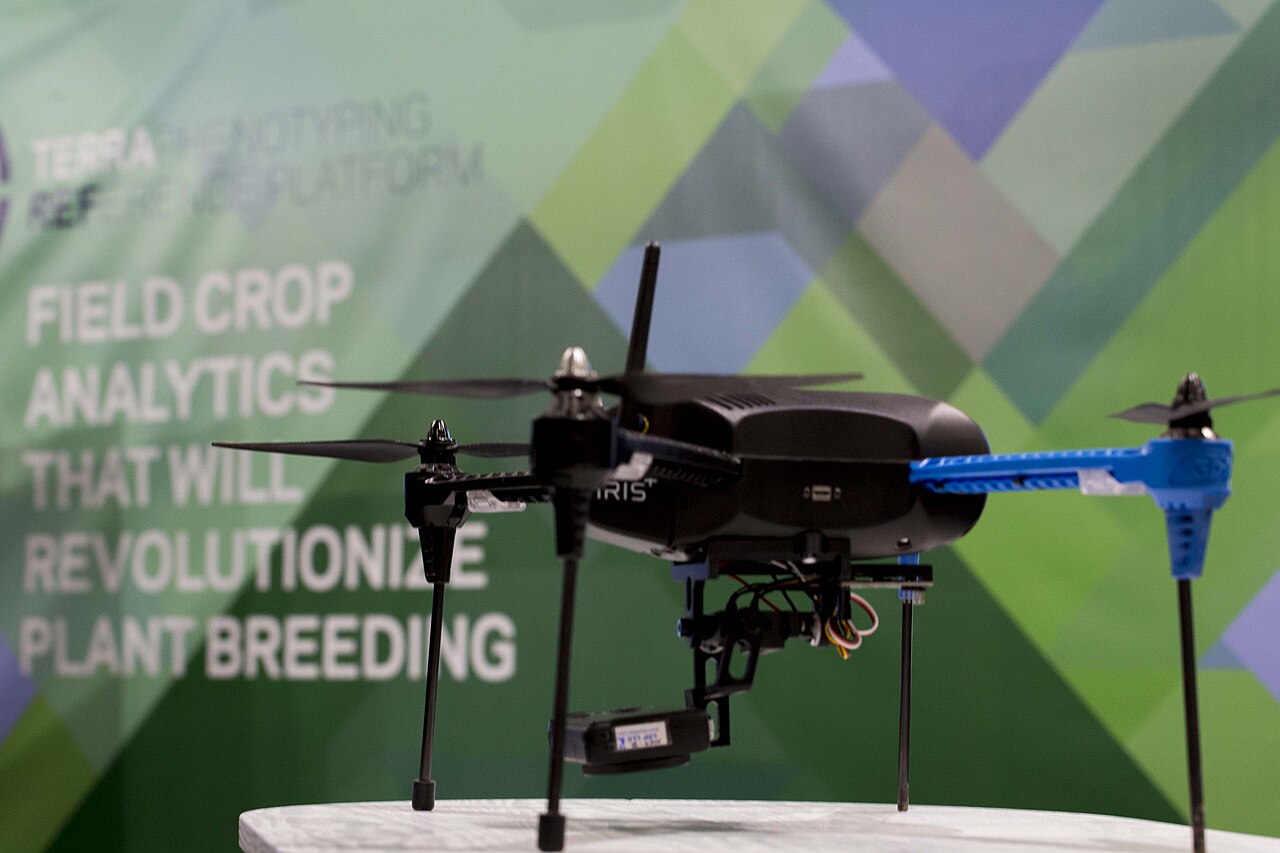
A team at the University of Guelph in Ontario, Canada, is field-testing AgriScout, an autonomous robot that drives through fields on its own, photographs the crop and uses artificial intelligence to flag early signs of disease, pests and stress before they spread, according to a university release of 9 November.
The project is led by computer science master's student Jacob Serafin, who moved into farm robotics after a course taught by Guelph researcher Gurjit Randhawa. It is backed by Canada's Natural Sciences and Engineering Research Council (NSERC) and the Ontario Ministry of Agriculture, Food and Agribusiness; funding amounts were not disclosed.
AgriScout puts mechanical parts, cameras and sensors, computing hardware and custom electronics on one mobile platform built for field conditions. As it moves, its cameras capture the crop canopy and onboard AI models, trained on the visual patterns of disease, pest damage and plant stress, analyse the images in place of a person walking the rows. Disease detection is the main focus, with pest and stress detection under development. The release does not name the crops tested, the cameras or the AI model used.
The hard part, Serafin said, was not the software. "Before I thought the AI model was everything, but it's actually not. It's everything else that goes around it." Cameras must cope with changing light, batteries must last a whole field, and parts must survive ruts, dust, rain, wind and sun. Testing brought broken legs on rough ground and batteries dying mid-field after dark; Serafin learned to weld, and a kitchen cutting board now sits inside the robot, used for its material properties.
For Serafin, the real test is whether farmers will use it: a scouting system that is too expensive, hard to operate, unreliable or not informative enough will not be adopted. The case for it is that finding disease hot spots early lets a farmer treat only the affected patches rather than spraying the whole field, which he argues cuts both crop losses and the amount of crop protection product applied.
The release gives no commercialisation timeline, no farmer pilot and no comparison of AgriScout's accuracy with manual scouting, so those questions remain open. "AgriScout definitely won't be the last thing I build," Serafin said.
Photo: ENERGY.GOV, Simon Edelman / Wikimedia Commons (public domain)
Source: Global Agriculture

Comments
(0)