
SatSure, the Bengaluru company that says its satellite and AI products help Indian banks judge farm loans, has raised Rs 60 crore from the government-backed Antariksh Venture Capital Fund. The money is the first close of a Series B round that SatSure plans to take to Rs 200 crore by December 2026.
The investment was announced on 20 November in a release issued from Mumbai and Bengaluru. The fund is anchored by IN-SPACe, India's space regulator and promoter, and managed by SIDBI Venture Capital Limited, the venture arm of the state-owned Small Industries Development Bank of India. The release says the deal is the fund's first investment in the "downstream data analytics and artificial intelligence (AI) layer" of India's space economy.
For farmers, the interest lies less in the cheque than in what SatSure already does with satellite pictures. The company says its SatSource product line is embedded in the Reserve Bank of India's Unified Lending Interface, a shared digital platform for lenders, and that public-sector banks, including the State Bank of India, use it "to underwrite farm loans in minutes that once took weeks". That is SatSure's own description, and no independent measurement of it has been published. If accurate, it places a satellite company inside India's farm credit system, at a time when lenders and researchers from Odisha to Kenya are testing whether a picture from space can stand in for a loan officer's field visit.
What the Rs 200 crore SatSure Series B round contains
According to the release, the Series B round is made up of Rs 165 crore of new equity, Rs 25 crore of venture debt and Rs 10 crore of secondary transactions, in which existing shareholders sell to new ones. The round is to close "on a rolling basis through December 2026". With the first close, SatSure says it has raised Rs 427 crore in institutional capital since it was founded, not counting government grants.
The release names four uses for the fund's money: preparing SatSure's optical satellite payloads for an orbital flight in 2027; carrying out its share of a multi-satellite constellation under an IN-SPACe public-private partnership; scaling Dhaarini, which SatSure calls its Large Earth Observation Model; and expanding its commercial business abroad. Farm lending is not among the four. It appears in the release as a description of work SatSure already does.
The valuation is not in the release; Indian Startup News and Inc42 reported a post-money valuation of Rs 870 crore. Dollar conversions vary between outlets (Via Satellite put the round at 21 million US dollars), so this report uses the release's rupee figures.
Prateep Basu, SatSure's chief executive and co-founder, said in the release: "The strategic value of the space economy lies not only in reaching orbit, but in what we can understand from it." He added that the company wants to own "the full chain" from payloads in orbit to "the AI and foundation models that turn that data into decisions enterprises and governments act on".
Arup Kumar, managing director and chief executive of SIDBI Venture Capital, said that leading the round "reflects AVCF's thesis of backing full-stack enterprises that pair indigenous orbital infrastructure with downstream decision intelligence".
SatSure was founded in 2017 by Basu, Rashmit Singh Sukhmani and Abhishek Raju, Inc42 reported. Earlier backers include Baring Private Equity Partners India, Promus Ventures, the Asian Development Bank's venture arm, HDFC Bank, ICICI Bank and Kotak Mahindra Bank. HDFC Bank and ICICI Bank are also customers, among 24 banking and financial-services clients, the company says.
The Antariksh fund's first bet on satellite data and AI
The Antariksh Venture Capital Fund is young. India's Union Cabinet approved a Rs 1,000 crore venture capital fund for the space sector under IN-SPACe in October 2024. The approval note, published by the Indian Space Research Organisation, set an indicative range of Rs 10 crore to Rs 60 crore per company and said the fund was expected to support about 40 start-ups over five years.
SIDBI Venture Capital announced the fund's first close at Rs 1,005 crore in November 2025, with IN-SPACe's Rs 1,000 crore as the anchor commitment and a target size of Rs 1,600 crore, YourStory reported at the time. Its first investment, Rs 60 crore in the Hyderabad satellite maker Dhruva Space, was announced in July 2026 at an IN-SPACe event in Ahmedabad, according to Dhruva Space's release.
SatSure is the second company to receive money from the fund, again at the top of that range. Dhruva Space builds satellites; SatSure's main business is analysing what satellites see for banks, insurers, infrastructure companies and governments.
How satellite data enters a farm loan in India
The Unified Lending Interface, or ULI, is what Business Standard calls a "UPI-like" digital public infrastructure for lending, after India's instant payments system. It began as a pilot on 17 August 2023 under the name Public Tech Platform for Frictionless Credit, and was relaunched as ULI by the then RBI governor Shaktikanta Das in August 2024, Business Standard reported. Instead of each bank building its own link to every government database, lenders connect once and draw on many data sources through a standard interface.
Those sources include digitised state land records, milk collection data from dairy federations, property searches and satellite data. In its Trend and Progress report released on 29 December 2025, the RBI said 64 lenders, 41 banks and 23 non-bank finance companies, were on the platform as of 12 December 2025, up from 36 a year earlier. They were using more than 136 data services across 12 loan journeys, including land records from eight states and "satellite services". A year earlier the RBI said ULI had facilitated more than 600,000 loans worth about Rs 27,000 crore. The central bank has not published a newer total.
The RBI also said that ULI is reaching district central cooperative banks and regional rural banks through the electronic Kisan Credit Card platform of NABARD, India's agriculture development bank.
SatSure describes its role in that chain as farm-level intelligence for "credit risk scoring, insurance validation, and rural banking expansion". Its farm-credit work predates ULI: in October 2022 the credit bureau TransUnion CIBIL launched a Credit and Farm Report for lenders that combines CIBIL's credit records with crop parameters from SatSure's geospatial data. In practice, satellite records can show a lender whether a field has been cropped, season after season, and how healthy the crop has looked compared with its neighbours, without anyone travelling to the village. The material reviewed for this report does not show how SatSure's scores are calculated, how often they are wrong, or how loans scored with its data have performed. No independent study of SatSure's scoring was found for this report.
The scale of farm credit the satellite checks are meant to serve
The numbers explain why lenders want a cheaper way to look at a farm. A government note dated 11 March 2026 says more than 7.72 crore Kisan Credit Cards are active in India, with about Rs 10.2 lakh crore of loans outstanding. The card, introduced in 1998, gives farmers short-term credit for crops and, after later revisions, for allied activities such as livestock and fisheries. Under the Modified Interest Subvention Scheme the loan limit was raised to Rs 5 lakh in 2025-26, and the limit for collateral-free credit to Rs 2 lakh per borrower, the note says. It says the scheme covers small, marginal and tenant farmers.
Most of those borrowers farm very little land. India's Agriculture Census of 2015-16 put the average operational holding at 1.08 hectares, and small and marginal holdings, under two hectares, made up about 86 per cent of all holdings. Checking each of those plots in person is slow and costly for a lender, and FAO describes the lack of a low-cost way to verify farm performance as a main reason creditworthy smallholders are refused.
What the evidence says about satellite credit scoring for smallholders
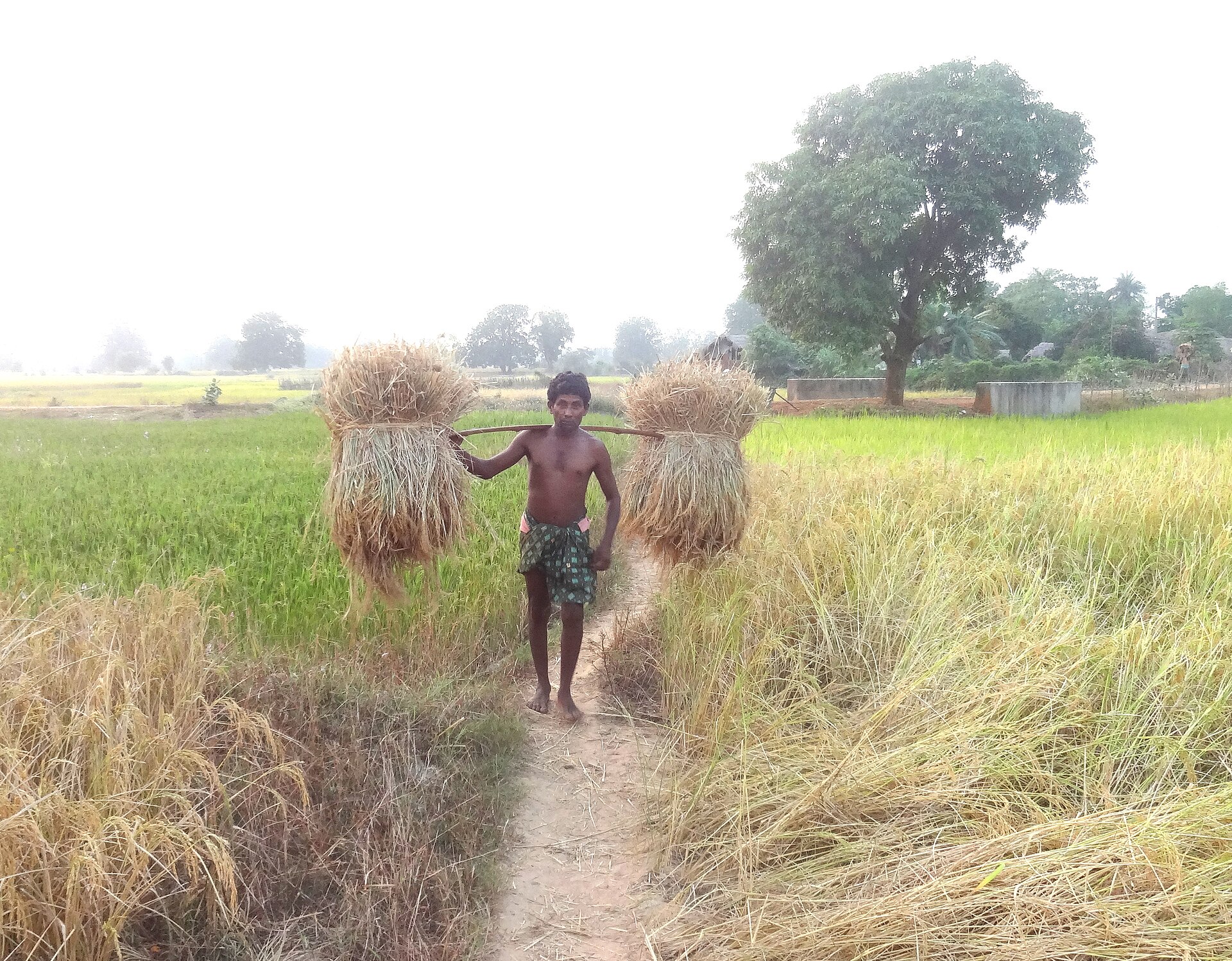
The strongest published evidence so far comes from Odisha, in eastern India, and not from SatSure. Researchers from the International Food Policy Research Institute and their partners ran a cluster randomised trial of KhetScore, a credit score built by Dvara E-Registry that combines satellite remote sensing, crop analytics and geotagged smartphone photographs, bundled with picture-based crop insurance.
Their results, published as IFPRI Discussion Paper 2288 on 31 October 2024 by Berber Kramer, Subhransu Pattnaik, Patrick S. Ward and Yingchen Xu, found that farmers offered the bundle, especially women, were more likely to hold insurance and to borrow from formal lenders, without cutting their informal borrowing. They reported fewer difficulties repaying, higher revenues in the monsoon season and lower costs in the dry season. The authors also found gains in women's empowerment and mental health. A discussion paper has not been through journal peer review, and the trial covered villages in a single Indian state.
A summary by the Center for Effective Global Action at Berkeley adds that women were less likely than men to apply under traditional credit scoring, while KhetScore raised demand most among women. It says the model was being extended to 10,000 more smallholders in five Indian states, with follow-up research on indebtedness and default.
In Kenya, the Food and Agriculture Organization's GeoCredit approach added satellite-derived vegetation and rainfall indicators to standard credit scores in a pilot with MkulimaScore360, a Kenyan credit platform. FAO reports that the combined model reached an AUC, a standard measure of how well a score separates good and bad borrowers, of 0.846, and that default risk fell steadily from 83 per cent in the lowest score band to zero in the highest. These figures come from FAO's own programme page rather than a peer-reviewed paper.
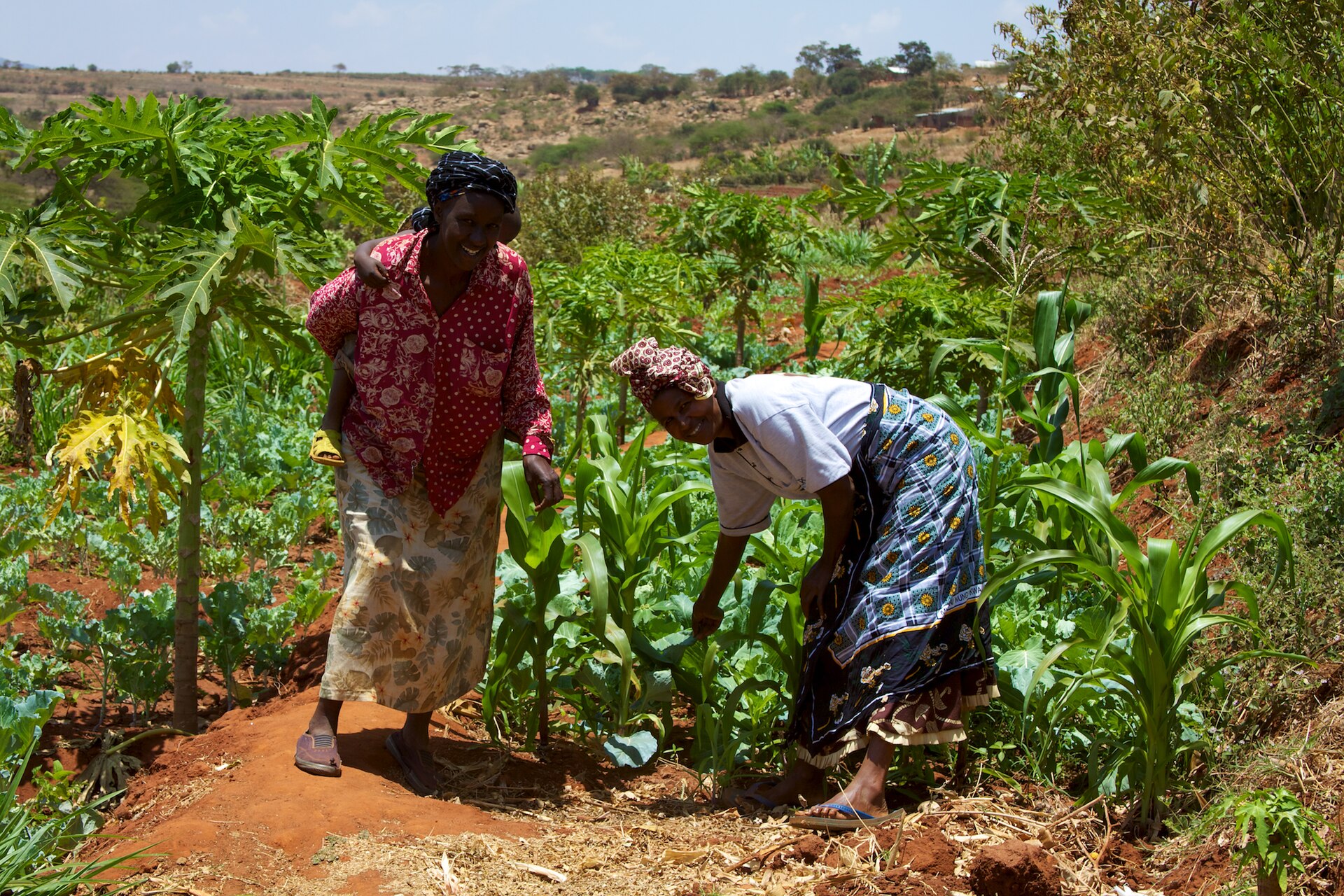
The European Space Agency described a similar pilot in October 2020: in 2018 and 2019 the Kenyan company FarmDrive fed satellite estimates of soil moisture, leaf area and yield into its credit models for two regions. ESA called it a success, but pre-commercial.
Payloads, Dhaarini and a satellite that is not yet in orbit
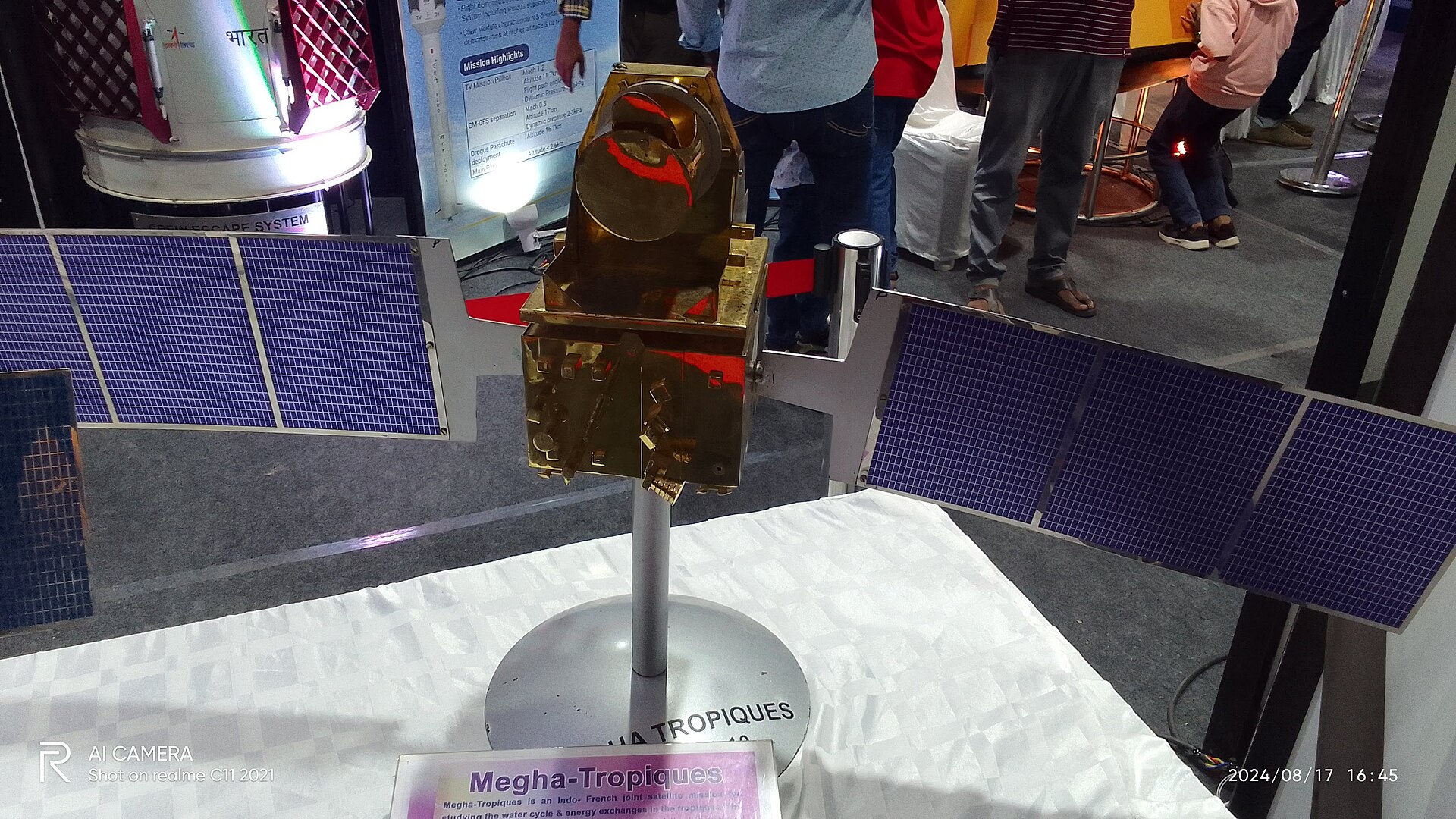
SatSure's subsidiary KaleidEO builds optical and multispectral imaging payloads, the cameras that ride on satellites. Via Satellite reported that KaleidEO has demonstrated its payload in aerial tests but has not yet launched a satellite; the release sets an orbital flight for 2027. Basu's phrase about "payloads in orbit" describes the plan, not the present.
In August 2025, IN-SPACe chose a consortium led by Pixxel, with Dhruva Space, SatSure and PierSight as partners, to build India's first fully commercial Earth observation constellation under a public-private partnership. SatSure's release said the 12-satellite network involves more than Rs 1,200 crore of investment over three to five years, with SatSure contributing two satellites carrying KaleidEO's wide-swath optical imager.
Dhaarini is the AI side. On 10 June 2026, IN-SPACe signed a Rs 24.6 crore grant under its Technology Adoption Fund for SatSure to build it, one of three projects chosen nationally. SatSure describes Dhaarini as a set of vision foundation models and Large Earth Observation Models that learn "India's monsoon dynamics, fragmented smallholder farmlands, flood cycles" and urban growth, in the way large language models learn from text. The company argues that AI trained on global imagery misreads Indian conditions; it has not yet published test results for Dhaarini.
The monsoon point matters for farm lending. Optical cameras cannot see through cloud, and India's main kharif crop grows during the monsoon, when cloud cover is heaviest. Radar satellites can see through cloud. In the 2025 consortium release, Gaurav Seth, PierSight's co-founder and chief executive, said its synthetic aperture radar "makes the constellation operational 24/7 in all weather conditions". How well a lender's score holds up when optical pictures are missing for weeks is one of the questions SatSure's customers will need answered.
The limits: land records, big banks and the farmers without title
Satellites can show what is growing on a field, but not who owns it or who farms it. ULI's growth depends on state land records, and those are uneven. In August 2025, bankers told Business Standard that the platform was held back by land records that had not been digitised, particularly at village level, and by large banks that prefer their own lending systems. One private bank executive said volumes were "not seeing a sharp increase from the pilot stage".
That matters most for tenant farmers and sharecroppers, who often hold no title to the land they work. The Kisan Credit Card scheme formally includes tenant farmers, and the KhetScore trial was aimed partly at landless farmers. A satellite score that is tied to a registered plot may help an owner and leave a tenant exactly where they were. SatSure's published material does not say how its products deal with tenancy.
There is also the question of errors. A farmer refused a loan because of a wrong reading from space needs a way to challenge it, and none of the published material from SatSure or the RBI reviewed here describes how such disputes are handled.
What satellite credit scoring could mean in Kenya, Bangladesh and other smallholder economies
The problem SatSure sells into is not only Indian. ESA's 2020 article noted that two thirds of the African population works in agriculture, yet only 1 per cent of commercial loans go to the sector. In August 2025 SatSure signed a memorandum of understanding with the Kenya Agricultural and Livestock Research Organisation to use satellite data for crop monitoring, yield forecasting and soil health. The announcement spoke of pilot projects and digital tools for farmers; no results from it have been published.
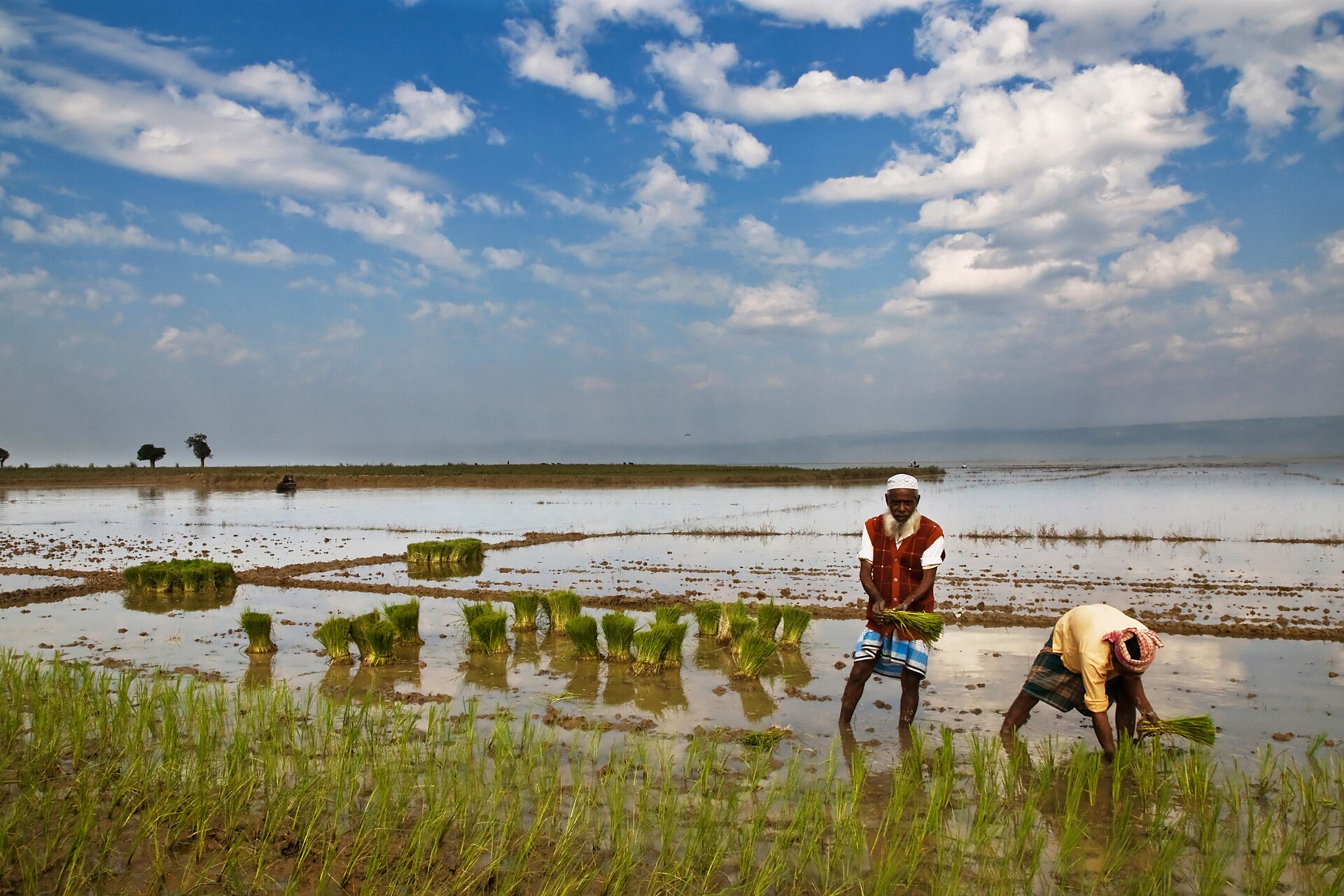
In Bangladesh, the push is for more credit rather than new data. On 17 August 2026, Bangladesh Bank set its agricultural and rural credit target for 2026-27 at Tk 60,000 crore, about 54 per cent above the previous year's Tk 39,000 crore, The Financial Express reported. Banks disbursed Tk 42,834 crore in 2025-26, beating that year's target, to 3.78 million people. Deputy Governor Habibur Rahman said farm lending was 2.5 per cent of total bank loans; the paper reported that the share would rise to 4 per cent with the new target.
A target that size means banks must assess many more small borrowers quickly, on land often as fragmented as India's. The Odisha and Kenya results suggest satellite scoring can help lenders find creditworthy farmers they would otherwise miss, but neither was tested in Bangladesh's flood-prone, multi-cropped delta, and no Bangladeshi bank has announced such a system in the reports reviewed here.
What to watch as the round closes in December
SatSure expects to complete its Series B by December 2026, and whether private investors join the government fund will show how much outside money is willing to follow it into space data. The RBI's annual Trend and Progress report, released in late December last year, may again update the count of lenders and data services on ULI.
Further out, KaleidEO's first payload is due in orbit in 2027, with the consortium's satellites to follow. Those are company plans, not results. Independent evidence on how satellite-scored farm loans perform, especially on default, remains the missing piece.
Why a space fund's cheque matters to a farmer with one hectare
India's space policy and its farm credit policy rarely meet. This round brings them together: a state-backed space fund has, for the first time, put money into a company that says its products help banks decide on loans to farmers.
For a smallholder in Odisha, Machakos or Sunamganj, the test is simple: whether a picture from space makes it easier and cheaper to borrow at the start of a season, and fair when the picture is wrong. The money raised this week will build satellites and AI models; whether it also builds fairer credit will be measured in loan books, not in orbit.
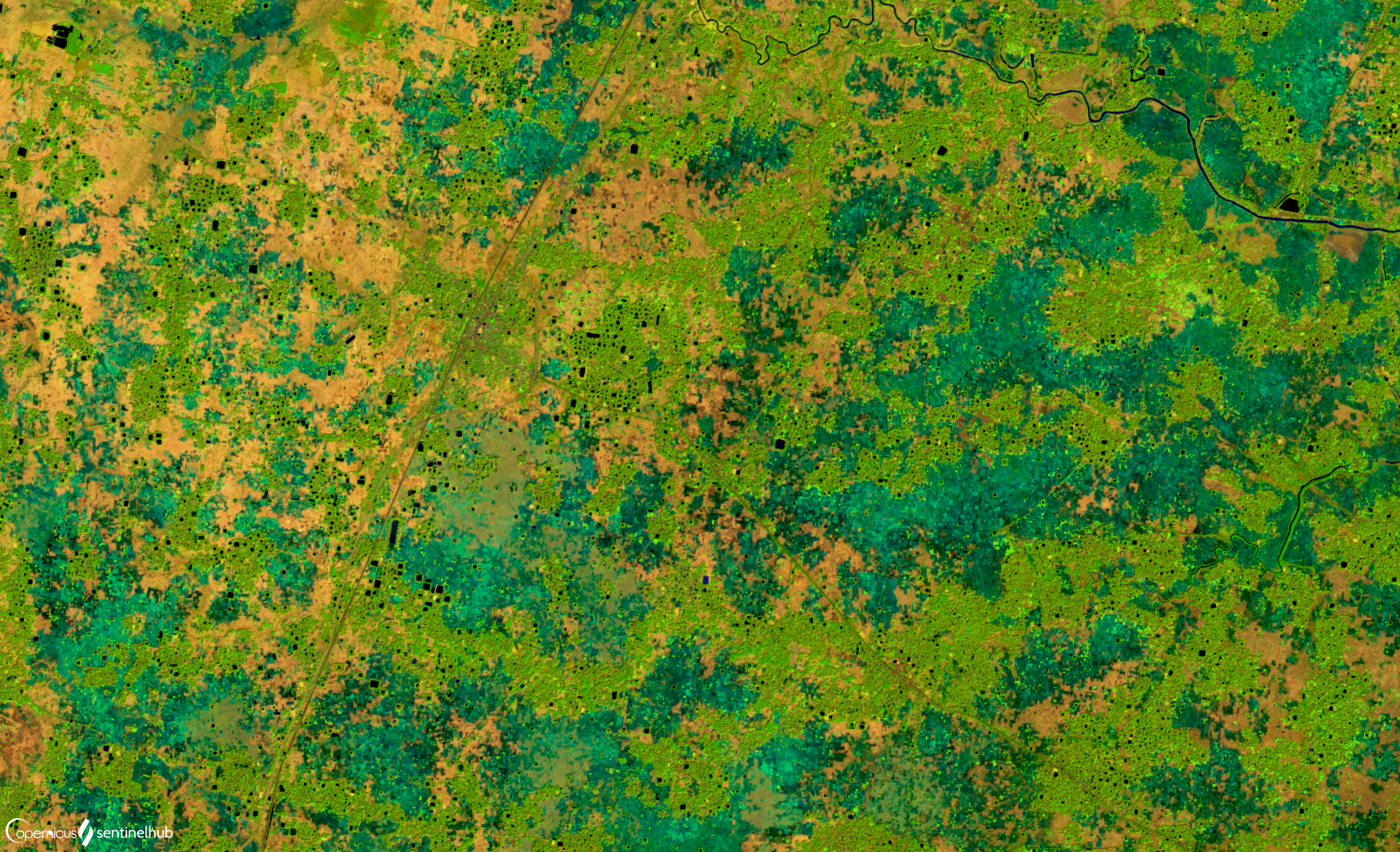
Photo: SentinelHub (contains modified Copernicus Sentinel data 2020) / Wikimedia Commons (CC BY 2.0). The top picture shows farmland in West Bengal, India, in an enhanced false-colour image from the Sentinel-2 satellite taken on 25 January 2020, as background.
Comments
(0)