
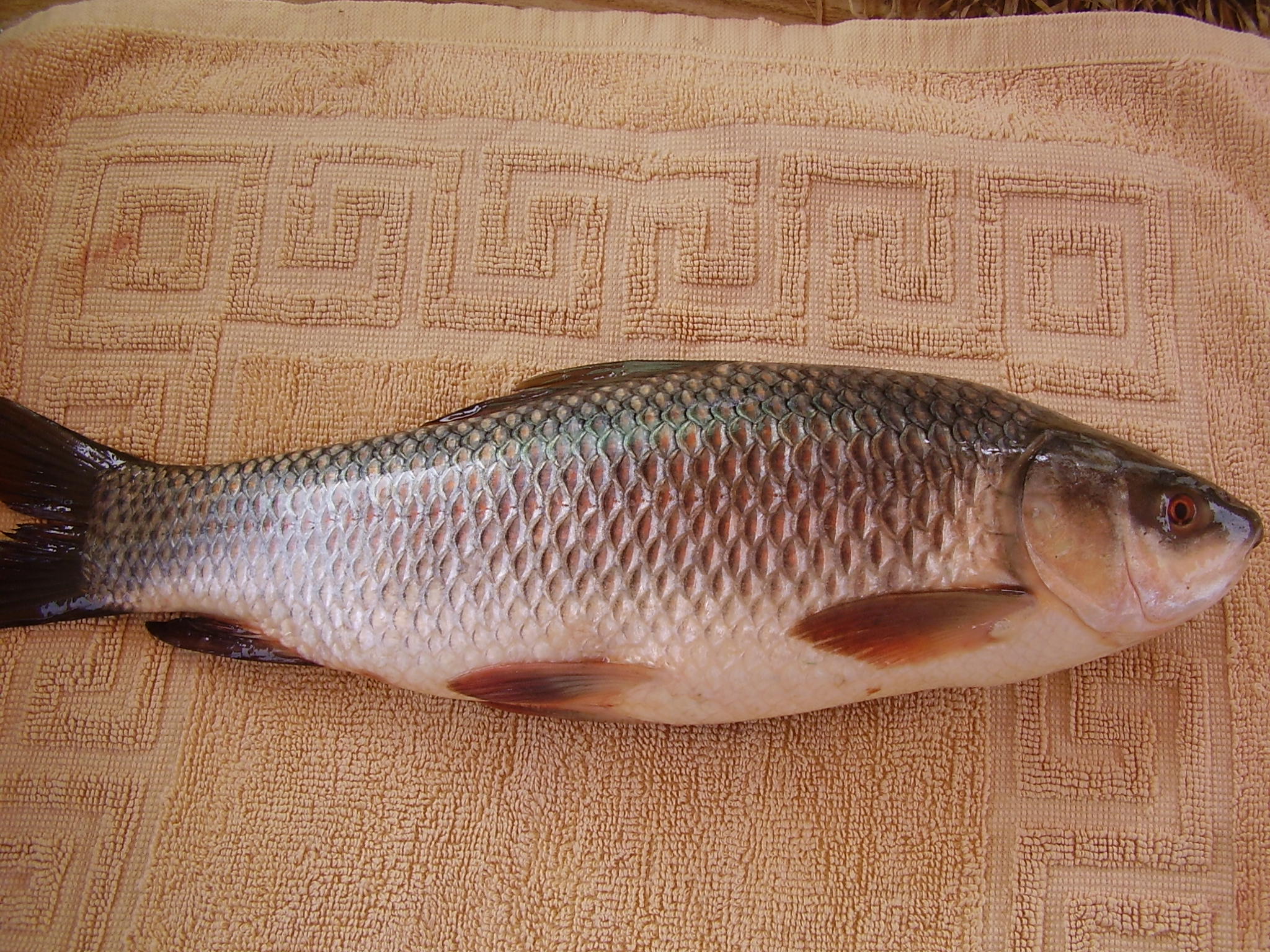
In November 2021, the fish ponds of the Rajshahi region were sending something more valuable than iced fish to the capital. Large rui and other carp, grown commercially in the district's ponds, were loaded into trucks filled with water and driven to fish wholesale markets in Dhaka and other parts of Bangladesh while still alive. For buyers worried about formalin and stale fish, a carp that is still moving when it reaches the market is the plainest proof of freshness.
The Agro News's staff correspondent reported at the time that safe fish had become a much-discussed issue, and that live carp from Rajshahi were giving ordinary buyers the chance to buy formalin-free fish. The same report set out what the trade meant for farmers: a better price per kilogram, set against the cost of hiring a truck and keeping the fish alive on the road.
This article sets out what that report found, how the live fish trade from Rajshahi began, what the Department of Fisheries (DoF) and newspapers had recorded about the district's ponds by 2021, what happened to the trade during the 2020 lockdown and the oxygen crisis of that September, what Food and Agriculture Organization (FAO) guidance says about keeping fish alive in transport, why live fish fetch more, and where farmed carp stood in Bangladesh's fish supply at the time.
What the November 2021 report found
According to the report, farmers selling live fish received about Tk 100 more per kilogram than they would for iced fish sent to market. Each truck could carry 500 to 600 kg of live fish. To keep the fish alive and the water in good condition, the water in the truck had to be changed once or twice during the journey.
At the time, the report said, the live fish were carried from Rajshahi to Dhaka for a truck fare of Tk 15,000 to 16,000. It then gave its own estimate: if live transport cost Tk 60 a kilogram, the farmer would still be left with about Tk 40 a kilogram more than from iced fish. The Tk 60 figure was framed as an assumption for the calculation, and the report did not break it down beyond the truck fare.
The report ended with a suggestion rather than a finding. If specially equipped trucks for carrying live fish could be introduced or developed, it said, farmers could gain even more. In 2021 the trade relied on ordinary trucks fitted to hold water, which is why the water changes on the road mattered so much.
The fish in question were what Bengali speakers call rui-jatiyo mach, the rui family of carps. The phrase means carp of the rui type, a group that includes rui, catla and mrigel, and it is not a reference to the national fish of Bangladesh, which is the hilsa.
How the live fish trade from Rajshahi began
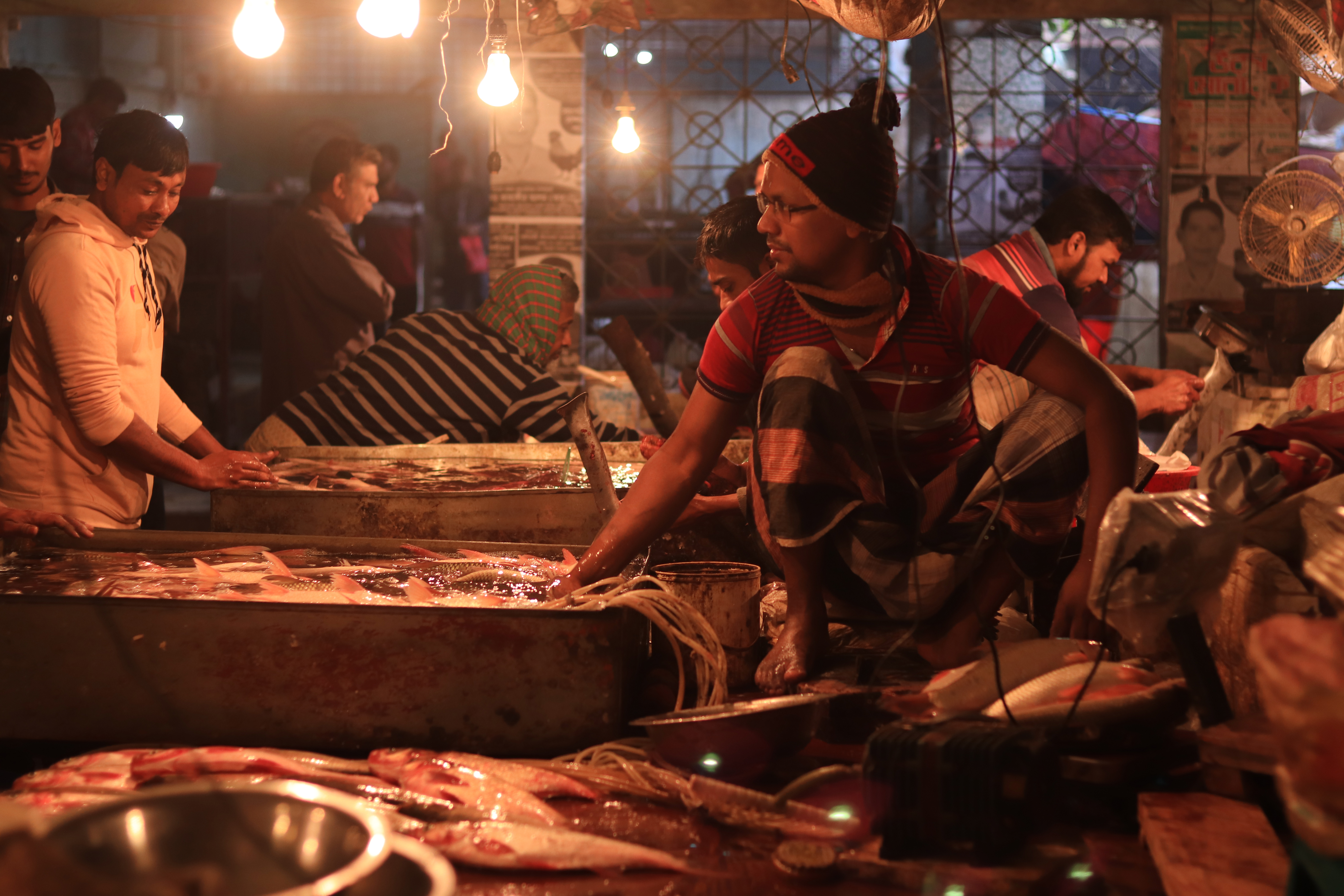
The idea of sending live fish to Dhaka was not new in 2021. The Financial Express reported on 25 July 2018 that it was first introduced in 2009 by a fish trader, Jamal Uddin, of Krishnapur village in Tanore upazila of Rajshahi. The live fish he sent were sold at high prices in Dhaka's kitchen markets, and others followed.
By 2018, the same newspaper reported, about 250 truckloads of live fish were being supplied every day from the Rajshahi region to other parts of the country, each truck carrying 500 to 600 kg of live fish. That load per truck is the same range The Agro News gave three years later.
The Financial Express named the areas where fish farming had spread: Paba, Mohanpur, Durgapur and Tanore in Rajshahi; Manda, Badalgachhi and Mohadevpur in Naogaon; and Bonpara, Lalpur and Boraigram in Natore. Several hundred large ponds had been dug for commercial fish culture, and over the previous decade several thousand tonnes of carp and other fish had been produced across the three districts.
Carp varieties, namely rui, catla, mrigel, silver carp and grass carp, were the most popular. According to the 2018 report, a carp weighing 2.5 to 4 kg generally sold for Tk 300 to Tk 500 a kilogram. Rezaul Islam, a deputy director of the Department of Fisheries, told the newspaper that Rajshahi had been a pioneer in achieving self-sufficiency in fish production.
Rajshahi's ponds in numbers
Rajshahi district covers 2,425.37 square kilometres in the north-west of Bangladesh, according to Banglapedia, the national encyclopaedia. It is bounded by Naogaon to the north, Natore to the east, Nawabganj to the west, and the Ganges (Padma) and India's West Bengal to the south. It has nine upazilas: Godagari, Charghat, Tanore, Durgapur, Paba, Puthia, Baghmara, Bagha and Mohanpur. The 2011 census counted 2,595,197 people, and agriculture was the main occupation of 59.35 percent of households.
On 16 April 2020, The Business Standard (TBS) reported the Department of Fisheries as saying that around 19,000 farmers produced 85,000 tonnes of fish in 50,000 ponds in Rajshahi, which was 32,000 tonnes more than the district's own demand. That surplus is what the trucks carried away. Fish farmers in the area told the newspaper that in normal times they met 80 percent of the country's demand for carp; that was the farmers' claim, not an official figure.
Five months later, on 20 September 2020, TBS reported figures from the Directorate of Fisheries in Rajshahi. The district had 50,000 ponds covering 13,000 hectares, which produced 81,000 tonnes of fish a year on average, and carp made up 85 percent of that output. Around 140 trucks, carrying 700 to 800 kg each, left for Dhaka every day after local demand had been met.
The same report put the district's annual fish trade at Tk 1,620 crore, according to the Directorate of Fisheries, with about 900,000 people involved in the sector, including 17,000 farm owners. The truck loads in the 2020 reports were higher than the 500 to 600 kg The Agro News gave for live fish; the sources did not say whether those loads were live or iced.
The lockdown and the oxygen crisis of 2020
The year before the report showed how exposed this trade was. During the lockdown that began on 26 March 2020 and lasted until 31 May, fish could hardly be supplied to Dhaka, TBS reported. In its April report, the paper said the number of trucks leaving for Dhaka each day had fallen from about 150 to about 20, and farmers described ponds of mature fish they could not sell.
Prices also slipped. In September 2020, a fish farmer in Paba upazila told TBS that he had sold rui at Tk 320 a kilogram in February but had to sell at Tk 270 by then, and farmers said prices of different varieties had fallen by Tk 40 to Tk 50 a kilogram.
Then came a blow from the weather. Prothom Alo reported on 3 September 2020 that, according to the district fisheries office, 616 tonnes of fish had died and floated up in Rajshahi's ponds in a single day. Paba upazila alone lost 307 tonnes, its upazila fisheries officer said. Overcast weather followed by rain had cut the oxygen produced in pond water, and District Fisheries Officer Alok Kumar Saha said the ponds stocked most heavily with catla and silver carp had suffered the greatest losses. Ponds where farmers ran aerators or regularly cast nets lost less, the newspaper reported.
The episode is a reminder of the same principle that governs live transport: carp need dissolved oxygen, and the more fish there are in a body of water, the faster it runs out.
Keeping fish alive on the road: what FAO guidance says
The Agro News report gave only the practical outline: 500 to 600 kg of fish per truck and one or two water changes on the way. FAO training material on freshwater fish culture, part of its Simple Methods for Aquaculture series, explains why such steps matter. It describes live transport as a routine part of fish farming, from short moves on the farm to journeys of one or two days.
The FAO manual's main points for transporting live fish include the following:
- Fish should be starved before transport so that their guts are empty and they foul the water less: 12 to 24 hours in warm water, longer in cool water, and preferably at least 48 hours for Chinese carps.
- Dissolved oxygen falling below 3 to 5 mg per litre, or total ammonia rising above 5 mg per litre, is a danger sign.
- Transport water for warmwater fish is best kept at about 15 to 20 degrees Celsius, with a pH of about 7 to 7.5, and free of silt and chemicals.
- Oxygen consumption rises sharply with temperature, and stressed fish use far more than resting fish, so fish should be kept quiet, shaded and moved in the cool hours of night or early morning.
- Stops should be short, at most about 15 minutes, and water can be exchanged during a long stop if the fish show distress.
- On arrival, fish should be brought gradually to the new water, allowing at least 20 minutes for every 5 degrees Celsius of temperature difference.
An older FAO review, The transport of live fish by R. Berka (EIFAC Technical Paper 48, 1986), makes the same point more bluntly: the most important single factor in transporting fish is an adequate level of dissolved oxygen. It notes that a rise of 10 degrees Celsius roughly doubles oxygen consumption, and that starving fish before shipment reduces both their oxygen demand and the ammonia they release into the water.
Seen against this guidance, the water changes described in the Rajshahi trade are a way of replacing oxygen-poor water fouled with ammonia and carbon dioxide by fresh water. The FAO manual also warns that it is better to transport a small number of healthy fish than a larger number in doubtful condition, with a high risk of mortality. The FAO figures are general guidance; a farmer planning to send fish alive can seek advice from the upazila fisheries officer of the Department of Fisheries.
Why live fish sell for more: freshness, formalin and the law
The premium the report described rests on trust. As the report put it, live fish gave buyers the chance to buy fish free of formalin, a chemical whose misuse as a food preservative led Bangladesh to pass a law to control it. The Formalin Control Act, 2015 (Act No. 5 of 2015) brought the import, production, transport, storage, sale and use of formalin under licence; a government gazette notification of April 2015 set 5 April 2015 as the date it took effect.
In November 2020, a year before the report, Parliament passed the Fish and Fish Products (Inspection and Quality Control) Bill, 2020, replacing a 1983 law on the same subject. Desh Rupantor reported on 16 November 2020 that it banned the use of harmful chemicals in fish and fish products and made the registration of fish farmers mandatory to ensure safe fish production.
Price differences between fresh and iced carp are not unique to Bangladesh. The FAO fact sheet on rohu (2009) notes that the species is mostly sold fresh in local markets and that locally produced fresh fish fetches about one and a half times the market price of iced fish. In Rajshahi's case, the premium of about Tk 100 a kilogram reported in 2021 is what made the cost of the truck and the water changes worth paying.
Rui and the other carps
Rui, or rohu (Labeo rohita), is a freshwater fish of the carp family native to the rivers of northern and central India, Pakistan, Bangladesh and Myanmar, according to the FAO fact sheet written by J.K. Jena. Adults are mainly herbivorous column feeders that prefer algae and submerged plants, and the species does not thrive at temperatures below 14 degrees Celsius.
In culture, the FAO fact sheet says, rohu reaches about 35 to 45 cm and 700 to 800 g in one year, and a harvestable size of 1 to 1.5 kg in 12 to 18 months. It is the main species in the polyculture of the three Indian major carps, alongside catla and mrigal, and is usually stocked at a higher share than the other two. Drag nets are the usual gear for harvesting ponds.
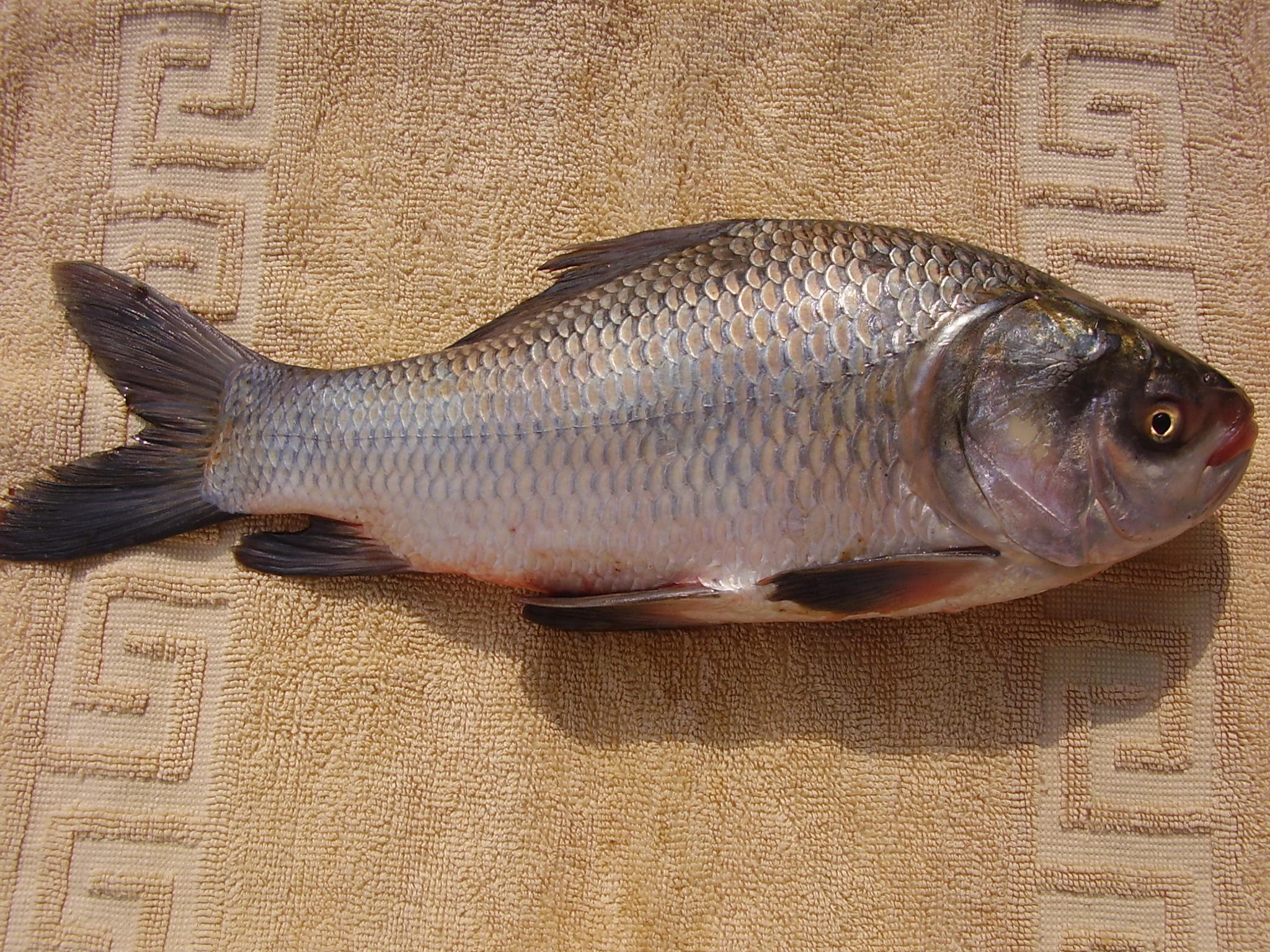
Banglapedia lists rohu as the largest of the Indian major carps in Bangladesh, reaching about 90 cm, with catla (38 to 46 cm) and mrigal (50 to 80 cm) also widely distributed. Exotic carps were added later: scale carp was introduced from China in 1960, mirror carp from Nepal in 1979 and bighead carp from Nepal in 1981.
Farmed fish in Bangladesh's food supply
Rajshahi's live trucks were part of a national shift towards farmed fish. According to the Department of Fisheries' Yearbook of Fisheries Statistics of Bangladesh 2019-20, as reported by The Financial Express on 7 November 2021, the country produced 45.03 lakh tonnes of fish in the 2019-20 financial year. Culture fisheries produced 25.84 lakh tonnes, inland capture 12.48 lakh tonnes and marine fisheries 6.71 lakh tonnes, so aquaculture accounted for 57.38 percent of the total.
Over the decade from 2010-11 to 2019-20, the same report said, culture fish production had grown far faster than capture or marine fisheries. Per capita fish consumption stood at 62.58 grams a day, above the target of 60 grams, and fish supplied about 60 percent of the animal protein in the national diet.
The sector contributed 3.52 percent of Bangladesh's gross domestic product and 26.37 percent of agricultural GDP, according to the figures cited. Citing FAO's The State of World Fisheries and Aquaculture 2020, the report said Bangladesh ranked third in the world in inland open water capture and fifth in aquaculture production.
Against those national figures, the Rajshahi trade showed how a district with a surplus of pond-grown carp could reach distant urban buyers. The November 2021 report's case was simple: as long as the extra price for a live fish stayed above the cost of the truck and the water, sending the catch alive paid off for the farmer, and better-equipped trucks would make it pay more.
Photo: Khalid Mahmood / Wikimedia Commons (CC BY-SA 4.0)
Sources: The Agro News (Staff Correspondent), The Financial Express, The Business Standard, Prothom Alo, Desh Rupantor, Department of Fisheries (Yearbook of Fisheries Statistics of Bangladesh 2019-20), Food and Agriculture Organization of the United Nations, Banglapedia, Bangladesh Government Press
Comments
(0)