
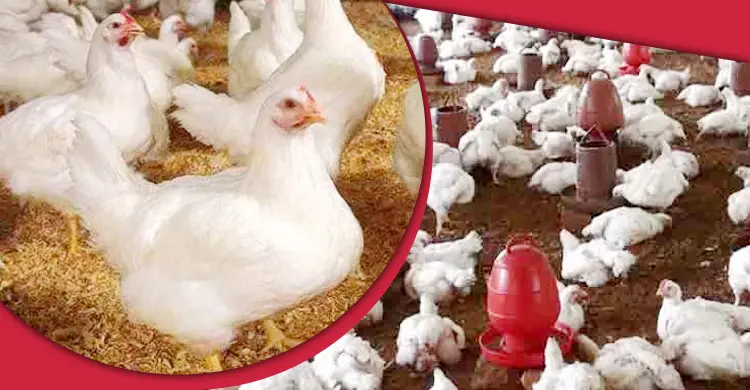
The poultry industry has become popular because it meets the growing demand for protein and creates jobs. Chicken farms are even being set up on the roofs of multi-storey buildings in cities, helping to meet the country's nutritional needs, especially for protein. Those who want to raise chickens on the litter system should know the rules.
The house and floor space
The house chosen for litter-system poultry must be quite open. It must be built lengthwise from east to west so that sunlight cannot enter the chicken house directly, while air comes in on one side and leaves through the other.
A concrete floor is best. For adequate light and air, build a 2 to 2.5-foot brick wall or bamboo fence, and above it put up a 2.5 to 3-foot net-like screen of split bamboo. Each broiler needs 1 square foot of floor space in winter and 1.5 square feet in summer; layers need 2 square feet each in both seasons.
The space needed can vary with the age and size of the birds. The litter should be laid 3 to 4 days before the chickens are put in. Once the house is dry, spread the materials 2 inches deep for ordinary litter, or 6 inches deep for deep litter.
Feed, water and light
For normal growth, chickens should be given nutritious feed with clean water twice a day. One round feeder is needed for every 25 birds and one round drinker for every 50. For laying hens, the feed should contain 16 per cent protein, 8 per cent fibre, 7 per cent oyster-shell powder, 2,800 kilocalories of energy and an adequate amount of vitamins.
Artificial light is important in poultry rearing. Chicks need heat up to 4 to 5 months of age; the amount of heat depends on their age and falls as they grow older. Laying hens need 16 hours of light a day in the house. Lights should not be hung so that they swing in the wind, as this can frighten the birds. Egg production is higher under yellow or red light. Bright light should never be used in the house, as it can lead to pecking.
Hygiene and disease prevention
Keeping the chicken house clean is essential, and all equipment must be kept free of germs. To keep the litter dry, the droppings on top should be turned over once a day. With deep litter, stirring it with a piece of wood once a week mixes in the waste. Using lime now and then helps, and care must be taken that the litter never becomes damp.
Once poultry fall ill it is almost impossible to save them, so prevention is better than cure. No one other than designated people should enter the house, and those involved in management should enter only after disinfecting themselves. Animals that spread disease, especially dogs, cats, foxes and rats, must be kept out of the farm.
Vaccines should be given on schedule before disease strikes. If a bird is found sick during daily checks, emergency measures should be taken without delay on the advice of a livestock specialist. Dead birds must be buried or burned, and sick birds should quickly be moved elsewhere.
Why the litter system works
Raising chickens on litter has many advantages. The litter absorbs the urine mixed with droppings, so the house stays dry and odour-free and the birds are comfortable. It protects them from the cold in winter and gives relief in summer, and there are fewer flies.
In cage rearing, constant friction with the wire makes the underside of the birds' feet swell and later form sores, but there is no such risk with the litter system. Deep litter does not need cleaning every day. Processed litter can be made into feed for poultry and livestock, and spent deep litter can be used to make organic fertiliser for land and fish feed.
Using litter in the chicken house produces certain insects, fungi and bacteria, which die and are born again through the action of the litter. In this way the protein content of the litter increases.
Chickens scratch the litter with their feet, roll in it to bathe and pick up the food that grows in it, which keeps them healthy. For rearing chickens in confinement, the litter system is better: production costs are lower and the materials are close at hand.
Source: Jagonews24. First published in Bengali on The Agro News.



Comments
(0)