
A huge bull that farm hands had affectionately named "Zayed Khan" was the talk of Lalmonirhat district in northern Bangladesh in the run-up to Eid ul-Adha in 2026. By 27 May, the day before Eid, it had still not drawn the price its owners hoped for, so farm owner Advocate Mojmul Pramanik decided not to sell it and to sacrifice the bull, raised with great care as a hobby, himself. Jagonews24 carried the report from its Lalmonirhat correspondent that afternoon.
The National Moon Sighting Committee had met at the Islamic Foundation's conference room at Baitul Mukarram on the evening of 18 May and announced that the Dhul Hijjah moon had been sighted, so Eid ul-Adha would be celebrated across Bangladesh on Thursday, 28 May. When the family said they would sacrifice the bull themselves, Eid was one day away.
The bull on the farm
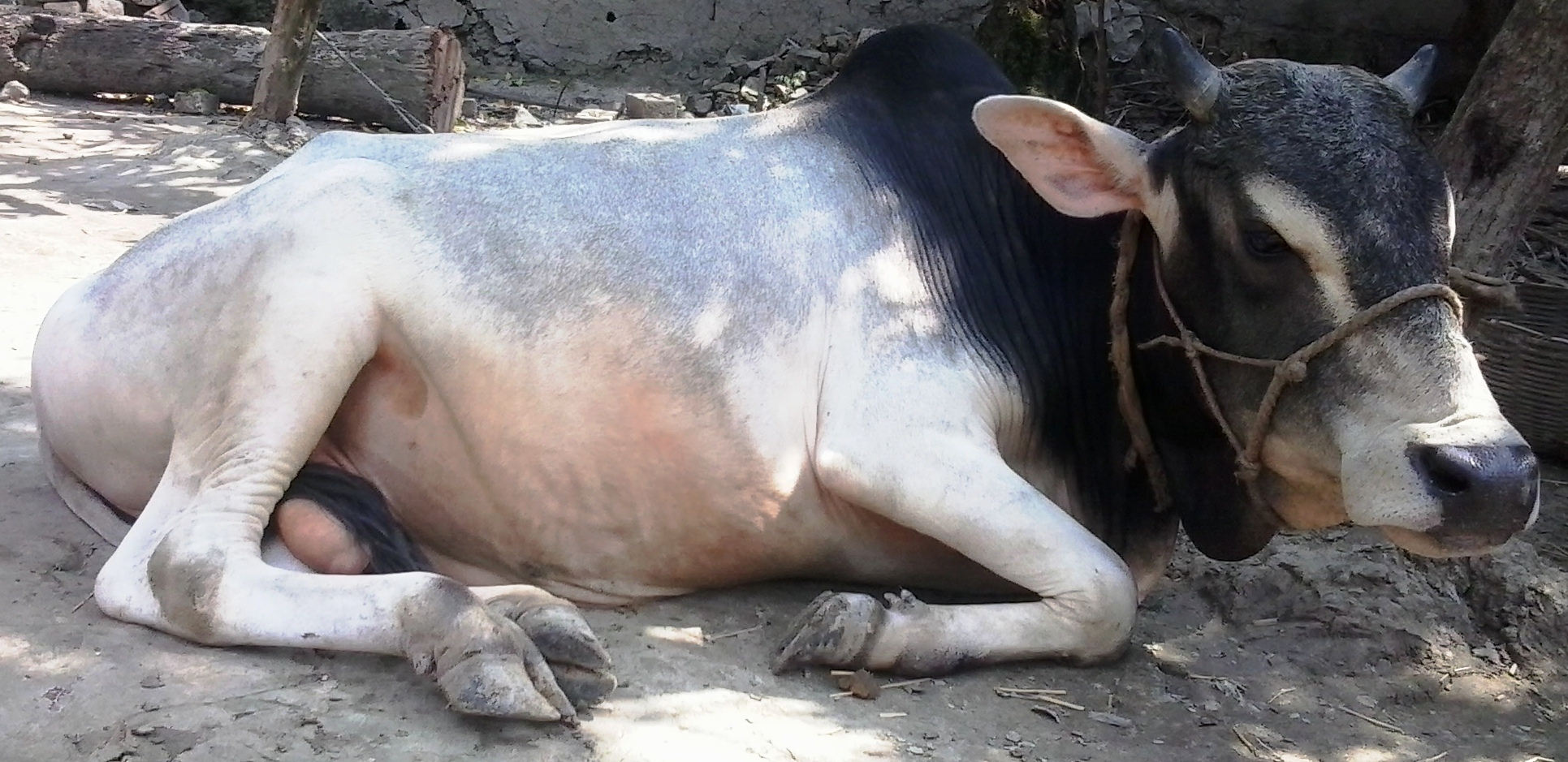
According to Jagonews24, the bull grew up on the farm of lawyer Mojmul Pramanik in the Doulajore area of Aditmari upazila, and he had been preparing animals for the sacrifice for several decades. This Eid, the bull was the one that drew the most attention on his farm. Jagonews24 described a striking mix of white and black on its body; the farm called it a Burma-breed bull, as bad-tempered as it was handsome.
Measured with a tape, the bull stood about five and a half feet tall and was 9 feet long, with a chest or belly girth of nearly six feet. When it stood up, people crowded round to look. It had not been weighed on a scale, but experienced cattle traders and wholesalers who came to the farm estimated from its size that it would easily yield 26 to 27 maunds of net meat.
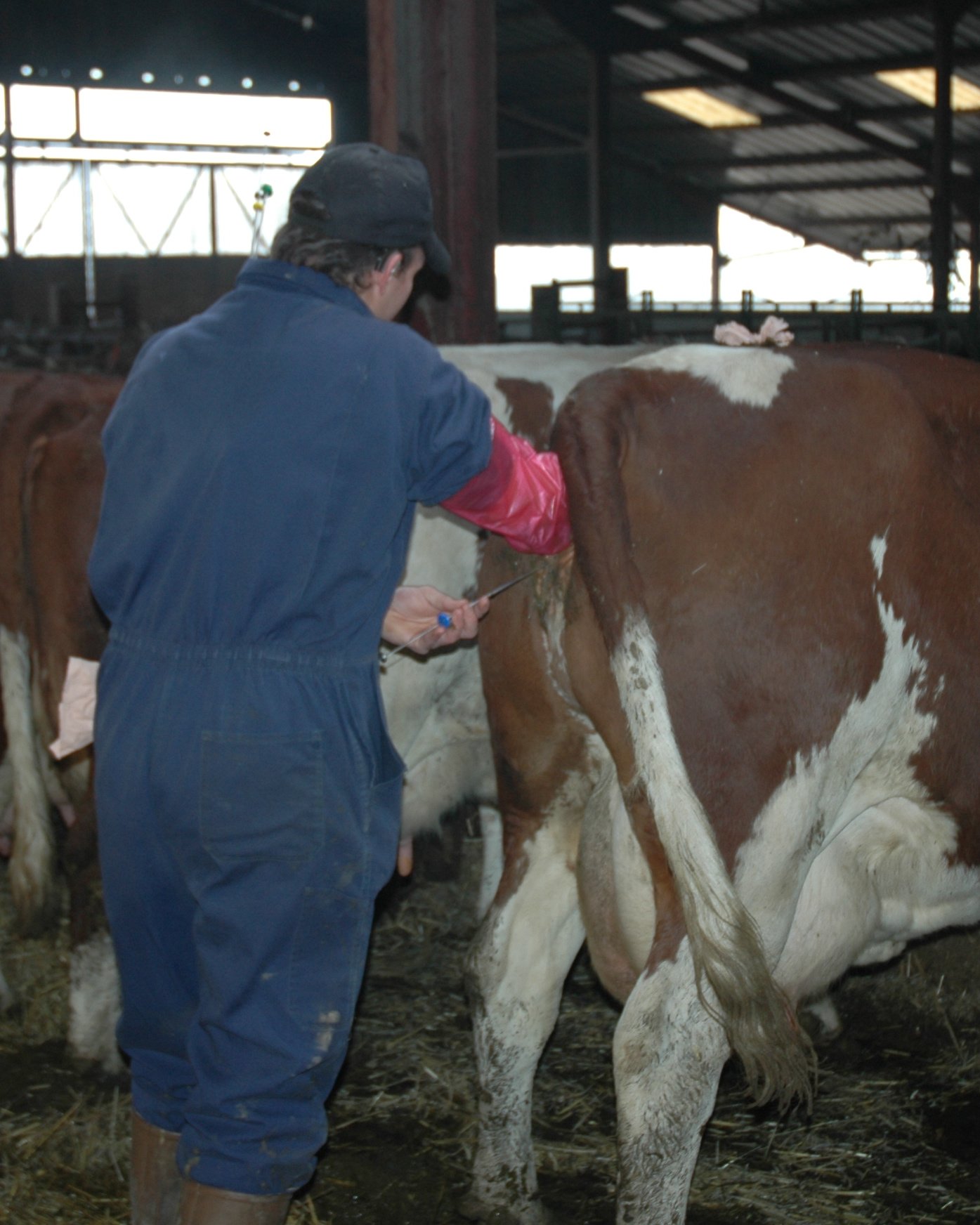
The farm told Jagonews24 that the bull was born through artificial insemination, using semen of an improved breed on a cow of another breed. It was raised with great care on local feed, and two people were employed on the farm to look after "Zayed Khan" around the clock.
Prothom Alo's Lalmonirhat correspondent, in a report published the same morning, gave more detail about the farm. The bull was being kept at "Mouri Agro Traders", owned by income-tax lawyer Mojmul Hossain Pramanik, in the East Doiljor area of Saptibari union in Aditmari. Visiting on the Monday before Eid, the correspondent found the bull lying on a concrete floor and described its colour as grey-ash. Farm workers said it was restless and liked to jump about. People involved with the farm put its feed cost at 400 to 500 taka a day.
The farm's supervisor, Nobur Hossain, told Prothom Alo he had worked there for about two decades. If such a big bull could not be sold even at Eid, he asked, when would it be? The owner, he said, was very worried. The two reports differ on the bull's age: the owner told Prothom Alo it was five and a half years old, while his younger brother told Jagonews24 the family had raised it for seven years.
Selling from the farm instead of the market
Jagonews24 reported that taking such a huge bull to a cattle market risked injury at any moment, and that in the heat and the crowds it could become exhausted and lose condition. For that reason the owners had decided to sell it from the farm rather than at a market. But the one or two buyers who came to the farm before Eid did not offer the price they expected.
In the Prothom Alo report, owner Mojmul Hossain Pramanik said that by its length and breadth the bull weighed no less than 1,000 kg. By his account, before the previous year's Eid, wholesalers from Dhaka, Narayanganj, Chuadanga and Jashore had approached him through local traders and offered seven to eight lakh taka, while he had asked for 10 lakh taka. "Such a price is not unusual in the Eid market," he said regretfully. "But this time not a single wholesaler made an offer."
He also told Prothom Alo that six other cattle from his farm had sold that season for 7 lakh 70 thousand taka, but he was not selling the big bull because it had not fetched the expected price. "Selling at a low price would mean a big loss," he said. "We would still benefit if someone offered a fair price. With such a big animal we are now in trouble." A local cattle trader, Solu Mia, told the paper that buyers for such large cattle were very few in the area, which made the bull hard to sell. Prothom Alo added that photos and videos of the bull had spread on social media under the name "Zayed Khan", and that many people were coming to the farm every day to take pictures and videos with it.
By that afternoon the family had made up its mind. Jony, the younger brother of farm owner Mojmul Pramanik, told Jagonews24 that the bull had not been sold because they did not get a price that matched its looks and size. "We raised the bull with great care for seven long years," he said. "Since we could not get the price we wanted, we have decided to sacrifice it ourselves."
Maunds, tape measures and the meat estimate
The traders' estimate of the bull's meat was given in maunds. The maund is a traditional unit of mass in South Asia. In British India it was first standardised in the Bengal Presidency in 1833 at 100 troy pounds; after independence, India and Pakistan metricated it at exactly 37.3242 kg. In Bangladesh one maund is generally taken as 40 kg, and in the older system one maund equals 40 seers.
Jagonews24 was clear that "Zayed Khan" had not yet been weighed: the figure of 26 to 27 maunds of net meat was the traders' visual estimate. The owner's "no less than 1,000 kg" in Prothom Alo was likewise worked out from the bull's length and breadth, not read off a scale. Estimates of this kind are what usually reach the public about large bulls in the sacrifice season. Before Eid in 2025, for example, Prothom Alo described a bull called "Mohon Raj" in Santhia, Pabna, as weighing about 25 maunds, or 1,000 kg.
Artificial insemination and crossbred cattle
The farm says "Zayed Khan" was born through artificial insemination. In Bangladesh, artificial insemination (AI) of cattle began in 1958 with the establishment of the Central Cattle Breeding and Dairy Farm at Savar. A 2024 paper by researchers from Sylhet Agricultural University in the journal Veterinary Sciences: Research and Reviews says the programme aimed to improve local cattle through crossbreeding suited to local conditions. From 1969 to 1982 German specialists worked at the Savar farm to develop breeds suitable for draught and milk, and frozen semen was imported from Germany, the United States, France, Australia and Japan to improve local cattle.
A 2006 study by Bangladesh Agricultural University researchers in Livestock Research for Rural Development called AI the single most important technique for the genetic improvement of cattle, because a few highly selected bulls can produce enough sperm to inseminate thousands of cows a year. The study examined crossbred bulls at the Central Cattle Breeding Station in Savar: several were crosses of local cattle with Friesians and one a Sahiwal-Friesian cross. Their semen was diluted, cooled, filled into 0.25 ml straws and stored in liquid nitrogen at minus 196 degrees Celsius, then sent to a district AI centre and on to a sub-centre. The researchers found that sperm motility dropped at the dilution, chilling, freezing and long-storage stages, and recommended better freezing and better handling of the semen in transport and storage.
The 2024 paper studied 360 cows inseminated in Thakurgaon, a district in the same Rangpur division as Lalmonirhat, between 1 July 2021 and 30 June 2022. Of these, 250 showed no sign of returning to heat, a success rate the authors put at 69.44 per cent. The cows were indigenous zebu cattle and their crosses with Holstein Friesian and Sahiwal. Because native cattle give less milk than improved breeds, the authors wrote, the number of crossbred cattle in Bangladesh grows as AI spreads, although poor nutrition, poor husbandry and weak infrastructure keep the programme's success unsatisfactory.
Lalmonirhat and Aditmari: a farming district on the border
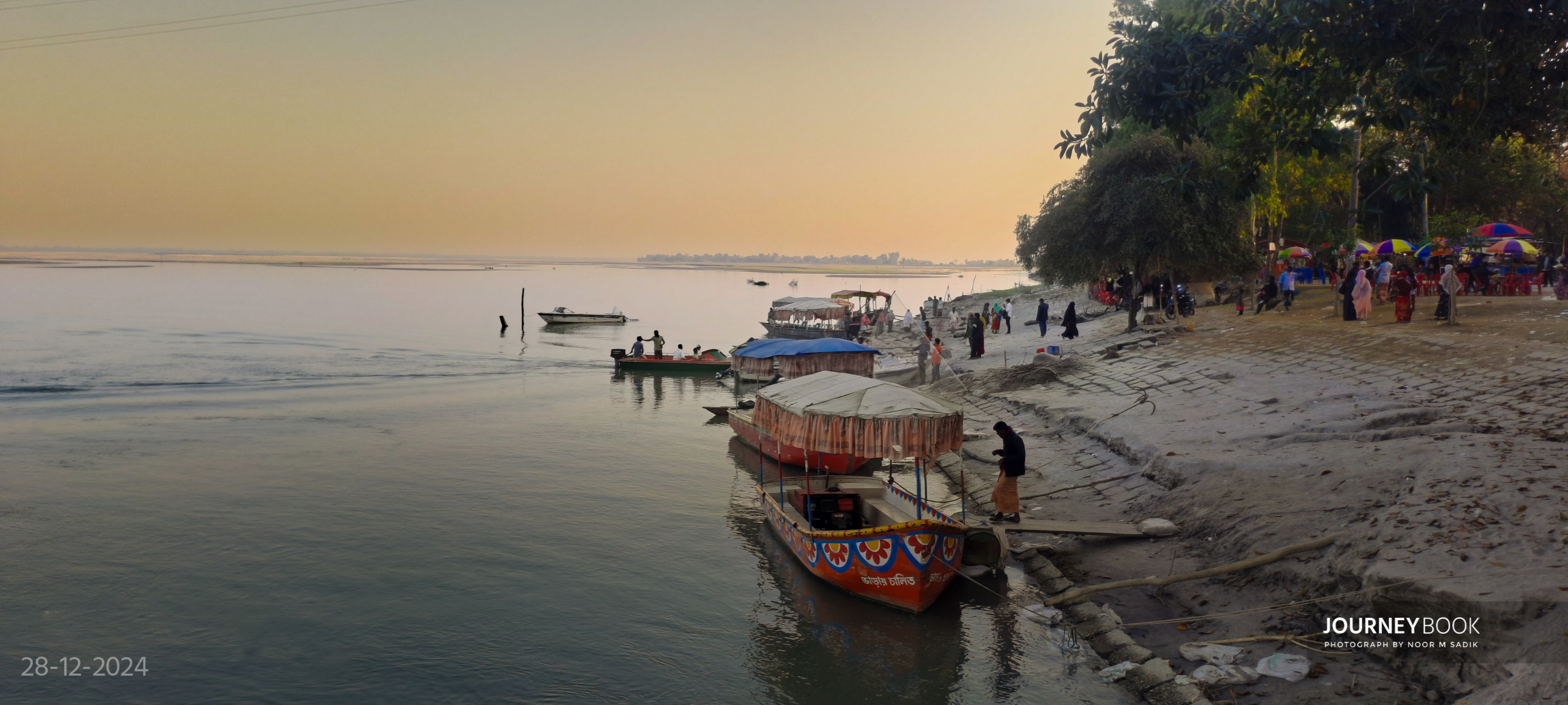
Lalmonirhat is a district of Rangpur division covering 1,247.37 square kilometres. According to Banglapedia, it is bounded by the Indian state of West Bengal to the north, Rangpur district to the south, Kurigram district and West Bengal to the east, and Nilphamari and Rangpur to the west. The district was formed in 1984, and its main rivers are the Dharla and the Teesta. Of its five upazilas, Hatibandha is the largest and Aditmari the smallest. The 2011 census counted 1,256,099 people in the district, and Banglapedia puts the share of income from agriculture at 72.78 per cent.
Aditmari upazila covers 195.03 square kilometres. It borders West Bengal to the north, Gangachara and Lalmonirhat Sadar upazilas to the south, Lalmonirhat Sadar to the east and Kaliganj upazila to the west. Aditmari thana was formed in 1980 from parts of Kaliganj thana and became an upazila on 7 November 1983. The 2011 census counted 224,796 people. The upazila has eight unions, among them Saptibari, where the farm of "Zayed Khan" stands. The Dharla, Teesta and Sharnamati rivers and Namurir Beel are its notable water bodies.
Banglapedia records that 77.32 per cent of income in Aditmari comes from agriculture. The main crops are paddy, tobacco, potato, maize, mustard and vegetables, and the main fruits jackfruit, betel nut, mango, litchi, pomelo and coconut. The upazila has a number of fish farms, dairies and poultry farms, and 12 hats and bazars, the best known being Namurir Hat, Durgapur, Bhelabari and Kumrir Hat.
Sacrificial animals in Rangpur division and Lalmonirhat
On 17 May, bdnews24.com reported figures from the divisional livestock office: about 2,023,000 sacrificial animals had been prepared in the eight districts of Rangpur division that year, leaving a surplus of more than 556,000 after local demand was met. The division had about 21,000 farmers, large and small. Cattle made up the largest share of the animals prepared, alongside buffalo, goats and sheep.
By that count, Lalmonirhat district had 206,462 animals ready, including bulls, bullocks, cows, buffalo, goats and sheep, against a sacrifice demand of 152,884. The report gave the other districts as well:
- Rangpur: 366,591 animals, demand 226,999.
- Kurigram: 336,919 animals, demand 261,246.
- Dinajpur: 426,523 animals, demand 273,262.
- Nilphamari: 282,850 animals, demand 232,676.
- Gaibandha: 177,983 animals, demand 137,500.
- Panchagarh: 130,303 animals, demand 103,650.
- Thakurgaon: 95,436 animals, demand 78,843.
Farmers in the division told bdnews24.com they were worried because buyers were few, and hoped more would come in the final days before Eid. They also asked for strict watch by the Border Guard Bangladesh and the police to stop Indian cattle entering illegally through Lalmonirhat and the other border districts. Dr Md Abdul Hai Sarkar, divisional director of the Department of Livestock Services in Rangpur, said enough domestic animals were ready for the sacrifice and that, with measures taken against smuggling, farmers were expected to get fair prices.
Supply and demand across Bangladesh
At a press conference at the Secretariat on 3 May, Agriculture, Fisheries and Livestock and Food Minister Amin Ur Rashid Yasin presented the Department of Livestock Services' figures: 12,333,840 sacrificial animals were ready in the country against an estimated demand of 10,106,334, leaving a likely surplus of about 2,227,506. Of the animals ready, about 5,695,878 were cattle and buffalo, 6,632,307 goats and sheep, and 5,655 camels, dumbas and other animals. The minister said no animals would need to be imported for the sacrifice that year.
A Bangla Tribune report on 22 May, citing the department, said supply was unevenly spread. Dhaka division had an estimated demand of 2,158,869 against 1,443,942 animals available, and Chattogram a shortfall of about 50,000, while Rajshahi, Rangpur, Khulna and Mymensingh divisions had large surpluses, so much of the capital's supply was expected to come from the north. According to the Ministry of Fisheries and Livestock, more than 3,600 cattle markets were to be held across the country.
The previous year had followed the same pattern. According to a release from the Ministry of Fisheries and Livestock on 10 June 2025, 9,136,734 animals were sacrificed at Eid ul-Adha in 2025, including 4,705,106 cattle and buffalo, and 3,310,603 animals went unsold. In the department's nine years of figures, the most animals were sacrificed in 2019, more than 10.6 million.
The department's "Livestock Economy at a Glance 2023-2024" puts the country's cattle population in 2023-24 at 250.13 lakh, with 15.24 lakh buffalo, 271.17 lakh goats and 39.03 lakh sheep. Meat production that year was 92.25 lakh tonnes. At constant prices, livestock contributed 1.80 per cent of GDP and 16.33 per cent of agricultural GDP, and the same table gives the sector's share of employment as 20 per cent direct and 50 per cent partial.
Fewer buyers for big cattle, more sales from farms
Several reports before Eid in 2026 noted weaker demand for big cattle. Bangla Tribune's 22 May report said Niloy Hossain, senior vice-president of the Bangladesh Dairy Farmers Association, had told journalists a few days earlier that demand for large cattle had fallen this year and that big farmers faced greater risk as feed and transport costs rose. A farmer in Uttarkhan, Dhaka, told the same report that small cattle were in greater demand and therefore relatively dearer, while large cattle were relatively cheaper.
The previous year had shown the same picture. On 28 May 2025, Prothom Alo reported from Bera and Santhia in Pabna that big or specially shaped cattle cost several times more to raise than ordinary ones, yet there was hardly any demand for them at the markets that year; buyers wanted medium-sized animals. The owner of "Mohon Raj" in Shamukjani village, Santhia, had hoped for 10 lakh taka but in the end sold the bull for six lakh taka, the paper said.
Reports at the time also described a shift towards selling from homes and farms rather than markets. On 22 May, Prothom Alo reported from villages in Jashore Sadar upazila where farmers had not taken cattle to market for at least five years. Farmers there said animals taken to a market risk catching disease from other animals, and that it takes at least three people to take a young bull to market. Another Prothom Alo report on 27 May said many buyers now look at photos and videos on Facebook, agree a price and then go to the farm to buy; the online cattle market that began during the Covid period had turned into a "digital promotion, direct sale" model. Citing the Department of Livestock Services, the paper said 505,494 animals were sold through online platforms across the country in 2024.
The owners of "Zayed Khan" had likewise chosen to sell from the farm to avoid the risks of the market, and pictures and videos of the bull had spread on social media. Even so, as the local trader told Prothom Alo, buyers for such a big animal were few in the area, and in the end no offer met the family's price.
Islamic rules on sacrificial animals
Under Islamic rules, the sacrifice at Eid ul-Adha is made with domesticated four-legged animals: camels, cattle, buffalo, goats, sheep and dumbas. A religious feature in The Daily Ittefaq on 11 May said no other animal is valid for the sacrifice. The time for the sacrifice begins after the Eid prayer and lasts until sunset on the 12th of Dhul Hijjah; an animal slaughtered before or after that does not count as the sacrifice. It must be slaughtered according to Islamic law in the name of Allah, with a sharp knife so the animal suffers less.
A Prothom Alo religious feature on 25 May, citing a hadith in Sahih Muslim, said a sacrificial cow or buffalo must be at least two years old and a goat at least one, and the animal must have no major defect of the eyes, ears, legs or other parts. A Bangla Tribune report on 15 May, quoting a hadith in Jami at-Tirmidhi, said the companions of the Prophet (peace be upon him) shared one cow among seven people for the sacrifice, which is why in Bangladesh one cow or buffalo can be sacrificed in seven shares. By custom, the meat is usually divided into three parts: one for the family, one for relatives and one for the poor.
Sacrificing an animal from one's own farm falls within these rules. Ittefaq's feature said it is better to slaughter the sacrificial animal oneself, though someone else may do it. With "Zayed Khan" unsold, the family announced that they would sacrifice it themselves on Eid day.
Photo: Wasiul Bahar / Wikimedia Commons (CC BY-SA 4.0)
Sources: Jagonews24, Prothom Alo, bdnews24.com, Bangla Tribune, The Daily Ittefaq, Department of Livestock Services (Livestock Economy at a Glance 2023-2024), Banglapedia, Livestock Research for Rural Development (2006), Veterinary Sciences: Research and Reviews (2024), Wikipedia
Comments
(0)