
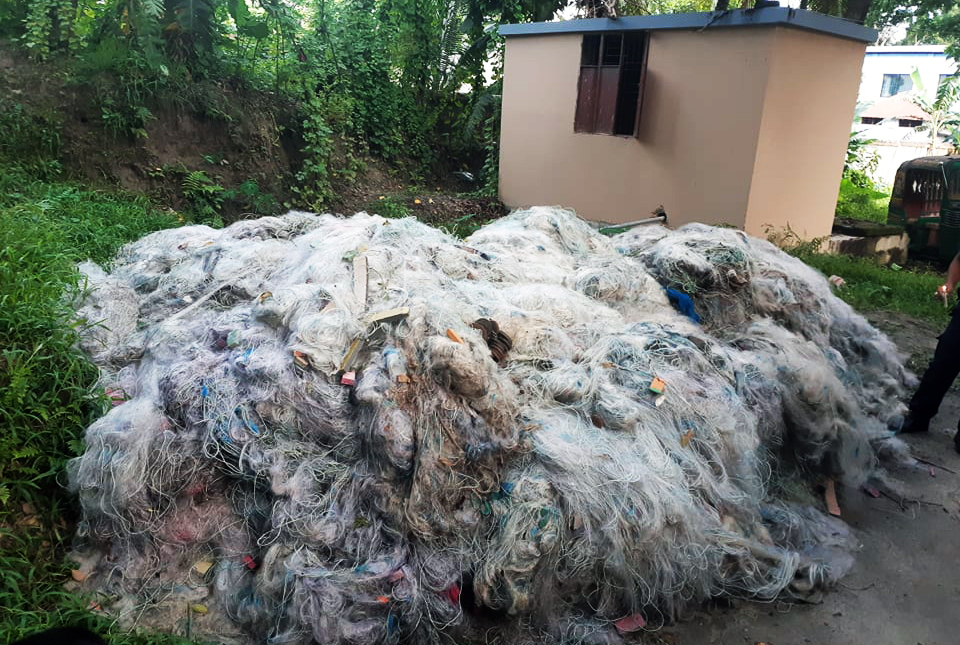
Fisheries officials in Kumarkhali upazila of Kushtia seized about 5,000 metres of banned current net from the Padma on Saturday, 11 October 2025, in a drive to protect brood hilsa during the nationwide 22-day ban on hilsa fishing. The drive was led by the senior upazila fisheries officer, Mahmudul Hasan. It set out at 12:30pm from the Shilaidah ferry ghat in Shilaidah union, and the seized net was burnt the same day, Jagonews24 reported that evening.
How the drive on the Padma went
From the Shilaidah ghat the team moved along the river through areas of Koya, Jagannathpur and Charsadipur unions of the upazila, then came back to the Shilaidah ferry ghat and ended the drive at 4pm. Two police officers from the local police station and staff of the upazila fisheries office assisted the fisheries officer throughout.
Confirming the seizure, the senior upazila fisheries officer told the paper that drives were being run regularly to protect mother hilsa. He said the day's drive had seized about 5,000 metres of illegal current net, which was set on fire and destroyed, and he put the market value of the net at about Tk 50,000.
The report said that although catching hilsa was banned and punishable during the breeding season, some fishermen were still fishing in the river, and that the upazila administration and the upazila fisheries office were running drives on the river to stop them. It did not report anyone being detained, fined or jailed during the Kumarkhali drive, and it named no fisherman.
The 2025 brood hilsa conservation drive
The Kushtia drive was part of the government's Brood Hilsa Conservation Drive 2025. At a press conference at the Ministry of Fisheries and Livestock on Monday, 29 September 2025, the ministry announced that the special drive would run from 4 to 25 October. For those 22 days, which take in the four days before the Ashwin full moon and the three days after the new moon, catching, transporting, storing and selling hilsa would be banned across the country. The original report gave the end of the breeding season as 26 October; the period the ministry announced ended on 25 October.
The ministry said the period had been set on the basis of advice from the Bangladesh Fisheries Research Institute (BFRI) and the views of fishermen, and that it covered both the full moon and the new moon to give the fish the best chance to breed. Fisheries officials would be joined during the drive by the river police, the Coast Guard, the Navy and the Air Force. Fishing trawlers would be kept from entering the country's waters from outside, dredging in the rivers would be suspended completely, and the same 22-day ban on catching hilsa would apply in the sea, along the coast and in the estuaries.
To make up for lost income, the government said it would give VGF (Vulnerable Group Feeding) support to more than 620,000 fishing families in 165 upazilas of 37 districts, at 25 kilograms of rice per family, a total of 15,503 tonnes.
The ministry also gave the results of the previous year's drive at the same press conference: 54.86 tonnes of hilsa seized, 612 lakh metres of net destroyed and Tk 75 lakh collected in fines. According to research cited by the ministry, 52.5 percent of brood hilsa spawned safely during that ban, producing about 44 thousand crore jatka, the young of the hilsa. The fisheries and livestock adviser said the ministry hoped the 2025 drive would be better organised and more effective than the one before.
Prothom Alo reported on 4 October 2025 that, according to the Department of Fisheries, catching, transporting, storing, marketing and selling hilsa during the ban were legally punishable. The 2024 ban had begun on 12 October; the 2025 ban was brought forward on the basis of scientific evidence about the breeding cycle, while fishermen asked for the timeframe to be reviewed. Officials told the paper that the ban is imposed every year between the new moon and the full moon of the month of Ashwin, when brood hilsa move from the sea into the rivers to spawn, and that catching them then would cause a collapse in future production.
The ban has grown over two decades. According to the same report, Bangladesh began a jatka conservation programme in 2003-04, which gradually raised production. From 2008 an 11-day ban on catching brood hilsa was imposed around the Ashwin full moon, and later research showing that hilsa spawn at both the full moon and the new moon led to the 22-day prohibition.
Kumarkhali, Shilaidah and the Padma
Kumarkhali is one of the six upazilas of Kushtia district. Banglapedia, the national encyclopedia of Bangladesh, records its area as 258.18 square kilometres, lying between 23°44' and 23°58' north latitude and 89°09' and 89°22' east longitude. Pabna Sadar upazila and the Padma lie to its north, Shailkupa upazila to the south, Khoksa upazila to the east and Kushtia Sadar upazila to the west. Its main rivers are the Padma, the Gorai and the Kaliganga, and the Dakua canal is also notable. The 2011 census counted 328,457 people in the upazila.
Kumarkhali has a long administrative history. Its thana was formed in 1855 from 13 parganas and was raised to a sub-division of Pabna district in 1857; the sub-division was abolished in 1871 and the area joined Kushtia sub-division under Nadia district. The thana became an upazila in 1983, and Kumarkhali municipality, formed in 1869, is one of the earliest municipalities of undivided Bengal. The 2011 census table in the Bengali Banglapedia lists 11 unions, among them Shilaidah (4,966 acres), Koya (4,842 acres) and Jagannathpur (3,639 acres), the unions the drive passed through.
Agriculture is the main source of income for 42.26 percent of households in the upazila. Its main crops are paddy, wheat, jute, sugarcane and maize, and Banglapedia notes that it has a number of fisheries, dairies, poultry farms, hatcheries and nurseries. About 15 kilometres of waterway run through the upazila, and the Shilaidaha Mela is one of its six fairs.
Shilaidah, where the drive began and ended, stands on the south bank of the Padma. Banglapedia places it five miles north of the district headquarters across the Gorai, opposite Pabna town on the far side of the Padma. Its old name was Khorshedpur. An indigo kuthi stood there, reportedly built by a planter named Shelly, and a deep daha, or whirlpool, formed at the confluence of the Gorai and the Padma; the village came to be called Shelly-daha, which in time became Shilaidaha.
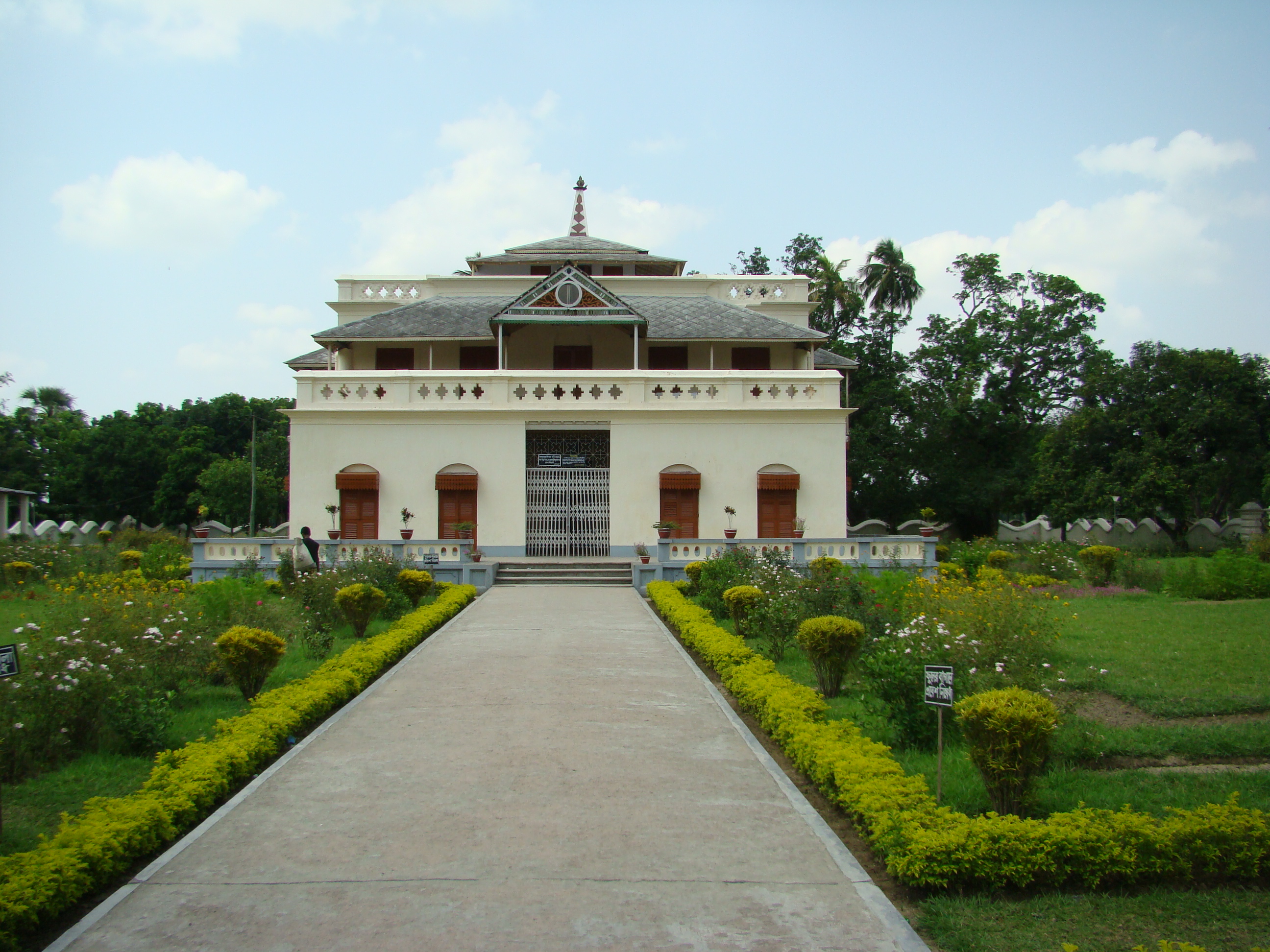
The place is best known for Rabindranath Tagore. His grandfather Dwarkanath Tagore became owner of the zamindari in 1807, and Rabindranath first came to Shilaidah in November 1889 to look after the estate. When the Padma began eating away the bank near the old kuthibadi, the building was dismantled and its materials used for a new one, where the poet lived at intervals between 1891 and 1901. There, at his desk or on a boat on the Padma, he wrote works including Sonar Tari, Chitra and Chaitali, and in 1912 he began translating Gitanjali into English. The kuthibadi is now a protected national monument with a Tagore memorial museum.
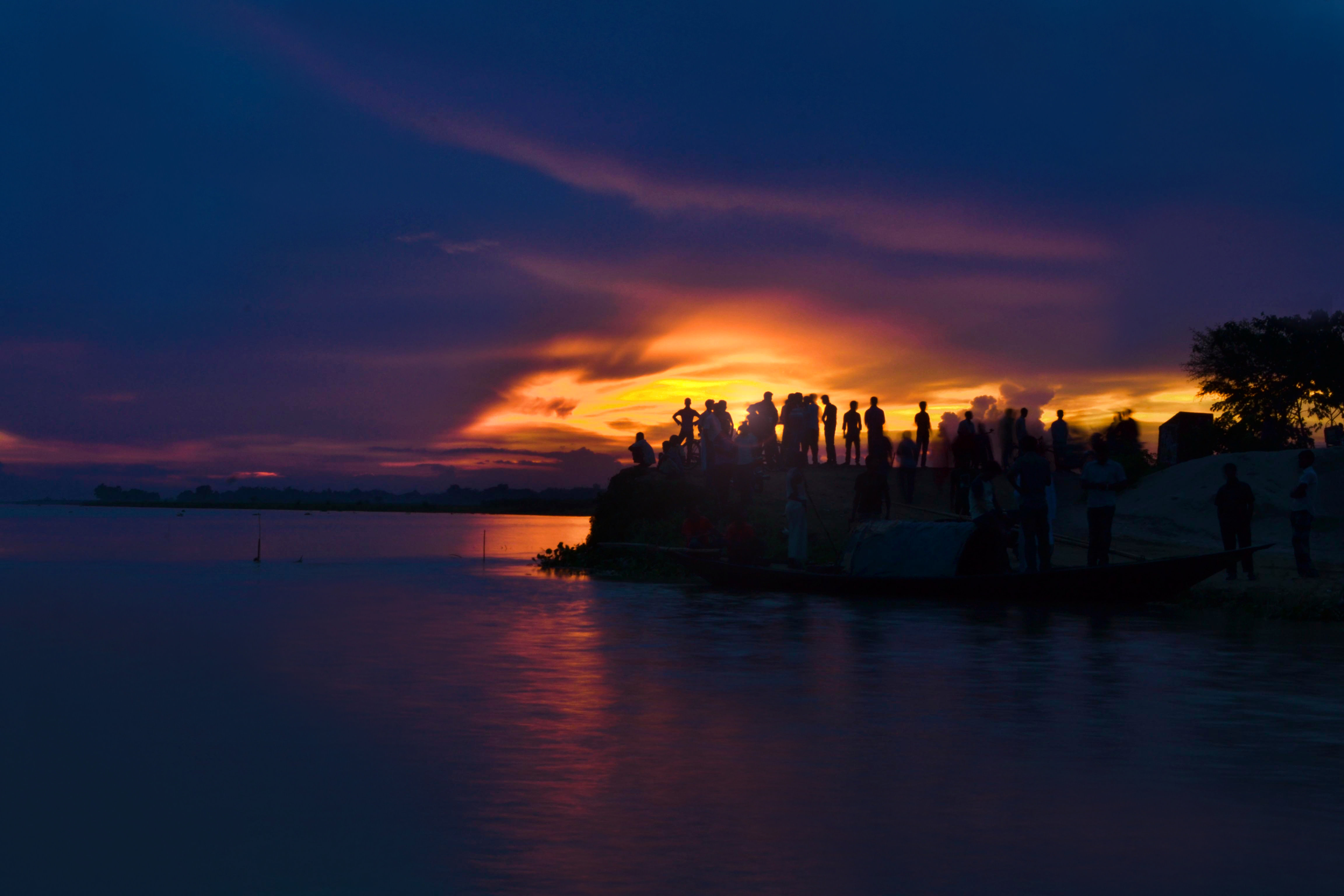
The river along Kumarkhali is the main channel of the Ganges after it enters Bangladesh. Banglapedia explains that in Bangladesh the Ganges is popularly known as the Padma from the point where it enters the country at Manakosa and Durlabhpur unions of Shibganj upazila in Nawabganj, although in strict hydrographic terms the name Padma belongs to the combined flow below the river's meeting with the Jamuna at Goalandaghat. The Gorai, at whose confluence with the Padma the Shilaidah whirlpool once formed, is one of the three second-order rivers of the Ganges-Padma system, alongside the Arial Khan and the Bhagirathi-Hugli.
Kushtia district itself covers 1,608.80 square kilometres in Khulna division. Rajshahi, Natore and Pabna districts lie to its north, Chuadanga and Jhenaidah to the south, Rajbari to the east, and West Bengal in India and Meherpur district to the west. Its main rivers are the Padma, the Gorai, the Mathabhanga and the Kumar. The 2011 census counted 1,946,838 people in the district, and agriculture is the main source of income for 51.71 percent of its households.
What the fish protection law said on the day
The ban and the seizure rest on the Protection and Conservation of Fish Act, 1950 (East Bengal Act XVIII of 1950, dated 18 May 1950) and the rules made under it. Section 3 of the Act lets the government make rules that prescribe the seasons during which catching fish of a prescribed species is prohibited, prohibit all fishing in specified waters for a specified period, and prohibit or regulate the use of any kind of fishing net and the size of its mesh. Under section 3(4), such rules may provide for the seizure, removal and forfeiture of current net and of any fish taken with it.
The hilsa ban itself sits in rule 13 of the Protection and Conservation of Fish Rules, 1985. In the Department of Fisheries' compilation of the rules up to 2 October 2011, rule 13(1)(b) bans catching hilsa, and carrying, transporting, offering, selling, exposing or possessing it, throughout the country, along with the listed hilsa spawning grounds, during the peak spawning period; in that 2011 text the period was 11 days around the first full moon of Ashwin. Rule 12 allows the government to prohibit the use of any kind of fishing net and to regulate its mesh, and any net used in breach of such a notification, and any fish caught with it, may be seized and forfeited.
Current net has had a ban of its own since 2002. Section 2 of the Act, as substituted by the Protection and Conservation of Fish (Amendment) Ordinance, 2002, defines current jal as fishing net made of monofilament synthetic nylon fibre of different mesh sizes. Section 4A, inserted by the same ordinance, says that no person shall manufacture, fabricate, import, market, store, carry, transport, own, possess or use current net, and it gave anyone holding such net 45 days to surrender it to the nearest police station, fishery officer's office or upazila nirbahi officer's office.
The penalties in force on 11 October 2025 were those of section 5 as substituted in 2002. Read from the official text of the Act on the Bangladesh Code website, with its amendment notes, they were:
- Breaking any rule made under section 3, such as the hilsa ban, or any prohibition notified under section 4: rigorous imprisonment of not less than one year and up to two years, or a fine of up to Tk 5,000, or both (section 5(1)).
- Manufacturing, fabricating, importing, marketing or storing current net: rigorous imprisonment of not less than three years and up to five years, and a fine of up to Tk 10,000 (section 5(2)(a)).
- Carrying, transporting, owning, possessing or using current net: rigorous imprisonment of not less than one year and up to three years, or a fine of up to Tk 5,000, or both (section 5(2)(b)).
Section 5A requires a court that convicts a person under the Act or its rules to order the confiscation of anything used or intended to be used in the offence. Under section 7, offences under the Act are cognisable; a court takes cognisance only on the complaint or report of a fishery officer or of a police officer not below the rank of sub-inspector; only a metropolitan magistrate or a first-class magistrate may try them; and all of them except the manufacturing and import offences of section 5(2)(a) may be tried summarily.
Why current net is banned and burnt
The law draws a clear line between current net and ordinary fishing net. Section 2 defines a fishing net as one made of other types of yarn, including synthetic yarn, of different mesh sizes but not current jal, and names the traditional tanning materials for nets: the fruit of the gab tree (Diospyros embryopteris), the bark of goran (Ceriops roxburghiana) and coal tar.
Fine-mesh nets take young fish along with adults. Banglapedia cites a survey by the Bangladesh Fisheries Research Institute in 1992-94 that estimated 3,500 to 4,000 tonnes of jatka were caught each year in the January to April fishing season with gears such as the jagat berjal, current jal and behundi jal, more than half of them in the Meghna. Before the 2025 ban, the project director of the government's Hilsa Resource Development and Management Project told Prothom Alo that overfishing had depleted stocks: the rule was to harvest only 30 percent of the stock and leave 70 percent, but indiscriminate fishing with illegal fine-mesh nets and local trawlers was killing fish of all sizes.
Burning seized net has been the standard response for years. In a column on The Daily Star's Law and Our Rights page on 30 January 2018, the writer argued that government agencies had been continuously confiscating current net since the 2002 amendment and burning large amounts of it in the presence of magistrates, the Coast Guard and other officials, yet more current net kept being used and the cycle continued. The column said enforcement fell mostly on poor fishermen, many of whom took their nets on loan from lenders against a share of the catch, while the influential owners of net factories were rarely brought to book.
The same column noted a limit on what officials could do at the source. It cited a High Court Division judgment, reported in 7 SCOB (2016) (HCD) 130, which held that an executive magistrate's sealing of a net factory was illegal and without jurisdiction, because neither the 1950 Act, even as amended in 2002, nor the 1985 rules gave executive magistrates that power.
The hilsa and its upstream rivers
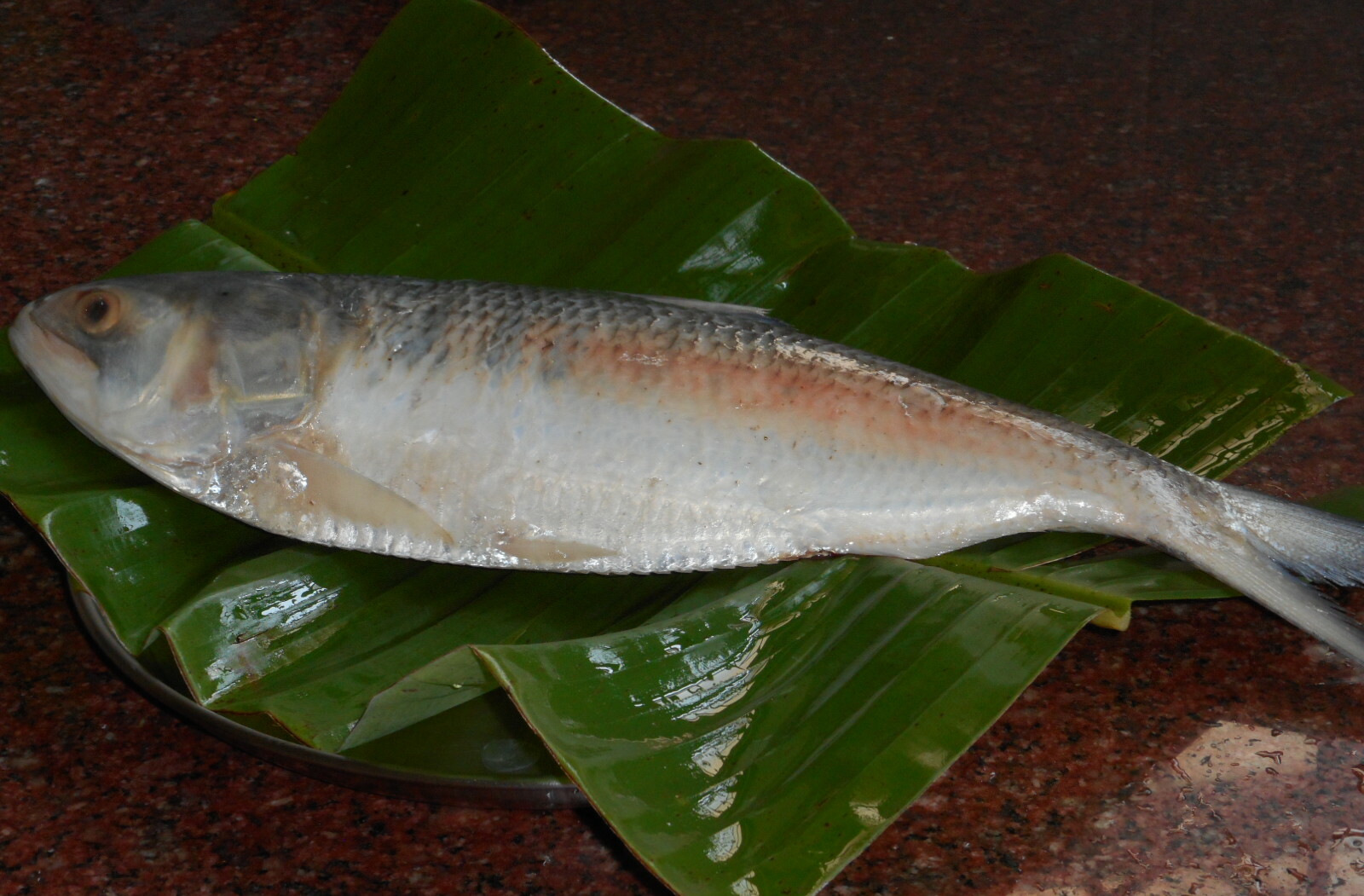
The hilsa, or ilish (Tenualosa ilisha), belongs to the herring family Clupeidae and is the national fish of Bangladesh. Banglapedia describes a strongly compressed body covered in metallic silver scales that may reach 60 centimetres, although most fish caught measure 35 to 40 centimetres; a large hilsa weighs about 2.5 kilograms. Females grow faster and are usually larger than males, and the fish matures in one to two years. It feeds mainly on plankton, including blue-green algae, diatoms, copepods and rotifers.
The hilsa is anadromous: it lives and feeds in the sea and swims up the rivers to breed. Its eggs float freely and hatch upstream in the Padma, the Jamuna and the Meghna; the young grow in the river channels and then descend to the sea before returning as breeding adults. A large female may produce up to two million eggs. Hilsa spawn more or less throughout the year, but Banglapedia records a minor spawning season in February and March and a major one in September and October, which is why the October ban matters most. Within six to ten weeks of hatching the young reach about 12 to 20 centimetres and, as jatka, start their journey to the sea.
Rivers like the Padma at Kushtia were once at the heart of the fishery. According to Banglapedia, until about 1972 the hilsa fishery was concentrated in upstream rivers, mainly the Padma, Meghna, Karatoya, Rupsa, Shibsa and Payra; it has since declined severely upstream and is now concentrated in the downstream rivers, estuaries, coastal waters and the sea. Since the Farakka barrage was built in India to divert water from the Ganges, the fish are being caught in coastal and estuarine waters before they can migrate upstream to spawn.
Banglapedia lists the causes of the decline as low water discharge from the Ganges after Farakka and the heavy siltation that followed, the indiscriminate catching of jatka, disrupted migration routes, the loss of spawning, feeding and nursery grounds, rising river pollution, and the uncontrolled use of mechanised fishing boats in coastal waters. It notes one cause close to Kushtia: the closure of the Kumar cut off hilsa migration from the sea to the Padma by way of the Nabaganga. Adult hilsa are traditionally caught with fixed or drifting gillnets known as chandi jal, with smaller amounts taken by berjal and lift nets called shangla jal.
The fish carries legal recognition as well as cultural weight. The Daily Star reported in August 2017 that the Department of Patents, Designs and Trademarks had completed the procedures to register hilsa as a geographical indication (GI) product of Bangladesh, on the Department of Fisheries' application, making it the country's second GI product after Jamdani sari. Citing WorldFish, the paper said Bangladesh alone produced over 60 percent of the world's hilsa.
Catches and prices before the 2025 ban
The 2025 ban came at the end of a poor season. Prothom Alo reported on 4 October 2025 that national hilsa production fell to 529,000 tonnes in the 2023-24 financial year from 571,000 tonnes in 2022-23, with projections pointing to a further fall in 2024-25. Citing Department of Fisheries data, it said the July to August 2025 catch stood at 29,519 tonnes, against 40,291 tonnes in the same months of 2024.
Researchers, the paper said, point to rainfall, temperature, river current, depth, flooding, food supply and water quality as key factors in hilsa spawning and catches. A fisheries department survey had found hilsa migration blocked at 17 points across the Meghna-Tentulia estuary and adjoining rivers, 14 of them on the Meghna itself, and experts said that while hilsa need about 30 feet of water to move freely, many estuaries fall to just 8 to 9 feet at low tide. Siltation and sandbars had reduced the depth of the southern rivers, industrial waste had polluted the water, and monsoon rainfall had been unusually low in recent years.
Prices reflected the shortage. According to the Trading Corporation of Bangladesh, as cited by Prothom Alo, hilsa prices in 2025 were about 33 percent higher than in 2023, and the Consumers Association of Bangladesh reported a price of Tk 417 a kilogram in 2010, Tk 789 in 2019 and Tk 3,000 to 3,500 in 2025. It was against that background that fisheries offices along the rivers, including Kumarkhali's on the Padma, ran their drives in October 2025 so that the brood fish could spawn.
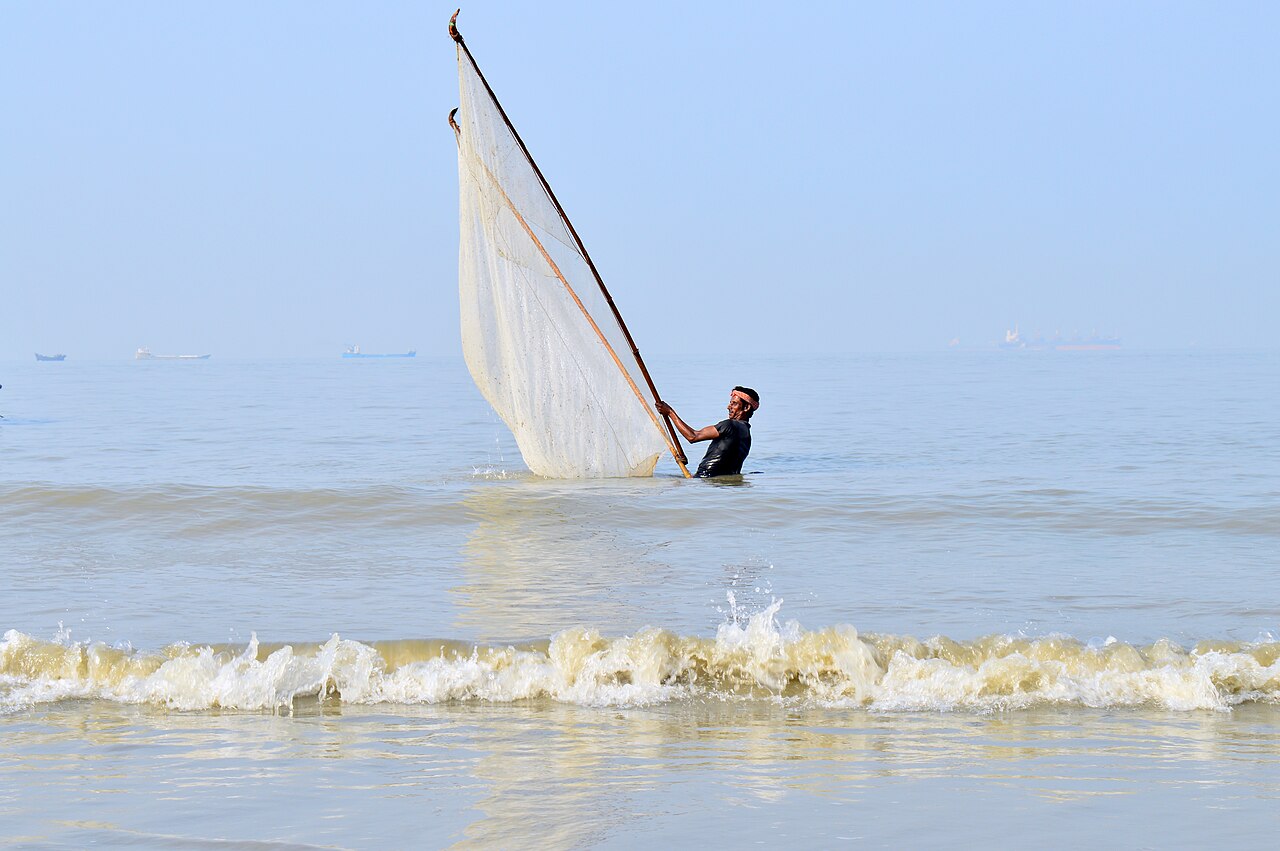
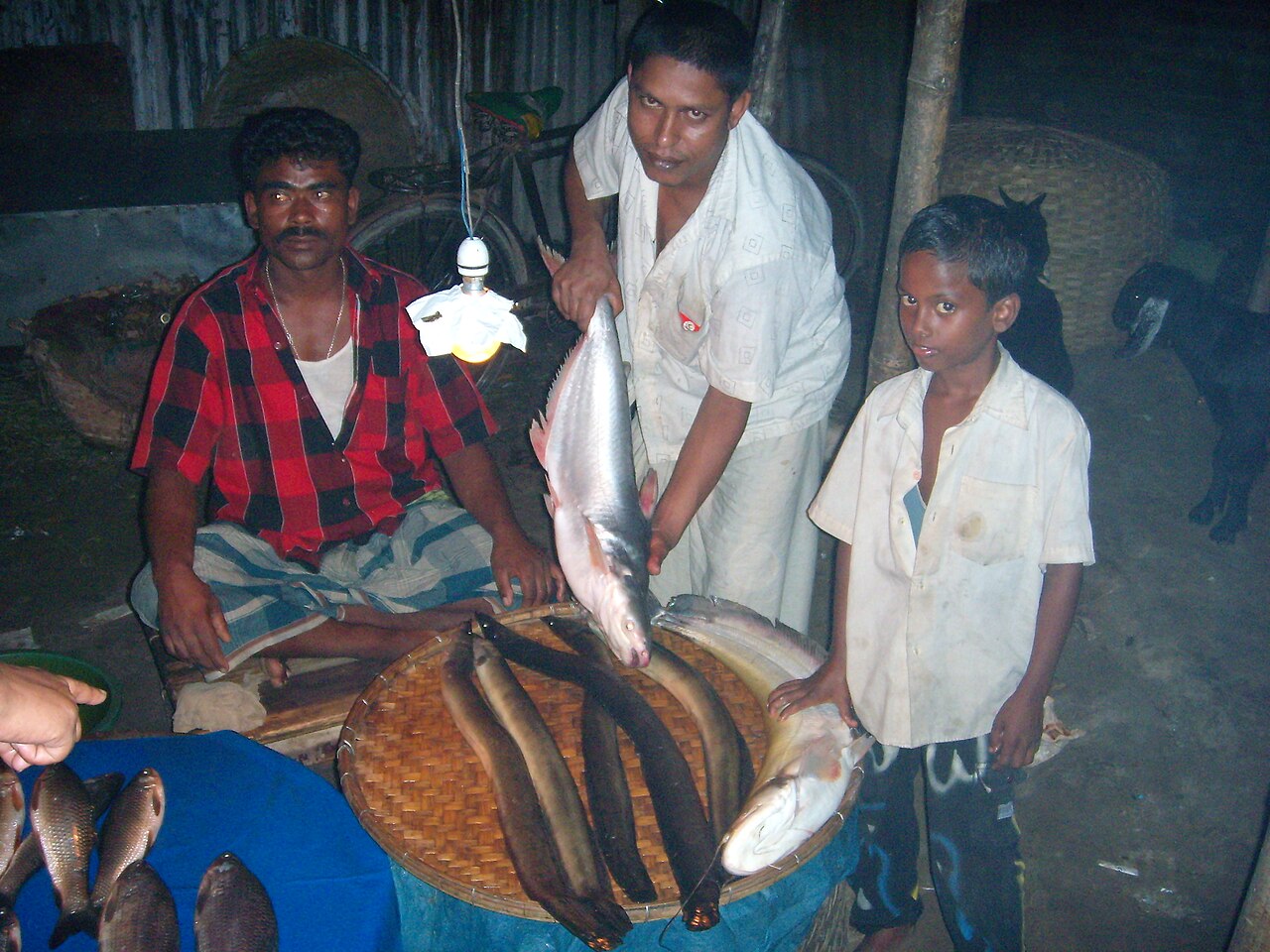
Photo: DelwarHossain / Wikimedia Commons (CC BY-SA 4.0). The top picture shows current net seized in Chandpur, as background; it is not the net seized in Kumarkhali.
Sources: Jagonews24, The Business Standard, Prothom Alo, The Daily Star, Protection and Conservation of Fish Act 1950 (Bangladesh Code, Legislative and Parliamentary Affairs Division), Protection and Conservation of Fish Rules 1985 (Department of Fisheries compilation to 2011), Banglapedia

Comments
(0)