
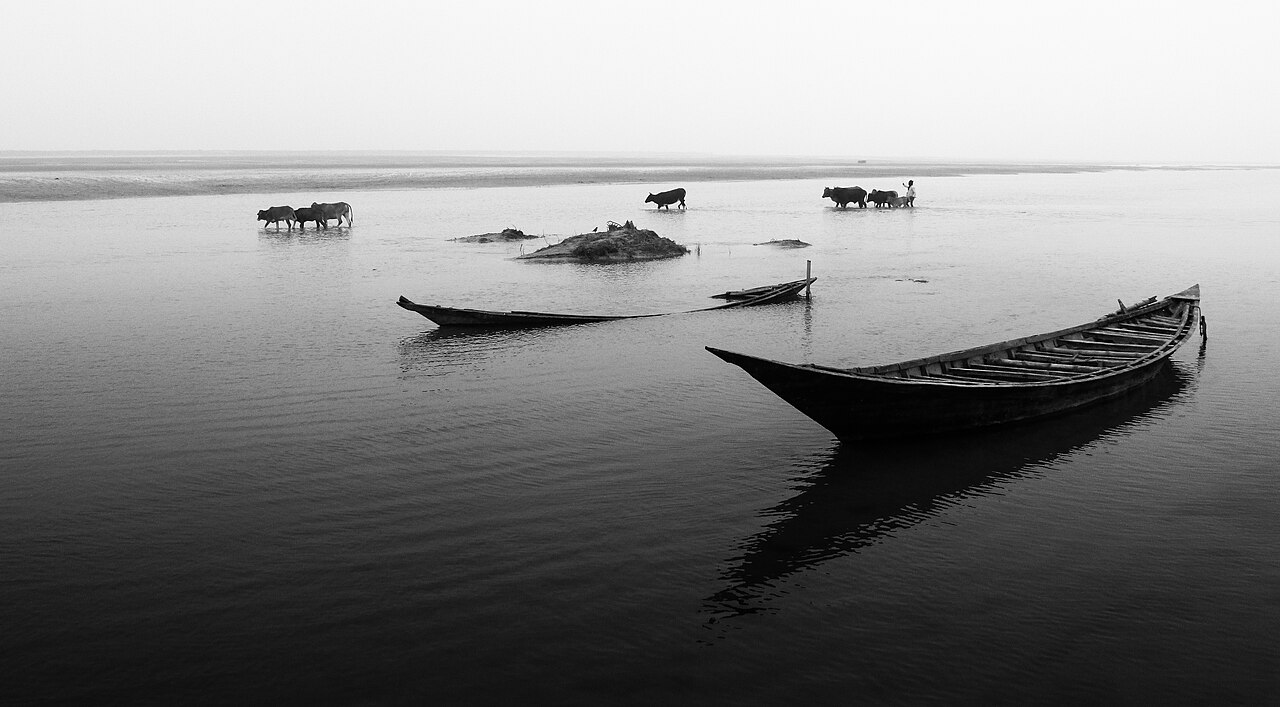
On paper the Kaliganga river in Kushtia is about 110 metres wide. The bridge across it at Shalghar Madhua in Bagulat union of Kumarkhali upazila is 11 metres long and has no approach road. According to a report by Prothom Alo's Kushtia correspondent Touhidi Hasan, it has stood like this for 14 years.
The bridge was built around 2013 under a relief ministry project at a cost of Tk 25 lakh. With no approach road, villagers paid for bamboo walkways at both ends; today the bridge and the walkways are both falling apart. Boats used to cross here before the bridge, and since vehicles cannot use it people take a long detour to Kushtia town.
On 30 October the reporter found that the earth filled in at either end had turned the river into a narrow channel. North of the bridge the river was clogged with water hyacinth; to the south there was water, with ducks swimming. In several places influential people had enclosed parts of the river with earth to make ponds.
Residents say the river's flow has been disrupted: it is full in the monsoon and stagnant in summer. Sheikh Selim, who lives at the west end of the bridge, said the bridge is close to collapse and the walkways are hardly used.
The Kaliganga divides Shalghar Madhua in two, with the union council building and a market on the east bank and the villages of Bharuapara, Nitaipara, Naturia, Charpara and Madhupur behind them. These villages, which depend on the river for irrigation, fish and ducks, have the most to gain if its flow is restored.
Photo: Enamur Reza / Wikimedia Commons (CC BY 2.0)
Source: Prothom Alo


Comments
(0)