
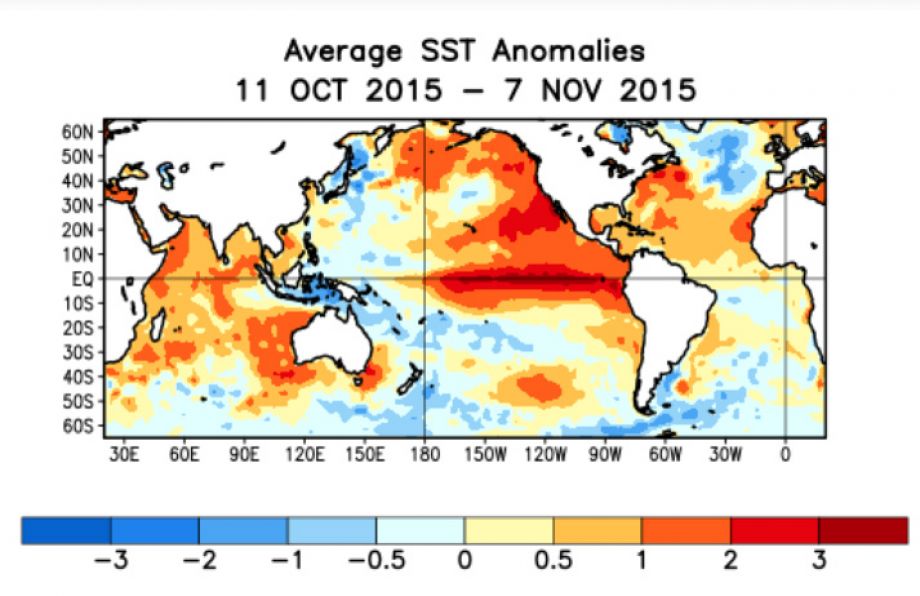
The El Niño now developing in the Pacific could be among the strongest in more than a century and could have far-reaching consequences for global food security, two academics have warned.
Prof Eoin McLaughlin of Heriot-Watt University in Edinburgh and Prof Matthias Beck of University College Cork set out their case in an article titled 'The super El Niño is more than a climate shock - it's a health one, too'. They argue that food shortages and disease outbreaks are linked threats that "must be addressed together rather than treated as separate emergencies".
El Niño is a recurring climate pattern marked by unusually warm ocean temperatures in the tropical Pacific. According to UCC, it can disrupt weather around the world, bringing droughts, floods and extreme temperatures to different regions.
Timing makes this one more dangerous, the authors say. "The latest El Niño is occurring at a time when global food systems are under pressure. Ongoing wars in Ukraine and Iran have disrupted agricultural production and trade, and fertilisers are in short supply." Many countries could withstand a major El Niño on its own, they wrote, "but the combined effect of several shocks could overwhelm that resilience".
The same climatic disturbance, they note, "can have very different outcomes depending on the economic and institutional conditions in which it occurs".
Some of the health risks are less obvious. "Food shortages and changes in relative prices can alter what people eat and where they obtain their food from, potentially increasing contact with animals carrying zoonotic diseases," they wrote. "The consequences are hard to predict, but planning can avert the worst outcomes."
"We need to move beyond responding to individual disasters and recognise how climate shocks can trigger wider humanitarian emergencies," Prof Beck said. "Governments and international organisations must prepare for these interconnected risks before they escalate."
Reporting by the Agriland News Team.
Photo: NOAA / Wikimedia Commons (Public domain)
Source: Agriland


Comments
(0)