
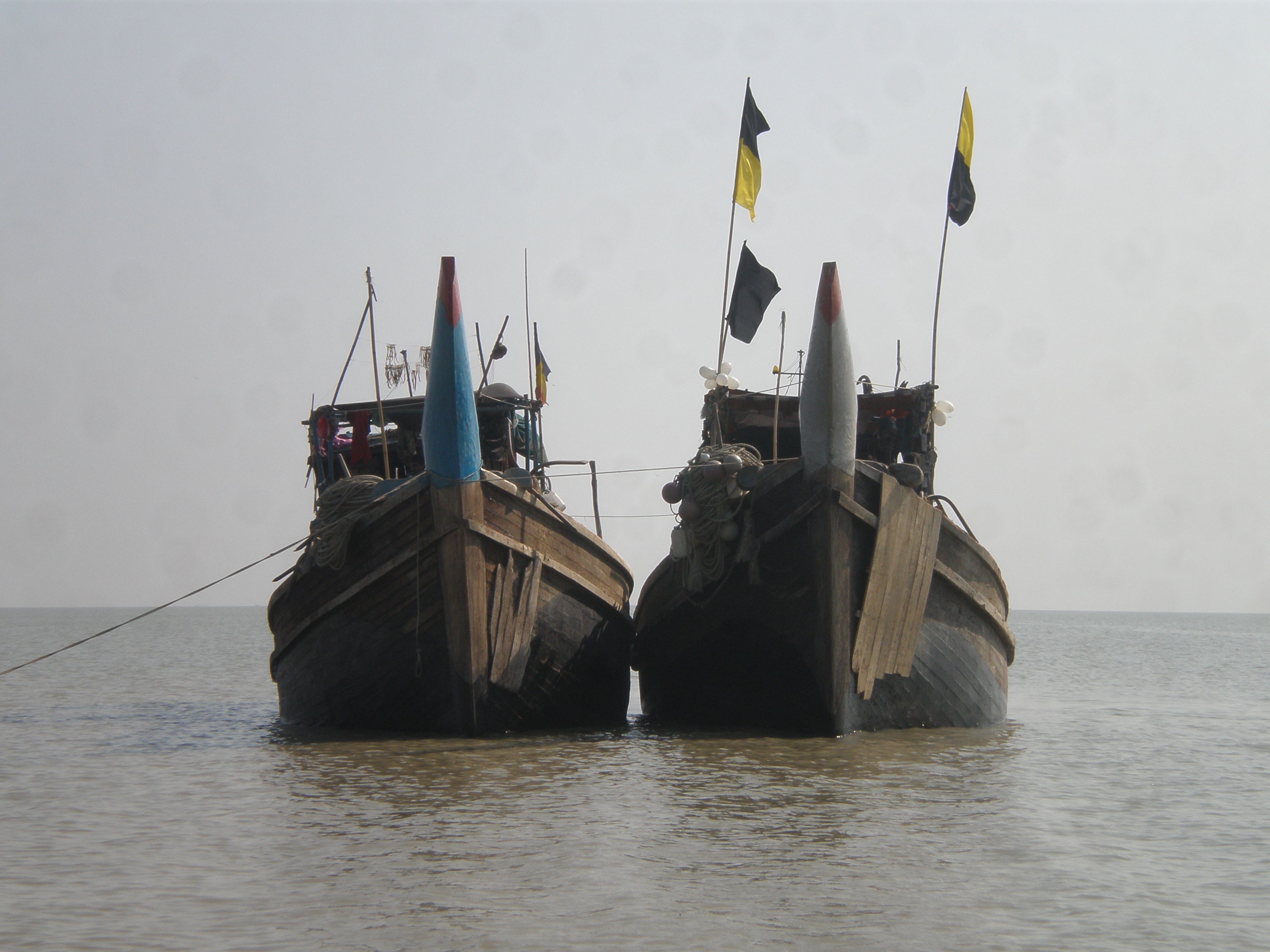
Fishermen held a human chain and protest rally at Kuakata Chourasta in Kalapara upazila, Patuakhali, on the morning of Sunday 27 July 2025, demanding an end to illegal trawling boats and banned nets. About a thousand fishermen from Cox's Bazar, Bhola, Noakhali and elsewhere joined the Kalapara fishermen. Jagonews24 published a special report on the protest on 4 August 2025.
Fishermen around the Alipur-Mohipur port, one of the main fish landing centres in the south, said hilsa and other sea fish had been scarce for several years, and blamed illegal trawling boats.
Wooden boats turned into trawlers with fine-mesh nets
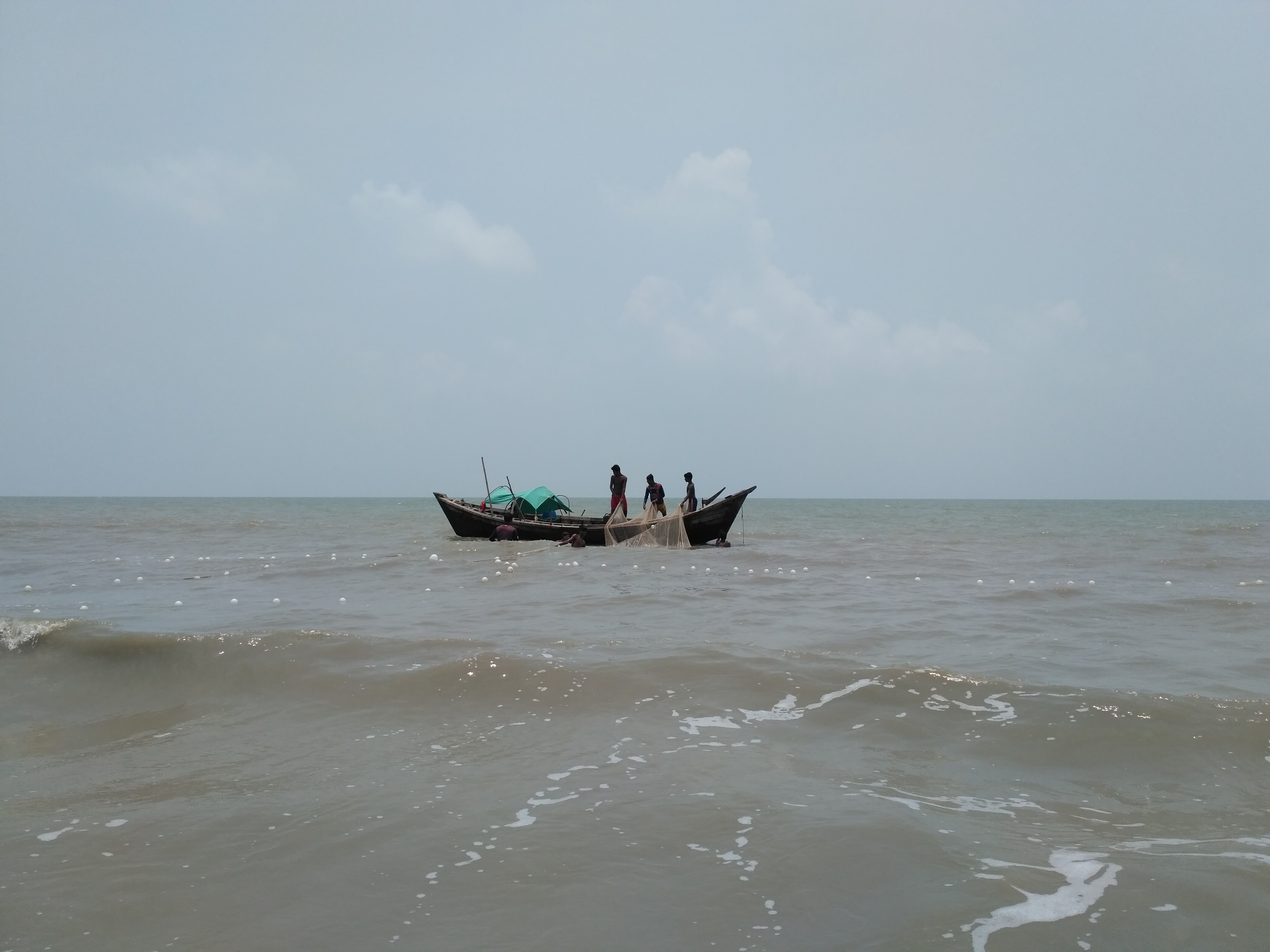
The fishermen said small wooden boats were being illegally fitted with locally made net-hauling gear and small-mesh behundi nets. These half-inch mesh nets take the fry of deep-sea and inshore fish, egg-bearing brood fish and even the fishes' natural food. As a result, they said, fish breeding had fallen alarmingly in four to five years.
Banglapedia's entry on fishing gear describes the behundi as a bag net, held open by a frame and kept stretched by the current when it is set against the flow; the same entry classes trawl nets as a kind of drag net. Towing a net along the seabed is known as bottom trawling; it draws concern worldwide over bycatch and damage to the sea floor.
The fishermen said there were 40 to 50 such boats at Alipur-Mohipur alone, and that at least 20 to 30 illegal trawling boats from Patharghata in neighbouring Barguna district also came to fish from the port. They said the practice had spread through Bhola and as far as Banshkhali in Chattogram. Alam Gazi, a fisherman from Noakhali, put the number of converted illegal trawlers at 50 in Mohipur, 90 in Bhola and about 200 in the Kathkhali area of Chattogram.
Md Nizam Sheikh, president of the Kuakata Ashar Alo Fisheries Cooperative Society, told Jagonews24 that converting an ordinary wooden trawler into a trawling boat cost Tk 30 to 40 lakh. The behundi nets used on these boats, he said, let nothing out but water, so fry, eggs and even the fishes' food were destroyed.
Allegations against officials, and their denials
Md Selim Faraji, a fisherman from Alipur, alleged that the boat owners paid the Kuakata naval police and the district fisheries officer every month, which was why nothing was done to stop the trawling. He said the fishermen would announce a bigger movement if trawling was not stopped.
Bikash Mondal, in charge of the Kuakata naval police outpost, told Jagonews24 that a court case over the trawling was pending and would be settled soon. He called the allegation against them completely false and said a shortage of logistics often made it impossible to run drives in the deep sea.
Patuakhali district fisheries officer Kamrul Islam also denied the allegation. He said the trawler owners had filed a writ petition claiming their boats were legal, and that drives against illegal trawling would begin soon with the Coast Guard. "There is no scope for paying money in the fisheries department," he said. He added that the department had not given any trawler permission to fish in the sea.
A researcher on why hilsa is declining
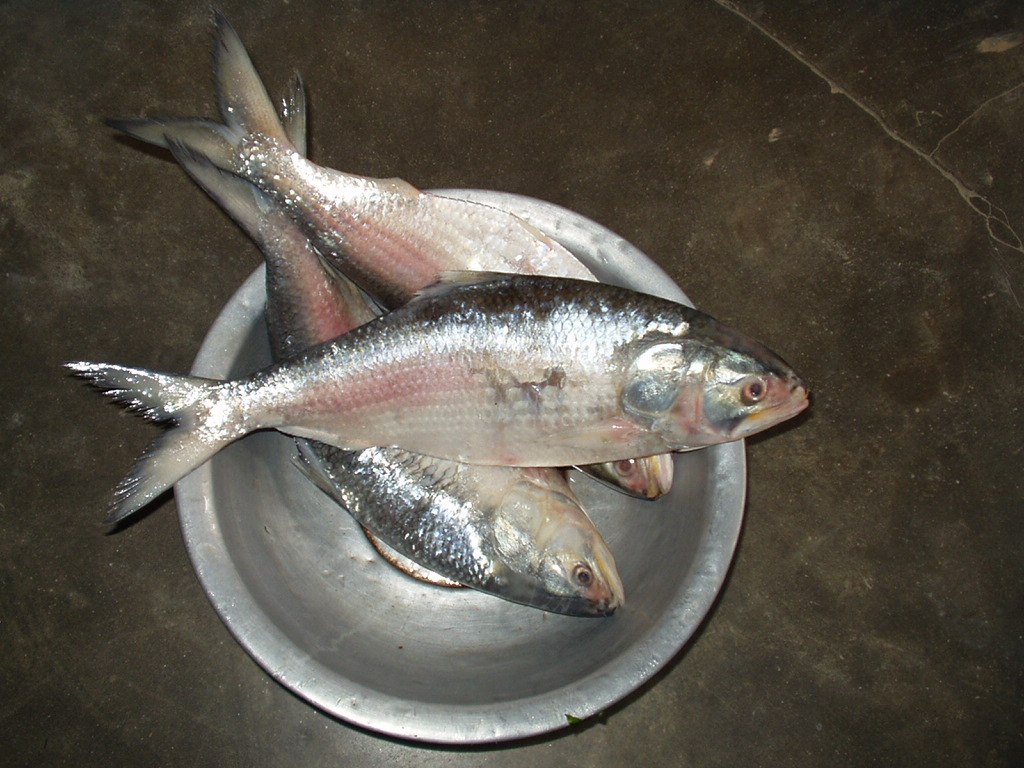
Professor Dr Rajib Sarkar of the Department of Fisheries Biology and Genetics, Faculty of Fisheries, Patuakhali Science and Technology University, told Jagonews24 that climate change, plastic and polythene damaging the sea bed, and illegal nets had all reduced hilsa, hurting poor fishermen. He hoped hilsa would recover if the government acted against illegal nets, careless plastic use and unregistered trawling.
Alipur-Mohipur and the weight of hilsa
The Alipur-Mohipur fishing port lies about four kilometres north of Kuakata and is one of the largest fishing centres in the south. Kuakata, in Kalapara upazila, is known for a sandy beach about 18 kilometres long on the Bay of Bengal. Kalapara had a population of 286,993 at the 2022 census.
Hilsa is the national fish of Bangladesh and was declared a Geographical Indication of the country on 6 August 2017. Bangladesh is the world's top hilsa producer; as of 2023 it supplied 97 per cent of the world's hilsa.
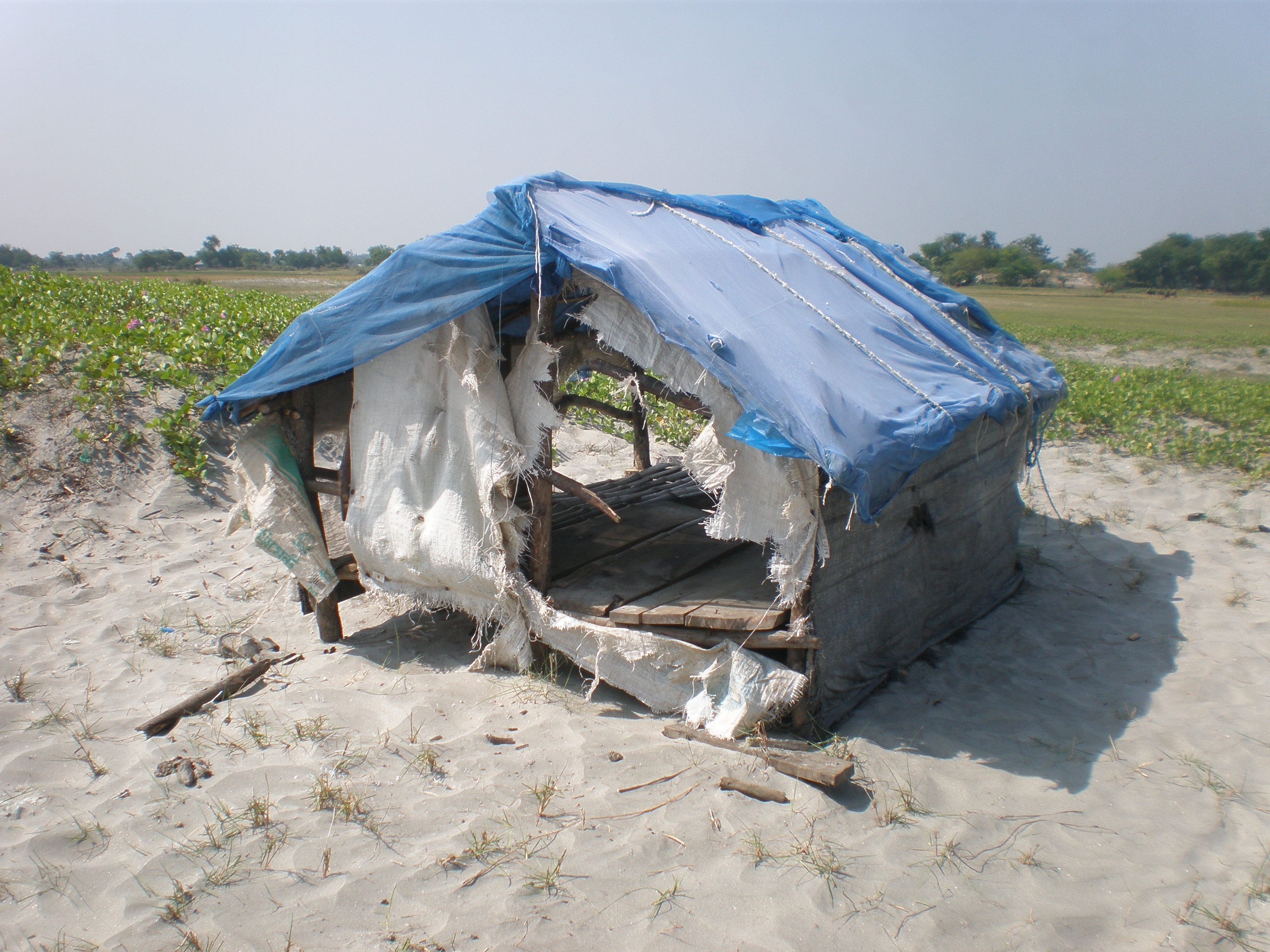
Photo: Shafiul / Wikimedia Commons (CC BY-SA 4.0)
Sources: Jagonews24, Banglapedia, Wikipedia
Comments
(0)