
Two employees of Palli Bidyut, Bangladesh's rural electricity service, were detained with eight kilograms of deer meat in Koyra upazila of Khulna district on Saturday, 7 October 2023, in a joint operation by the Forest Department and the Bangladesh Coast Guard, Jagonews24 reported the same day. According to the report, the two men were held around midday in front of the community clinic at Gharilal Bazar in Dakshin Bedkashi union, a part of Koyra that lies along the edge of the Sundarbans mangrove forest.
Along with the meat, the team seized a motorcycle that, the report said, was used for Palli Bidyut's official work. Mobarak Hossain, station officer of the Kobadak Forest Station, confirmed the matter to the paper and said preparations were under way to file a case over the incident. The two men had only been detained when the report was published; no case had yet been filed, and nothing in the report showed that either of them had been found guilty of any offence.
What the report said about the detention
Jagonews24's report from Koyra was short and kept to a handful of facts. The paper named both men. This report does not, because they had only been detained and no court had examined the allegation.
The report did not say where the meat had come from, which kind of deer it was taken from, whether the two men were carrying it, buying it or selling it, or how the joint team came to stop them. It carried no comment from the two men or from Palli Bidyut, and none from the Coast Guard. The only official quoted was the Kobadak station officer, whose statement was that a case was being prepared. Those gaps are left as the report left them: nothing is added here about the men, their reasons or their links to anyone else.
A market of that name, spelled Ghorilal Hat, appears in Banglapedia's entry on Koyra upazila as one of the upazila's notable hats and bazars, listed with Hugla Hat, Amadi Hat, Sutar Hat, Ghugrakati Hat and Khoralkati Hat. The same entry names the Dakshin Betkashi Banbibir Mela among the notable fairs of the upazila.
Koyra, an upazila on the edge of the Sundarbans
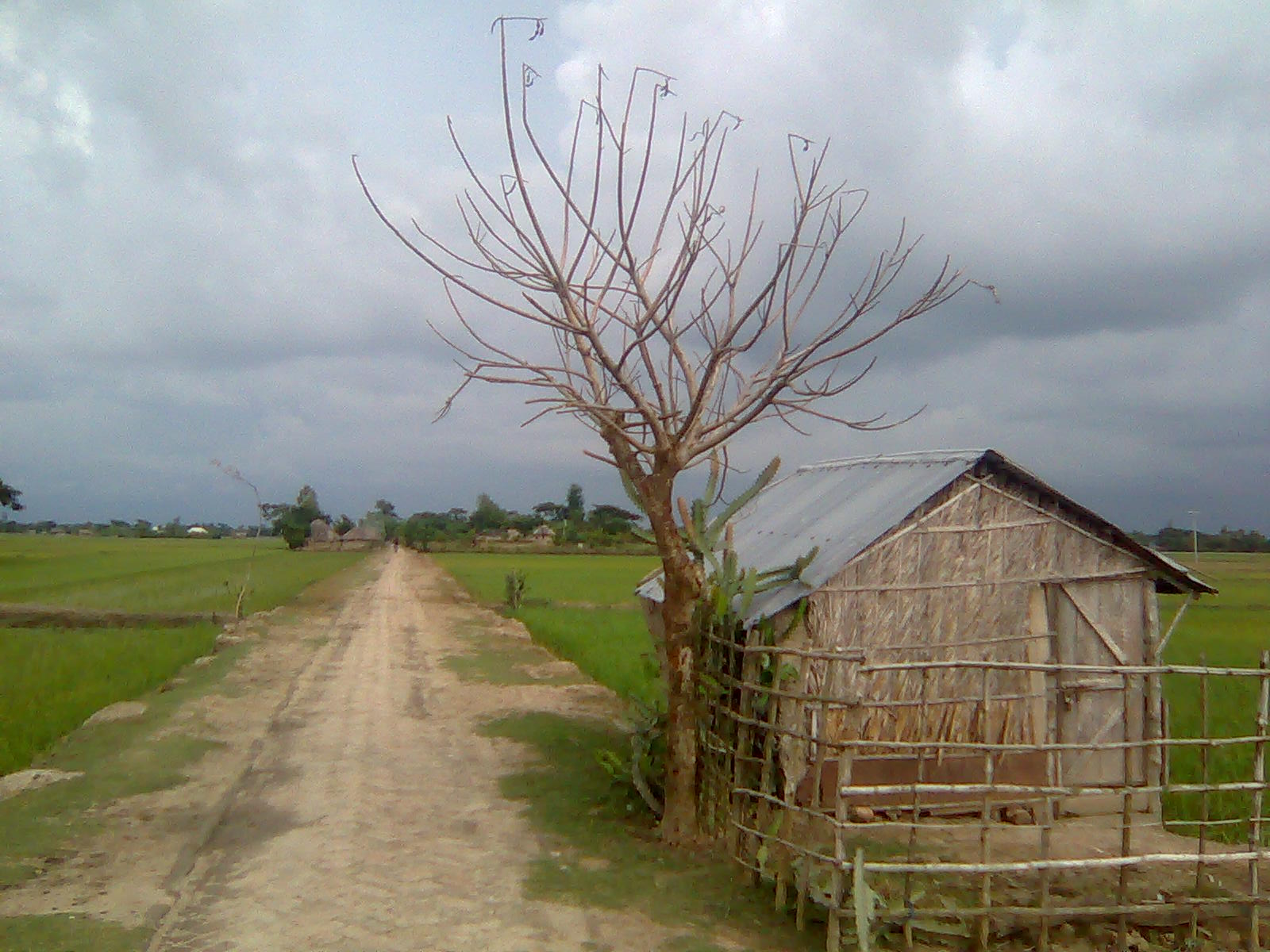
Koyra is an upazila of Khulna district. Banglapedia gives its area as 1,775.40 square kilometres and describes it as bounded by Paikgachha upazila to the north, the Bay of Bengal and the Sundarbans to the south, Dacope upazila to the east and the Assasuni and Shyamnagar upazilas to the west. Its rivers, the encyclopedia says, include the Pasur, Arpangachhia and Taldhup, and the Koyra canal is notable. Koyra thana was formed in 1980 and became an upazila in 1983.
At the 2011 census, as Banglapedia records it from the Bangladesh Bureau of Statistics, Koyra had 193,931 people: 95,393 men and 98,538 women. The same entry gives the main sources of income as agriculture at 66.64 per cent, commerce at 12.66 per cent and non-farm labour at 7.12 per cent. It lists paddy, potato and vegetables as the main crops, counts 3,138 shrimp ghers, five hatcheries and 273 shrimp depots, and names fish fry, timber, golpata (nipa palm leaf), honey and handicrafts as the main exports. Its list of tourist spots begins with the stretch of the Sundarbans along the east and south of the upazila.
Banglapedia, whose Koyra entry draws on the 2001 and 2011 censuses and a 2007 field report, notes that all the unions of the upazila were under the rural electrification network but that only 25.2 per cent of dwelling households had access to electricity; the figure describes those years, not the position in 2023.
Much of Koyra's working life runs through the forest. A Prothom Alo report of 30 May 2023 said that, according to the Forest Department, 2,900 boats in the area, including those using Koyra's Baniakhali, Kashiabad and Kobadak forest stations, held boat licence certificates (BLCs) to enter the Sundarbans. The same report cited the upazila fisheries office as saying that Koyra had 13,526 registered fishers. The report also said that, to protect fish and wildlife, the Forest Department had since 2019 closed the rivers and canals of the Sundarbans to fishing every year from 1 June to 31 August, a 92-day closure during which tourists and boats were also kept out, and that registered fishers received 86 kilograms of rice over those three months under the government's VGF programme.
The Sundarbans and the forest stations that guard it
The Sundarbans, Banglapedia says, is the largest single block of tidal halophytic mangrove forest in the world, lying on the Ganges-Brahmaputra delta where it meets the Bay of Bengal. The forest was originally measured, about 200 years ago, at roughly 16,700 square kilometres and has shrunk to about a third of that. Bangladesh received about two-thirds of it at the partition of India, and the rest lies in India. The forest is made up of about 200 islands separated by about 400 interconnected tidal rivers, creeks and canals. A Prothom Alo report of 7 May 2023, citing the Forest Department, gave the Bangladesh part of the forest as 6,017 square kilometres.
The forest was declared a reserve forest in 1875, according to Banglapedia, and is administered in two forest divisions, Sundarbans East and Sundarbans West. Banglapedia lists four ranges, Chandpai, Sarankhola, Khulna and Burigoalini, and says the forest has 16 forest stations and is divided into 55 compartments and nine blocks. Kobadak Forest Station, whose officer spoke about the October detention, is one of the stations of Sundarbans West and sits on the Koyra side of the forest; a Prothom Alo report of 2 November 2022 describes its station officer leading an anti-poaching raid in Dakshin Bedkashi.
Three wildlife sanctuaries in the forest were established in 1977 under the Bangladesh Wildlife (Preservation) (Amendment) Act, 1974, and they were inscribed as a UNESCO World Heritage Site in 1997. UNESCO describes the property as one of the largest mangrove forests in the world, of about 140,000 hectares, lying next to India's own Sundarbans World Heritage site, which was inscribed in 1987. UNESCO's statement on the site gives the three sanctuaries an area of 139,700 hectares and calls them core breeding areas for a number of endangered species.
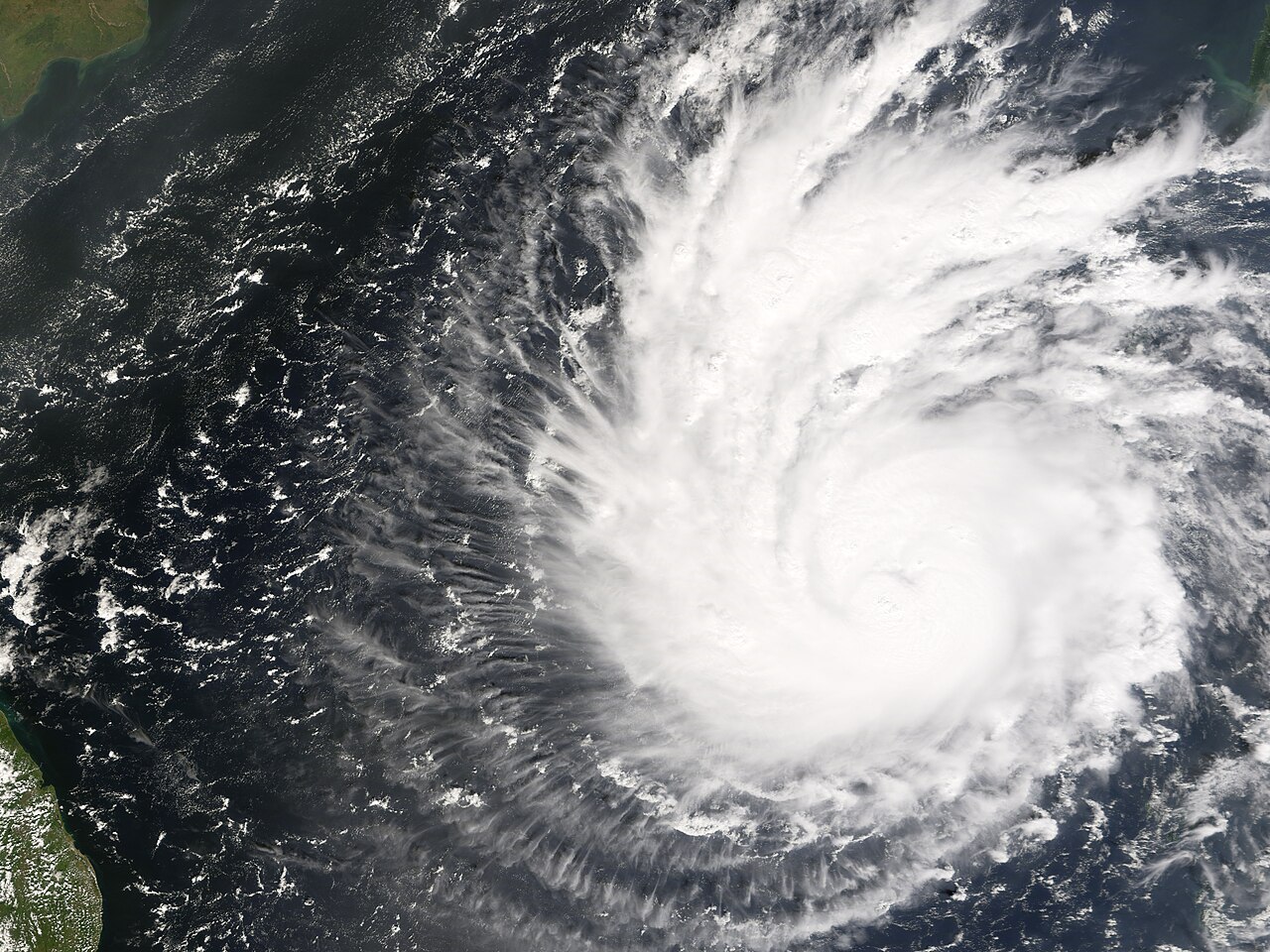
UNESCO's statement also sets out how the forest is protected and what threatens it. There are no recognised local rights within the reserved forest, it says, and entry and the collection of forest products are subject to permits issued by the Forest Department. Among the threats it lists are the over-exploitation of timber and fauna, illegal hunting and trapping, and agricultural encroachment; it adds that cyclones and tidal waves have at times caused considerable deaths among some animals, such as the spotted deer.
The spotted deer of the Sundarbans
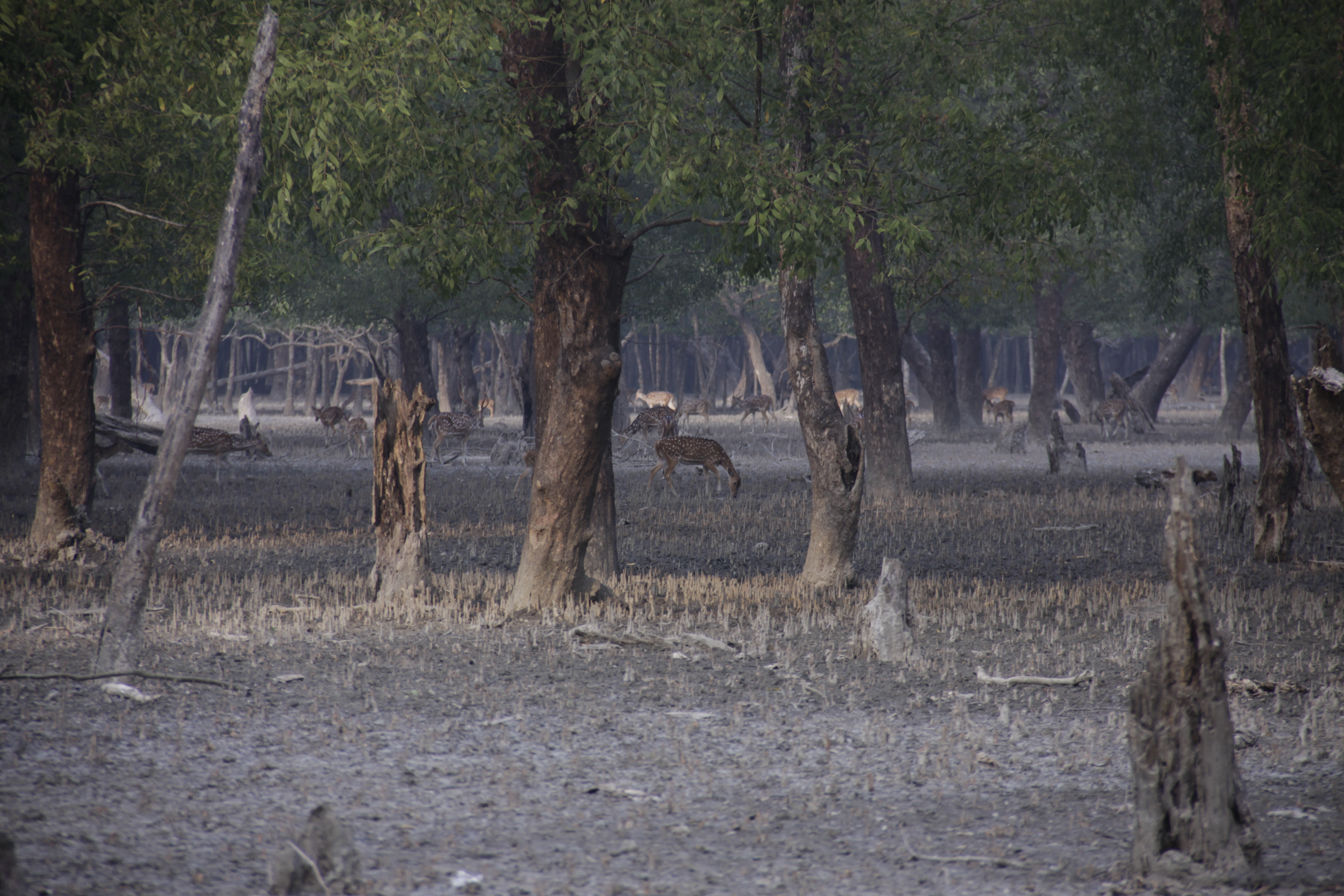
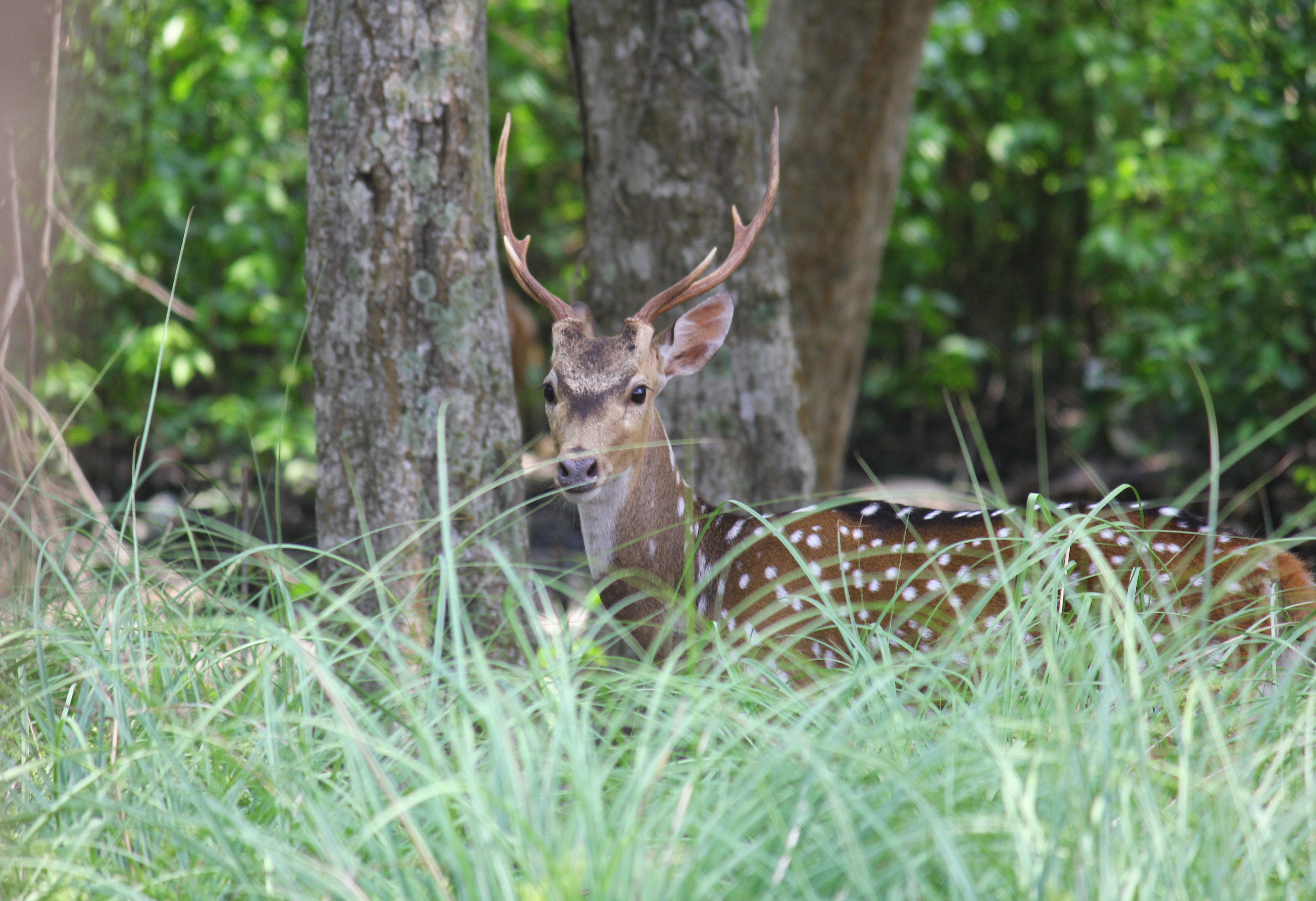
Banglapedia counts five deer species as found in Bangladesh, from the sambar, the largest, to the barking deer, the smallest. The spotted deer, known locally as chitra harin or chital, is the one most closely tied to the Sundarbans. It is a medium-sized deer standing about 70 to 95 centimetres at the shoulder, with a reddish-brown coat covered in white spots that stay for life, a dark stripe down the back, a white belly and throat, and a black band around the muzzle; an adult, the encyclopedia says, weighs about 85 kilograms and the male carries three-tined antlers.
In Bangladesh, Banglapedia says, spotted deer were once found in almost all forests but are now confined to the Sundarbans, where they live in herds of 10 to 30 animals with two or three stags, and gatherings of several hundred are not uncommon. They graze mainly on short green grass, have no fixed mating season, carry their young for about seven months and give birth to a single fawn. The encyclopedia says their numbers declined alarmingly from the 1950s because of indiscriminate hunting for meat and skins. The barking deer also lives in the Sundarbans, and Banglapedia's article on the forest names deer and wild boar as the tiger's main prey.
Internationally the species is not threatened. The International Union for Conservation of Nature assessed the chital (Axis axis) in 2015 as Least Concern because it occurs over a very wide range with many large populations, while noting that hunting for its meat has caused substantial declines and local extinctions in places. A 2023 Wikipedia revision drawing on that assessment says the chital occurs in the Sundarbans and some eco-parks around the Bay of Bengal but is locally extinct in central and north-eastern Bangladesh.
As of March 2022 there was no scientific count of the forest's deer. Prothom Alo reported on 3 March 2022 that there was as yet no study fixing the number of deer in the Sundarbans, only counts of tigers. It said a study had begun in November 2021 with funding from Germany's KfW development bank and support from IUCN: researchers had divided the forest into 65 plots and were collecting deer and wild boar droppings as samples, from which the numbers of both animals would be estimated, with results expected in 2023. The zoology professor at Jahangirnagar University leading the work told the paper that there was no scientifically accepted information on the tiger's prey and that the study would build that base.
Forest officials quoted in the same 2022 report said deer were being seen far more often than before and that poaching had fallen, crediting regular patrols by RAB, the Coast Guard, the Border Guard and the Forest Department, a task force formed in 2012, the end of the forest's pirate gangs and the narrowing of the Rash Mela at Dublar Char. The report also said that at least ten deer poachers had been detained with meat in the previous year around the forest, and that those caught were mostly people living beside it, especially in Koyra, Dacope and Paikgachha upazilas of Khulna, Shyamnagar in Satkhira, and Mongla and Sarankhola in Bagerhat. Prothom Alo reported on 7 May 2023 that the tiger count then under way used camera traps that also surveyed the deer and wild boar on which tigers feed, and that the previous counts had found 106 tigers in 2015 and 114 in 2018.
Deer meat seizures around Koyra in 2023
The reports below describe deer poaching and seizures in the Koyra area in the months before the October detention. They are about the area, not about the two Palli Bidyut employees, and none of them mentions those men.
On 24 March 2023 Prothom Alo reported that demand for deer meat had risen in Koyra and the surrounding area because it was cheaper than beef and mutton. Buyers told the paper that deer meat could be had from poachers for 400 to 600 taka a kilogram, while the paper gave the price of beef as 800 taka and mutton as 1,000 taka a kilogram. It said that in Dakshin Bedkashi union, the villages of Angtihara and Jorshing were the area where poaching gangs were strongest, and that on the day before its report the Coast Guard had seized 87 kilograms of deer meat and 20 deer legs in Jorshing after the carriers fled. Citing the Forest Department, it said more than 30 poaching gangs were operating from Koyra, setting snares in the forest and selling the meat through agents, sometimes against advance orders.
The same report said that, according to the Forest Department and the police, operations by the police, the Coast Guard and the Forest Department in the previous two months had recovered 353 kilograms of deer meat, a slaughtered deer, five skins and heads; five people had been arrested, several boats seized, and eight cases filed at Koyra police station and in court. The divisional forest officer of Sundarbans West told the paper that forest guards were working at risk with too few staff, and asked local people to help protect the forest's wildlife. Koyra police station's officer-in-charge said police operations against crimes linked to the forest were continuing.
A month later the figures had grown. Prothom Alo reported on 25 April 2023 that, according to a monthly meeting of the Koyra upazila law-and-order committee, operations by the police, the Coast Guard and the Forest Department in the previous three months had recovered 479 kilograms of deer meat, a slaughtered deer, five skins and heads, with ten cases filed and six people arrested. The most recent, on 17 April, was a Coast Guard seizure of three maunds of deer meat in Dakshin Bedkashi. The meeting expressed concern at the activity of deer poachers, timber thieves and people who poison canals to catch fish, and the upazila nirbahi officer told the paper that patrols would be stepped up with the Forest Department and the police.
Earlier reports described how the trade worked. Ittefaq reported on 27 January 2023 that poaching groups based in places including Koyra entered the forest disguised as fishers with fishing passes, set rope snares deep in the forest, slaughtered the trapped deer, packed the meat in sacks under ice and brought it out at night; the meat was sold secretly at 700 to 800 taka a kilogram, often booked in advance, and was carried as far as Dhaka, the paper said, citing several sources. Prothom Alo reported on 2 November 2022 that forest guards led by the Kobadak station officer had seized 30 kilograms of deer meat with a head and skin from a house in Golkhali in Dakshin Bedkashi and detained one man, against whom a case was filed under the wildlife law.
What the wildlife law said in 2023
In October 2023 the law on wild animals in Bangladesh was the Wildlife (Conservation and Security) Act, 2012 (Act No. 30 of 2012), dated 10 July 2012, which repealed the Bangladesh Wild Life (Preservation) Order, 1973. The provisions below describe how that Act treated wildlife meat in general. They are not a statement of the charge against the two men in Koyra, which the report did not give.
- Section 6 barred anyone from hunting any wild animal without a licence or permit under the Act.
- Section 10 allowed the Chief Warden to issue permits to collect, possess or transport a wild animal's body parts, meat or trophies only for set purposes such as education, scientific research, scientific management, display in zoos or museums, and breeding.
- Section 12 barred anyone without a registration certificate from giving, selling or otherwise transferring a wild animal, its meat or trophies to another person.
- Section 32 allowed an authorised officer to seize unlicensed or unregistered wild animals, their meat and body parts, and the arms, articles and equipment used in committing an offence.
- Section 34 made it an offence to buy or sell a wild animal, its parts or meat from anyone other than a licence or permit holder, punishable with up to one year's imprisonment, a fine of up to 50,000 taka, or both, and up to three years or 200,000 taka for a repeat offence.
- Section 39 set the punishment for breaking sections 6, 10, 11 or 12 at up to one year's imprisonment, a fine of up to 50,000 taka, or both, and up to two years or 100,000 taka for a repeat offence.
The Act named some animals for heavier penalties. Section 36 dealt with the tiger and the elephant, and section 37 with the leopard, clouded leopard, hoolock gibbon, sambar deer, crocodile, gharial, whale and dolphin; under section 37(2), collecting, possessing, buying, selling or transporting the meat or body parts of those animals could bring up to two years' imprisonment, a fine of up to 100,000 taka, or both. The spotted deer is not among the animals named in sections 36 and 37.
The Act also set out how cases were handled. Under section 43, offences under section 36 were cognisable and non-bailable, while offences under the other sections were non-cognisable, bailable and compoundable on payment of compensation. Under section 44, a court could take up an offence under the Act only on the written complaint of an officer empowered under it or of an aggrieved person, and such cases were tried by a first-class judicial magistrate, except tiger and elephant offences, which went to the court of sessions.
The agencies in the joint operation
The Forest Department manages the Sundarbans through its two forest divisions and their ranges, stations and patrol posts, UNESCO's statement on the site notes that the Forest Act, 1927 and the wildlife law have long controlled entry, movement, fishing, hunting and the extraction of forest produce in the reserve. The Kobadak Forest Station is one of its posts on the western side of the forest, facing Koyra.
The Bangladesh Coast Guard is the country's maritime law-enforcement force. It works under the Ministry of Home Affairs, and its officers and sailors are drawn from the Bangladesh Navy. Parliament passed the Coast Guard Act in September 1994, and the force came into being in its present shape on 14 February 1995, starting work with two patrol craft received from the navy. By 2023 it was governed by the Coast Guard Act, 2016 (Act No. 9 of 2016), and it had four zones, Dhaka, Chittagong, Mongla and Bhola. It took part in several deer-meat seizures in the Koyra area in 2023, as the Prothom Alo reports above show.

Palli Bidyut is the name by which people in Bangladesh know the rural electricity service run through the Bangladesh Rural Electrification Board (REB). Banglapedia says the board was set up under a government ordinance of 1977 and began work in 1978, and that it distributes power in rural areas and builds distribution lines and substations through Palli Bidyut Samities (PBS), rural electric societies organised on cooperative principles. The samities are owned by their member consumers, their management answers to a locally elected board of directors, and their overall performance is overseen by the board. The encyclopedia records 70 such samities by March 2011; a Wikipedia revision of May 2023 lists 80 samities and eight zones, Khulna among them.
Photo: Mohammad Shafayet Habib Khan / Wikimedia Commons (CC BY-SA 4.0). The top picture shows spotted deer at Katka in the Sundarbans, Bangladesh, as background; it is not a photograph from the Koyra report.
Sources: Jagonews24 (7 October 2023), Prothom Alo (3 March 2022, 2 November 2022, 24 March 2023, 25 April 2023, 7 May 2023 and 30 May 2023), Ittefaq (27 January 2023), Banglapedia (Koyra Upazila; Sundarbans; Deer; Rural Electrification Board; Rural Electrification), UNESCO World Heritage Centre, Wildlife (Conservation and Security) Act 2012 on bdlaws, Wikipedia (Bangladesh Coast Guard; Bangladesh Rural Electrification Board; Chital, revisions of 2023).

Comments
(0)