LiveMarket prices
Wheat flour (packaged)58—Ginger (imported)167—Ginger (local)154—Aman rice (medium)56—Aman rice (coarse)48—Aman rice (fine)72—Iodised salt (packaged)32—Green chilli218—Broiler chicken162—Mutton900—Sugar (local)132—Chickpeas (whole)85—Farm eggs (red)47—Onion (local)60—Boro rice (medium)55—Boro rice (coarse)47—Boro rice (fine)66—Beef729—Mung dal122—Garlic (imported)192—Garlic (local)173—Soybean oil163—
Updated 28 September 2026
Dhaka29°FairHumidity 82%Wind 6 km/h

Deer, birds and nipa palms: Kochikhali in the Sundarbans, in pictures

Where the Bay of Bengal meets the Sundarbans mangroves, Kochikhali is home to deer, birds, butterflies and forests of golpata and gewa.

Kochikhali lies where the salt water of the Bay of Bengal meets the dense mangrove forest of the Sundarbans. On one side of this tourist spot in the Sharankhola range run the river's waves, on the other a sea beach, and between them a thick forest where deer, birds, butterflies and many plants live.

Along the creeks, golpata (nipa palm) and gewa trees line the banks, birds squabble on the chars and deer move through gaps in the forest. From the watch tower the blue-green forest stretches away. These pictures of Kochikhali's nature and wildlife were taken by a Prothom Alo photographer.
1 / 9Two chega birds squabbling on a river char
2 / 9Follow a creek and views like this open up in the Sundarbans
3 / 9Golpata (nipa palm) lining the bank of a creek
4 / 9The Sundarbans seen from the watch tower
5 / 9Tall grass beside the trail, the kind of cover a tiger also rests in
6 / 9Gewa trees grow in large numbers at Kochikhali
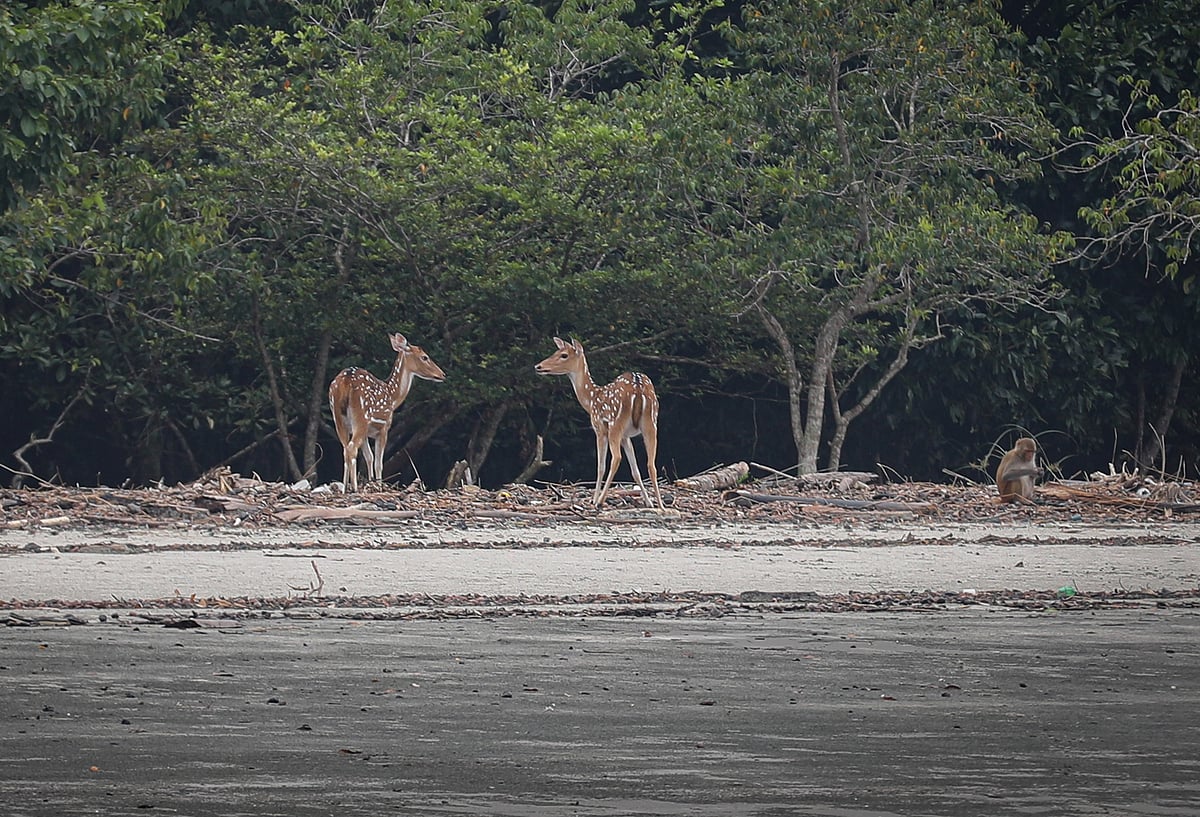
7 / 9Two deer standing side by side, as if in conversation
8 / 9Butterflies of many species are seen at Kochikhali
9 / 9A tourist vessel waits to leave Kochikhali

Photos: Saddam Hossain, Prothom Alo

Source: Prothom Alo

Prothom AloThe Agro News

Gallery

Related stories

Comments

(0)