
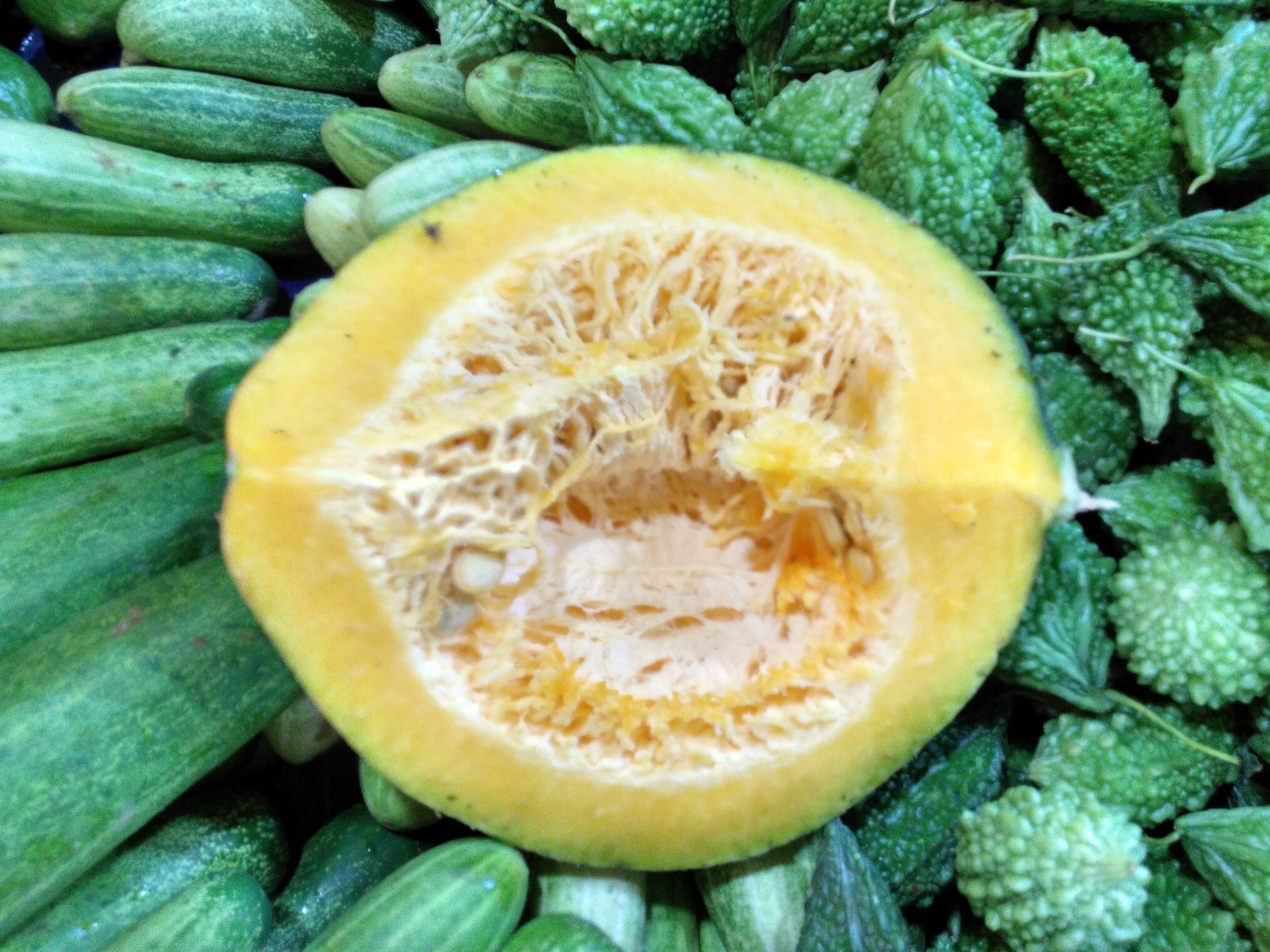
Sweet pumpkin farmers in the haor of Kishoreganj district were counting losses at the start of March 2025. Jagonews24 reported on 1 March 2025 that the area under the crop in the district had grown, from 1,005 hectares the year before to 1,216 hectares in the 2024-25 season, with a production target of 25,000 tonnes. Yet growers said their yields were lower than expected, and the price they were offered at local markets and by wholesalers had fallen to Tk 6 to 10 a kilogram, depending on the size of the pumpkin. Traders told the paper that the market was oversupplied.
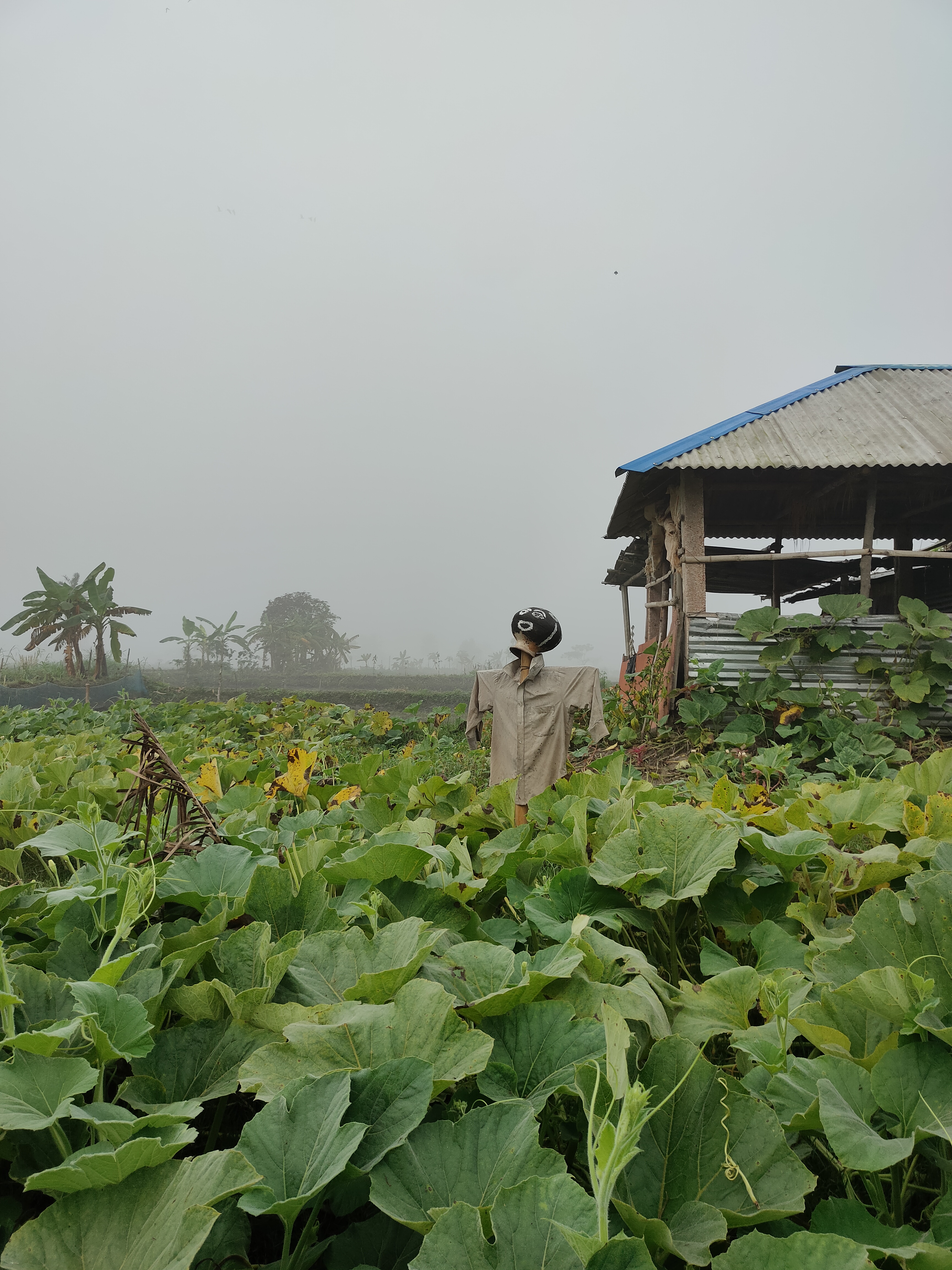
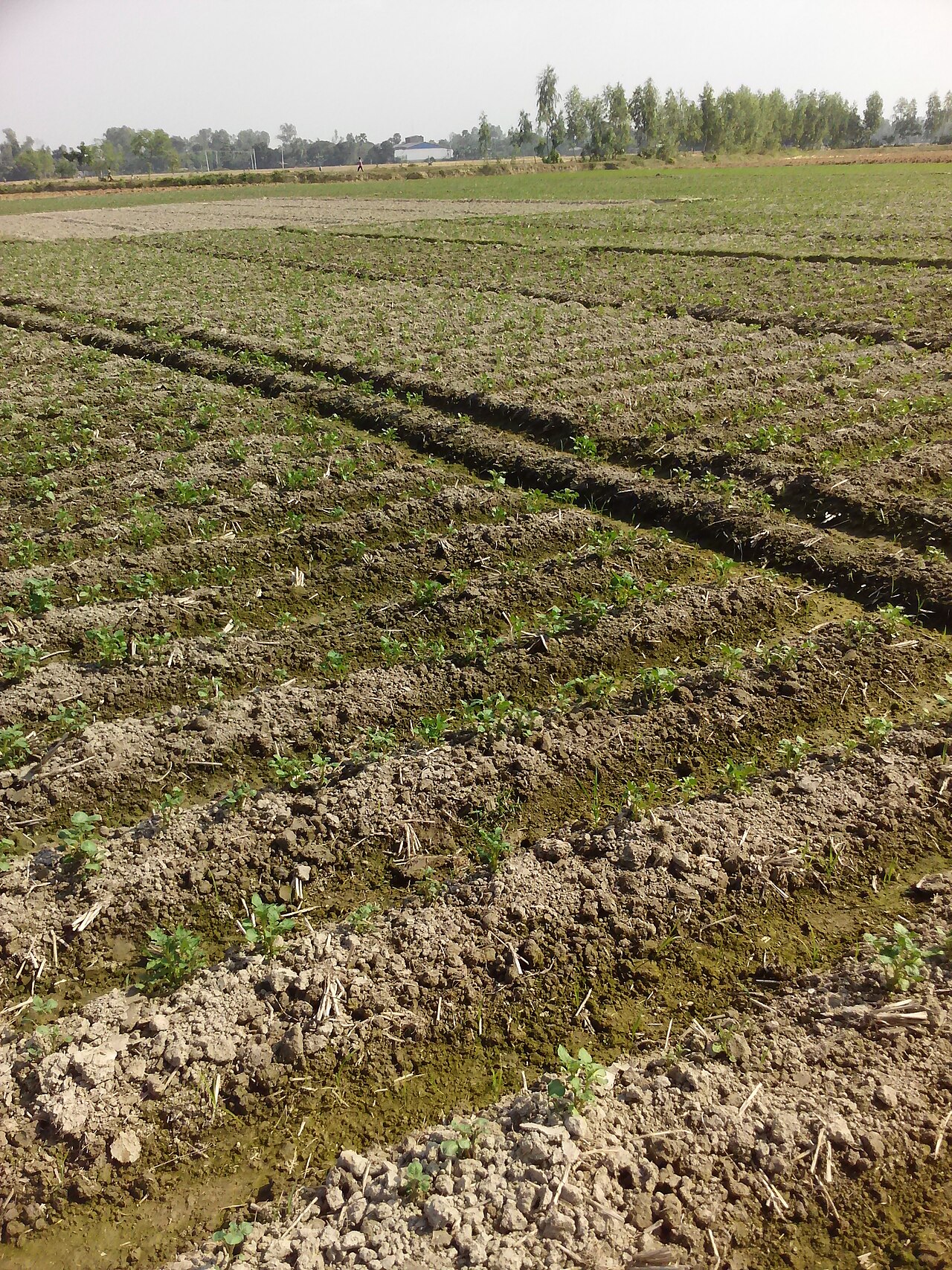
Most of the district's crop was in two haor upazilas, according to the report: 300 hectares in Tarail and 250 hectares in Itna. In this wide wetland, about 60 percent of the pumpkins are usually sold by that time of year, but in early 2025 much of the crop was still unsold. Seed for the crop is normally sown between October and December, the report said, once the floodwater has drained from the haor.
The gap between field and town was wide. While growers were selling at Tk 6 to 10 a kilogram, sweet pumpkin was selling at Tk 25 to 30 a kilogram in the retail markets of Kishoreganj town, the reporter found.
Costs up, prices down: what the farmers said
Farmers told Jagonews24 that in earlier years they had sold sweet pumpkin at Tk 20 to 25 a kilogram. In the 2024-25 season they had paid more for fertiliser, diesel and pesticide, and labour had also become dearer, so recovering the cost of cultivation had become their main worry. Some described the crop as a thorn in the throat.
Aminul Islam, a farmer in Raituti union of Itna upazila, said he had grown sweet pumpkin on 1,200 kathas of land in three haors in the Itna, Mithamain and Austagram upazilas, at a cost of Tk 56 lakh. "At the current price it is a big challenge to recover my costs," he said. He added that 15 workers were employed on the land, each paid Tk 15,000 a month, and that he was in trouble over both the low yield and the price.
Farmer Roich Mia said he had farmed 220 kathas and spent Tk 14.5 lakh. "The plants have yielded little, and the price is low too," he said. "It is not only me; everyone in the area who grew sweet pumpkin is in the same position." He had hoped to sell at Tk 20 to 25 a kilogram and was selling at Tk 10.
Jummon, who both farms and trades, said he had spent Tk 20 lakh on his fields and could not hope to get back even Tk 5 lakh. By his account, the price of pesticide had gone from Tk 200 to Tk 300, fertiliser from Tk 1,200 to Tk 1,600, and a labourer's daily wage from Tk 500 to Tk 700 that year. "Other years we earned lakhs of taka; this time it is a loss," he said.
Shantipur market and the traders' view
The trade in haor pumpkins runs through a riverside market. Every day, the report said, farmers from different haor upazilas bring their pumpkins by boat to the Shantipur haat in Raituti union of Itna. From there wholesalers send them to Dhaka, Jashore, Khulna, Satkhira, Faridpur, Pabna, Chuadanga, Paikgachha, Benapole and other places. On a market day the haat used to handle more than Tk 1 crore worth of sweet pumpkin; in the 2024-25 season, the report said, the daily turnover averaged Tk 50 to 60 lakh.
Umar Faruk, a local wholesaler (aratdar), said about 75 tonnes of sweet pumpkin left his depot for different parts of the country every day. In the previous season the lowest price had been Tk 20 a kilogram; this season the market had opened at Tk 17 and fallen to Tk 6 to 10. "Prices have fallen because supply is high," he said, adding that most of the pumpkins at the market came from the Itna and Kaliajuri areas. Kaliajuri (Khaliajuri) is the neighbouring haor upazila of Netrokona district, which borders Itna to the north.
Sabuj Mia, a wholesaler from Jashore who said he had been in the business for 20 years, told the paper that he bought sweet pumpkin every day from the fields and the landing ghats, four trucks of 15 tonnes each. He said he was buying from farmers at no more than Tk 10 a kilogram and selling at Tk 14 to 15. "If we cannot sell at a higher price, we cannot buy from farmers at a higher price either," he said, and he too put the fall down to heavy supply that year. These are the traders' explanations as reported; the report did not carry a separate study of margins along the chain.
What the agriculture department said
Md Imrul Kayes, acting deputy director of the Department of Agricultural Extension (DAE) in Kishoreganj, confirmed the district figure of 1,216 hectares and said farmers were not getting a fair price. In his view prices had fallen because the production of other vegetables was also high. He also said that in other years various juice companies had bought sweet pumpkin from the area, but that in this season no company had yet come; if they did, he said, farmers would get a better price.
The DAE is the government's field extension service under the Ministry of Agriculture, with offices in every district and upazila. Its district office keeps the figures on area planted and expected output that the report quoted, and its upazila agriculture officers are the first point of contact for farmers on varieties, fertiliser use and pests.
Kishoreganj's haor and the upazilas in the story
Kishoreganj is a district of Dhaka division covering 2,688.59 square kilometres, according to Banglapedia, the national encyclopaedia published by the Asiatic Society of Bangladesh. It has 13 upazilas, and its main rivers include the Old Brahmaputra, the Meghna, the Kalni, the Ghorautra and the Dhanu. At the 2011 census it had a population of 2,911,907. It became a district in 1984; before that it was a subdivision of Mymensingh, formed in 1860.
Itna, where the Shantipur market stands, covers 401.93 square kilometres in the north-east of the district. Banglapedia lists the Surma, Dhanu, Baulai and Kalni as its main rivers, along with Haular Haor and a string of beels. Raituti is one of its nine unions. At the 2011 census, 77.84 percent of Itna's households lived mainly from agriculture, and the encyclopaedia names paddy, potato, mustard, peanut and vegetables as its main crops. It records 150 kilometres of waterway in the upazila, against 15 kilometres of pucca road. Farmers in the report brought their pumpkins to market by boat.
Tarail, the other main pumpkin upazila in the report, lies west of Itna and covers 141.43 square kilometres. Banglapedia names the Bathail, Baruni, Narsunda and Buri rivers and a number of beels there, and records agriculture as the main source of income for 69.75 percent of households at the 2011 census. Mithamain (222.91 square kilometres) and Austagram (355.53 square kilometres), where Aminul Islam said he farmed, are the district's other deep-haor upazilas.

A haor, in Banglapedia's description, is a bowl-shaped tectonic depression that receives runoff from rivers and canals. In the monsoon it becomes a vast stretch of water in which villages stand like islands, and in the dry season most of the water drains away, leaving shallow beels and exposing rich alluvial soil that is farmed intensively. The haor basin of greater Sylhet and greater Mymensingh includes about 47 major haors and some 6,300 beels, and the plains stay flooded for about seven to eight months a year. In the Kishoreganj report, the pumpkin crop on this land was sown between October and December, after the water had gone down.
The Bangladesh Agricultural Research Council (BARC), in its Fertilizer Recommendation Guide 2024 published in September 2024, lists the "haor and flash flood areas" of the Sylhet and Mymensingh regions among five fragile ecosystems identified as agricultural hotspots in the Bangladesh Delta Plan 2100. Its soil data for haor land from 2003 to 2021 show pH readings from about 3.4 to 6.9, that is, soils that range from strongly acidic to close to neutral.

Sweet pumpkin as a crop
Sweet pumpkin, mishti kumra in Bengali, is a gourd of the family Cucurbitaceae. Banglapedia describes it as a popular vegetable and a good source of carbohydrate, vitamins A and C and minerals, thought to be native to the Americas. The encyclopaedia names it Cucurbita maxima, while BARC's 2024 fertiliser guide lists the country's sweet gourd varieties under Cucurbita moschata. Banglapedia puts the area under the crop in Bangladesh at about 14,000 hectares and its average yield at 20 to 25 tonnes a hectare; it names Bikrampuri and Baromashi as two local varieties.
The crop can be grown by sowing seed directly or by transplanting two-week-old seedlings, and fully ripe pumpkins are harvested within about 90 days of sowing, according to Banglapedia. Its leaves, vines, flowers and fruit are all eaten, the fruit is used in curries and sweet dishes, and ripe whole pumpkins can be kept dry for several months.
The Bangladesh Agricultural Research Institute (BARI) has released improved varieties. BARC's Fertilizer Recommendation Guide 2024 lists BARI Mistikumra-1, -2 and -3 and BARI Hybrid Mistikumra-1, -2 and -3, and sets a yield goal of 45 tonnes a hectare for them. For fertiliser, the guide sets amounts by soil-test category and advises the following method:
- Apply all of the organic fertiliser, phosphorus, potassium, sulphur, zinc and boron in the pits five to seven days before planting, mixed thoroughly with the soil.
- Apply nitrogen around the plant as a side dressing at 15, 35, 55 and 75 days after transplanting, while the soil is moist, and mix it into the soil.
- Use the amount that matches the field's soil-test result; the upazila agriculture officer of the DAE can advise on the right dose for a given field.
Input costs in context
The farmers' complaint about costs came after two increases in the official price of fertiliser. On 10 April 2023 the government raised the price of the main fertilisers by Tk 5 a kilogram, The Business Standard reported on 11 April 2023: at the farmer level, urea went from Tk 22 to Tk 27 a kilogram, TSP to Tk 27, DAP to Tk 21 and MoP to Tk 20. At the dealer level urea rose from Tk 20 to Tk 25, TSP to Tk 25, DAP to Tk 19 and MoP to Tk 18. It was the second increase in nine months. The government said it was reducing the pressure of subsidy, and the agriculture ministry said the change would save about Tk 7,000 crore a year.
Those are the official prices. The figures Jummon gave for fertiliser, pesticide and wages in the 2024-25 season are his own account of what he paid, as reported by Jagonews24, and they were not set against an official price series in the report.
A season of low vegetable prices
Kishoreganj was not alone that winter. On 30 January 2025, The Daily Star's Bengali edition reported from Chandpur that sweet pumpkins were going unsold and being used as cattle feed. According to the agriculture department there, the area under the crop in several upazilas, including Sadar, Hajiganj and Matlab, was about double that of the previous year. Hajiganj's upazila agriculture officer put the crop at no less than 618 hectares in that upazila, against 286 hectares in 2023. The district's agriculture office said sweet pumpkin had been grown on 1,135 hectares in Chandpur, producing 24,971 tonnes, and that winter vegetables as a whole had covered 6,100 hectares against a target of 5,500, with output of 134,728 tonnes against a target of 121,000 tonnes; the official cited this as the reason prices had fallen. One farmer in Debpur said he was selling pumpkins at Tk 8 a kilogram as cattle feed, and the agriculture department had advised growers to sell at local markets.
The year before had looked different elsewhere. On 18 March 2024, bdnews24.com reported from Faridpur, one of the districts to which Shantipur's pumpkins are sent, that sweet pumpkin had been grown on 850 hectares in the Padma chars of Decrirchar and Char Madhabdia unions of Faridpur Sadar. Good weather had brought a good yield, pumpkins were selling at Tk 15 to 20 a kilogram from the field, and the district's sweet pumpkin crop was worth more than Tk 50 crore, according to the district agriculture office. One farmer there said a bigha of land cost Tk 12,000 to 15,000 to farm and its crop sold for Tk 50,000 to 60,000, and that the pumpkins were ready for sale in three to three and a half months.
The way haor farmers sell is also long established. Back in May 2018, The Daily Star described sweet pumpkin growers in Manikganj selling their crop in the field to wholesalers because, as one grower put it, retail sale of so many pumpkins at the local market was not possible. Wholesale buyers there said Manikganj pumpkins were in demand at Karwan Bazar, Jatrabari and Baipail, and one of them said that he could not store the pumpkins in heavy rain and that his transport costs had risen.
Who oversees the market
The marketing side of farm produce falls to the Department of Agricultural Marketing (DAM) under the Ministry of Agriculture, under the Agricultural Marketing Act 2018 (Act No. 44 of 2018). Section 2 of the Act defines market intermediaries to include wholesalers, aratdars, stockists, commission agents or brokers, weighers, sample collectors, farias and beparis, the chain through which haor pumpkins reach town markets.
Section 4 of the Act lists DAM's functions. They include:
- managing agricultural market information;
- framing and carrying out a price policy for farm produce;
- helping to link farmers with markets and to keep supply running smoothly;
- building and strengthening market infrastructure, warehouses, cold stores and cool chambers in production areas;
- setting and enforcing minimum and fair prices for farm produce;
- supporting value addition and processing of farm produce, and providing price support;
- expanding domestic and export markets, and promoting agro-based industry and contract marketing.
The report from Kishoreganj did not say whether any of these tools had been used for sweet pumpkin in the 2024-25 season. The district agriculture official's own suggestion, that processing companies return to buy from the haor, points to the value-addition link the Act describes.
Photo: Salim Khandoker / Wikimedia Commons (CC BY-SA 3.0)
Sources: Jagonews24, Banglapedia (Asiatic Society of Bangladesh), Bangladesh Agricultural Research Council (Fertilizer Recommendation Guide 2024), The Business Standard, The Daily Star, The Daily Star Bangla, bdnews24.com, Agricultural Marketing Act 2018 (Laws of Bangladesh, bdlaws.minlaw.gov.bd)
Comments
(0)