
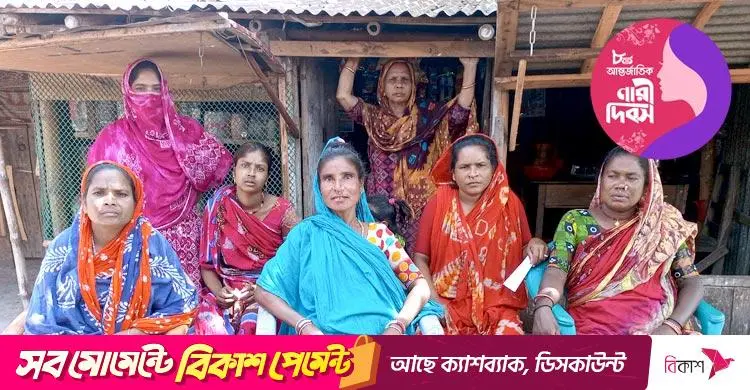
They have left the rootless Bede life behind and returned to a settled life. They have started businesses, built themselves up as entrepreneurs and enrolled their children in schools and madrasas. Overcoming many obstacles, 18 Bede women are fighting their way through life.
They now live settled lives with their families at Seven Number Ghat in Khulna, earning money from selling cloth, making bags, running grocery shops, selling vegetables and rearing goats. They have put their children in school and madrasa and work hard every day to improve their lives. Their story of struggle emerged in interviews with Jagonews.
From snake shows to shops
They told Jagonews: "We used to do singa and show snake tricks. We had to wander from village to village. Life was hard. During the coronavirus pandemic people wouldn't let us into their homes and treated us with contempt. We even had to beg. We've come back from that life to a normal one and no longer do our old work. After the pandemic, in 2022, we took 10 days of training at the NGO Rupantar. After the training we started our own businesses with their help and sell saris and cloth. Our income has grown. People used to give us no place; now everyone loves us."
Khodeja Begum, who has returned to a settled life, said: "About three years ago I left the Bede life and started rearing goats. When one goat died, I sold the other and started a cloth business. Now I'm doing well."
Kapali Begum of the Bede community said: "We've come through a rootless life. We don't want our children to go back to it. That's why we are still struggling."
Keya Khatun, sighing at the memory of hardship, said: "I've got out of the net of Bede life. Now I buy cement sacks, make bags from them and sell them. We used to earn money showing snakes, and had to beg from people too. Now I live in great peace."
A call for government help
Minara Khatun said: "We couldn't marry our sons and daughters outside the Bede community. We lived within a boundary. Now we're back to a normal life and doing business, and everyone respects us."
She added: "Just as we've come to a healthy life, many in our community want the same, but many can't for lack of opportunity. So we want the government's help. If the government helps, many will be able to return to a normal life."
Swapan Kumar Guha, founder and executive director of the NGO Rupantar, told Jagonews that the Bede women are very hard-working and industrious. During the ten days of training they were not a minute late. It was by force of will that they were able to change their fortunes, he said.
Source: Jagonews24. First published in Bengali on The Agro News.


Comments
(0)