
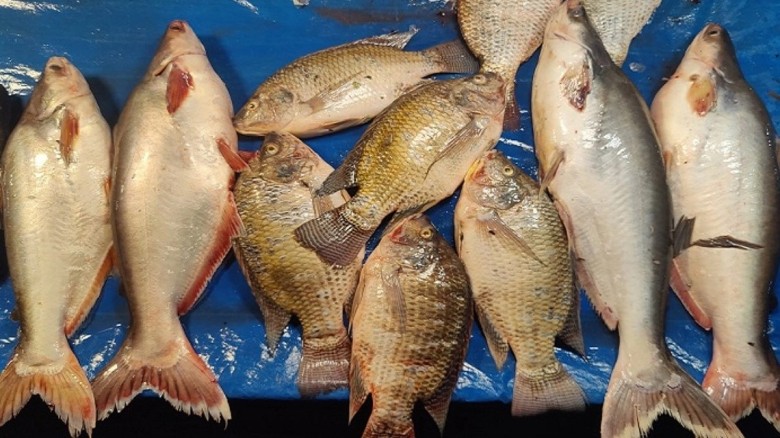
The rivers, channels and canals of Khansama and other upazilas of Dinajpur, among the main refuges and breeding grounds of native fish, have been taken over by illegal nets. Brood fish and every other kind of fish are being killed as a result. Many native species, including puti, koi, magur, shing, tengra, darka, mola, dhela, shoul, boal, air, prawns, cheng, taki, gota, poa and balia, are disappearing day by day. The situation is the same in different parts of the district. Drives against the nets are seen from time to time, but they are not enough.
Fixed traps across three rivers
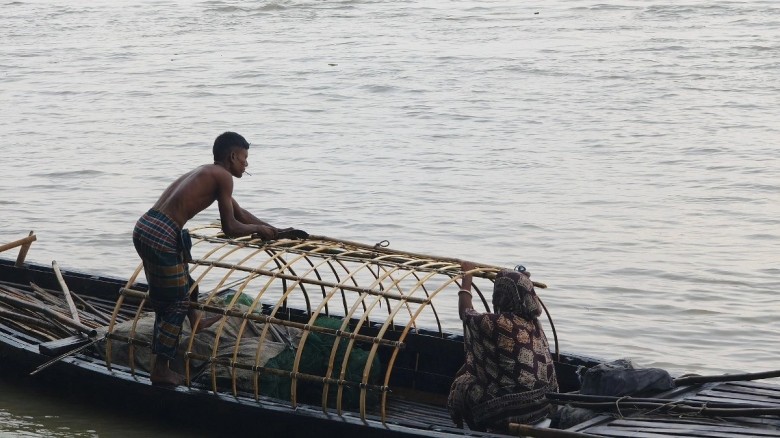
In wide areas of the Alokjhari, Bherbheri, Angarpara, Khamarpara, Bhabki and Goaldihi union parishads of Khansama upazila, some fishers have set traps in river channels and canals. They have built permanent fishing structures such as khora, bana, darki and jolenga and catch native fish regularly. These closely spaced structures block the natural flow of water and hamper the breeding and growth of native fish and other useful aquatic creatures. Because fishing with illegal nets goes on unchecked, fish production in these places is falling at an alarming rate.
More than a hundred illegal current nets and darki traps have been set in the Atrai river, which flows past the Alokjhari, Khamarpara and Bhabki unions; in the Ichhamati river, beside the Angarpara and Goaldihi unions; in the Belan river in the Bherbheri, Angarpara and Goaldihi unions; and in the small and large channels and canals around them. Where the nets are set, bana screens have been fitted across canals and channels, completely stopping the movement of fish. Flowing canals and channels have turned into small, closed ponds.
Because the natural flow of the Belan river has been blocked from Bherbheri to Goaldihi, rainwater cannot drain away, and nearby crop fields stay waterlogged and are damaged. The environment is being polluted and the habitats of native fish are being destroyed.
Farmers and traders speak
Several fish farmers said the authorities had taken no initiative to maintain fish sanctuaries or to protect the natural environment of the water bodies and fish production. Even though canals and beels are covered with illegal nets, no action is taken.
Fish traders said demand for native fish in the market is high and prices are much higher too, so fish farmers need to take an interest in farming these species.
Khansama upazila fisheries officer Ratan Barman said using illegal nets is an offence in itself, and fixing them permanently in places where native fish breed naturally is a serious illegal act. This year, about a hundred current nets have been burnt in drives at various markets and water bodies. Everyone must become aware to protect native fish species, he said; otherwise these fish will disappear day by day.
Source: Bangladesh Pratidin. First published in Bengali on The Agro News.
Comments
(0)