
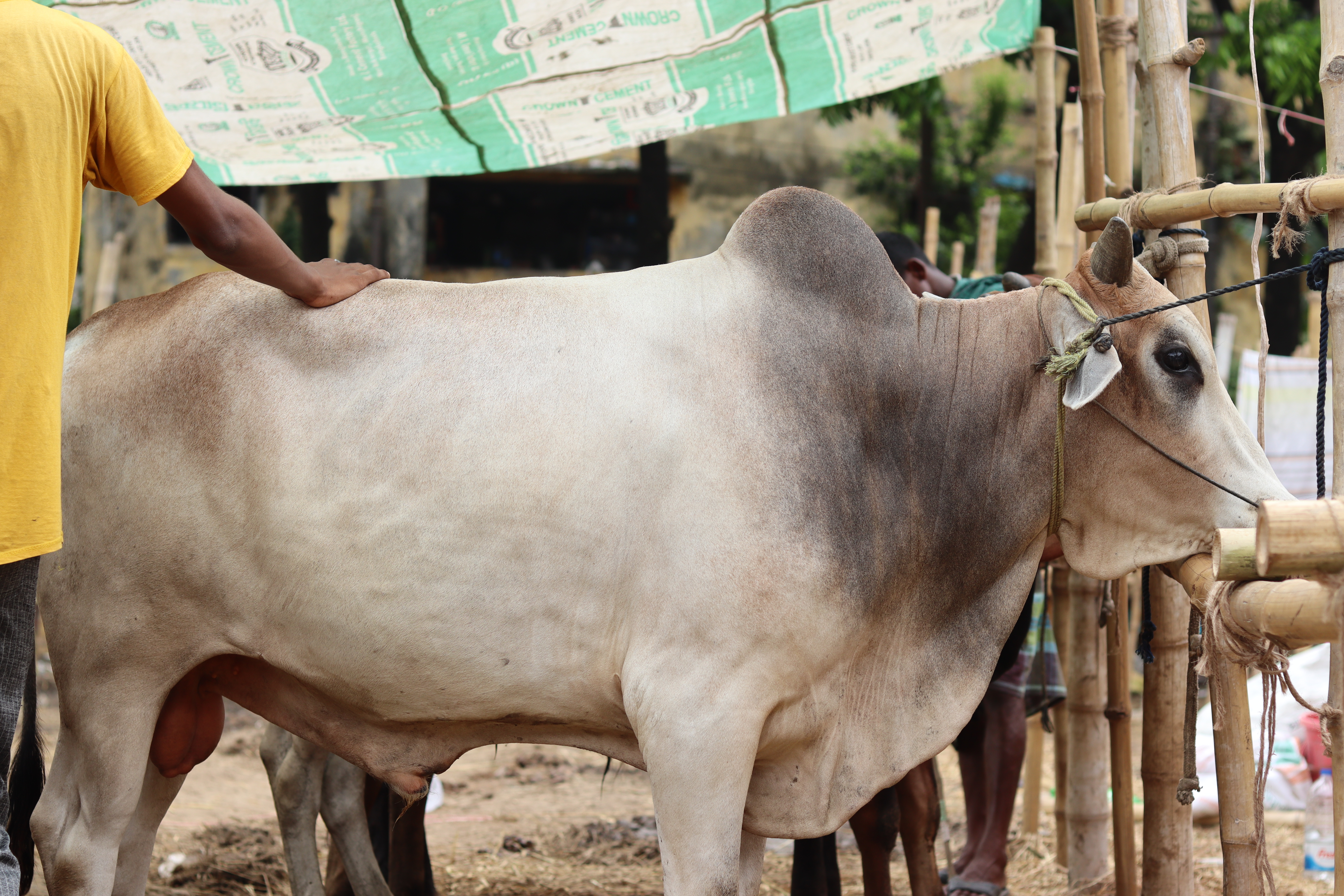
For many traders who rear animals year after year in the hope of a profit, the 2026 Qurbani Eid markets ended in disappointment and loss. They had brought cows from distant districts to Dhaka for the biggest seasonal trade of the year, but on Eid day, Thursday 28 May 2026, many were heading back to their villages with unsold animals and their losses counted.
According to Jago News, at the temporary cattle market in Kamalapur in the capital that afternoon, many traders were standing glumly beside their cows. Unable to find buyers, they were preparing to take the animals home, and some were seen loading unsold cattle onto lorries. Several traders from Kushtia and Sirajganj gave the paper their own figures for what they had paid, what they had sold for and what the journey back would cost.
Thirty cows from Kushtia, two sold
Md Sohel Ali came to the Kamalapur market from Kushtia with 30 cows bought jointly by 10 people. He told Jago News he had managed to sell only two and would take the remaining 28 back to the village.
Sohel Ali said they had made a big loss this time. All the cows had been bought with cash, and the 30 had cost around Tk 50 lakh. He sold two for Tk 3 lakh. Now, he said, the rest would have to go back to the village and be reared again.
He said that this year their backs were against the wall. Because of situations like this, villagers do not sell cattle on credit, so traders borrow to buy them and bring them to market. Taking the cows back, he said, would cost Tk 33,000 in lorry hire.
Another trader, who had brought four cows from Mirpur upazila in Kushtia, said he had sold two at a loss of Tk 1 lakh and was taking the other two home. Buyers were offering Tk 1 lakh each for the two unsold cows, he said, though each had cost him Tk 1.5 lakh. He had hired a lorry for Tk 33,000 and would share it with several other traders; 22 cows would travel on the one lorry.
A trader's allegation of a 'syndicate'
Md Jamal Mondol, also from Kushtia, told Jago News that he had brought 10 cows to the market and sold only four, and was taking six back. A cow that had cost them Tk 2.5 lakh, he said, was drawing offers of Tk 1.8 lakh from buyers, and some offered Tk 1.6 lakh.
Jamal Mondol alleged that a 'syndicate' had operated at the market this year and had done them great harm. He alleged that traders had not even been allowed to take their cows out of the market; had they been allowed to leave the day before, when he saw the market turning bad, he believed he could have sold them elsewhere. The Jago News report carried no response from the market authority or the leaseholder to this allegation, and no response was found in other reports from Eid day.
He said that as soon as he got back to the village he would have to pay the people he had bought the cows from; they would not let him off otherwise, and they would not take the cows back. By his reckoning, lorry hire and other costs would mean a loss of around Tk 30,000 on the returning cows alone, and bringing cattle to Dhaka this year had left him nearly Tk 2.5 lakh out of pocket.
Sold after the Eid prayers, but at a loss
Rezaul Karim, a trader from Sirajganj, sold one cow after the Eid prayers. He said he had been taking two unsold cows back when some buyers arrived and bought this one for their Qurbani. He sold it for Tk 89,000, though it had cost him Tk 1.12 lakh, and with other costs he said he lost Tk 25,000 on that one animal.
Rezaul Karim had brought 14 cows to the market and sold 13. All of them, he said, had to be sold at a loss, and his total loss was about Tk 4 lakh. Every cow had been bought, he said; there was no option but to sell at a loss, so he was forced to.
The cattle these traders brought to market had been bought in the villages: Sohel Ali said all of his were bought with cash, and Rezaul Karim said every one of his had been bought. What runs through their accounts is borrowed money, the lorry hire for the journey back, and debts that fall due as soon as they get home.
Prices had already fallen at Kamalapur the night before
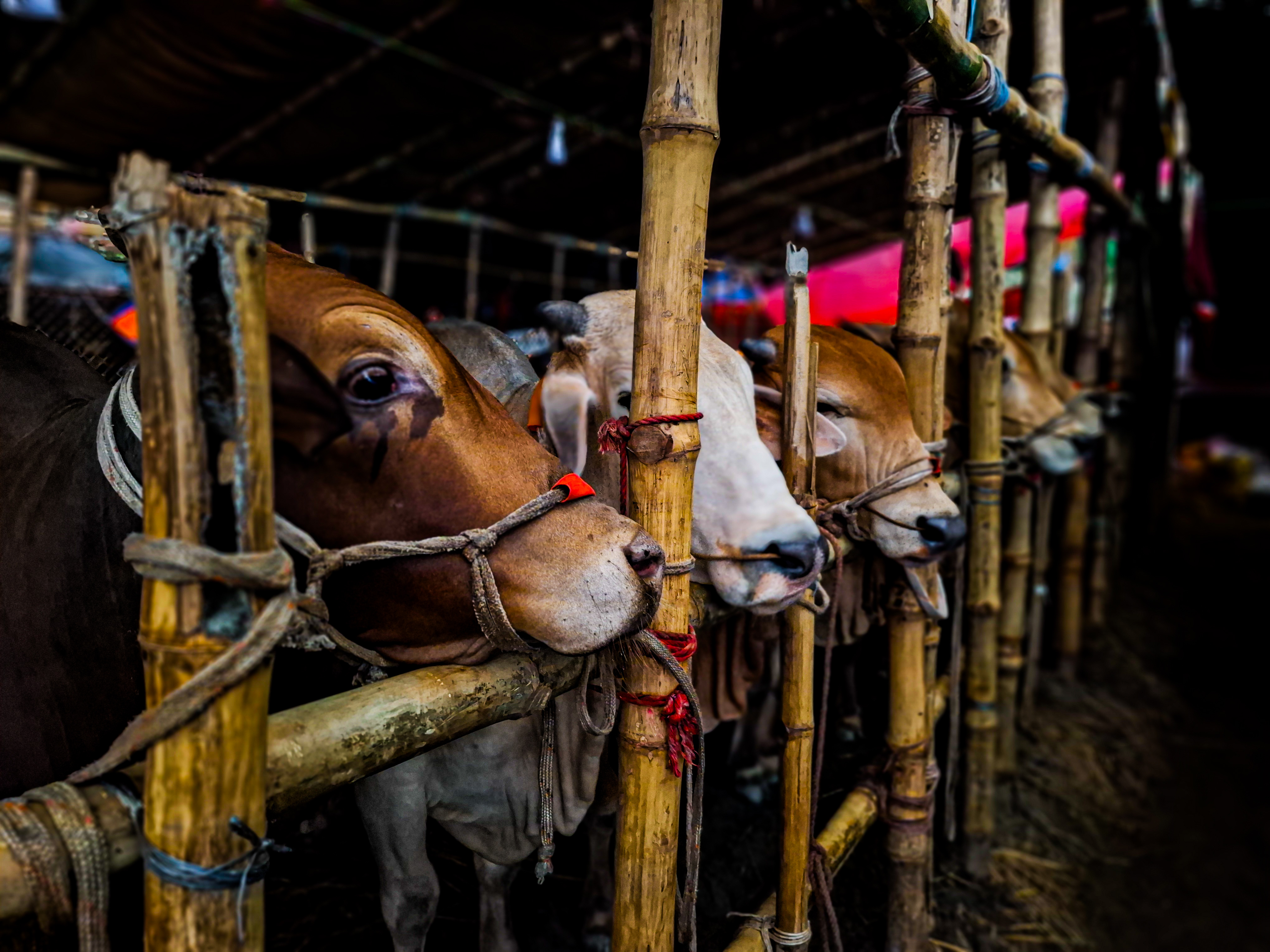
The picture at Kamalapur had begun to change on the eve of Eid. Bangla Tribune, in a report published on the night of 27 May, said that on a walk round the market until 10pm the grounds were full of cattle and sellers but short of the buyers they had expected. According to the report, a cow that had been priced at Tk 2 lakh as late as Tuesday (26 May) was drawing Tk 1.3 lakh on Wednesday, and in places cattle priced at Tk 3 lakh were being offered Tk 1.7 lakh to Tk 2 lakh.
In the same report a trader who had brought 80 cows from Alamdanga in Chuadanga said that cattle which had cost him Tk 2 lakh were drawing offers of Tk 1.3 lakh to Tk 1.5 lakh, and that selling at that price would mean a loss of at least Tk 20,000 to Tk 30,000 a head. He said the animals had travelled a long way standing in lorries and then stood in the rain at the market; many had fallen ill and some had fever. Another trader, from Jhenaidah, said all 10 of his cows were unsold.
Bangla Tribune's reporter found small, medium and large cattle alike unsold, with the steepest fall in the market for big cattle. Some traders complained that last-minute rain had kept buyers away. Analysts quoted in the report said demand this year had been stronger for small and medium cattle than for large ones; high inflation, falling purchasing power and economic strain had thinned the buyers of big cattle, and continuous rain had hurt the final days of trading.
Four days before Eid, on Sunday 24 May, The Business Standard (TBS) visited several markets including Tejgaon, Kamalapur, Postogola and Bhatara and reported that the intense heat was keeping buyers away and that many were leaving after only bargaining. Abu Bakar, a trader at the Kamalapur market, told TBS the heat was so severe that the cows could barely stand and had to be given water again and again.
The same scene at Gabtoli on Eid morning
Kamalapur was not alone. Jugantor, in a report published around midday on 28 May, said prices at Dhaka's Gabtoli cattle market had collapsed in the final hours because buyers were few and supply plentiful. Between 9.30am and 12.30pm that day, sellers were seen loading unsold cattle onto lorry after lorry, while some were searching the market for transport.
In Jugantor's report a trader from Manikganj said he had brought 50 cows and sold only 18. Another said 20 of his 40 cows were unsold, and that a cow priced at Tk 3.8 lakh two days before Eid had finally gone for Tk 2.7 lakh. Farmers and traders said that keeping animals in the market through several days of rain and mud had put them at risk of illness, so many sold at heavy losses. According to the traders, prices had started falling from dawn on Wednesday. Many buyers, for their part, said the lower prices were a relief.
Official figures: a surplus of more than 22 lakh animals
Behind this year's market lay a large surplus of animals. At a briefing at the Ministry of Fisheries and Livestock on 3 May 2026, Mohammad Amin Ur Rashid, minister for fisheries and livestock and for agriculture, said the likely demand for sacrificial animals had been put at 1 crore 1 lakh 6,334, against an available supply of 1 crore 23 lakh 33,840 animals. On that count, he said, about 22 lakh 27,506 animals would be left over.
Of the animals available, according to the minister, 56 lakh 95,878 were cattle and buffalo, 66 lakh 32,307 goats and sheep, and 5,655 other species. More than 3,600 cattle markets would operate across the country, he said, including 27 in Dhaka: 16 in the North City Corporation and 11 in the South. Twenty veterinary medical teams were to be on duty at these markets.
Supply varied widely by region. Citing Department of Livestock Services (DLS) data, Bangla Tribune reported on 19 May that the eight districts of Rajshahi Division had about 43 lakh animals ready against local demand of 24 lakh. Dhaka Division, by contrast, had demand of about 21 lakh 58,869 but only 14 lakh 43,942 animals ready, with the shortfall to be met from other divisions. In other words, much of what is sold in Dhaka's markets comes from the northern and western districts, brought in by traders from Kushtia, Sirajganj, Pabna and nearby.
The surplus was not new. Bangla Tribune reported on 22 May that in 2023 about 1 crore 25 lakh animals were produced and about 1 crore sacrificed; in 2024 production was 1 crore 21 lakh and about 95 lakh were sacrificed; and in 2025 about 90 lakh were sacrificed against 1 crore 24 lakh animals. Prothom Alo, citing a ministry statement on 10 June 2025, reported that 91 lakh 36,734 animals were sacrificed at that year's Eid al-Adha and 33 lakh 10,603 went unsold. At the time the DLS said that, with production high, unsold animals were not unusual.
Prices, costs and weather in the week before Eid
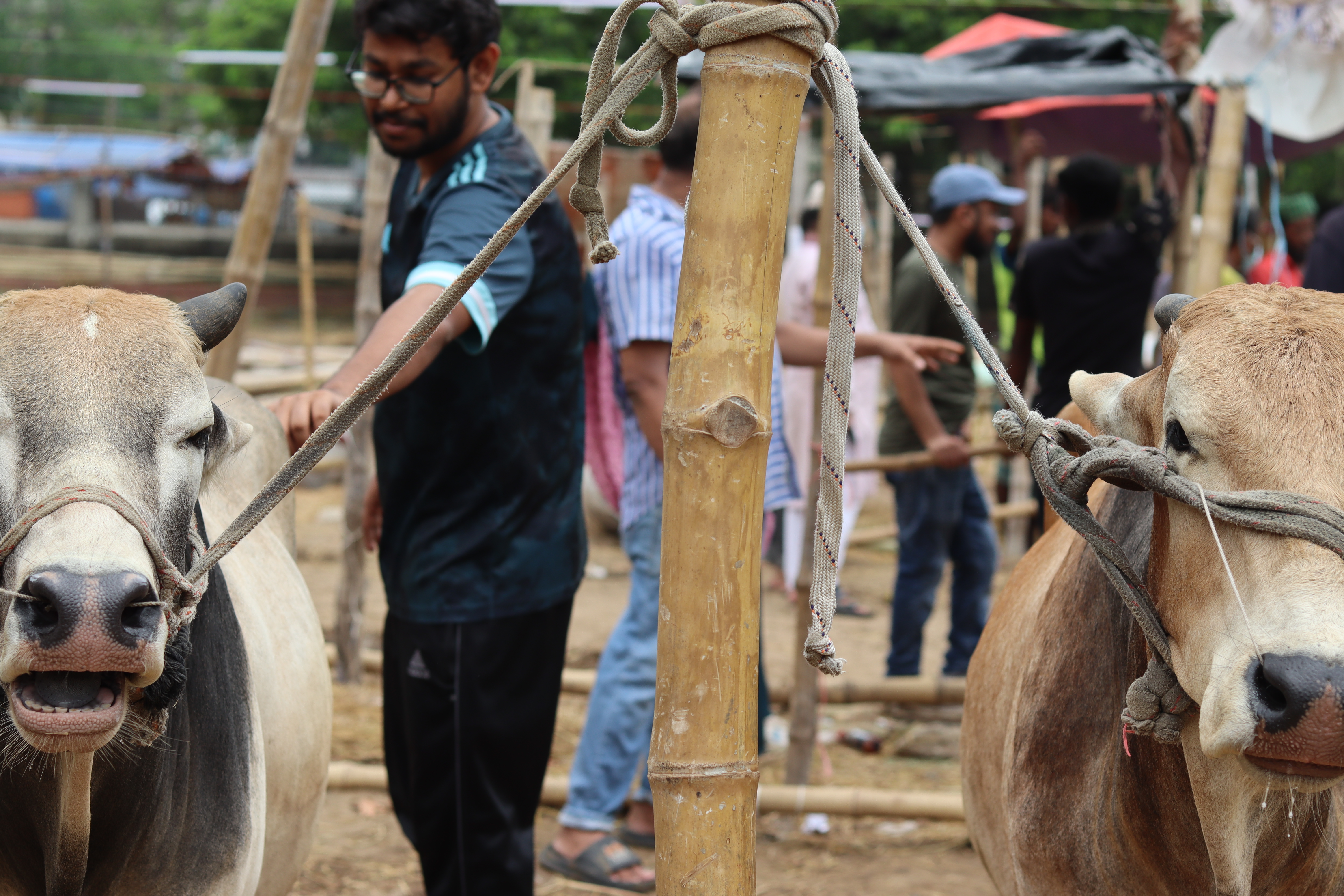
Worries about prices and costs were heard before the markets filled up. TBS reported on 25 May that in Dhaka's markets a cow yielding two to two and a half maunds of meat was being priced at Tk 1.2 lakh to Tk 1.3 lakh; two and a half to four maunds at Tk 1.5 lakh to Tk 2 lakh; four to six maunds at Tk 2.2 lakh to Tk 2.8 lakh; and traders were asking more than Tk 3 lakh for cattle over six maunds. Farmers claimed that the soaring price of feed, including bran, oil cake and straw, had pushed prices above last year's.
In Bangla Tribune's 22 May report, a farmer said transport costs had risen sharply with fuel prices while animal prices stayed close to last year's. The same report cited Niloy Hossain, senior vice-president of the Bangladesh Dairy Farmers Association, as saying that demand for large cattle had fallen and that rising feed and transport costs had put big farms at greater risk. Md Shariful Haque, deputy director (farms) at the DLS, said there was no shortage of animals this year either. The report also carried a warning from people in the sector: raising production alone was not enough, market management had to be strengthened too, or the pressure of surplus animals could end in losses for farmers.
The weather also upset the reckoning. On 24 May Dhaka's markets sweltered; TBS described water being hosed over the animals and traders fanning them with palm-leaf fans. Then the rain came. The Daily Inqilab reported on 27 May that after three days of heavy rain, mud and waterlogging the markets had finally filled up at the last minute, but many traders from Kushtia, northern Bangladesh and elsewhere were selling at a token profit to avoid a loss. Small and medium bullocks and bulls priced from Tk 80,000 to Tk 2 lakh were in greatest demand, the paper said.
The state news agency BSS reported on 25 May that buyers and sellers had flocked to the capital's markets as the Eid holiday began, with farmers bringing animals from Kushtia, Pabna, Sirajganj, Natore, Cumilla, Naogaon, Rajbari and other districts. BSS also found demand strongest for medium-sized local cattle, while buyers said large cattle were still expensive.
Kushtia and Sirajganj: where Dhaka's Qurbani cattle come from
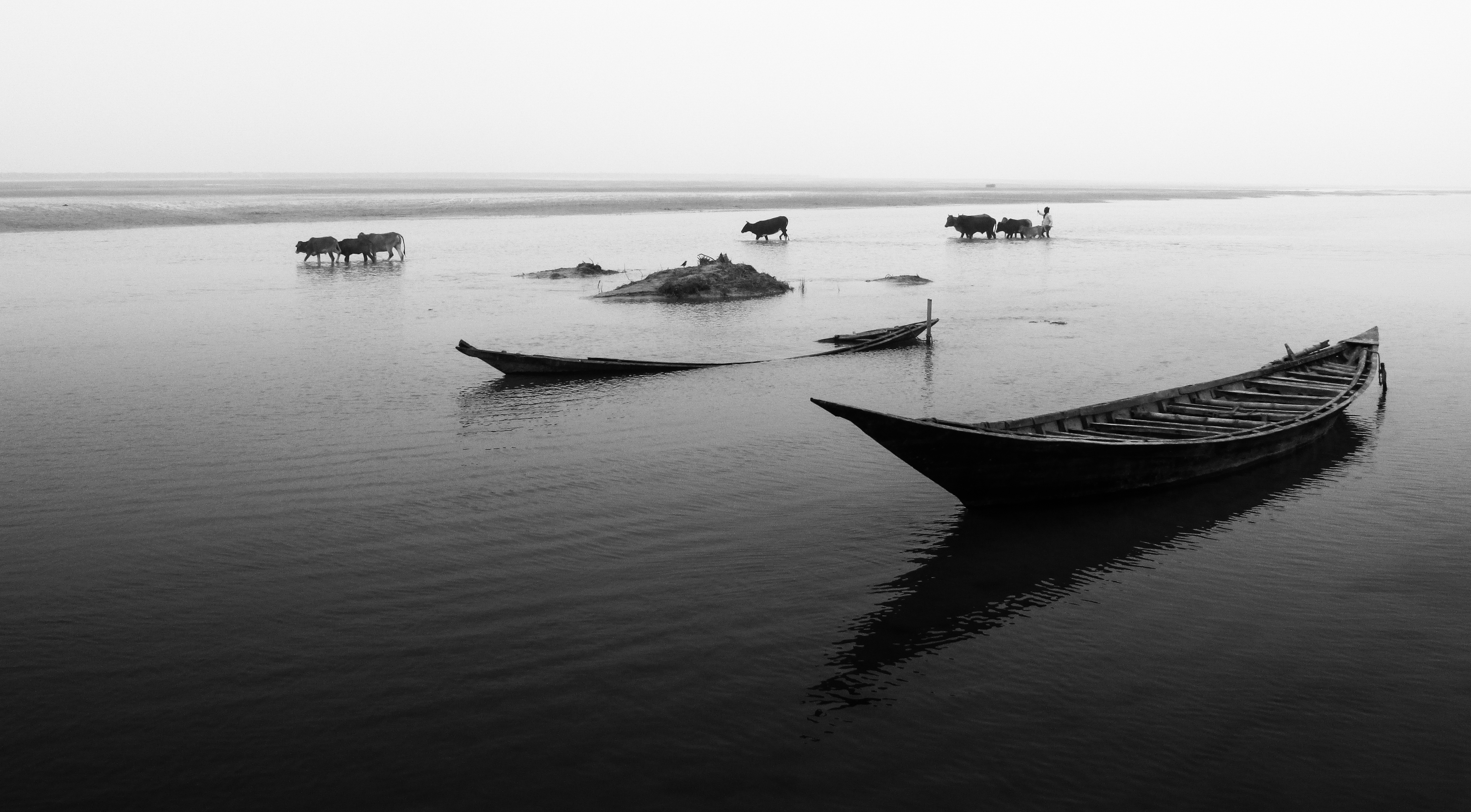
Most of the traders quoted at Kamalapur were from Kushtia, a district of Khulna Division with the Padma river along its northern side. It covers 1,608.80 square kilometres in six upazilas, one of which is Mirpur, and had a population of 2,149,692 at the 2022 census. It is primarily an agricultural district.
Kushtia is also known for its livestock. Ahead of Qurbani in 2025, the district livestock officer, Dr Md Al-Mamun Hossain Mondol, told Khobor Sangjog that 2 lakh animals had been prepared for sacrifice on 18,000 farms in the district, and that after meeting local demand of 1 lakh animals the rest were being sold in markets around the country. Farmers in the same report said the cost of rearing had risen with the price of bran, broken rice and rice polish, without a matching rise in what they were paid.
Sirajganj, in Rajshahi Division, lies in the Jamuna river basin and is known as the gateway to North Bengal; it covers about 2,497.92 square kilometres. In Bangla Tribune's 19 May report, the Sirajganj district livestock officer, Dr AKM Anwarul Haque, said 6 lakh 17,000 animals had been prepared for Qurbani in the district this year. Citing DLS data, the same report put the district's demand at 2 lakh 93,676.
Dr Antim Kumar Sarkar, deputy director of the DLS divisional office in Rajshahi, told Bangla Tribune that the division had the largest surplus of any: 43 lakh animals had been prepared against demand of 24 lakh across its eight districts, and the remaining 18 lakh would be sent to other districts. Bangla Tribune's 22 May report likewise said that, with large surpluses in the north, a big share of the sacrificial animals sold in the capital would come from there.
How Dhaka's markets were run, and Kamalapur
Kamalapur is the area around Dhaka's central railway station. Kamalapur railway station, officially Dhaka Railway Station, is the largest station in the country and opened on 1 May 1968. In the 2026 Qurbani season TBS, Bangla Tribune and Jago News all reported from the temporary cattle market held there.
TBS reported on 21 May that preparations were under way at the capital's markets for Eid on 28 May and that the two city corporations had said trading would run for five days. Dhaka South City Corporation administrator Abdus Salam said no market would be allowed to set up at random or on roads and that no market had been leased outside the rules. Every market, he added, had special arrangements for sacrificial waste.
At the 3 May briefing the minister said the government would take a hard line against extortion from livestock lorries and that law enforcement would be on constant alert to protect markets, buyers and sellers. He also announced a policy decision not to hold cattle markets in border areas, to protect local farmers, and said no toll or market fee would be charged on animals bought online.
To reduce the risks of cash dealing, Bangladesh Bank issued a circular on 24 May directing designated bank branches and sub-branches near approved markets in Dhaka's two city corporations and several other city corporations to stay open from 10am to 10pm every day from 24 May until the day before Eid. Banks were also told to set up temporary booths in or next to the markets for deposits, withdrawals and opening new accounts. That traders buy and sell mostly in cash came through in Sohel Ali's account at Kamalapur too.
Eid al-Adha is one of the two main festivals of Islam, held on the 10th of Dhul Hijjah, the last month of the Islamic calendar. After the Eid prayer a livestock animal is sacrificed, honouring the Prophet Ibrahim's (Abraham's) willingness to sacrifice in obedience to God. In Bangladesh this sacrifice by Muslim households drives the biggest livestock trade of the year, and for traders still in the market on Eid morning, everything rests on the last few hours of selling.
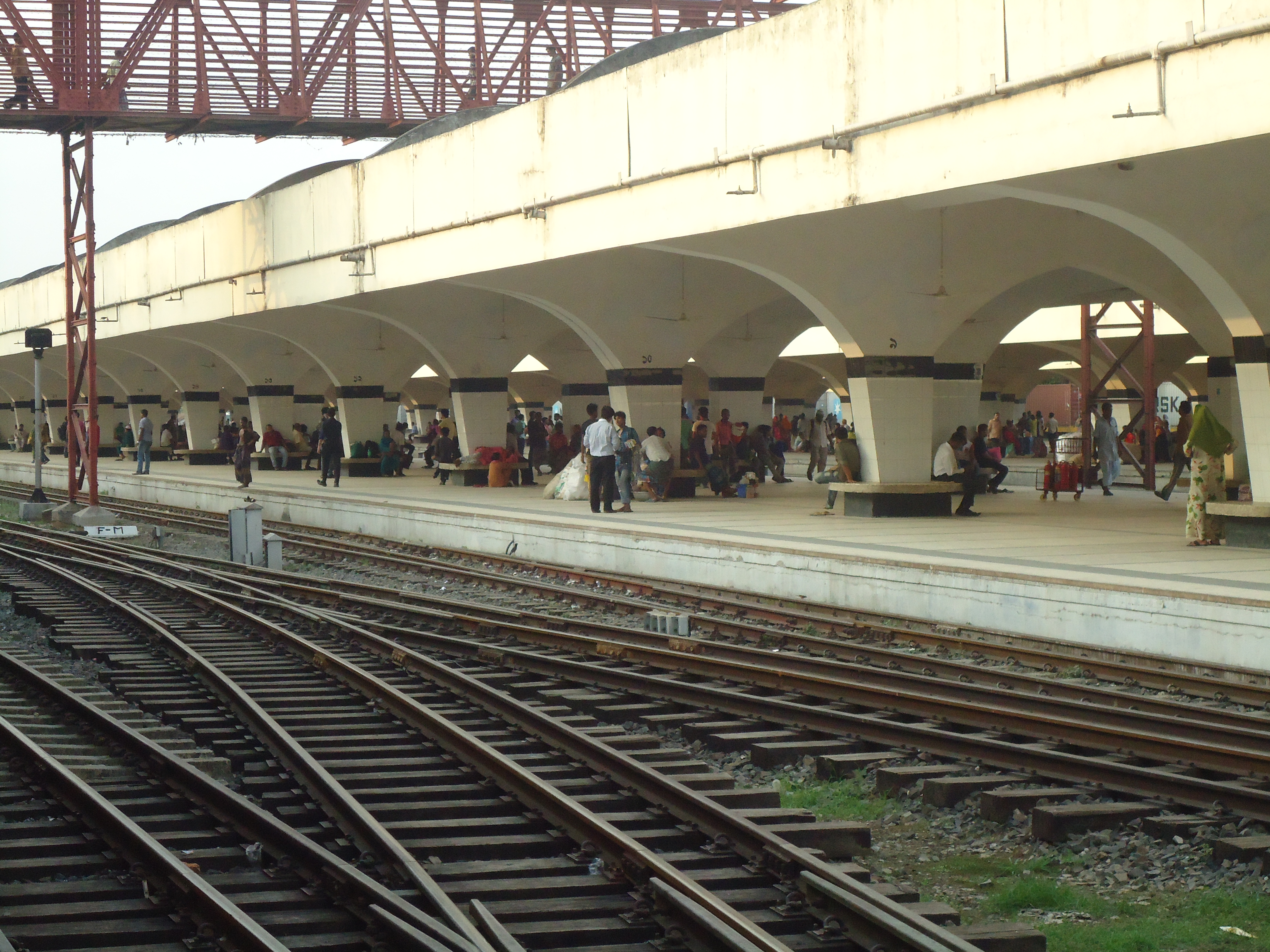
Photo: Wasiul Bahar / Wikimedia Commons (CC BY-SA 4.0)
Sources: Jagonews24, Bangla Tribune, The Business Standard (Bangla), Jugantor, The Daily Inqilab, Bangladesh Sangbad Sangstha (BSS), Prothom Alo, Khobor Sangjog, Wikipedia
Comments
(0)