
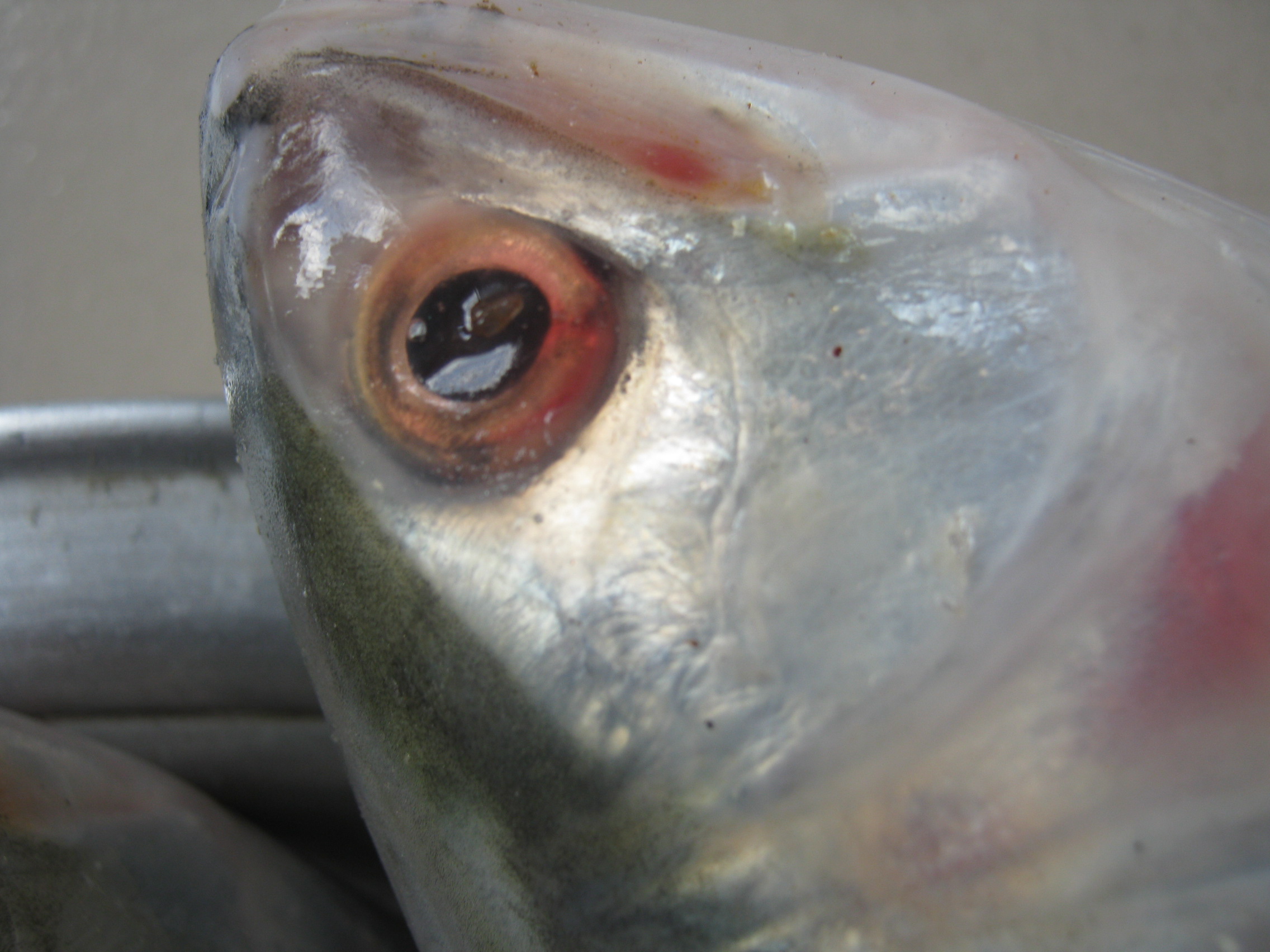
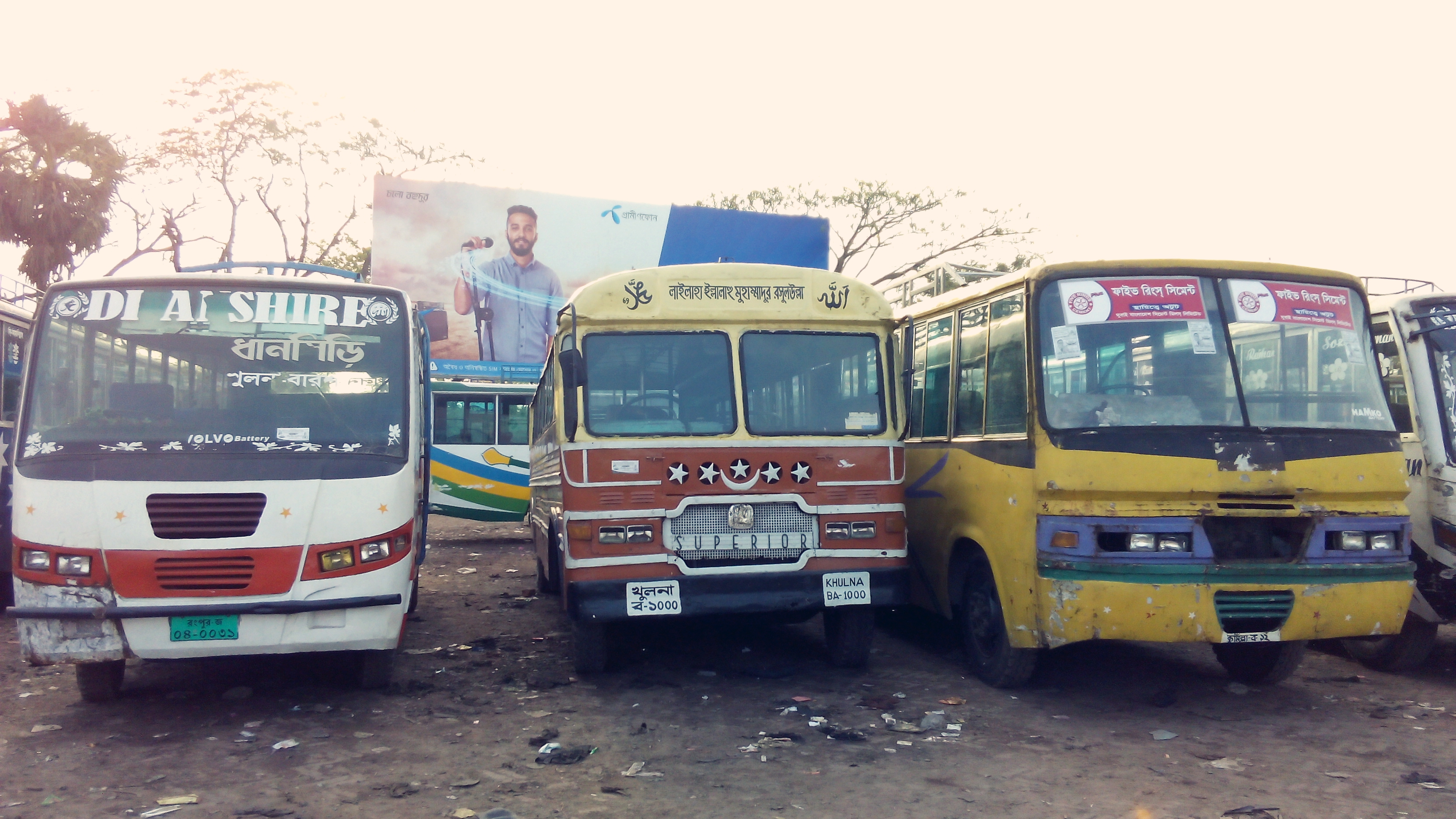
The Bangladesh Coast Guard seized 42 maunds of jatka, the young of the hilsa, from a Dhaka-bound passenger bus at the Dapdapia zero point on the Dhaka-Kuakata highway in Nalchity upazila of Jhalakathi district on the morning of Wednesday, 1 April 2026, according to the Coast Guard and the upazila administration as reported by Jagonews24. The bus had set out from Patuakhali. An executive magistrate held a mobile court at the scene and fined the bus's driver, supervisor and helper a total of Tk 5,000, and the fish were handed out to madrasas and orphanages in the upazila. The seizure came during the eight-month national ban on catching, carrying and selling jatka that ran from 1 November 2025 to 30 June 2026.
The search at Dapdapia
Acting on a tip-off, the Coast Guard set up an operation in the Dapdapia zero point area that morning and searched a bus of the Islam Paribahan company travelling to Dhaka from Patuakhali. In it they found a large consignment of jatka. The Coast Guard said the fish had been caught from the river in defiance of the government's ban and were being carried for sale.
The daily Jugantor, reporting the same operation at 6:36 pm on 1 April, put the quantity at 1,700 kg. It described the vehicle as a passenger bus of Islam Paribahan going from Patuakhali to Dhaka with the jatka on board illegally, and said the Coast Guard stopped it at the spot on a tip-off and recovered the fish in a search. The Daily Gonokantho also reported the seizure that day, under a headline giving it as 42 maunds of jatka seized in Nalchity with a fine collected.
The maund, or mon, is the traditional South Asian unit of weight. When the old British Indian standard was converted to metric units after independence, one maund became exactly 37.3242 kg, and a similar metric definition is used in Bangladesh; in day-to-day use throughout Bangladesh, one maund is counted as 40 kg.
The Coast Guard said that, under the government's instructions, catching, transporting and selling jatka was completely banned, and that this consignment had been seized while it was being moved illegally in breach of the ban. Officials of the upazila administration and the Coast Guard said the drive to protect hilsa would be stepped up and that strict action against those who broke the law would continue.
The mobile court and the fine
After the seizure, Nalchity upazila's Assistant Commissioner (Land), who also acts as an executive magistrate, came to the scene and conducted a mobile court. The court fined the bus's driver, supervisor and helper a total of Tk 5,000. Neither Jagonews24 nor Jugantor named the three men. The upazila administration said the 42 maunds of jatka were then distributed among various madrasas and orphanages in the upazila.
Courts of this kind sit under the Mobile Court Act, 2009. The Act lets an empowered executive magistrate, while carrying out law-and-order and crime-prevention work, take cognisance on the spot of an offence under one of the laws listed in its schedule that is committed or discovered in front of him, and punish the accused person on the basis of his own admission. The magistrate must first frame a short written charge, read and explain it to the accused and ask whether he admits it. An admission is written down and signed or thumb-printed by the accused and by two witnesses, after which the magistrate gives a signed written order with the punishment he considers fit.
If the accused denies the charge and his explanation is satisfactory, the magistrate must release him; if it is not, the complaint goes to a court with jurisdiction. Whatever the underlying law provides, a mobile court may not impose more than two years' imprisonment, though it may impose any fine within the limit that law sets. Where the magistrate considers an admitted offence too serious for the punishment a mobile court can give, he must arrange for a regular case to be filed instead.
The jatka ban in force that season
The ban the Coast Guard referred to was the annual eight-month ban on jatka. The Financial Express, citing the news agency UNB, reported on 1 November 2025 that a nationwide ban on catching juvenile hilsa had begun that day and would remain in force until 30 June 2026, with the aim of raising hilsa production and conserving the stock. Supervised by the Ministry of Fisheries and Livestock and implemented by the Department of Fisheries (DoF), it prohibited catching, transporting, marketing, buying, selling and storing hilsa smaller than 25 centimetres.
The paper said the jatka ban followed the Hilsa Conservation Campaign 2025, run from 4 to 25 October 2025 to protect brood hilsa at the peak of their breeding season. Officials said the eggs laid in that period had hatched and the young fish were roaming the coastal rivers and estuaries; if they were allowed to grow safely, the country's hilsa production was expected to rise significantly in the following years. Under the amended fish protection ordinance of 2025 and the Protection and Conservation of Fish Rules 1985, the paper said, violators faced up to two years in prison, a fine of up to Tk 5 lakh, or both, and the DoF would enforce the ban together with district and upazila administrations, the Navy, the Coast Guard, the River Police, RAB and other law enforcement agencies.
The eight-month window was not new. Prothom Alo, reporting a jatka seizure in Barishal in March 2021, described the rule as a ban every year from 1 November to 30 June on catching, transporting and selling jatka, which it defined as hilsa smaller than 10 inches. Jagonews24's report linked the ban to protecting 'mother hilsa'. Strictly, the rule that covered young fish on a bus in April was this ban on jatka; brood fish are protected by a separate nationwide ban in the main breeding season, which The Business Standard in October 2023 described as 22 days of no catching, transporting, marketing, buying, selling or stockpiling of hilsa.
What the law said on 1 April 2026
The bans rest on the Protection and Conservation of Fish Act, 1950. Section 4 allows the government, by notification, to prohibit for a specified period the catching, carrying, transporting, offering, exposing or possession for sale or barter of fish below the prescribed size of any prescribed species, throughout Bangladesh or in any part of it. Section 3 allows the government to make rules that, among other things, prescribe seasons when a species may not be caught, set a minimum size below which a species may not be killed or sold, and prohibit all fishing in specified waters for a specified period.
The penalties had been raised in 2025. The Protection and Conservation of Fish (Amendment) Ordinance, 2025 (Ordinance No. 34 of 2025), dated 29 June 2025 and effective immediately, replaced the old penalty in section 5(1), which had been at least one year and up to two years in prison or a fine of up to Tk 5,000, with rigorous imprisonment of up to two years, a fine of up to Tk 5 lakh, or both, for breaking a rule made under section 3 or a prohibition notified under section 4. It also changed the current-net penalties to up to three years' rigorous imprisonment and a fine of up to Tk 10 lakh for making, importing, marketing or storing current nets, and up to one year or a fine of up to Tk 2 lakh, or both, for carrying, transporting, owning, possessing or using them. The same ordinance defined a 'fish sanctuary' as an area or whole water body declared by gazette where fish and other aquatic life are protected so that they can breed, thrive and move freely, and empowered the government to declare sanctuaries where fishing could be banned permanently or for a set period.
A second ordinance, the Protection and Conservation of Fish (Amendment) Ordinance, 2026 (Ordinance No. 21 of 2026), dated 2 February 2026, added electrofishing devices to the destructive methods the rules may ban, defined 'water body' to cover rivers, estuaries, canals, beels, haors, baors, ponds, floodplains and wetlands, allowed the government to declare aquatic 'other effective area-based conservation measures', and added a section on sustainable fisheries management. Both ordinances were in force on 1 April 2026.
The Act also sets out enforcement powers that remained unchanged. Fishery officers empowered by the government have the powers of search, seizure and investigation of a police sub-inspector. A person committing a breach of a rule or a notified prohibition may be arrested without warrant if his name and address are unknown or doubtful. Offences under the Act are cognisable, and a court that convicts someone must order the confiscation of any article or thing used or intended to be used in the offence. Section 4A, in force since 2002, bans the manufacture, import, marketing, storage, carriage, transport, ownership, possession and use of current nets, one of the gears Banglapedia lists among those used to catch jatka.
Sanctuaries closed for March and April
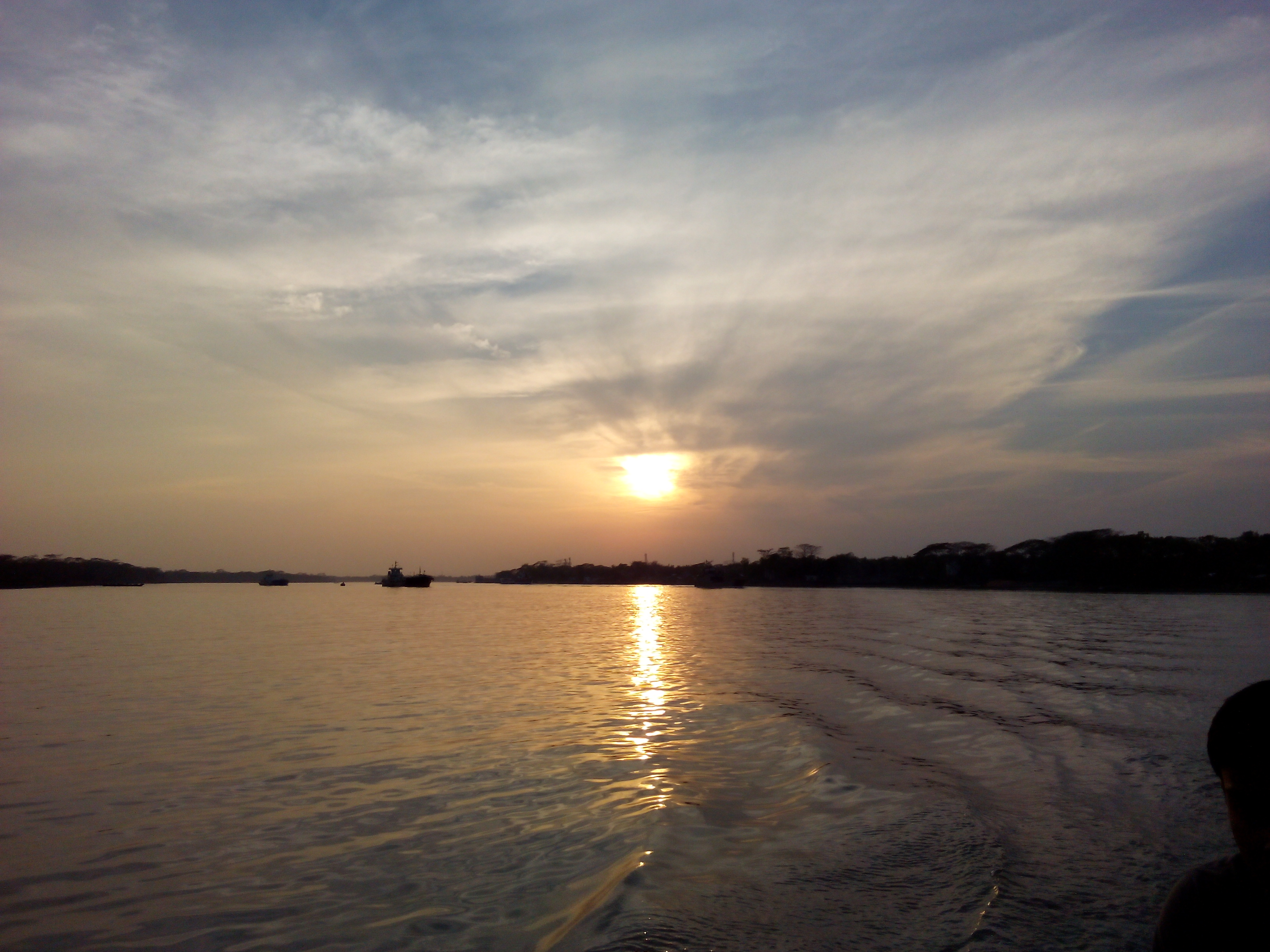
The seizure also fell in the two months when fishing of every kind is stopped in most of the country's hilsa sanctuaries. The state news agency BSS reported on 1 March 2026 that from that day until 30 April all fishing, hilsa included, was banned in five sanctuary areas in Barishal, Patuakhali, Bhola and Chandpur, and that the Navy, the river police, the Coast Guard and the DoF would run drives in an 82 km sanctuary stretch in Barishal. The two-month closure, BSS said, is imposed every year so that jatka can grow into full-sized hilsa, and fishing in a sanctuary in breach of it carried a prison term of up to two years and a fine.
According to the DoF, BSS reported, food aid was to be given during the closure to 234,421 fisher families in six districts of Barishal division, including 44,736 registered hilsa fishers in ten upazilas of Barishal district. Fishers told the agency that they lost their income during the ban, that when rice aid did not arrive in time many were forced back onto the river, and that many genuine fishers had received neither rice nor a fisher's card. Barishal's district fisheries officer, Dr Md Hadiuzzaman, said the ban would be enforced firmly and that speedboats and launches had been arranged to guard the rivers day and night, especially in Hizla and Mehendiganj upazilas. The Daily Ittefaq, reporting the same day, quoted Bhola's district fisheries officer, Iqbal Hossain, as saying that two sanctuaries covering 190 km of the Meghna, the Tetulia and other rivers in Bhola would be closed.
The sanctuary network had grown over the years. The Dhaka Tribune reported in June 2018 that an 83 km stretch of the Meghna from Hizla to Mehendiganj in Barishal had been declared the country's sixth hilsa sanctuary, and that the March-April ban applied in all sanctuaries except the one in the Andharmanik river in Patuakhali, which closes from November to January instead. The Business Standard reported in February 2025 that a 100 km stretch from Alexander in Ramgati, Lakshmipur, to Shatnal in Matlab, Chandpur, was declared a breeding ground for hilsa, and that small hilsa move into the sanctuaries during the March-April ban.
Jatka Conservation Week planned for 7 April
On the day of the seizure the government was preparing for its annual awareness week. Protidiner Bangladesh reported at 12:48 pm on 1 April 2026 that Jatka Conservation Week 2026 would run from 7 to 13 April, under the slogan 'If we stop catching jatka, the seas and rivers will fill with hilsa'. The decision had been taken at a meeting of the national task force committee on hilsa resource development on 8 March, and the minutes were issued on 11 March.
The paper said the week would be observed in 20 districts: Manikganj, Rajbari, Faridpur, Madaripur, Shariatpur, Munshiganj, Bhola, Patuakhali, Barishal, Pirojpur, Barguna, Jhalakathi, Chandpur, Lakshmipur, Feni, Noakhali, Chattogram, Bagerhat and Sirajganj among them. The minister was to brief the press on 6 April, and the central opening, with a river rally, was set for 11 am on 7 April at the Molhead in Chandpur Sadar. In 2025 the week had been held from 8 to 14 April in 20 districts, with its central opening in Barishal Sadar upazila.
The meeting noted that jatka are abundant in the rivers in March and April, that all fishing, jatka included, is banned for those two months in five sanctuaries for the sake of the young fish, and that the week has been observed every year since 2007 to explain to fishers and the public why jatka must be protected and how illegal nets harm hilsa and other fish.
Why the young fish matter
Jatka is the local name for the young hilsa (Tenualosa ilisha), the national fish of Bangladesh. Banglapedia describes the hilsa as an anadromous member of the herring family: adult females release eggs upstream in the major rivers, including the Padma, Jamuna and Meghna, and the larvae hatch from free-floating eggs and stay in their nursery grounds to feed and grow. In about six to ten weeks they reach roughly 12 to 20 cm and become known as jatka; at that stage they begin descending to the sea, where they feed and mature before returning to the rivers to breed.
The hilsa is highly fecund: Banglapedia says a large female may produce up to 2 million eggs, and that although the fish spawns more or less throughout the year, it has a minor spawning season in February and March and a major one in September and October. It is a plankton feeder that matures in one to two years and can grow to 60 cm, though most specimens caught measure 35 to 40 cm.
Because the young fish move downstream in large numbers, they are easy to catch. A Bangladesh Fisheries Research Institute survey in 1992-94, cited by Banglapedia, estimated that about 3,500 to 4,000 tonnes of jatka were caught each January-April season with gears such as jagat berjal, current jal and behundi jal, more than half of it in the Meghna. The encyclopedia lists the indiscriminate catching of jatka among the main causes of the decline of the hilsa fishery, alongside reduced flow and heavy siltation, disrupted migration routes, the loss of spawning, feeding and nursery grounds, river pollution and flood-control works.
Hilsa in the national figures
The hilsa catch had grown strongly after protection began, then dipped. At a press conference on 11 October 2023, the then fisheries minister said production had risen to 5.71 lakh tonnes in 2022-23 from 2.98 lakh tonnes in 2008-09, an increase of about 92 per cent in 15 years, after an alarming fall in 2002-03. The Daily Star reported in April 2025, citing DoF data given by the Barishal divisional fisheries office, that production in 2023-24 fell to 5.29 lakh tonnes, about 42,000 tonnes less than the year before and the lowest in seven years; earlier figures were 5.32 lakh tonnes in 2018-19, 5.50 lakh in 2019-20, 5.65 lakh in 2020-21 and 5.66 lakh in 2021-22.
In that report a scientific officer at the Bangladesh Fisheries Research Institute's riverine station in Chandpur, Dr Mohammad Abu Kawsar Didar, blamed adverse weather that kept fishers ashore, a navigability crisis on the main migration routes such as the Meghna-Tetulia and the Payra-Bishkhali, where depths had fallen to two or three metres against the more than five metres hilsa prefer, and overfishing. The deputy director of the Barishal divisional fisheries office, Narendranath Biswas, said fewer hilsa were arriving through the main routes and admitted that many fishers continued to catch jatka illegally, undermining conservation.
The fish carries great weight in the economy. The Dhaka Tribune, citing the Fisheries Statistical Report 2016-17, said the hilsa then contributed around 12 per cent of the country's fish production and about 1 per cent of GDP, with around half a million fishers directly and two million more indirectly dependent on it. The Business Standard reported in February 2025 that, according to WorldFish data, 86 per cent of the world's hilsa is produced in Bangladesh, which ranks first among the 11 countries that produce it, that around 25 lakh people in the country are involved in the hilsa trade, and that the hilsa of Bangladesh received the geographical indication tag in 2017.
Earlier seizures on the southern roads
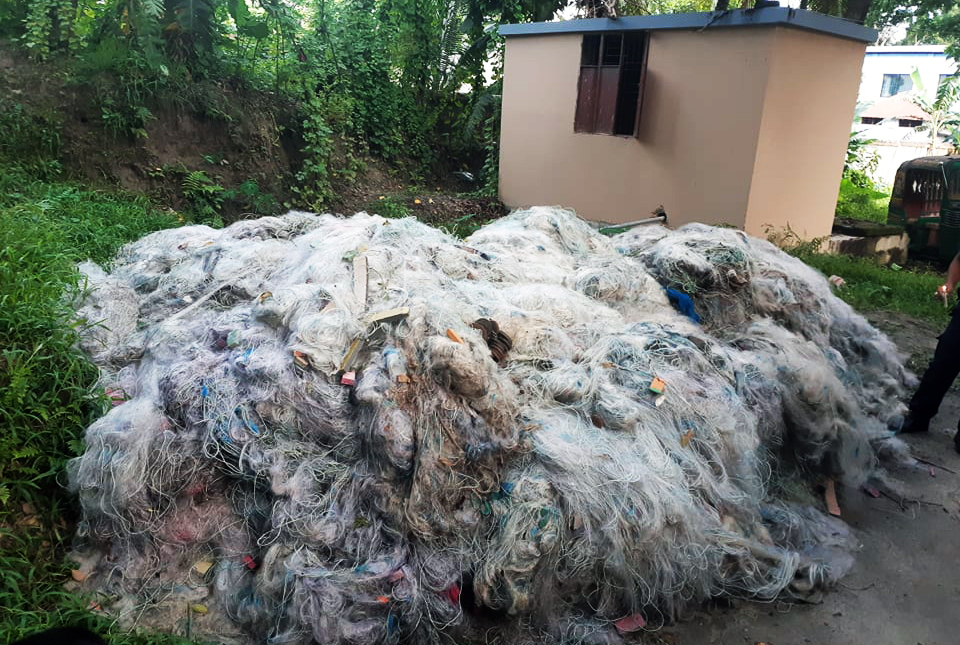
Jatka moving by road from the coast had been stopped in the same region before. Desh Rupantor reported in January 2022 that a mobile court in Jhalakathi, in a joint drive by the DoF and the district administration, seized 15 maunds of jatka from two Benapole-bound buses from Kuakata at the Krishnakathi petrol pump crossing on the Barishal-Khulna highway late at night. Six bus staff were fined Tk 5,000 each, a total of Tk 30,000, and the fish were distributed that night to madrasa lillah boarding houses, orphanages and a government children's home. The district fisheries officer said jatka had been taken from fish wholesalers at the Mohipur port in Kalapara upazila of Patuakhali and was bound for markets in Pirojpur, Khulna and Jashore, and that catching, transporting, storing and trading jatka was banned for eight months from November to June.
Prothom Alo reported on 14 March 2021 that the river police and the fisheries department, acting on information that jatka was being smuggled to the capital, seized 304 maunds of jatka from a passenger bus from Kuakata and a pickup van from Laharhat in Bhola at the toll plaza of the Abdur Rab Serniabat bridge in Barishal city. Four people were detained on allegations of involvement, a mobile court fined them Tk 12,000, and the jatka was distributed to madrasas and poor people. The district fisheries officer said surveillance continued round the clock with the help of the district and upazila administrations and law enforcement agencies.
Nalchity, Jhalakathi and the Coast Guard
Jhalakathi is a district of Barishal division covering 706.76 sq km, bounded by Barishal district to the north and east, Pirojpur to the west, and Barguna district and the Bishkhali river to the south, according to Banglapedia. Its main rivers are the Bishkhali, Gajalia, Nalchity and Kalijira. It became a subdivision in 1972 and a district in 1984, and the 2011 census counted 682,669 people. Of its four upazilas, Nalchity is the largest.
Banglapedia gives Nalchity upazila an area of 231.42 sq km with one municipality and ten unions, one of them Dapdapia, and a 2011 population of 193,556. Its rivers include the Nalchity, Bishkhali, Khairabad, Gazalia and Kalijira, and it has some 270 km of waterways. Nalchity thana was formed in 1924 and became an upazila in 1983. Agriculture is the main source of income, and paddy, pulses, wheat, maize, potato and vegetables are the main crops, with paddy, coconut and betel nut its main exports; the upazila also has fisheries, dairies, poultry farms and hatcheries, and ice factories among its manufacturers.
The Bangladesh Coast Guard is the country's maritime law enforcement agency. It operates under the Ministry of Home Affairs with officers from the Navy, and grew out of the Coast Guard Act passed in September 1994; it came into being in its present shape on 14 February 1995, starting with two patrol craft received from the Navy. Its headquarters is in Agargaon, Dhaka, and it has four zones, Dhaka, Chattogram, Mongla and Bhola. Its stated mission includes protecting the fishery, oil, gas and forest resources in Bangladesh's waters and coastal areas, and fishery protection is listed among its primary roles.
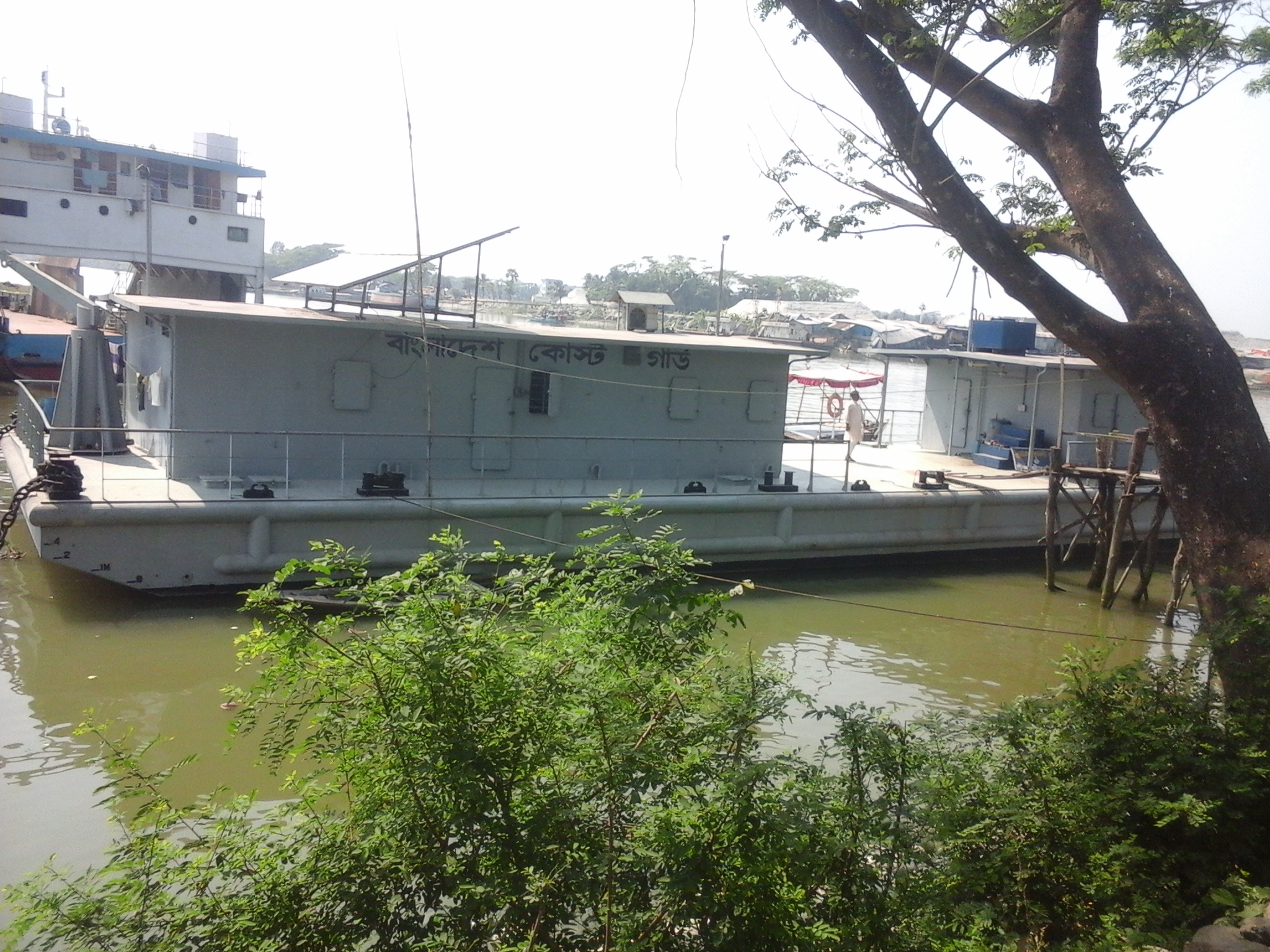
Photo: Rezowan / Wikimedia Commons (CC BY-SA 4.0)
Sources: Jagonews24, Jugantor, Daily Gonokantho, The Financial Express (UNB), Laws of Bangladesh (Protection and Conservation of Fish Act 1950, Amendment Ordinances 2025 and 2026, Mobile Court Act 2009), BSS, The Daily Ittefaq, Protidiner Bangladesh, Dhaka Tribune, The Business Standard, The Daily Star, Prothom Alo, Desh Rupantor, Banglapedia, Wikipedia
Comments
(0)