
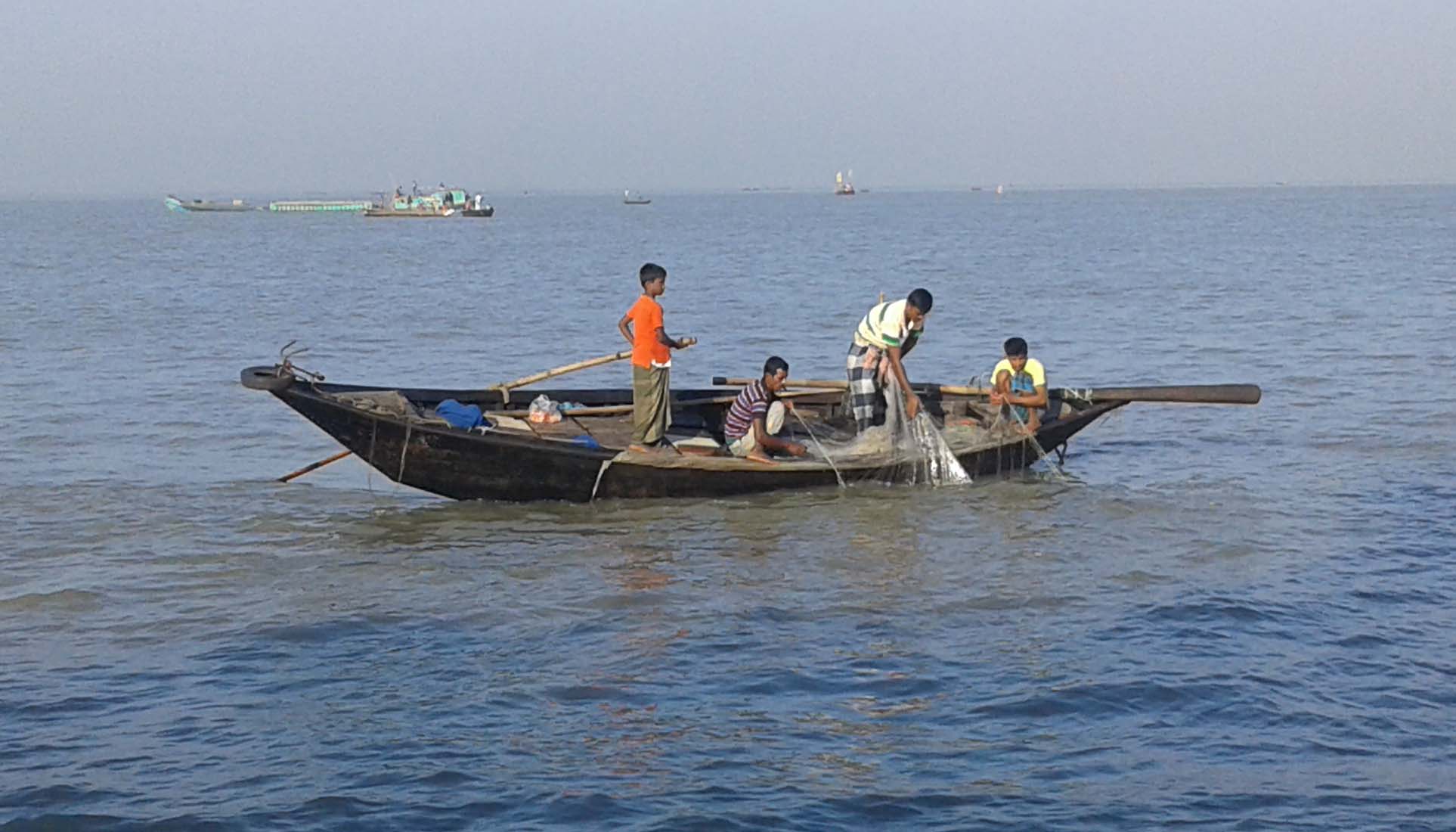
Fishers and local people on the Padma and Meghna rivers in Chandpur said in mid-April 2026 that jatka, the young of the hilsa, was still being caught and sold in large numbers, even though all fishing was banned in the district's hilsa sanctuary for March and April. Jagonews24's Chandpur correspondent Shariful Islam, reporting on 17 April 2026 after visits to several stretches of the two rivers, found fishers netting jatka freely, with patrol boats absent from many places. Local residents alleged that the catch went on with the backing of influential people. The senior fisheries officer of Chandpur Sadar upazila said joint patrols were continuing round the clock and that 140 fishers had been detained in the previous month, and the Fisheries and Livestock Minister said enforcement of the law had been strengthened.
What the reporter found on the rivers
According to the Jagonews24 report, fishers were seen casting nets freely in different parts of the Padma and Meghna. In many places there was no sign of regular patrols by the river police or the Coast Guard, and even where a patrol boat was seen, the reporter saw no effective action taken against fishers who were fishing at the time.
Local people alleged that jatka was being caught openly in front of the administration. They said news of drives leaked out ahead of time, so fishers could slip away easily, and that the drives had become largely a formality. These were the residents' allegations; the report did not carry a response from the agencies to that specific claim, beyond the fisheries officer's account of the patrols.
The report said that, ignoring the ban, fishers were laying nets at night at different points in Chandpur Sadar, Haimchar and Matlab Uttar upazilas, and that the jatka they landed was being sold at riverside markets and in neighbourhoods. According to local sources quoted in the report, the activity continued under the shelter of some political party leaders and activists and other influential people, which, those sources said, was why the drives could not stop it completely. No person or party was named, and the claim was not independently confirmed.
Fishers' accounts
Two fishers on the Meghna, Yunus and Abdul Awal, told Jagonews24: "There is hardly any jatka protection drive this year. Fishermen are catching fish in the river with various nets, including current nets."
One of them said: "They used to patrol by speedboat, but now they don't come. All the jatka in the river has been caught this year. Those of us who fish with big nets don't think we will get hilsa ahead. The government needs to step up its monitoring." His point was a practical one: the large-mesh nets used for adult hilsa later in the year depend on the jatka of spring surviving to grow.
Fishers' doubts about the food aid were not new. On 27 February 2026, as the 2026 ban began, ITV reported that fishers in Chandpur said the rice they received was not enough. A UNB report published by The Business Standard on 29 February 2024 had recorded the same complaint two years earlier: fishers at Ananda Bazar said they would obey the ban but that 40 kg of food aid did not go far with prices so high, and two fishers from a Meghna village asked for the assistance to be doubled because they had no other income while the river was closed.
The sanctuary and the March-April ban
The stretch in question is one of the country's hilsa sanctuaries. Each year from 1 March to 30 April, all fishing is banned in about 70 km of the Padma and Meghna in Chandpur, from Shatnal in Matlab Uttar upazila to Char Bhairabi in Haimchar upazila. The rule covers every kind of fish, not only hilsa: catching, selling, storing and transporting fish are all prohibited in the sanctuary for the two months, which the Matlab Uttar correspondent of the Daily Inqilab described on 1 March 2026 as the main season for the hilsa's young to grow in these waters.
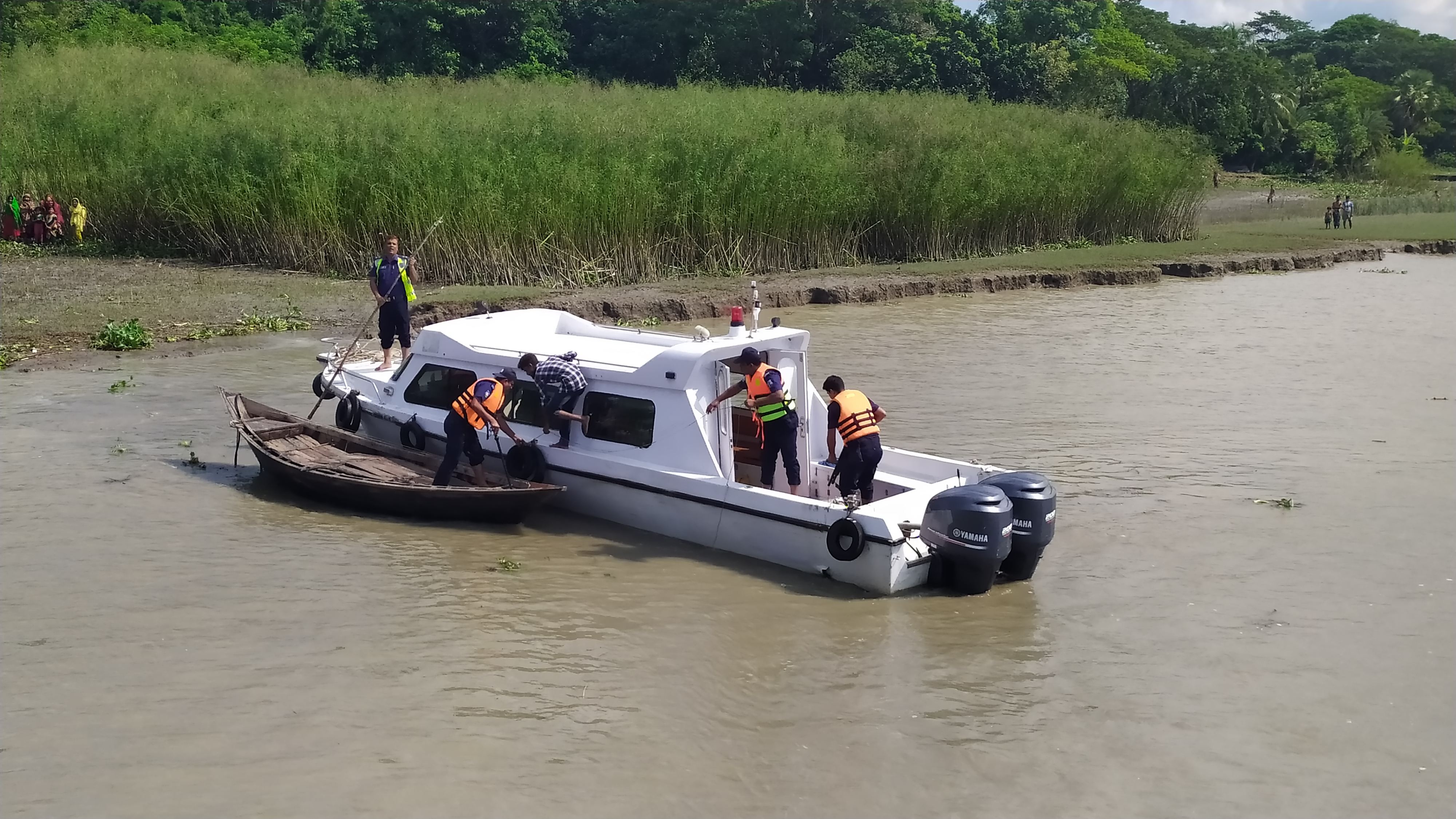
ITV reported on 27 February 2026 that more than 47,000 registered fishers in four upazilas, Chandpur Sadar, Haimchar, Matlab Dakshin and Matlab Uttar, were affected by the ban, and that 39,400 of them would receive 40 kg of rice a month for four months. A district fisheries official, Md Fakhrul Islam, told ITV that a fleet of 12 speedboats would patrol round the clock through March and April. Abdul Bari Jamadar Manik, president of the district fish traders' association, called for both awareness and enforcement.
In Matlab Uttar alone, the Inqilab report said, 9,100 fishers were registered, and each was to receive 160 kg of rice in four instalments under the government's Vulnerable Group Feeding (VGF) programme. The upazila's senior fisheries officer, Bijoy Kumar Das, said drives against jatka fishing would start on the Meghna from 1 March, conducted jointly or separately by the local administration, police, river police and Coast Guard. The upazila executive officer, Mahmuda Kulsum Moni, said fishers had been told to stop killing jatka and that a task force would keep the river clear of fishers who broke the rules.
The sanctuary ban was a long-standing annual measure. UNB reported on 27 February 2025 that about 44,000 registered fishers in the district were barred from fishing in the same 70 km stretch from 1 March to 30 April that year, with 40 kg of rice a month for four months under VGF, task forces in Chandpur and Haimchar and river police patrols day and night. In 2024 the figure given was 43,000 registered fishers.
What the law said in April 2026
The bans rest on the Protection and Conservation of Fish Act, 1950, which allows the government to prohibit, by notification, the catching, carrying, transporting or possession for sale of fish below a prescribed size, and to make rules on fishing. The Act was amended by the Protection and Conservation of Fish (Amendment) Act, 2026 (Act No. 25 of 2026), dated 10 April 2026, which took effect immediately. That law repealed two interim ordinances of 2025 and 2026 on the same subject.
Under the Act as it stood on the date of this report, breaking a rule made under the Act or a prohibition notified under it was punishable with rigorous imprisonment of up to two years, a fine of up to Tk 5 lakh, or both. The original report said violators faced at least one and up to two years in prison or a fine of up to Tk 5,000; that was the older wording of section 5, which the 2026 amendment replaced.
The Act has a separate section on current nets, the fine monofilament gill nets often used to catch jatka. Since 2002 no one may manufacture, import, market, store, carry, transport, own, possess or use a current net. After the 2026 amendment, manufacturing, importing, marketing or storing current nets was punishable with up to three years' rigorous imprisonment and a fine of up to Tk 10 lakh; carrying, transporting, owning, possessing or using them, with up to one year or a fine of up to Tk 2 lakh, or both.
The 2026 amendment also wrote the sanctuary idea into the Act itself. It defined a "fish sanctuary" as an area or a whole water body declared by the government in the official gazette where fish and other aquatic life are protected so that they can breed, thrive and move freely, and it gave the government power to declare such sanctuaries, where catching fish could be banned permanently or for a set period.
Officials' account of the drives
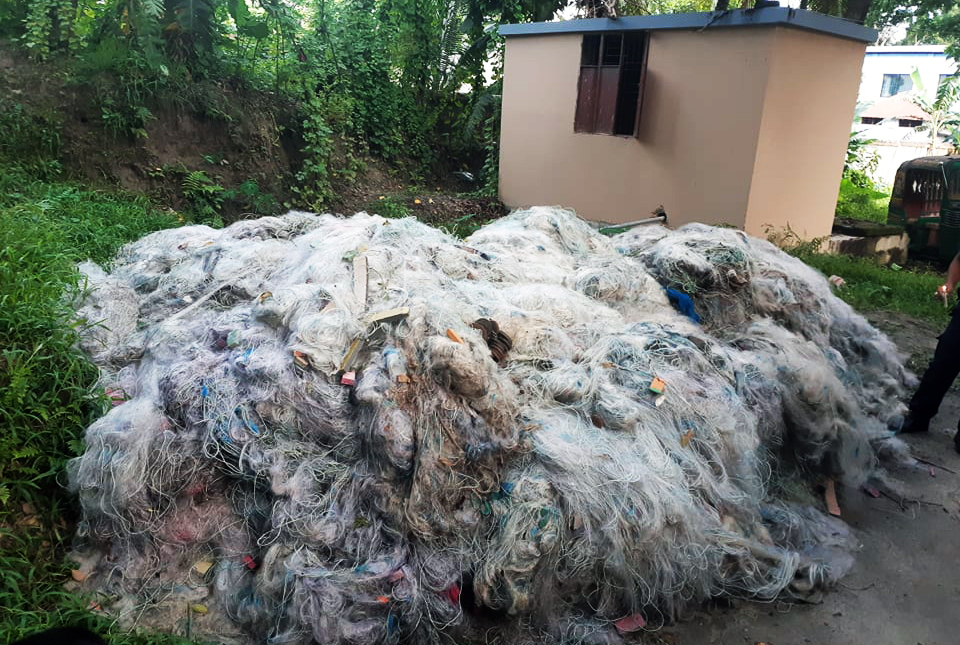
Mirza Omar Faruk, senior upazila fisheries officer of Chandpur Sadar, told Jagonews24 that patrols on the river were continuing with the fisheries department, the Coast Guard and the river police working together. He said the fisheries department had run drives in rotation 24 hours a day, that 140 fishers had been detained over the previous month for breaking the ban, and that a large quantity of current net had been seized.
One of those drives had been reported in detail two weeks earlier. Dhaka Times reported on 2 April 2026 that a task force operating from 5 pm on 1 April to 2 am on 2 April along the Meghna in Chandpur Sadar, from Akhner Hat to Bahoriya, caught 32 fishers in the act of catching jatka. Twenty-six were sent to the river police station with regular cases under the fisheries law, while two who were ill and four minors were released on bonds. The team seized two boats, about 5,000 metres of current net and about 20 kg of jatka, which was distributed to poor people. Omar Faruk confirmed the operation and said ten cases had been filed.
The national picture was set out by the Fisheries and Livestock Ministry on 6 April 2026, ahead of Jatka Conservation Week. According to UNB, a 30-day "Special Combing Operation 2026" had been run in January and February in 96 upazilas of 18 districts, and a 15-day drive in March in 79 upazilas, with drives to continue until June against current nets and behundi nets, a fixed bag net.
The same complaints had come from Chandpur in earlier seasons. On 6 April 2023 the Daily Inqilab reported that a task force in Haimchar had detained 60 fishers for catching jatka in the sanctuary, of whom 44 were sentenced to prison, and that about 120,000 metres of current net seized in the area had been burned.
Fisheries and Livestock Minister Md Amin Ur Rashid told Jagonews24 for the 17 April report that the government was taking a firm stand on conserving jatka to protect the country's hilsa, and that enforcement of the law had been strengthened further.
Why jatka matter to the hilsa catch
Jatka is the Bengali name for the young hilsa (Tenualosa ilisha), the country's national fish. Banglapedia describes the hilsa as an anadromous fish of the herring family: adults run up the big rivers, including the Padma, Jamuna and Meghna, to spawn in fresh water, and the young drift down to the sea to feed and grow before returning as adults. It spawns through much of the year, with a minor season in February and March and a major one in September and October, and a large female can carry up to 2 million eggs. Wikipedia's account, drawing on fisheries research, says adults may travel some 50 to 100 km upriver to spawn, and that males usually mature at 26 to 29 cm and females at 31 to 33 cm.
Because the young pass down the rivers in large shoals, they are easy to catch. Banglapedia notes that jatka are taken in great numbers during this seaward migration, mainly from February to May, with gears such as jagat berjal, current jal and behundi jal. A Bangladesh Fisheries Research Institute (BFRI) survey in 1992-94 estimated that 3,500 to 4,000 tonnes of jatka were caught each January-April season, more than half of it from the Meghna. The encyclopedia lists over-exploitation of jatka among the main causes of the hilsa's decline in earlier decades, alongside siltation, pollution, flood-control works and lost nursery grounds.
Hilsa researcher Dr Md Anisur Rahman, formerly a scientific officer at BFRI's river research centre in Chandpur, put the point plainly to Jagonews24: "Today's jatka is tomorrow's big hilsa. Indiscriminate catching of jatka in the river could have an adverse effect on hilsa production in future. If jatka fishing continues like this, hilsa production will be seriously hampered." He added: "Protecting hilsa has now become a big challenge. If 70-80 per cent of jatka can be protected, the country's hilsa production could be raised to nearly six lakh tonnes."
He had made related points before. In February 2025, as reported by UNB, he linked the fall in hilsa numbers to pollution and excessive sand extraction from the rivers. On 1 March 2026 he told the Daily Inqilab that administrative action alone would not raise production, and that without financial security for fishers the benefits of the ban would not last.
Hilsa output and the national rules before the report
The report came at a time of falling hilsa output. According to Department of Fisheries figures carried by the daily Desh Rupantor on 7 April 2026, production rose from 4.96 lakh tonnes in 2016-17 to 5.71 lakh tonnes in 2022-23, then fell to 5.29 lakh tonnes in 2023-24 and to about 5 lakh tonnes in 2024-25, the lowest in eight years. Minister Amin Ur Rashid gave the 2024-25 figure at a press conference at the Secretariat on 6 April 2026 and named river siltation, climate change, river pollution and growing pressure on fish stocks as the reasons production was hard to sustain.
At the same briefing the ministry said hilsa made up about 9.79 per cent of the country's fish production and close to 1 per cent of GDP, that Bangladesh produced more than 80 per cent of the world's hilsa and ranked first among the 11 countries that catch it, and that about 6 lakh people fished for hilsa directly while 20 to 25 lakh more worked in transport, trade, net and boat making, ice, processing and export. The hilsa was registered as a Geographical Indication product of Bangladesh on 6 August 2017.
The main protections in force in April 2026, as the ministry listed them, were:
- A complete ban on catching, transporting and selling jatka from 1 November to 30 June.
- Six hilsa sanctuaries, with seasonal fishing bans in designated areas, including the March-April closure in Chandpur.
- A 22-day ban on hilsa fishing in the peak breeding season.
- A 58-day ban on all fishing in the Bay of Bengal from 15 April to 11 June.
- A marine protected area of 3,188 square kilometres.
- Food aid of 40 kg of rice a month for four months for about 3.67 lakh fisher families, plus training, equipment and other support for alternative income.
Jatka Conservation Week 2026 ran from 7 to 13 April under the slogan "If we stop catching jatka, rivers and seas will be filled with hilsa", with its opening in Chandpur Sadar and programmes in 20 hilsa-rich districts. At the 6 April briefing, State Minister Sultan Salauddin Tuku said that for the first time 40,000 fishers would receive a two-month food package of rice, flour, oil, lentils, sugar and potatoes worth about Tk 6,000 per family. The Jagonews24 report from the rivers was published four days after the week ended, while the sanctuary ban still had two weeks to run.
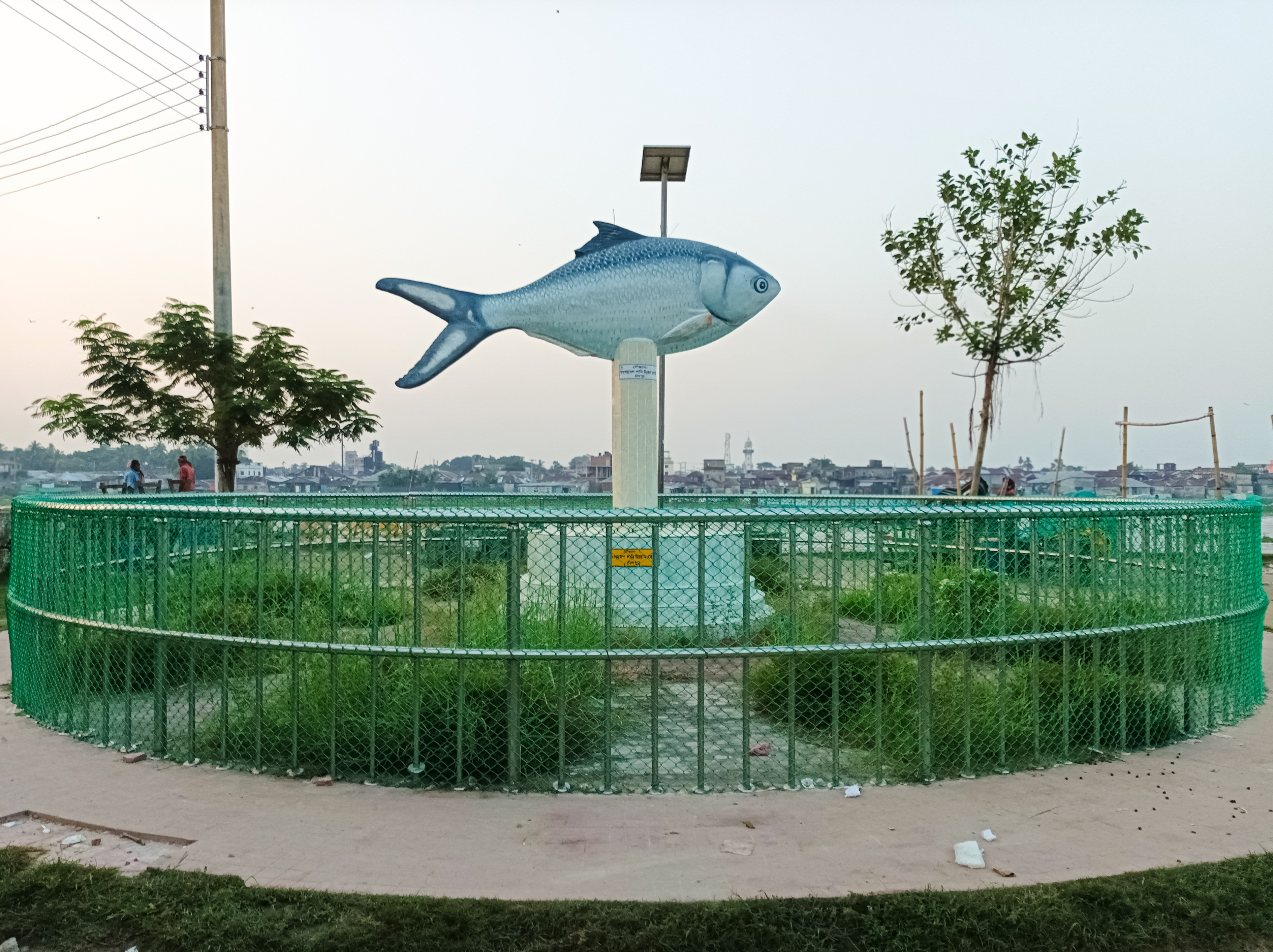
Chandpur, where the Padma meets the Meghna
Chandpur district, in Chattogram division, is widely known as the "home of hilsa". It lies on the east bank of the Meghna and has eight upazilas: Chandpur Sadar, Faridganj, Haimchar, Hajiganj, Kachua, Matlab Dakshin, Matlab Uttar and Shahrasti. Banglapedia gives its area as 1,645.32 square kilometres; the 2022 census counted 2,635,748 people. Chandpur was made a subdivision in 1878 and a district in 1984. Haimchar, the southern upazila where the sanctuary ends, covers 134.16 square kilometres in six unions; Matlab Uttar, where it begins, covers 260.29 square kilometres.
The town stands at the confluence known as Molhead or Boro Station, where the Padma, Meghna and Dakatia meet. Banglapedia describes how the Upper Meghna becomes the Lower Meghna below Shatnal, and how the Padma, carrying the combined flow of the Ganges and the Brahmaputra-Jamuna, joins it about 16 km from Shatnal near Chandpur, where the confluence is about 11 km wide in the rainy season. The Lower Meghna then runs some 160 km south towards the Tentulia. Mean flow at Chandpur between June and October is about 2.5 million cusecs, and the river carries some 1,500 million tons of sediment a year.
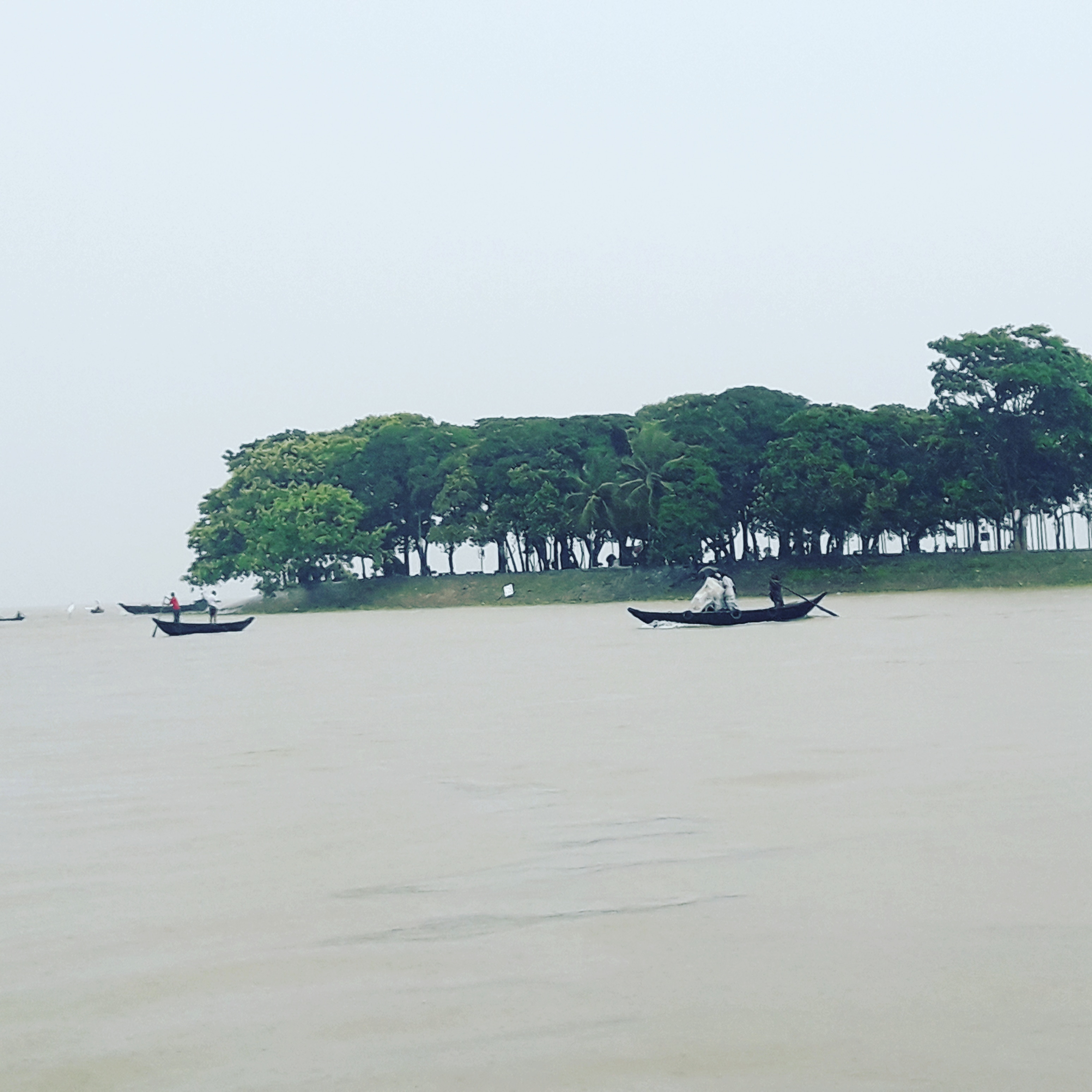
These wide, silt-laden channels are a nursery and migration route for young hilsa on their way to the sea, which is why the Chandpur stretch was closed to fishing in spring and why what happened there in March and April mattered for the hilsa catch of the seasons to come.
Photo: AsikBinRahim / Wikimedia Commons (CC BY-SA 4.0)
Sources: Jagonews24, Dhaka Times, ITV, The Daily Inqilab, UNB, The Financial Express, The Business Standard, Desh Rupantor, Laws of Bangladesh (Protection and Conservation of Fish Act, 1950 and Amendment Act, 2026), Banglapedia, Wikipedia
Comments
(0)