
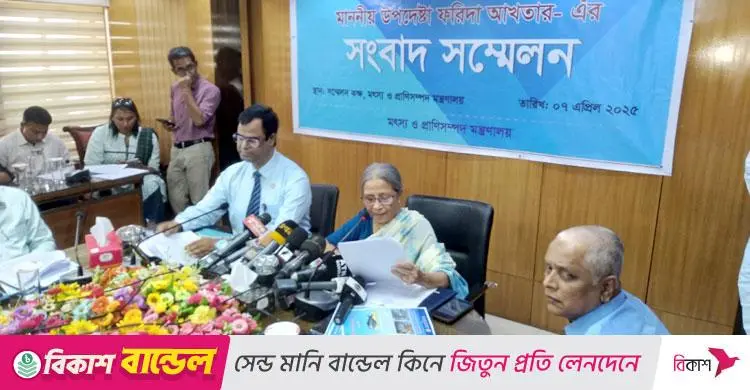
The government will observe Jatka Conservation Week from 8 to 14 April. During the week it will work to stop the catching of jatka (young hilsa), the making of illegal nets, smuggling, illegal transport and hoarding.
Farida Akhter, adviser to the Ministry of Fisheries and Livestock, announced this at a press conference at the Secretariat on Monday (7 April).
She said the government has taken an effective action plan to bring hilsa within the purchasing power of ordinary people, and the conservation week is part of that.
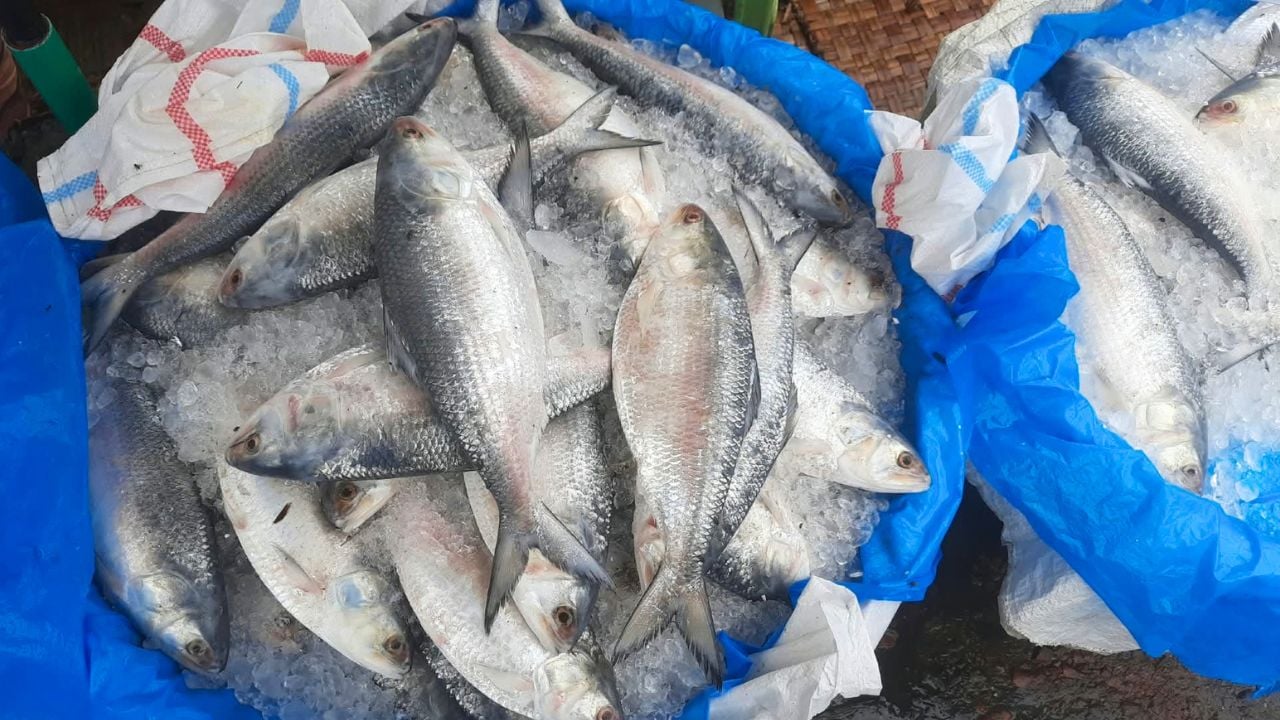
This year's theme is "If jatka catching stops, hilsa will fill the nets". Jatka are small hilsa of 10 inches or 25 centimetres. A 1 kg hilsa is at least 40 to 50 centimetres long, and one over 2 kg is 60 to 62 centimetres. The aim of the week is to let jatka grow into hilsa, she said.
Hilsa in numbers
She said 5 lakh 29 thousand tonnes of hilsa were produced in the country in the 2023-24 financial year. Hilsa makes up about 11 percent of total fish production and more than 1 percent of GDP. More than about 80 percent of the world's hilsa is caught from Bangladesh's rivers, estuaries and sea, and Bangladesh is at the top among 11 hilsa-producing countries.
About 6 lakh people are directly engaged in catching hilsa, and 20 to 25 lakh are directly or indirectly involved in transporting and selling hilsa, making nets and boats, producing ice, processing and export. The interim government is working constantly to develop hilsa resources and put hilsa within reach of people across the country, she said.
"Jatka Conservation Week 2025" will be observed in 20 hilsa-rich districts: Dhaka, Manikganj, Rajbari, Shariatpur, Madaripur, Faridpur, Munshiganj, Barishal, Bhola, Patuakhali, Pirojpur, Barguna, Jhalakathi, Chandpur, Lakshmipur, Feni, Noakhali, Chattogram, Bagerhat and Sirajganj. Seven days of programmes will be held at central, district and upazila levels. The week will be inaugurated on 8 April at Bells Park in Barishal Sadar upazila, with a boat rally on the Kirtankhola river next to DC Ghat.
Sea fishing ban changed
Under rule 3(1) of the Marine Fisheries Rules 2023, catching all fish and crustaceans in Bangladesh's waters in the Bay of Bengal had been banned for 65 days each year from 20 May to 23 July. This is recorded as having increased the marine fish catch by 12.78 percent.
Against this background, the Ministry of Fisheries and Livestock formed a technical committee of university teachers specialising in marine fisheries science, scientists of the Bangladesh Fisheries Research Institute (BFRI), Department of Fisheries officials and representatives of various stakeholders. After examining scientific data, the committee recommended setting the Bay of Bengal fishing ban at 58 days, from 15 April to 11 June. On that recommendation, the government issued a notification on 16 March.
As a result, the Marine Fisheries Rules 2023 have been amended, and catching fish from the Bay of Bengal by any fishing vessel is now banned for a total of 58 days, from 15 April to 11 June every year, for marine fish conservation and sustainable fishing.
Source: Jagonews24. First published in Bengali on The Agro News.
Comments
(0)