
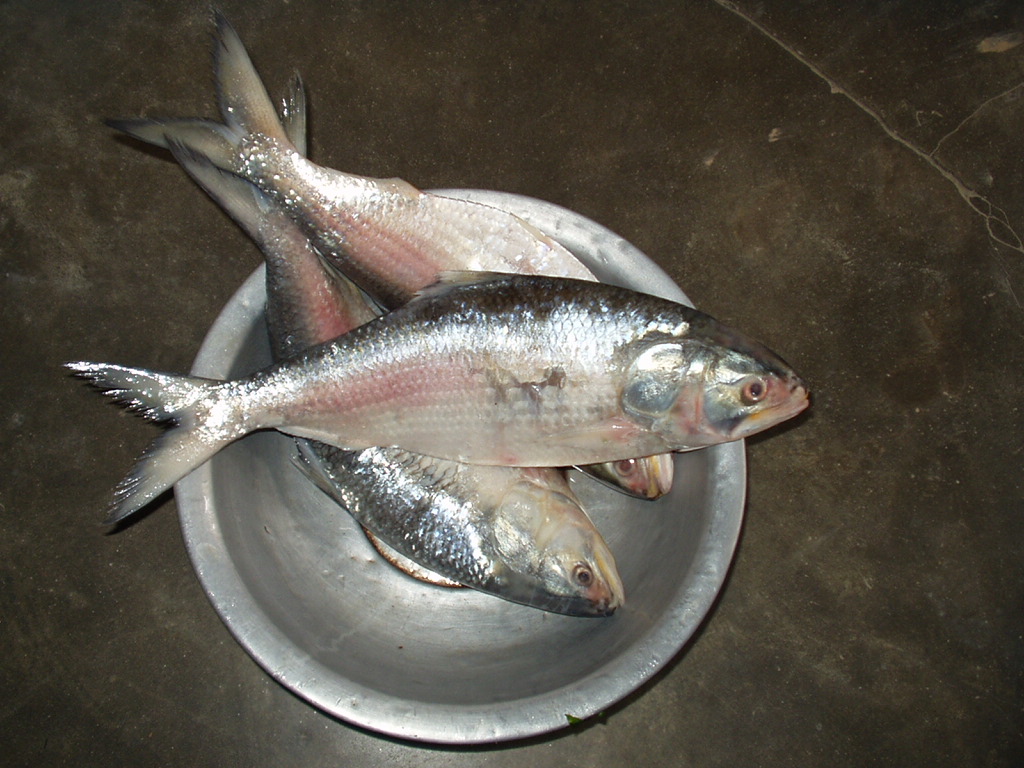
Bangladesh's hilsa will not reach India this year, so how will West Bengal's markets manage, and can Indian hilsa match the Padma fish? Ei Samay Online put the question to chefs, fish traders and fishermen's associations in Kolkata.
Executive chef Sushanta Sengupta, a co-owner of a Kolkata restaurant, said hilsa from Diamond Harbour and near the Bangladesh border is of very good quality and no less tasty, though it depends on the season; fish arriving after June lack flavour. Veteran fish trader Prafulla Haldar said hilsa entering from the Bay of Bengal is caught at Digha Mohana, Diamond Harbour and Namkhana, while catches from the Damodar and Rupnarayan at Kolaghat have fallen sharply. The state's own hilsa is broadly meeting demand, he said.
Hilsa is landed at Digha Mohana, Shankarpur, Shoulya near Contai, Khejuri, and on the Rupnarayan at Kolaghat, Mahishadal and Haldia. Pranab Kar, chairman of the Digha Mohana Fish and Fish Traders Association, said he has found no difference between Digha and Bangladeshi hilsa in the past 10 to 15 years. Swadesh Nayek, secretary of the Shankarpur Fishermen's Association, said West Bengal will not suffer much if the large Padma hilsa does not come.
Some point to hilsa from Odisha's Budhabalanga river, but Prafulla Haldar said it does not reach most of West Bengal; the market is filled from Digha, Kolaghat and Diamond Harbour, along with hilsa from Gujarat.
Not everyone agrees. Syed Anwar Maksud, secretary of the Howrah Wholesale Fish Market Association and the Fish Importers Association of West Bengal, said the Howrah wholesale market now receives mainly hilsa from Gujarat and Myanmar, with little from Kolaghat or Odisha, and that Bangladeshi hilsa tastes far better than either. The report is by Ei Samay's Abhirup Dutta.
Photo: Mamun2a / Wikimedia Commons (CC BY-SA 2.5)
Source: Ei Samay
Comments
(0)