
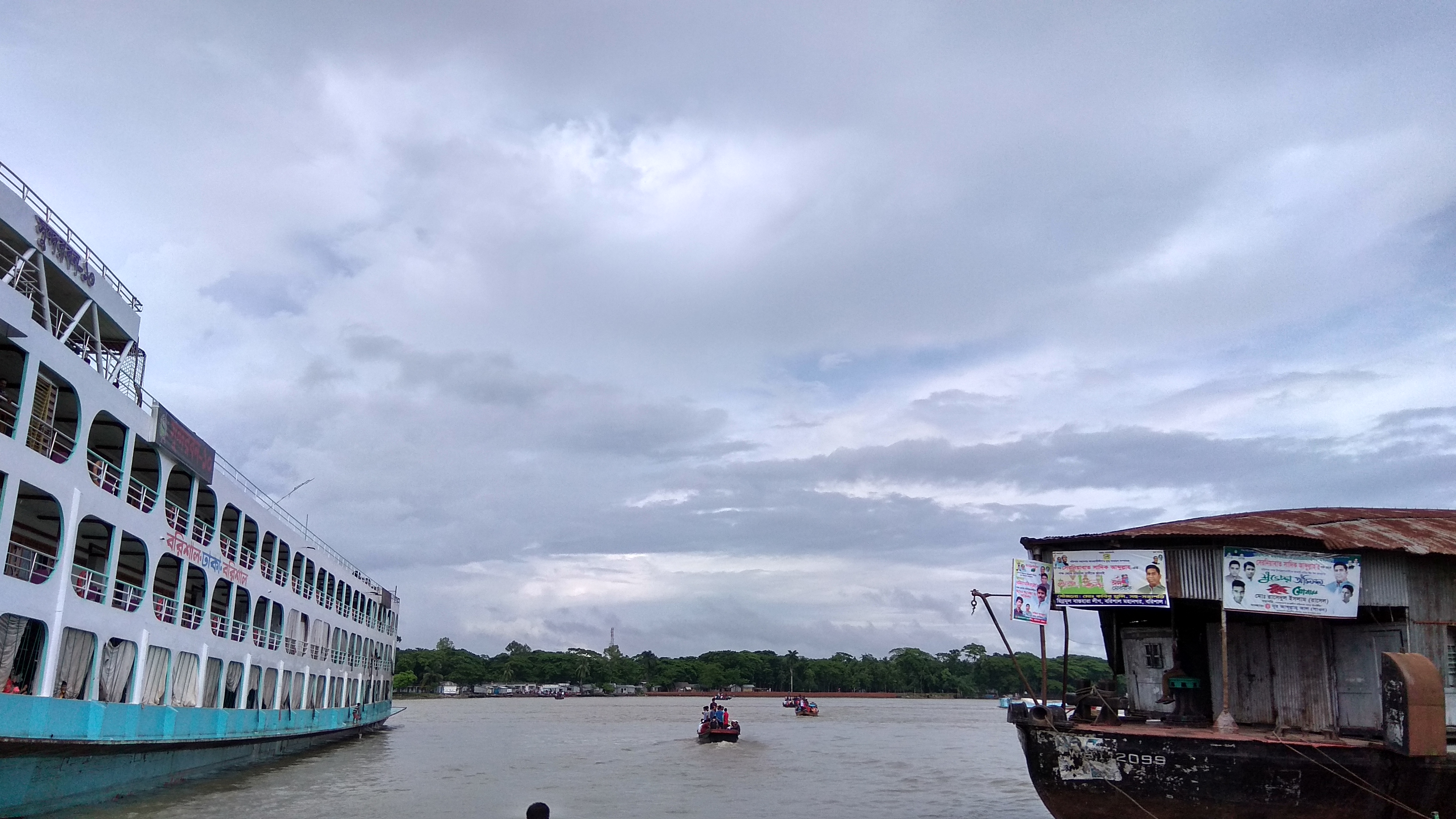
Hilsa were still scarce in the rivers around Barishal in mid-July 2026, well into the period that fishers and traders count as the peak of the season. On the morning of Sunday 19 July 2026, Jagonews24 found that hilsa arrivals at the Port Road wholesale fish landing centre in Barishal city had been far below normal for several days. Traders said that around a thousand maunds of hilsa should have been arriving each day at that point in the season, but only 100 to 150 maunds were coming in. With supply short, prices had risen sharply, and many ordinary buyers were choosing other fish instead.
Prices at the Port Road wholesale market on 19 July
According to the Jagonews24 report, hilsa of about one kilogram were selling at the Port Road wholesale market for Tk 2,800 to Tk 3,000 a kilogram that morning. Fish of 700 to 900 grams cost Tk 2,500 to Tk 2,800 a kilogram. Hilsa of 500 grams were selling for about Tk 1,800, and those of 400 grams for Tk 1,500 to Tk 1,600. Prices in the retail markets were higher still, the paper said.
The aratdars, the commission agents who run the wholesale depots, or arats, of the market, said that supply was normally much higher at that time of year. There was a shortage of fish in the local rivers, they said, and the expected supply was not arriving, so prices could not be held down even though demand remained.
The same market had shown a similar picture in early June. On 2 June 2026, at the very start of the season, Jagonews24 had reported that about 60 maunds of hilsa reached Port Road that morning, when a thousand maunds would have been expected. Fish of about one kilogram were then selling for Tk 2,500 to Tk 3,000 a kilogram, 700 to 900-gram fish for Tk 2,050 to Tk 2,400, 500-gram fish for Tk 1,800 and 400-gram fish for Tk 1,500 to Tk 1,600. In that report the Barishal fisheries officer had said that the peak of the season begins in July and that hilsa would come into the rivers from the sea once it rained.
What the traders said about arrivals and sales
Nasir Uddin, proprietor of Lia Arat at the Port Road hilsa market, told Jagonews24 that there was very little hilsa in the rivers. In the previous few days no more than 60 to 100 maunds had reached the market, he said, whereas several hundred maunds used to be normal.
Md Robin, manager of M/s Dulal Fish, said that a few years earlier around 2,000 maunds of hilsa had been bought and sold every day at the Port Road arats in the peak season. That picture had changed completely, he said: no more than 100 maunds were arriving, and with supply short of demand, prices had risen.
Md Zahir Sikder, president of the owners' association of the Mohanagar fish landing centre, told Jagonews24 that 1,000 to 1,200 maunds of hilsa used to arrive every day at the market's 170 arats. That had fallen to just 100 to 150 maunds. Where daily trade had once been more than Tk 1 crore, he said, it was now limited to Tk 30 lakh to Tk 40 lakh.
The traders gave these quantities in maunds, mon in Bengali, the traditional unit used at the market. They are the traders' own estimates of daily arrivals; the report did not cite an official landing record for the market, and the three men's figures for the quantity reaching Port Road differ somewhat from one another.
Buyers turn to pangas
Buyers at the market were angry about the prices. One buyer, Saiful, told Jagonews24 that hilsa that could once be bought for Tk 1,400 to Tk 1,600 now cost Tk 2,500 to Tk 2,800. He alleged that a section of traders was keeping prices unreasonably high by taking advantage of the short supply. The allegation was his; the traders quoted in the same report put the high prices down to the shortage of fish, and the report carried no direct reply to the claim.
Another buyer, Mamun, said he had come to the wholesale market hoping to pay a little less than in the retail market, but found the prices almost the same. In the end, he said, four hilsa of 700 to 800 grams each had cost him about Tk 3,500.
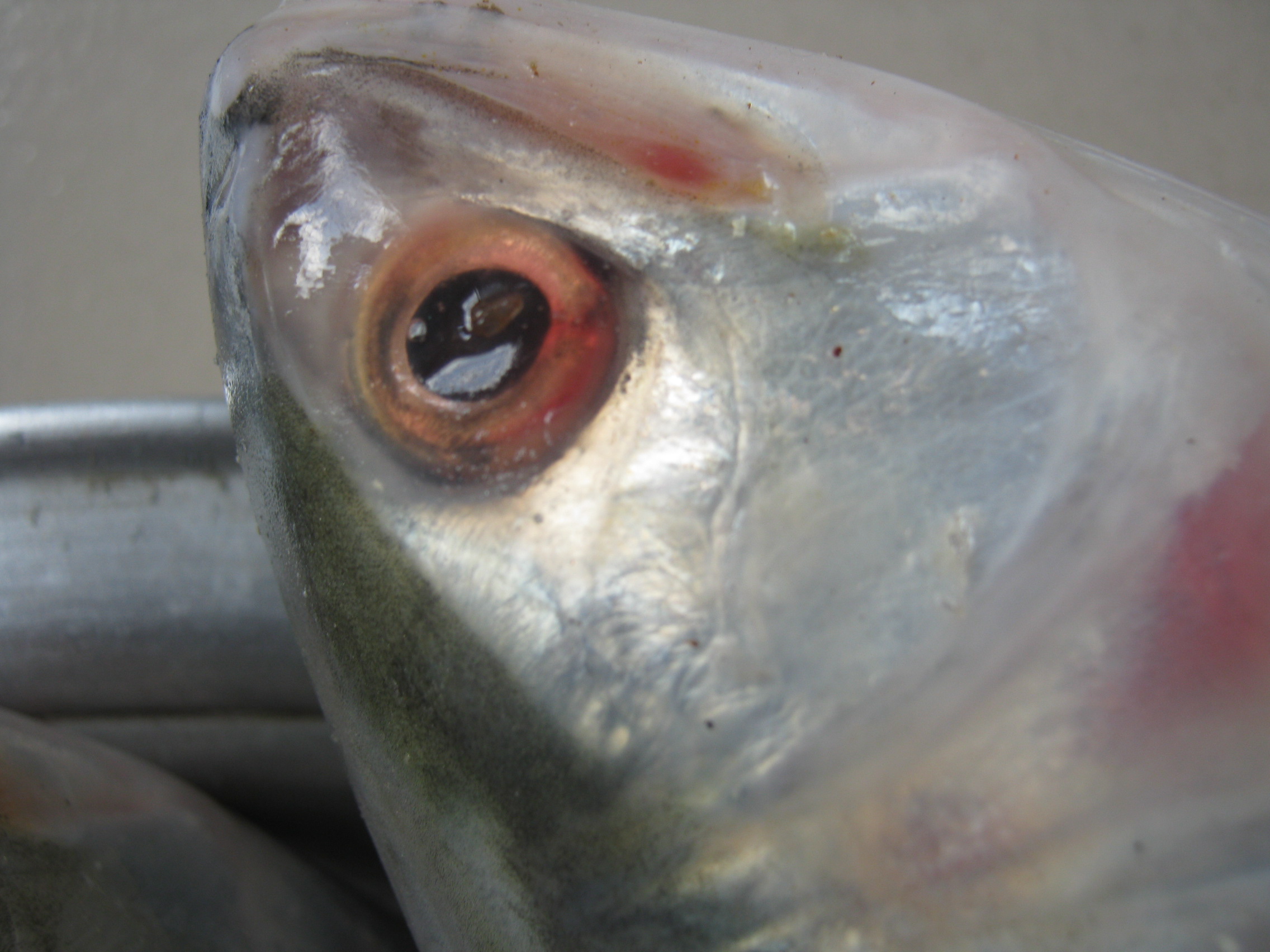
A third buyer, Sohel, said he had been forced to buy pangas because hilsa was out of reach. A 500-gram hilsa that used to cost Tk 800 to Tk 900 now cost Tk 1,800 to Tk 2,000, he said. Other fish had also become dearer: he was paying about Tk 280 a kilogram for pangas.
The rise was not confined to Barishal. In April 2026 Prothom Alo, citing the Department of Agricultural Marketing, reported that hilsa of 400 to 900 grams were selling in Dhaka's markets for Tk 1,500 to Tk 3,000 a kilogram, 50 percent more than a year earlier, while the average price over the whole of 2020 had been Tk 701 a kilogram. A large pangas was selling at Tk 250 a kilogram at the time, the paper said, and a kilogram of hilsa cost twelve times as much.
Fishers on the Kirtankhola and the fisheries officer
Fishers were going through a hard time, Jagonews24 reported. Aslam, a fisher on the Kirtankhola river, said that no hilsa of any size were being found in the river and that he had to borrow to keep his household going. Bad weather, he said, was also making it hard to cast nets properly.
Sagir, another fisher on the Kirtankhola, said that even though they went out on the river after observing the government ban, they were not finding hilsa. If this continued, he said, he would have no choice but to sell his nets to repay his loans.
Barishal District Fisheries Officer Dr Hadiuzzaman told Jagonews24 that although the hilsa season begins in June, the real peak usually starts in July. With enough rain, he said, more hilsa would come into the rivers from the sea, and he was hopeful that prices would then fall.
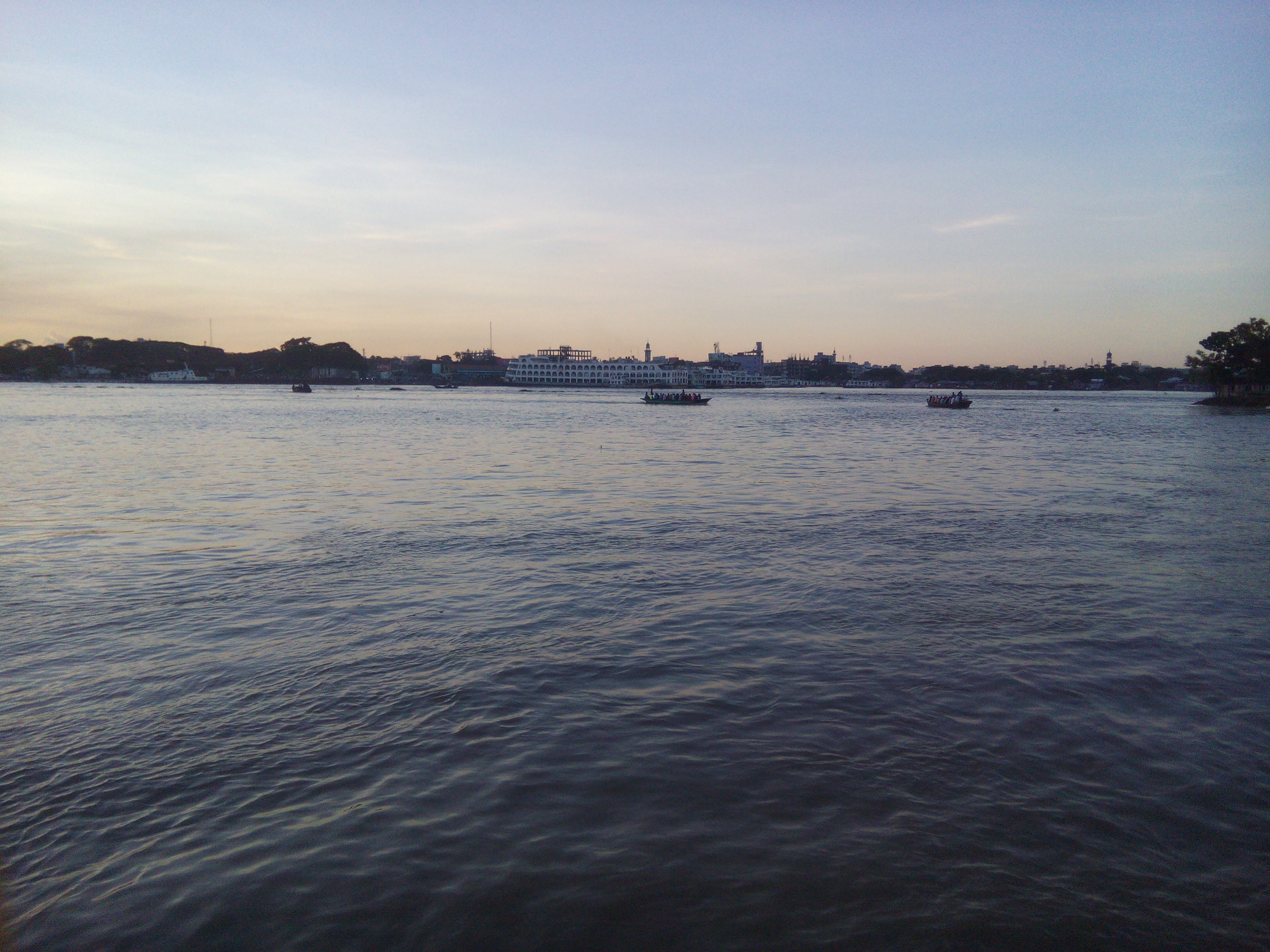
The Kirtankhola is the river on which Barishal town stands. Banglapedia describes it as an offshoot of the Arial Khan that begins near Shayestabad and flows south-southwest to Nalchity, keeping Barishal town on its west bank; it is now also known as the Barisal river. The stretch from Shayestabad to Nalchity is about 21 km long and about half a kilometre wide on average. In the British period the river was about a kilometre wide, but char formation has reduced it to about half that width, and its depth, discharge and flow have also fallen. Banglapedia notes that the river carries a large amount of sediment.
Barishal district covers 2,784.52 square kilometres, according to Banglapedia, and its main rivers include the Meghna, Arial Khan, Kirtankhola and Tentulia. The old Bakerganj district, established in 1797, was later renamed Barisal; Barisal was declared a division on 1 January 1993, and the town's municipality, formed in 1957, became a city corporation in 2000. Hizla is the largest of the district's ten upazilas.
Empty nets and rough seas along the coast
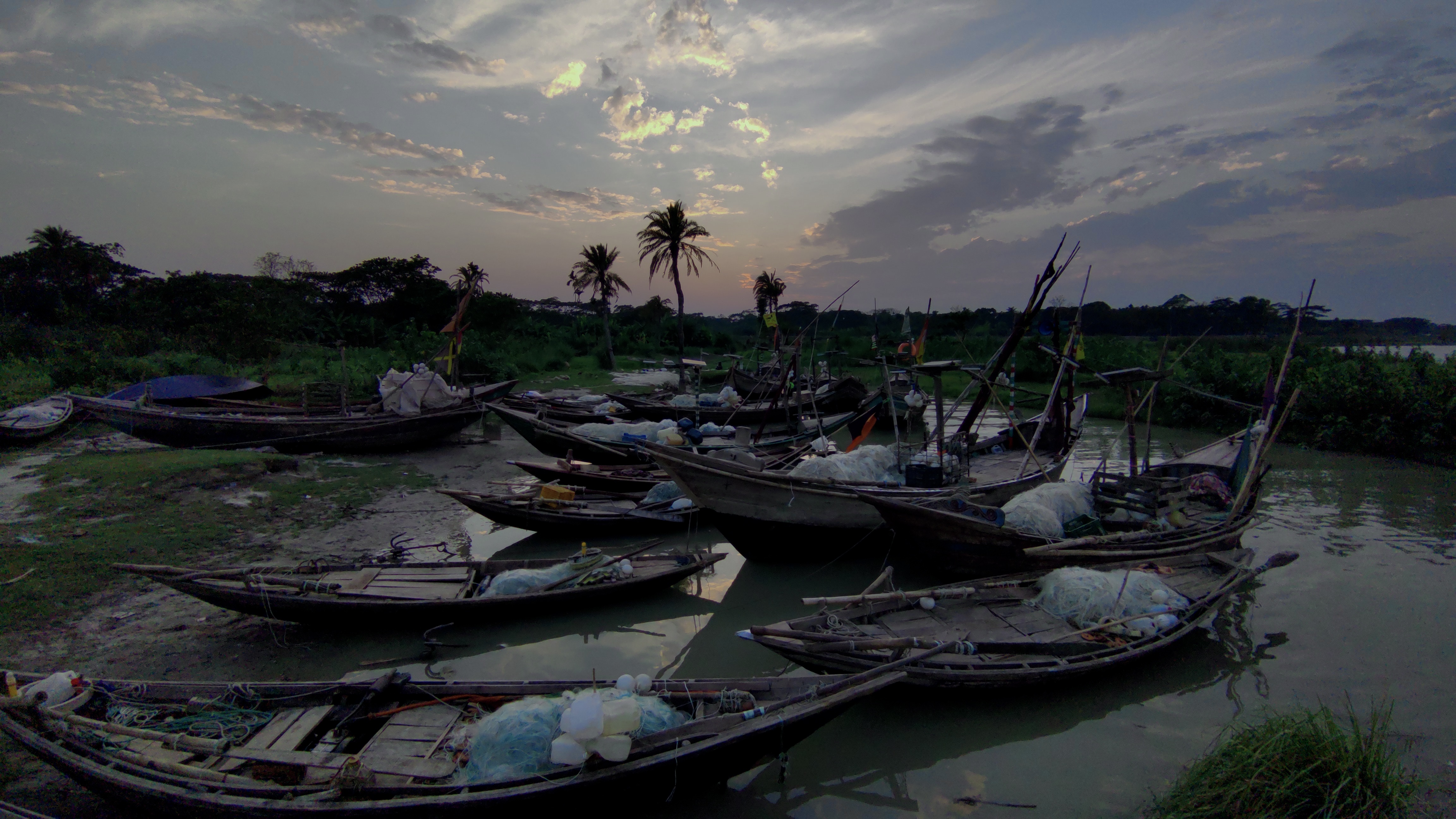
Reports from other coastal districts in the weeks before the Barishal report described similar hardship. On 21 June 2026 Bangladesh Sangbad Sangstha (BSS) reported from Bhola that fishers who went to sea after the 58-day ban ended on 11 June had returned without catching enough fish to cover their costs, and that fishing had been hampered by rough weather and strong waves caused by active monsoon conditions in the Bay of Bengal. The Bhola Meteorological Office said the sea remained rough, and small boats and trawlers had been advised to stay in safe shelter. In the same report, fishers on the Meghna, Tetulia and other rivers of Bhola were catching large hilsa, some of 2.5 to 3 kilograms, which sold locally for Tk 3,000 to Tk 3,500 a kilogram.
On 6 July 2026 BSS reported from Barguna that the peak season had brought little relief to thousands of fishers there. They were returning from the sea with nearly empty nets after days offshore, while fuel and operating costs had pushed many deeper into debt. Local fishers said a single trawler trip cost nearly Tk 1 lakh. Large hilsa were selling in Barguna's markets for around Tk 1,200 a kilogram, medium fish for Tk 900 and small ones for Tk 600. The president of the district trawler owners' association blamed the poor catch partly on illegal small-mesh nets that catch young fish before they mature, while fisheries experts quoted by BSS pointed to climate change, erratic weather, reduced river navigability and shifts in the hilsa's migration routes. The Patharghata upazila fisheries officer said hundreds of trawlers were sheltering from the rough weather.
The season before had also begun poorly. The Daily Star's Bangla edition reported on 21 August 2025 that hilsa landings in Barishal division fell from 21,817 tonnes in June 2024 to 14,496 tonnes in June 2025, and that July 2025 landings were 10,876 tonnes against 15,470 tonnes a year earlier. Citing the Bangladesh Meteorological Department, the paper said rainfall in July 2025 had been 23.5 percent above the normal average, with 878 mm recorded in Barishal division, and that three depressions in that month had brought heavy rain. The Barishal fisheries office's data showed the movement of hilsa obstructed at at least 20 places on the Meghna, Payra, Baleshwar, Bishkhali, Andharmanik, Tetulia, Sugandha and Gazaria rivers.
Why rain matters for the hilsa
The fisheries officer's hope that rain would bring the fish follows from the hilsa's life cycle. Banglapedia describes the hilsa, Tenualosa ilisha, as a member of the herring family Clupeidae. It can reach 60 cm, though fish of 35 to 40 cm are the most common, and a large hilsa weighs about 2.5 kg. Females grow faster and are usually larger than males, and the fish matures in one to two years. It feeds mainly on plankton.
The hilsa is anadromous: adults migrate from the sea up the rivers to breed in fresh water, the eggs float free, and the young grow in the river channels before going down to the sea to feed and grow, returning later as breeding adults. A large female can produce up to 2 million eggs. Banglapedia records spawning through the year, with a minor season in February and March and a major one in September and October, and says that migrating adults are caught from May to October. Adults are taken mainly in fixed or drifting gill nets, the chandi jal, with smaller amounts in berjal and lift nets.
Fisheries officials made the same link between rain and river catches in June 2026. Bhola District Fisheries Officer Md Iqbal Hossain told BSS that hilsa can spawn throughout the year, but that their movement into the rivers increases greatly in the Bengali months of Bhadra and Ashwin, when rainfall, river currents and water levels rise. In August 2025 the director of the Hilsa Resource Development and Management project, Molla Emdadullah, told The Daily Star's Bangla edition that hilsa need fresh water, current, a depth of at least 10 metres and a width of at least 500 metres to enter a river; where they do not find these, he said, they move elsewhere.
Banglapedia lists the causes of the long-term decline of the hilsa fishery as lower flow in the Ganges after the Farakka Barrage and heavy siltation, the catching of jatka, disrupted migration routes, the loss of spawning, feeding and nursery grounds, and growing river pollution, along with flood control and irrigation projects that damaged the ecosystem.
Falling national production
The shortage at Port Road came after two years of falling national catches. According to the Department of Fisheries (DoF) Yearbook of Fisheries Statistics of Bangladesh 2023-24, Bangladesh produced 529,487 tonnes of hilsa in 2023-24, against 571,342 tonnes in 2022-23, a fall of 7.33 percent. Hilsa made up 10.55 percent of the country's fish production that year, and the yearbook calls it the biggest single-species fishery in the country. Its species table shows hilsa production rising from 313,753 tonnes in 2009-10 to the 2022-23 peak.
The same yearbook shows how much of the country's hilsa comes from the Barishal region. In 2023-24 Barishal division produced 348,834 tonnes: 166,474 tonnes from inland waters and 182,360 tonnes from the sea. Bhola led the districts with 168,674 tonnes. Barishal district itself recorded 38,280 tonnes, of which 34,225 tonnes came from the lower Meghna, 2,495 tonnes from other rivers and 1,560 tonnes from the sea.
The DoF yearbook attributes the decline in the river catch to several factors together: closure of migratory routes, river siltation, overfishing, indiscriminate catching of brood fish and juveniles, the use of monofilament small-mesh nets known as current jal, mechanisation of fishing, the growing number of fishers, industrial pollution and climate variability.
The fall continued in 2024-25. Citing DoF figures, The Daily Observer reported on 22 June 2026 that production dropped to 500,000 tonnes in 2024-25, and that senior fisheries officials did not expect the 2025-26 figure, not yet published, to exceed 500,000 tonnes. Prothom Alo reported in April 2026 that a Bangladesh Fisheries Research Institute (BFRI) study had found the average size of hilsa caught falling from 14.65 inches in 2022-23 to 13.39 inches in 2025-26, and that plankton, the hilsa's food, had fallen by 68 percent in the Meghna, largely because of river pollution.
The bans, the sanctuaries and the hilsa project
By 19 July 2026 the main seasonal restrictions on fishing had ended. The jatka ban, which barred catching, transporting, marketing, selling or storing hilsa smaller than 25 centimetres, ran from 1 November 2025 to 30 June 2026, Bonik Barta reported when it began; violations were punishable with up to two years in prison, a fine of up to Tk 5 lakh, or both. The 58-day ban on all fishing in Bangladesh's waters of the Bay of Bengal ran from midnight on 14 April to midnight on 11 June 2026, the Dhaka Tribune reported.
Barishal district also holds one of the country's six hilsa sanctuaries. In June 2018 the Dhaka Tribune reported that an 83 km stretch of the Meghna from Hizla to Mehendiganj in Barishal district had been declared the sixth sanctuary. The others listed were 100 km of the Meghna from Shatnol to Char Alexander, 90 km of the Shahbazpur Channel and 100 km of the Tentulia in Bhola, 40 km of the Andharmanik in Patuakhali and 20 km of the lower Padma in Shariatpur. Fishing is banned in March and April in all of them except the Andharmanik, where the ban falls from November to January.
The government's Hilsa Resource Development and Management project, run by the DoF at a cost of Tk 229 crore, was due to end on 30 June 2026. The Daily Observer reported from Barishal on 21 June 2026 that the project, launched to raise annual hilsa output by 53,000 tonnes, had not met its key targets. The average hilsa had weighed 500 to 550 grams when the project began, the paper said, but most fish then weighed only 300 to 400 grams.
Deputy Project Director Md Nasir Uddin told the paper that the number of hilsa caught had actually risen, but that the fish were much smaller, because many were caught before they could grow. Mir Mohammad Ali, an assistant professor in the Faculty of Fisheries and Marine Science at Sher-e-Bangla Agricultural University, said industrial pollution around estuaries and sanctuaries, thermal pollution from power plants, contaminated river water, siltation and declining navigability were major factors besides overfishing. Dr Anisur Rahman, a former chief scientific officer of BFRI, blamed excessive harvesting, climate change, environmental degradation and a lack of long-term research. Project Director Molla Emdadullah said conservation had had relative success in the rivers but not in the Bay of Bengal, and that a feasibility study for a follow-on project, with more emphasis on the sea, was under way.
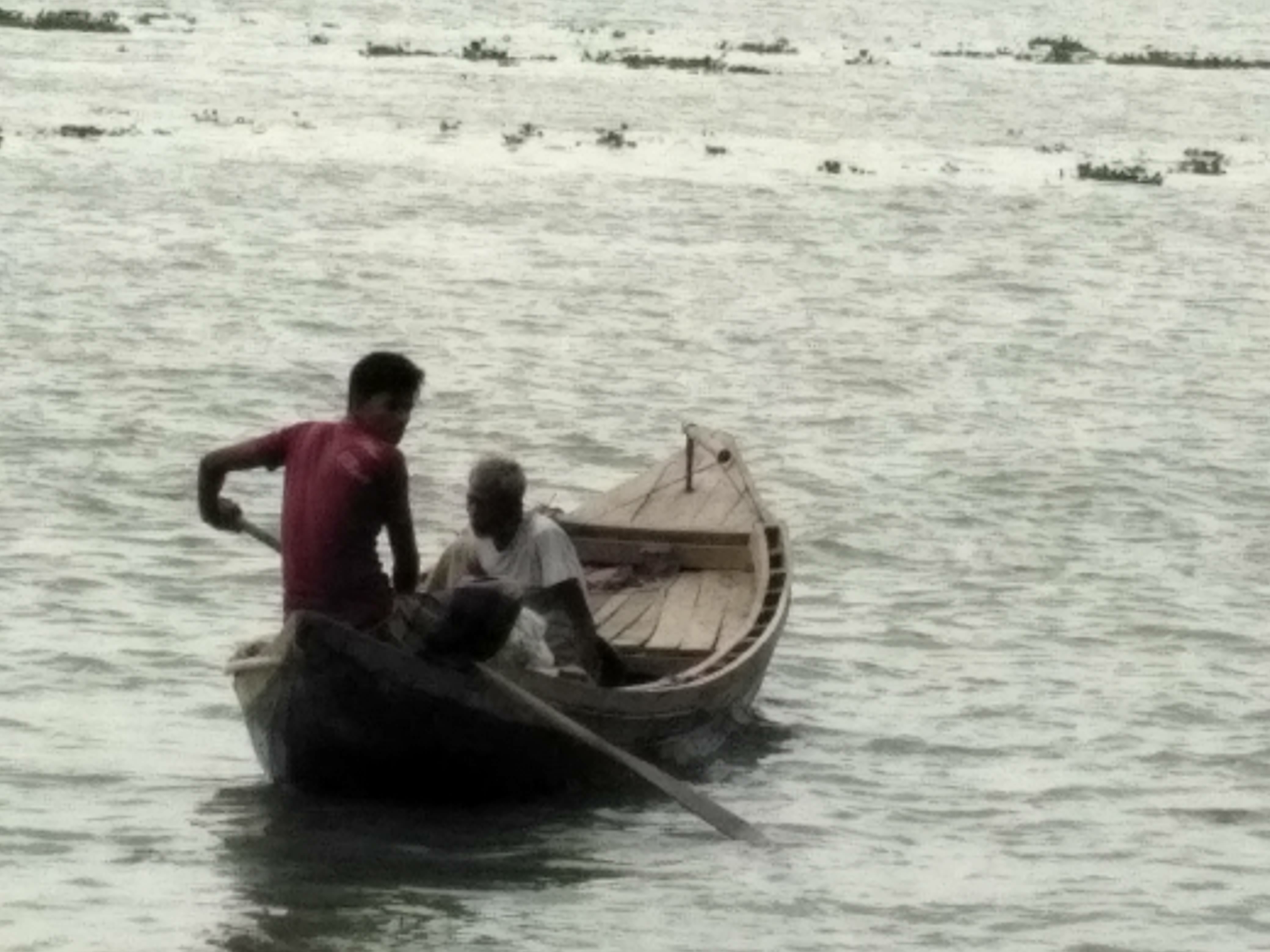
Photo: Lonely Explorer / Wikimedia Commons (CC BY-SA 4.0). The top picture shows Barishal river port on the bank of the Kirtankhola river, as background; it is not the Port Road landing centre on the day of the report.
Sources: Jagonews24 (19 July 2026 and 2 June 2026), Bangladesh Sangbad Sangstha (21 June 2026 and 6 July 2026), The Daily Observer (22 June 2026), Prothom Alo (13 April 2026), The Daily Star Bangla (21 August 2025), Bonik Barta (November 2025), Dhaka Tribune (25 June 2018 and 15 April 2026), Department of Fisheries (Yearbook of Fisheries Statistics of Bangladesh 2023-24), Banglapedia
Comments
(0)