
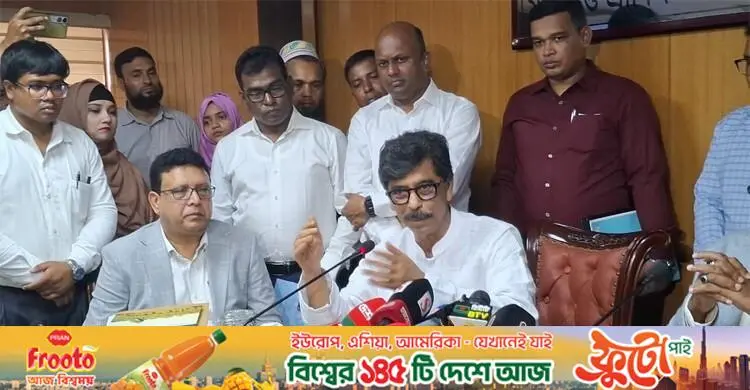
Fisheries and Livestock Minister Mohammad Amin Ur Rashid has said the government is focusing on re-dredging rivers, increasing water flow, stopping the killing of jatka (juvenile hilsa) and ending the use of current nets entirely, to keep up the production and flavour of hilsa, the national fish. Fishers are also to be brought under alternative employment rather than receiving only food aid.
He was answering reporters' questions at the Secretariat on Tuesday, 11 August, at an event to formally hand over avian influenza and goat pox vaccine seeds, developed from local strains by the Bangladesh Livestock Research Institute (BLRI), to the Department of Livestock Services.
Mohammad Amin Ur Rashid, described as minister for fisheries and livestock and for agriculture, and State Minister for Fisheries and Livestock Sultan Salahuddin Tuku attended the event.
River flow and flavour
The minister said hilsa is Bangladesh's national fish and part of its heritage. The same species is found elsewhere in the world, but hilsa from the Padma and Meghna taste different, and he said Bangladesh's alluvial silt gives them their special flavour.
Stressing that river flow must be normal and strong to increase hilsa movement and production, he said the main rivers hilsa use have not been properly dredged for a long time. The government has already proposed dredging them, and increasing flow would boost hilsa movement and output.
Hilsa swim against the current, which is also why they taste special, he said, so maintaining flow in their rivers is very important.
Beyond food aid for fishers
On protecting jatka and the fishing ban in the breeding season, he said fishing is banned for a set period when hilsa spawn, and fishers receive food aid during that time. Lakhs of fishers are being brought under this aid.
But food aid alone cannot make fishers' lives sustainable, he said. Those whose only income is fishing need alternative work during the ban, and plans are being made to involve them in livestock rearing, growing improved fodder grass and other activities, giving them extra income during the ban.
Monitoring against jatka catches has been tightened this year and jatka fishing has been largely controlled, he said, expressing hope that this would continue in future seasons.
Pollution and current nets
Calling pollution a major obstacle, the minister said hilsa are very sensitive fish that come from the sea into fresh water at certain times. If river pollution rises, hilsa move away, so controlling pollution is essential to raising production.
On current nets, he said imports have been banned for a long time. After reports that several current-net factories were operating in Munshiganj, steps were taken to shut them too.
The administration has been involved in stopping current-net use in the field, with drives run in consultation with deputy commissioners and upazila nirbahi officers. Large quantities of current nets were seized this year and later destroyed and burned.
The minister said hilsa production has risen compared with last time. River and canal re-dredging has already begun and is being prioritised to raise output further, and he hoped it could be expanded in coming years.
He stressed taking forward three things together to preserve hilsa's flavour and production: river flow, protection of breeding and feeding grounds, and alternative livelihoods for fishers.
Source: Jagonews24. First published in Bengali on The Agro News.
Comments
(0)