

Hilsa production in the 2024-25 fiscal year was the lowest in eight years. Last year 5 lakh tonnes of the national fish were produced, the lowest since 2016-17. Fisheries and livestock minister Mohammad Amin Ur Rashid calls raising hilsa output a huge challenge in the present circumstances.
He presented last fiscal year's hilsa production figures at a press conference at the Secretariat on Monday (6 April) for Jatka Conservation Week 2026.
The minister said river siltation, climate change, river pollution and ever-growing pressure on fisheries had made it a huge challenge to sustain hilsa production. "The fisheries and livestock ministry will take everyone along in meeting this challenge," he said.
Eight years of figures
At a ministry press conference at the Secretariat on 29 September last year, it was said that under the Bangladesh Fisheries Research Institute's ARIMA model, hilsa production in 2024-25 could be 538,000 to 545,000 tonnes, but that actual production could be lower if the declining trend continued.
Officials said production was last below 5 lakh tonnes in 2016-17, at 496,000 tonnes. It then stayed above 5 lakh tonnes until 2023-24, and fell to 5 lakh tonnes last year.
According to the fisheries department, hilsa production was 529,000 tonnes in 2023-24, 571,000 tonnes in 2022-23, 566,000 tonnes in 2021-22, 565,000 tonnes in 2020-21, 550,000 tonnes in 2019-20, 532,000 tonnes in 2018-19 and 517,000 tonnes in 2017-18.
That makes last year's output the lowest in eight years.
The minister said hilsa was of immense importance for public nutrition, jobs, fishermen's livelihoods, the rural economy and the country's socio-economic development. Hilsa makes up about 9.79 per cent of the country's total fish production and about 1 per cent of GDP, and more than about 80 per cent of the world's hilsa is caught in Bangladesh's rivers, estuaries and sea.
Bangladesh ranks first among the 11 hilsa-catching countries, he said, and Bangladeshi hilsa is recognised as a geographical indication (GI) product. About 600,000 people in Bangladesh are directly engaged in catching hilsa, and 2-2.5 million are directly or indirectly involved in transporting and selling it, making nets and boats, producing ice, processing and exporting fish. The government is therefore working to develop the resource and put hilsa within reach of people across the country.
Fuel, smuggling and silted rivers
When his attention was drawn to fishermen being unable to take trawlers to sea for lack of fuel, the minister said there was no major problem with fuel so far and enough was being supplied to emergency sectors. If any other irregularity lay behind the high price of hilsa, the government would look into it, he said, adding that talks had been held with law enforcement agencies to stop hilsa smuggling.
The minister also said hilsa fishing was being halted in Indian waters as well as in Bangladesh's.
Answering a question, Amin Ur Rashid said hilsa production had fallen because of chars forming in the rivers. To raise production those places must be cleared, and river and canal dredging programmes are in place for that. "We will clear those places so that hilsa can move properly," he said.
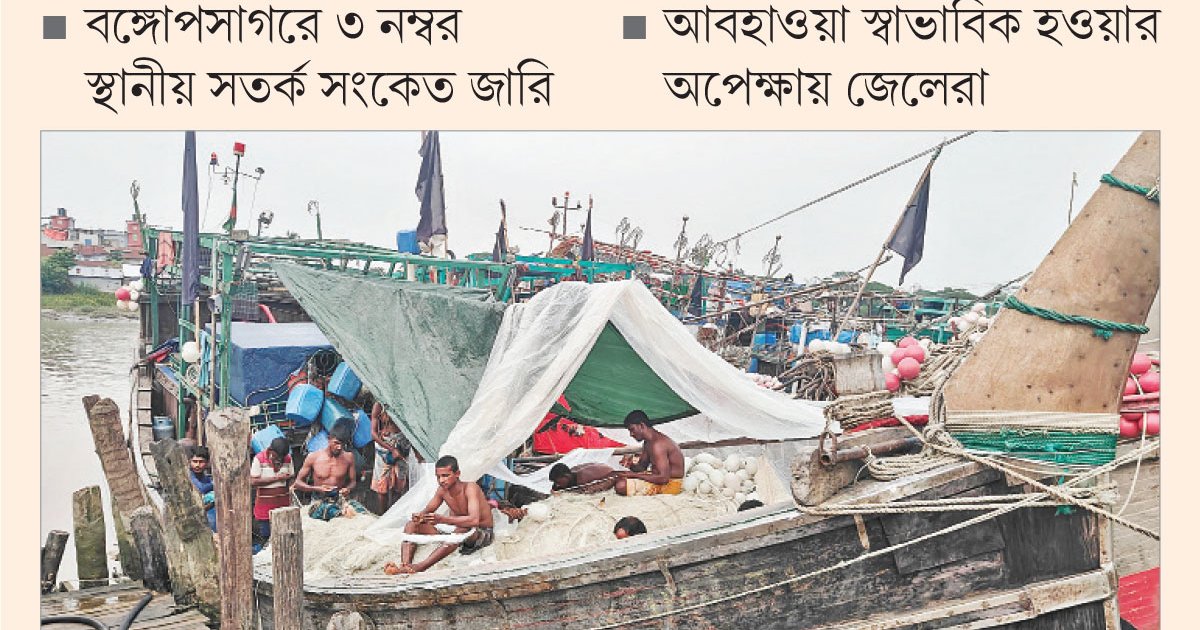
Fisheries and livestock state minister Sultan Salahuddin Tuku said the government had given each fishing household 80 kg of rice, 12 kg of flour, 10 kg of oil, 8 kg of lentils, 4 kg of sugar and 16 kg of potatoes for two months. Each household is receiving goods worth about Tk 6,000. For the first time, 40,000 fishermen are getting this much food aid, far more than last time.
The state minister said no irregularity would be tolerated in food distribution to fishermen or in any other area.
Source: Jagonews24. First published in Bengali on The Agro News.

Comments
(0)