
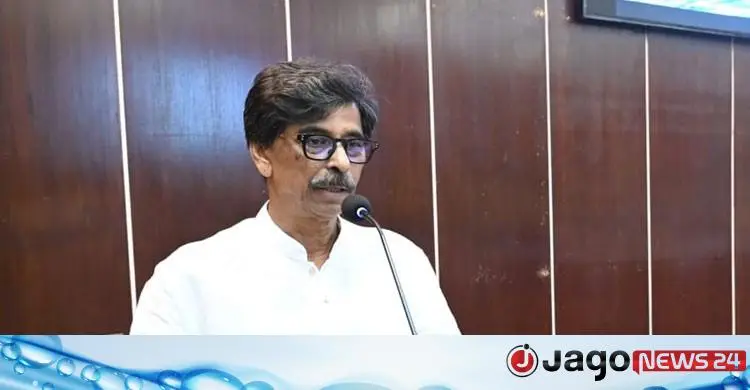
Mohammad Amin Ur Rashid, minister for fisheries and livestock and agriculture, has said scientists must engage more actively in research to protect jatka and raise production. He said planned work was urgently needed on how to maximise jatka production and increase jatka numbers through the proper hatching of hilsa eggs. Production must be raised to bring this valuable fish within reach of ordinary people, the minister said.
He was speaking as chief guest on Wednesday, 8 April, at a workshop titled "Hilsa Research: Achievements, Jatka Conservation and Future Tasks" at the Bangladesh Agricultural Research Council auditorium, held for Jatka Conservation Week 2026 (7-13 April), whose theme is "If we stop catching jatka, sea and rivers will fill with hilsa".
Research and fishers' role
The minister said scientists must research ways to raise production further while keeping the taste and quality of hilsa intact. A method is needed that increases production and meets the country's demand without spoiling the fish's natural taste and character.
Addressing fishers, he said: "The nets and the rivers are yours, so you can give the government effective proposals on what steps can be taken to stop jatka fishing." The shortage of hilsa is now a problem for the whole country, he said, so production must be raised to bring it within reach of ordinary people.
Speaking as special guest, Sultan Salahuddin Tuku MP, state minister for fisheries and livestock, said hilsa is a geographical indication product of Bangladesh and about 70-80 percent of the world's hilsa is produced in the country. He urged everyone to be aware of the need to protect this important resource.
He said that if jatka catching could be stopped completely, hilsa production would rise significantly, making a big contribution to the economy and making Bangladesh more prosperous.
Food aid for fishers
He added that food assistance for 40,000 fisher families began in the past two months. Each family receives 80 kg of rice, 12 kg of flour, 10 litres of oil, 4 kg of sugar, 8 kg of lentils and 16 kg of potatoes, worth about Tk 6,000 in all. Fishers had never received this much help in the past, he said.
Local members of parliament will also keep helping fishers, he said, urging everyone to make sure that fishers refrain from fishing during the hilsa ban and obey the law.
The workshop was chaired by Dr Anuradha Bhadra, director general of the Bangladesh Fisheries Research Institute (BFRI). Md Delowar Hossain, secretary of the Ministry of Fisheries and Livestock, spoke as guest of honour. Also speaking were Md Zia Haider Chowdhury, director general of the Department of Fisheries; Professor Dr Kazi Ahsan Habib, dean of the Faculty of Fisheries and Marine Science at Sher-e-Bangla Agricultural University; and Dr Md Motaleb Hossain, director of the Department of Fisheries. The keynote paper was presented by Dr Mohammad Ashraful Alam, chief scientific officer of BFRI.
Senior officials of the Ministry of Fisheries and Livestock, BFRI and the Department of Fisheries, along with fishers, fish farmers and others, were present.
Source: Jagonews24. First published in Bengali on The Agro News.
Comments
(0)