
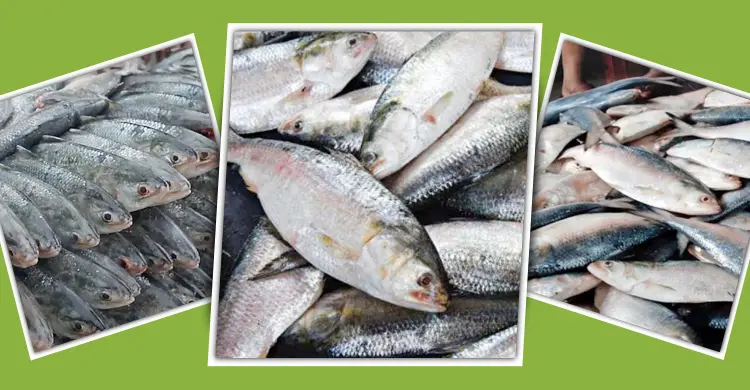
Hilsa is our national fish, and in looks and taste it could be called the king of fish. As the national fish, our responsibility towards it has always been great. By increasing hilsa breeding, its price could be controlled and brought within people's reach.
Every person in Bangladesh has the right to eat hilsa, and as a geographical indication the hilsa is regarded as our country's fish. But climate change, natural pollution and water pollution are creating various complications, including for its breeding.
Threats to breeding
As the climate changes, hilsa stocks may change in various ways. Shoals may shift direction at the estuaries and move to lower areas, and ordinary fishers who depend on hilsa will catch fewer fish. Cyclones and other natural disasters in the Bay of Bengal will put the fish out of fishers' reach. When water flow falls at the estuaries of the Ganges, Brahmaputra and Meghna, hilsa breeding capacity drops, and water pollution from factory waste and pesticides will also reduce it.
By nature the hilsa is a fast-migrating fish, and heavy water pollution and chemicals in the water can make it move away quickly. Hilsa spawn in fresh water and then move to salt water. A mother hilsa can carry 15 to 20 lakh eggs, but because of climate change and water pollution this capacity has fallen steadily and now stands at 12 lakh.
Hilsa are not caught just because they are in the sea; often they do not come up from deep water. That needs favourable weather, such as enough rain, water pressure and food. The first claim on this fish belongs to the poorest fishers, and it is for them that the fish is conserved. If it is not fished, it will run out by nature's own rules.
Who gains, who loses
Half of this year's season has already passed without the hoped-for hilsa, and prices are beyond the reach of the middle class. Even so, a large share of what is caught goes to the Gulf countries, North America, Europe and Australia, the biggest markets for hilsa. In India, meanwhile, most of the hilsa available comes from the area around the Narmada estuary on its west coast.
Sadly, Bangladesh's hilsa sells at high prices in big markets abroad, yet the country's small fishers get barely a fraction of this huge profit. It is not only fishers who suffer from the shortage of fish in the rivers; local traders in the sector are hurt equally. In this season the main supply of hilsa comes from the sea.
Heavy silt deposits at the estuaries are filling up river mouths, seriously disrupting hilsa migration in the breeding season. Hilsa also need relatively clean water to move upstream. Shipping traffic in identified hilsa sanctuaries and migration routes has increased greatly, obstructing migration, and there is the matter of various dams and barrages built on and across rivers.
What must be done
Public awareness is most urgent for increasing hilsa production, and much wider research is needed on Bengal's silver hilsa. Monitoring must be stepped up to stop water pollution and make sure no waste, chemicals or other pollutants enter the water.
Since 2011 the government has been making fishers aware that they must not catch jatka (young hilsa) or mother hilsa. Poor fishers face problems in education, health and every other area, and they must be given much more help under the government's social safety net. A separate fund for hilsa conservation is needed so that fishers can be given more help in times of disaster, and the ban period on catching mother hilsa must be set with the help of sound scientific data.
The government could help fishers who cannot afford it with hilsa fishing gear, and distributing more food grain to fishers could play a big role in conserving hilsa. Incentives for fishers, broad public awareness and administrative action can all play an important part in hilsa production. Above all, the utmost awareness from every quarter is urgent to protect hilsa and increase its breeding.
Source: Jagonews24. First published in Bengali on The Agro News.
Comments
(0)