
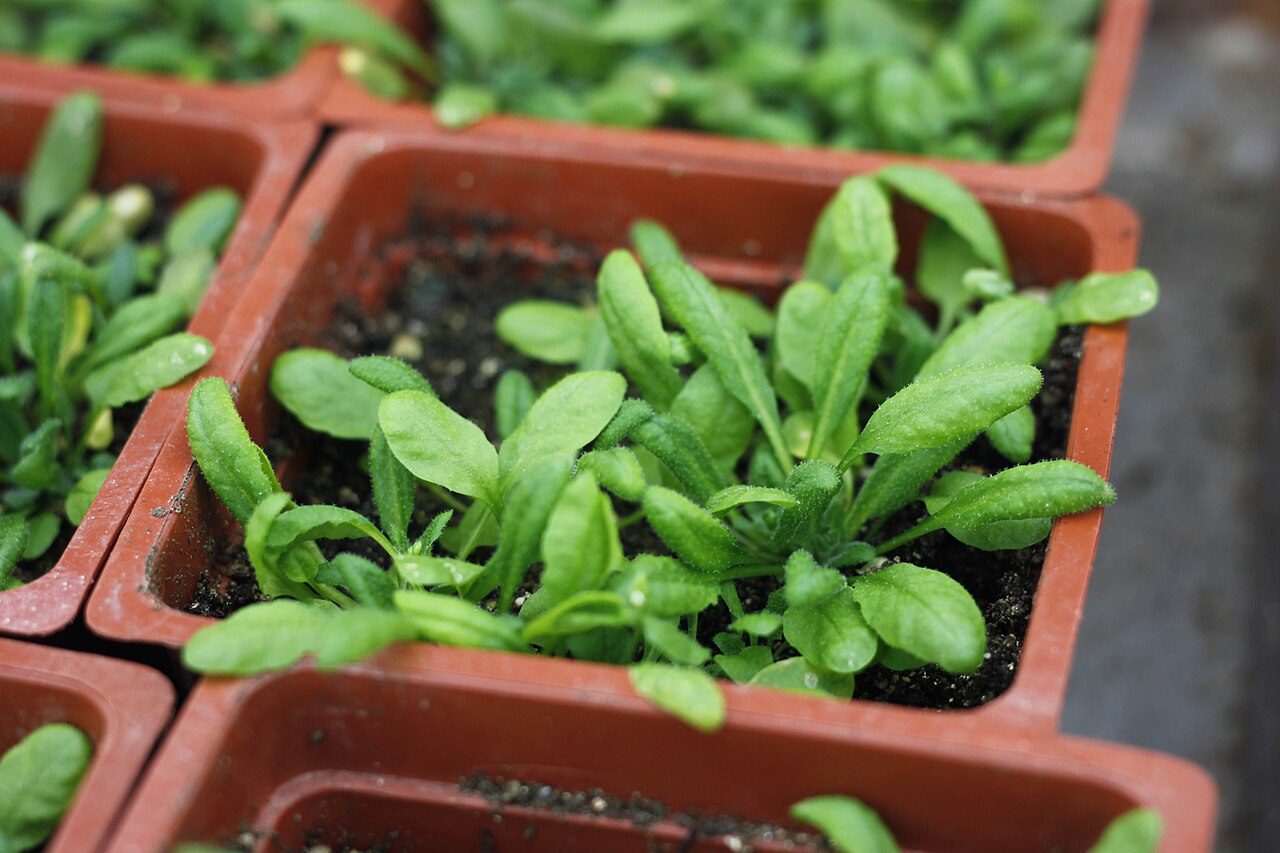
Scientists at Iowa State University, led by Hongqing Michelle Guo, have found a molecular mechanism that controls how strongly plants respond to warm temperatures, a finding that could help breeders develop heat-resilient crops without sacrificing yield.
Most plants answer moderate heat through thermomorphogenesis: stems and stalks grow longer, improving air flow and reducing heat stress. That helps survival but diverts energy from growth, which can cut yields. "We want plants to be able respond to the warmth, but in a way that's not so responsive that they become frail," Guo said.
The study looked at two proteins. One senses temperature and light and, in normal warmth and good light, holds back stem growth; when temperatures rise or light falls, its activity drops and the heat response begins. The other sits in cell membranes and acts as a signalling hub. In a flowering plant widely used in genetic research, plants lacking the signalling protein responded less to warmth, pointing to a link between the two.
The team traced the link to specific regions of the temperature-sensing protein and used precise gene editing to make plants that either mimicked or blocked those molecular changes. Plants imitating the signal grew more strongly under warmth; plants that could not receive it responded far less. The researchers describe the system as a dimmer switch rather than an on-off button: the aim is to fine-tune the response, not remove it.
More work is needed before the findings reach field crops. The next steps are to test similar genetic strategies in crop species and to find out whether the signalling protein can itself detect temperature.
Photo: Jucember / Wikimedia Commons (CC BY-SA 3.0)
Source: Farms.com


Comments
(0)