
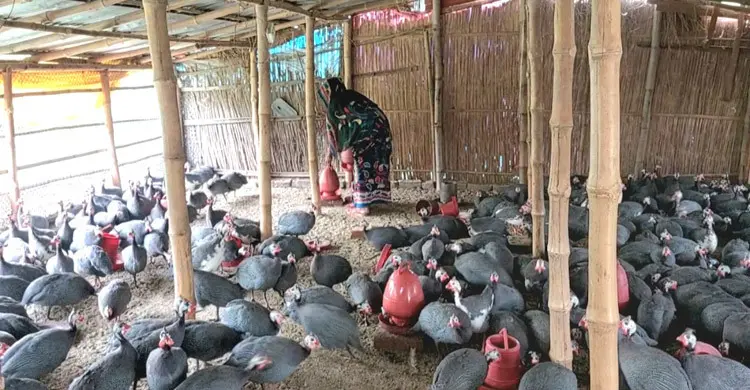
Many people keep guinea fowl on their duck and chicken farms, and the birds sell well in the market. They can be raised at home at little cost for a good income, which makes guinea fowl farming a worthwhile option, and it can help meet demand for eggs and meat.
What is a guinea fowl?
The bird's proper name is guinea fowl, but it is known as titir, and some call it the "Chinese chicken". It has bare skin on the head and neck, white and brown feathers with white spots on the body, and a yellow-blue throat. It carries a brown "helmet" on its head and has red wattles on its legs.
Eggs and meat
Guinea fowl farming can be a good business for poultry farmers. The breed suits a range of climates, and the bird is considered excellent for both egg and meat production. Consumers find guinea fowl meat very tasty; it is rich in vitamins, low in cholesterol and nutritious.
Advantages of rearing
Guinea fowl are environmentally friendly. Their droppings produce manure, and they control insect pests in the fields. A female lays around 90 to 110 eggs between March and September.
Income from guinea fowl
Raised as part of low-cost poultry farming, guinea fowl can be a very good source of earnings and a profitable business. With a good breed and proper technical guidance, it is possible to earn three to four times more a year than from chickens.
Source: Jagonews24. First published in Bengali on The Agro News.

Comments
(0)