
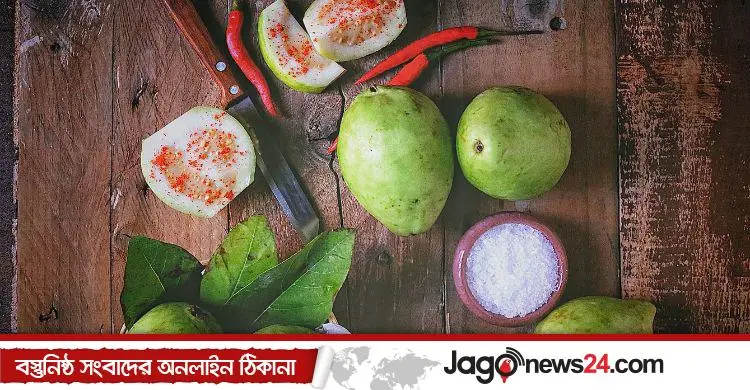
At street corners, in traffic jams or at vegetable stalls in the market, the guava, known as the poor man's apple, is available all year round in Bangladesh. It is hugely popular mixed with chilli, salt and kasundi, and just as enjoyable crunched on its own.
In autumn and early winter markets fill with local guavas. Our guava is exceptional not only for its taste but also for its nutrition, with high levels of vitamins, minerals and antioxidants. Eating guava regularly boosts immunity, improves digestion and keeps skin healthy.
Vitamin C and blood sugar
Guava is an excellent source of vitamin C. According to the Journal of Nutritional Science, a medium-sized guava contains almost three times as much vitamin C as an orange. It helps the body make antibodies, helps prevent infection and strengthens immunity.
Guava is a low glycaemic index fruit, meaning it does not raise blood sugar quickly. A study published in the International Journal of Food Science and Nutrition says the fibre in guava improves insulin sensitivity, which makes it very useful for people with diabetes.
Digestion, heart and skin
Guava is rich in dietary fibre, which aids digestion and prevents constipation. Eating one guava a day keeps bowel movement regular and strengthens digestion, and its natural enzymes help the secretion of digestive juices.
Eating guava helps keep blood cholesterol in check. According to research by the American Heart Association, the potassium and antioxidants in guava lower blood pressure and keep blood vessels healthy, reducing the risk of heart disease and stroke.
The vitamin C, vitamin A and antioxidants in guava brighten the skin and reduce signs of ageing. It boosts collagen production and keeps the skin supple. Guava also strengthens hair roots and helps prevent hair loss.
Guava is low in calories but high in fibre, which keeps you full for longer. It curbs the urge to snack and is an ideal fruit for a weight-loss diet.
Caution: people with gastric problems or ulcers are better off not eating guava on an empty stomach.
Sources cited: Journal of Nutritional Science, International Journal of Food Science and Nutrition, American Heart Association.
Source: Jagonews24. First published in Bengali on The Agro News.

Comments
(0)