
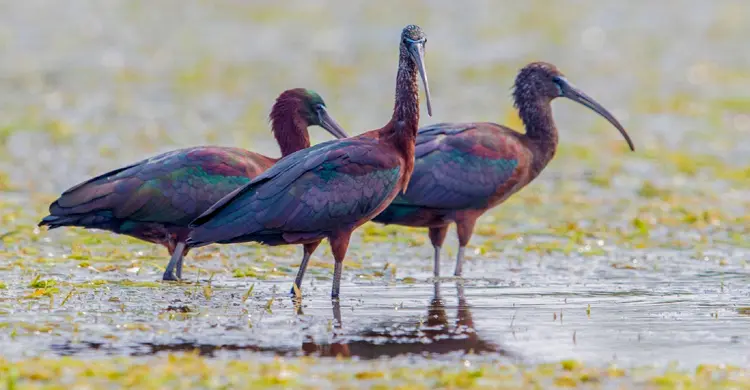
In winter, flocks of migratory birds join Bangladesh's many-coloured native birds. They fly in from the northern hemisphere to the country's wetlands to escape the bitter cold, spend a set three to four months and then return. Through the winter the haors, baors and wetlands ring with birdsong.
Among these birds is the strikingly beautiful migratory glossy ibis, known in Bengali as khoyra-kastechora. Ornithologist Dr Inam Al Haque, founding president of the Bangladesh Bird Club, says the glossy ibis has a wonderful colour: a reddish-brown body and bright purple wings. In the breeding season the red on its body blends with the purple to create a stunning colour, as if painted on canvas by an artist's brush.
Life in the wetlands
The birds usually stay in wetlands and haors around the country. They walk through knee-deep water over the mud, picking insects out of it. Weighing close to a kilogram, the bird is usually 65 centimetres long. It breeds in summer, usually lays three eggs, and the chicks take three weeks to hatch.
Its favourite foods are small fish, earthworms, small snakes, frogs and small aquatic creatures, and it probes the mud with its bill in search of food. On land its favourite foods are insects and lizards, though its diet changes with the season.
Haors and wetlands full of aquatic plants are its favoured places for food and shelter. When hunting it does not go into water deeper than its knees. It is sometimes seen alone, sometimes in flocks and sometimes in pairs. Indiscriminate hunting and the destruction of aquatic plants in wetlands have reduced its numbers in Bangladesh.
Call to enforce the law
Bird lovers say that unless the law is enforced to stop hunting with air guns, poisoned bait and nets, future generations will not get to see birds, and the balance of nature will be damaged. If wildlife and birds cannot survive, humans cannot survive on earth either.
So the law must be enforced properly as soon as possible and the public made aware. Illegal nets and air guns must also be banned.
Source: Jagonews24. First published in Bengali on The Agro News.



Comments
(0)