
In January 2026, people across Berlin were carrying home free potatoes by the sackful. A campaign called "4000 Tonnes" (4000 Tonnen) was giving away a surplus of about 4,000 tonnes of potatoes that had been left in storage on a farm near Leipzig, in the eastern German state of Saxony. Soup kitchens, homeless shelters, kindergartens, schools, churches, non-profit organisations, Berlin Zoo and ordinary residents had all collected their share by the end of the month. The Guardian, reporting from Berlin on 31 January 2026, wrote that about 3,200 tonnes were, in theory, still up for grabs and that a last round of drops was expected in the coming days.
The giveaway came after Germany's 2025 potato harvest, which the Federal Ministry of Agriculture had estimated in September 2025 at about 13.4 million tonnes, the largest in 25 years. Germans eat on average 63 kg of potatoes a person every year, according to official statistics quoted by The Guardian, but the glut was more than even keen potato eaters and the market could take. Locally it was nicknamed the "Kartoffel-Flut", the potato flood.
How the potatoes were shared out in Berlin
According to The Guardian's report, soup kitchens, homeless shelters, kindergartens, schools, churches and non-profit organisations were among those that had taken their fill. Berlin Zoo took part in what was described as a "rescue mission", taking tonnes of potatoes that would otherwise have gone to landfill or to produce biogas, and using them to feed its animals. Two lorry loads were sent to Ukraine.
Ordinary residents, many of them feeling the squeeze of the rising cost of living, came to pre-announced potato dump locations and filled anything from sacks and buckets to handcarts. The Guardian counted 174 distribution points set up spontaneously around the city.
One of those who queued was Astrid Marz, a teacher, who stuffed an old rucksack with potatoes in Kaulsdorf, on the eastern edge of Berlin. "I stopped counting at 150. I think I've got enough to keep me and my neighbours going until the end of the year," she told The Guardian. When she first saw the appeal on social media, she said, she thought it was AI-generated fake news: "There were pictures of huge mountains of 'earth apples', with the instruction to come and get them for free!" She used the word Erdäpfel, an affectionate term for the potato sometimes used by Berliners.
The giveaway took place while an arctic cold gripped Berlin, hampering travel, bringing public transport to a halt and leaving pavements icy. A resident who picked up potatoes for his family at Tempelhofer Feld described "a really party-like atmosphere", with people helping one another with heavy loads and swapping cooking tips.
The distribution had been planned in stages. The Berliner, an English-language Berlin magazine, reported on 13 January 2026 that registration for collection had closed and that applicants would be told by email whether they had been accepted, with a collection date, an approximate time window and the logistics. The Local reported on 14 January that the first truckloads were due that Wednesday at distribution points around Berlin, that deliveries would continue for several days, and that from 15 January Berlin residents could go to designated pick-up points shown on a map on the campaign's website.
The Berliner Morgenpost had asked organisations and individuals able to take at least one tonne of potatoes to apply to host a drop-off point. More than 1,000 organisations and individuals signed up, Berlin Zoo among them, The Local reported. The Berliner Tafel, the city's food bank, was to receive a full truckload of 20 tonnes, which it would pass on to social institutions and hand out at its "Laib und Seele" distribution points. The newspaper was also looking for more distribution sites and taking donations to pay for further truckloads.
Where the 4,000 tonnes came from
The potatoes belonged to Osterland Agrar GmbH, a farming company in Saxony. A Guardian photograph caption placed its 4,000-tonne surplus in a warehouse in Frohburg, near Leipzig. The reports describe the cause in slightly different words. The Local wrote that a spot trader's failed investment had left the potatoes sitting in a storage warehouse south of Leipzig. The Berliner wrote that the potatoes had been grown and harvested to a trader's order; after they were harvested and stored, supply on the market exceeded demand and prices fell, and although the financial side of the deal was settled, the potatoes themselves stayed on the farm, kept in cool, dry storage halls. The Guardian wrote that the farmer offered the surplus in December after a sale fell through at the last minute.
Rather than let the potatoes go to waste, the farm approached Ecosia, a search engine based in Berlin, and the Berliner Morgenpost newspaper. Ecosia arranged and paid for the lorries from Saxony to Berlin, and the Morgenpost ran the call for distribution points and organised the giveaway. Two papers in Saxony, the Leipziger Volkszeitung and the Sächsische Zeitung, joined to coordinate distribution with local groups in Leipzig. The Morgenpost described the case as "a story about the absurdities of our food system" and reported that without the campaign the potatoes would most likely have gone to biogas plants.
The scale was hard to picture. The 4,000 tonnes were about four million kilograms. The Morgenpost compared the weight with about 800 adult elephants, said the potatoes could be stacked as high as Berlin's TV Tower, and said they were enough to feed hundreds of thousands of people.
Frohburg is a town in the Leipzig district of Saxony, about 34 km south-east of Leipzig. Leipzig itself, the most populous city in Saxony, lies about 150 km south-west of Berlin and has been a trading city since at least the time of the Holy Roman Empire; its trade fair dates back to 1190. Ecosia is a search engine whose profits are used to pursue environmental goals; its operating company, Ecosia GmbH, was founded in 2009 and has its headquarters in Berlin. The Berliner Morgenpost is a Berlin daily and one of the most read newspapers in the city.
Germany's 2025 potato harvest in figures
The surplus had been building since the autumn. On 24 September 2025, the Federal Ministry of Agriculture confirmed preliminary official results putting the potato harvest at about 13.4 million tonnes, as reported by the farm journal top agrar and the trade magazine LebensmittelPraxis. That was 5.3 per cent more than in 2024, itself a very good year, and 17 per cent above the multi-year average. The last comparable harvest had been in 2000.
Two things drove the record. The area planted with potatoes grew by 6.7 per cent to 301,000 hectares, the largest since the turn of the millennium, and yields were high. The national average yield was about 44 tonnes a hectare, almost 5 per cent above the multi-year average and about 1 per cent below the very good previous year. The weather in 2025 was much more favourable for the crop than in the two previous years.
The figures were not final. They came from the special harvest and quality survey (Besondere Ernte- und Qualitätsermittlung) together with the main land-use survey, and were based on yields measured on representative sample plots on farms. At the time of the September estimate about 42 per cent of the nearly 700 plots had been evaluated, so the final figure could still change.
A later top agrar analysis, published on 25 October 2025, put the 2024 harvest at roughly 12.7 million tonnes and said the 2025 crop was about 700,000 tonnes larger. Potato area had grown by 7 per cent in both 2024 and 2025. The biggest increases in 2025 were in Schleswig-Holstein (27 per cent), Mecklenburg-Western Pomerania and Saxony-Anhalt (19 per cent each), Lower Saxony (16 per cent) and North Rhine-Westphalia (15 per cent). Lower Saxony, the main growing state, had 140,100 hectares of potatoes and North Rhine-Westphalia almost 48,000 hectares.
Germany normally grows far more potatoes than it eats. Federal agriculture ministry statistics for the 2023/24 marketing year, cited by the fact-checking newsroom CORRECTIV in October 2025, put the country's self-sufficiency in potatoes at 153 per cent. Germany exported 6.2 million tonnes and imported 2.5 million tonnes, while domestic consumption was about 7.2 million tonnes, making it a net exporter. Consumption per person that year was 63.5 kg.
Falling prices and pressure on farmers
A big harvest meant low prices. According to the ministry's September figures, farmers were receiving about a third less for main-crop table potatoes than a year earlier, and in August 2025 table potatoes in supermarkets cost about 15 per cent less than in August 2024. CORRECTIV, citing the farm magazine agrarheute, reported that early potato prices had fallen from about 60 euros to 39 to 40 euros per 100 kg within a few weeks in June 2025. Demand was weak, cold stores were full, and experts did not expect prices to rise soon.
In October 2025 CORRECTIV examined a claim spread on X that prices were falling because supermarkets were importing potatoes. It found that the drop came from the record harvest and oversupply. Aldi Nord said that since July 2025 all its conventional and organic potatoes came from Germany, apart from one small variety sometimes sourced from France and Belgium; Aldi Süd and Lidl also said they sold almost only German table potatoes. CORRECTIV noted that some farmers had supplied surplus potatoes to biogas plants or used them as animal feed, but described this as a small share of the harvest.
Top agrar's October analysis was more worried. It reported that considerable amounts of the 2025 crop had already gone to biogas plants, into feed troughs and into maize silage, and that it was uncertain whether about 700,000 tonnes, or up to 1.1 million tonnes if the previous year's surplus was added, could be absorbed this way. Storage capacity in Germany was limited for such a large supply. The Benelux countries took most German potatoes destined for processed products, but sales of potato products in the EU and worldwide had fallen short of expectations and had been declining since mid-2023. Shipments to Eastern and South-Eastern Europe could grow, but from a much smaller base. New processing plants were planned in northern France and one in Germany. The journal concluded that the 2025 harvest was too large for current and foreseeable demand.
The giveaway itself drew criticism. Farmers in the region said the market in Berlin was now even more saturated and that the giveaway had devalued their crop further still, The Guardian reported. Environmental campaigners said the glut stemmed in part from a warped and out-of-control food industry, and that the mountains of potatoes in storage across the region recalled the butter mountains and milk lakes of the 1970s, when farmers were encouraged to overproduce because the European Economic Community guaranteed to buy up surplus products at high prices. The paper added that while it was the potato's turn this year, hops had been in surplus the year before, and milk was predicted to be next.
The "butter mountain" was the name given to the stock of surplus butter produced in the European Community because of the market intervention that began in the 1970s. Agricultural policy was designed to stabilise prices for farmers and consumers and to make sure there was always enough food, but output varied from year to year, so in most years there was an excess, which was often sold off cheaply inside or outside the bloc. Other surpluses of the same kind were called beef mountains, milk lakes, wine lakes and grain mountains.
Food waste and Germany's food banks
Osterland Agrar, Ecosia and the Morgenpost said the aim of the campaign was to draw attention to food waste. The Local, citing Germany's Federal Environment Agency (Umweltbundesamt), reported that about 10.8 million tonnes of food were wasted along the country's supply chain in 2022, a figure that does not include surplus food diverted to animal feed or biogas plants. The campaign said that 4,000 tonnes of potatoes contain about the same calories as 1,800 tonnes of chicken meat, with a much lower environmental impact, and its website claimed that producing that much chicken would require clearing 250,000 trees in the Amazon to grow soya for feed.
Food banks were among the main recipients. In Germany they are called Tafeln: non-profit organisations that collect food which is no longer used in commerce and would otherwise be destroyed, and give it to people in need for free or for a small charge. Each Tafel works mostly at local level and carries the name of its town. The first was founded in Berlin in 1993. The Berliner Tafel describes itself as Germany's first Tafel, collecting unsold but fresh food and passing it on to people affected by poverty. In 2005, together with the churches and the regional broadcaster rbb, it added "Laib und Seele" (loaf and soul), a network of distribution points that hand out food for people to take home.
Frederick the Great and the potato's German history
The excitement revived stories of how the potato became popular in Germany. The Guardian recalled that Prussia's Frederick II issued an order for its cultivation in the 18th century, known as the Kartoffelbefehl (potato decree), which established it as a staple food despite initial scepticism over its strange texture and form. Frederick II, known as Frederick the Great, ruled Prussia from 1740 until his death in 1786.
Historians use the name Kartoffelbefehl for a series of orders, circulars and decrees in which Frederick told the officials of his provinces to push potato growing. Fifteen such orders are known. The first was issued in 1746 during a famine in Pomerania; the first for Silesia was dated 24 March 1756. A second Silesian circular, of 5 April 1757, noted that people did not know how to plant the tubers or what to use them for, and gave long instructions on suitable soil, tillage and planting, and on using potatoes as human food and as fodder. It described bread made from potato flour mixed with rye, mashed potato, potatoes served with meat, potato starch, and, for the poor, potatoes boiled in their skins with salt.
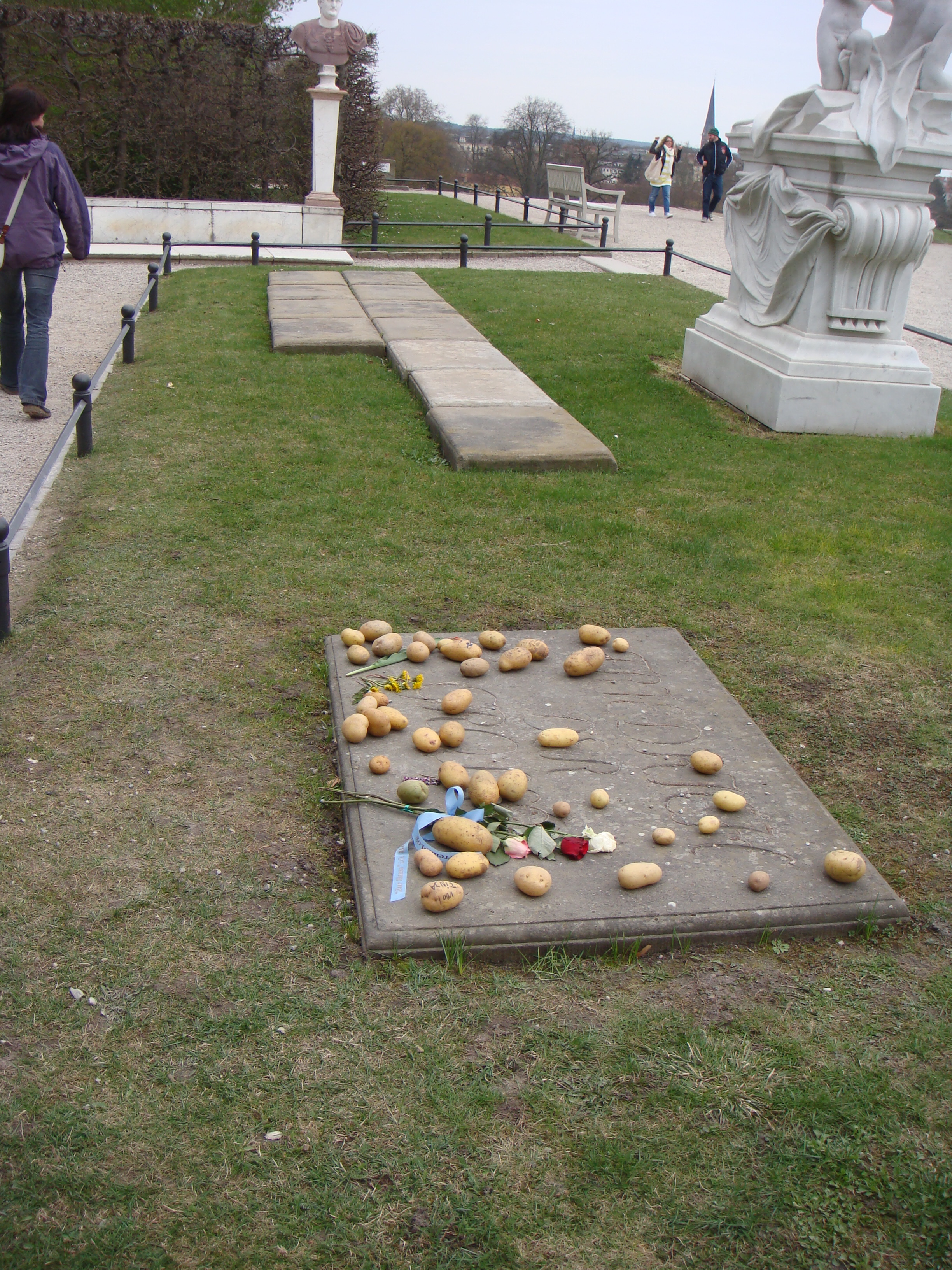
Frederick saw several advantages in the crop: it was not demanding about soil, it fed both people and livestock, and it coped with wet weather better than grain. He also had pastors spread knowledge of how to grow it, and asked his officials for tables showing where planting had succeeded or failed. A well-known legend says he had potatoes planted on royal land and guarded by soldiers, so that curious farmers would steal the tubers and plant them on their own fields. In memory of the decrees, visitors to his grave at Sanssouci in Potsdam often leave potatoes on it.
The potato itself came to Europe from the Americas. It was domesticated in the Andes, in what is now southern Peru and north-western Bolivia, and the Spanish brought it to Europe in the second half of the 16th century. The plant, Solanum tuberosum, belongs to the nightshade family. The International Potato Center (CIP), a CGIAR research centre, describes it as the third most important food crop in the world for human consumption after rice and wheat, eaten by more than a billion people. Europe, especially its northern and eastern parts, still has the highest potato production per person in the world.
The potato in the kitchen: nutrition and recipes
Recipes of every kind were shared online as people who had scooped up the potatoes tried to work out what to do with them. Although some fitness advocates had urged people to avoid carbohydrates, experts pointed to the potato's nutritional value, including its vitamin C and potassium, The Guardian reported.
Standard food tables show what that means. The United States Department of Agriculture's FoodData Central lists the following for 100 grams of raw potato, flesh and skin:
- Energy: 77 kilocalories
- Water: 79.25 g
- Carbohydrate: 17.49 g
- Protein: 2.05 g
- Fat: 0.09 g
- Dietary fibre: 2.1 g
- Potassium: 425 mg
- Vitamin C: 19.7 mg
- Vitamin B6: 0.298 mg
The International Potato Center describes the potato as a low-fat source of carbohydrate and says a serving eaten with the skin provides about 10 per cent of the recommended daily intake of fibre. Anyone with a medical condition that affects their diet should ask a doctor or dietitian how much to eat.
Restaurant kitchens joined in. Marco Müller, the celebrated Berlin chef of the Rutz restaurant, said it was the ideal moment to give the potato the Michelin-star treatment. He makes a rich broth from roasted potato peelings and a potato vinaigrette.
Another recipe doing the rounds was the Kartoffelsuppe (potato soup) of former chancellor Angela Merkel, which she first shared in a 2017 interview with a celebrity magazine. Her tip for the soup's lumpy texture: "I always pound the potatoes myself with a potato masher, rather than using a food mixer."
The places in the story
Kaulsdorf, where Astrid Marz queued, is a locality in the borough of Marzahn-Hellersdorf on the eastern side of Berlin. It became part of Greater Berlin under the Prussian Greater Berlin Act of 1920, and in 2020 it had 19,408 residents on an area of 8.8 square kilometres.
Tempelhofer Feld, another collection point, is a large public park on the site of the former Tempelhof Airport in south-central Berlin. The airport was the centre of the Berlin Airlift of 1948 and 1949 and stopped operating in 2008.
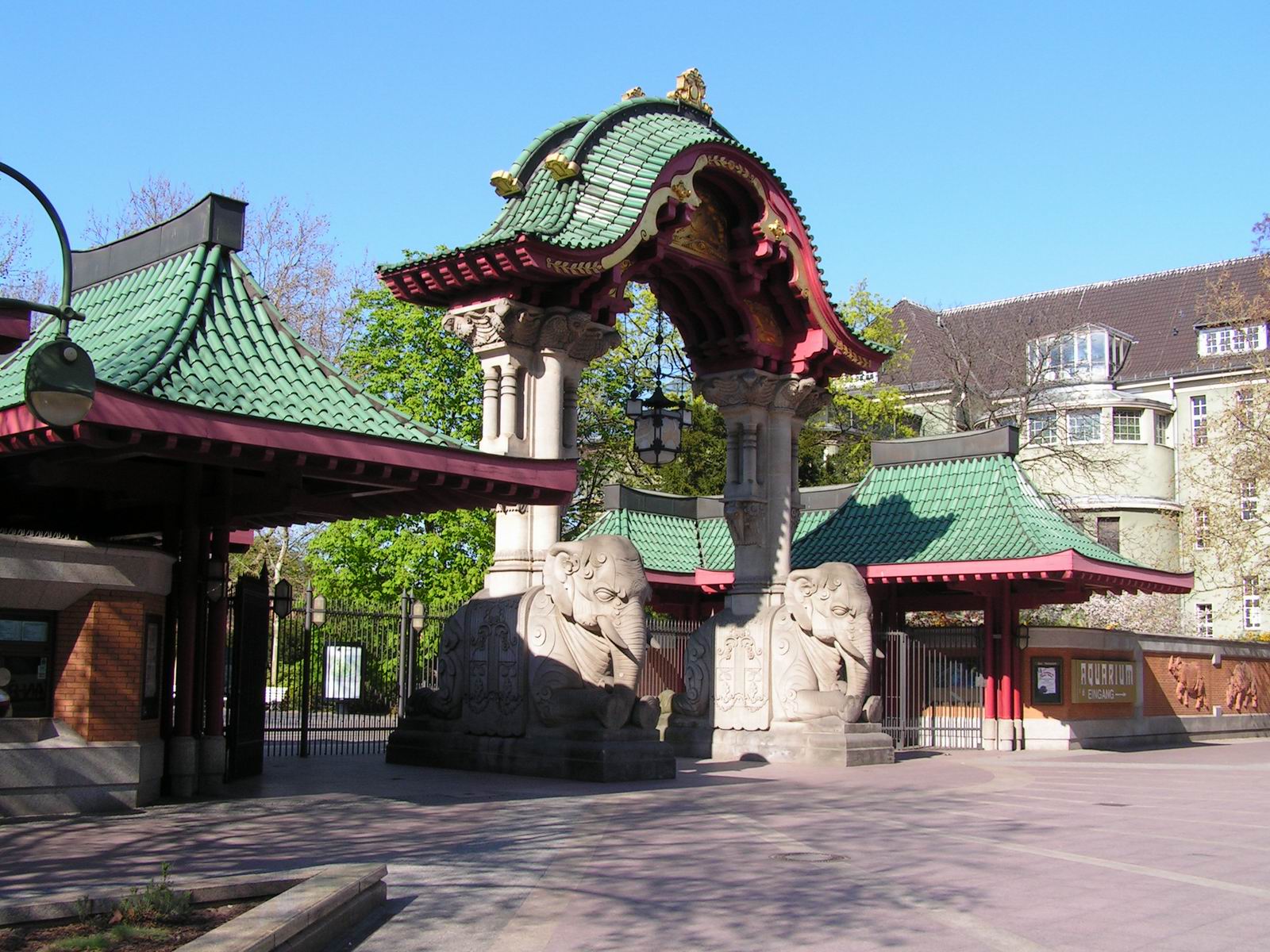
Berlin Zoo, the Zoologischer Garten, is the oldest surviving zoo in Germany. It opened in 1844 and covers 35 hectares in Berlin's Tiergarten district, where the zoo used part of the potatoes as animal feed.
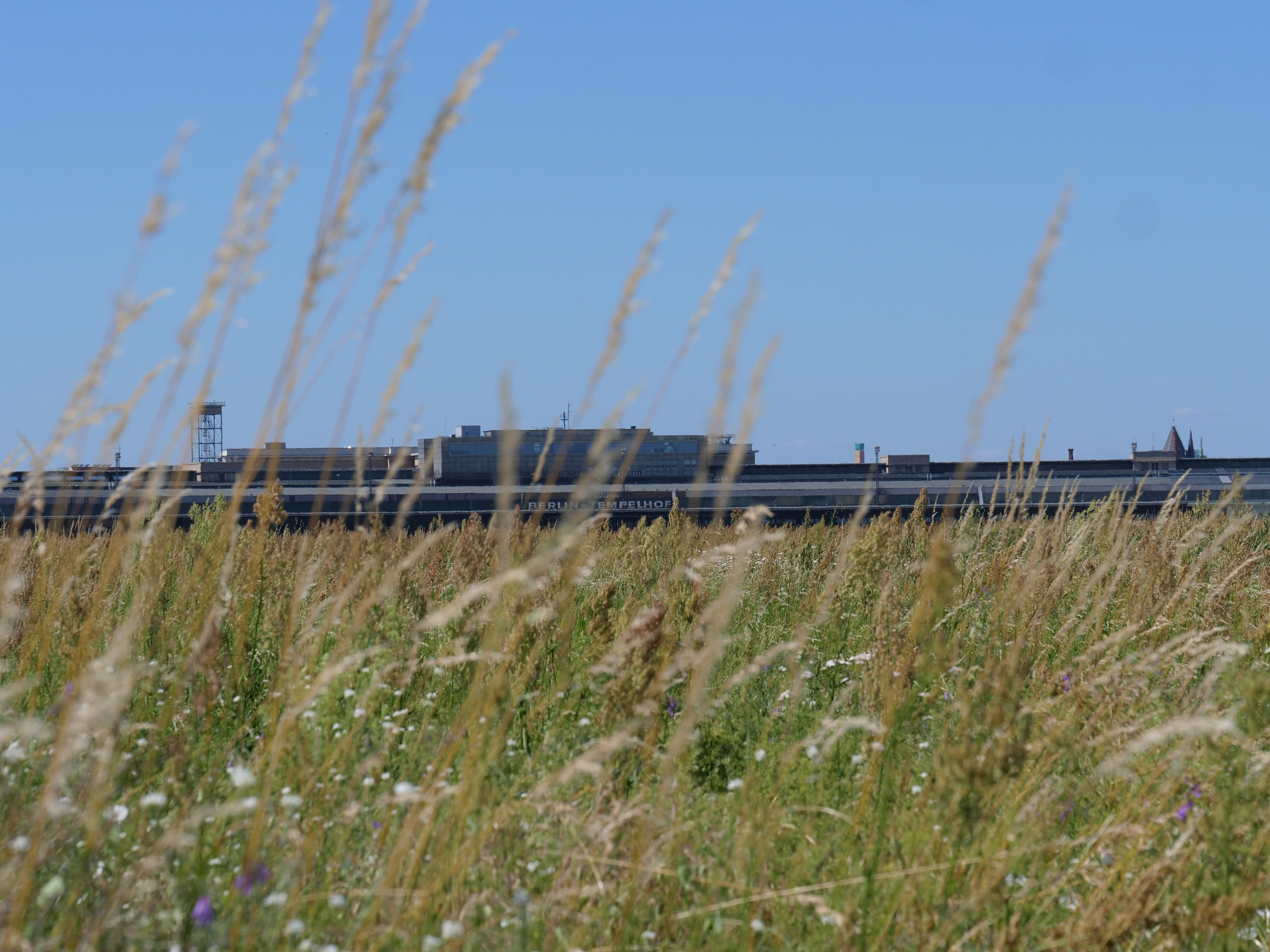
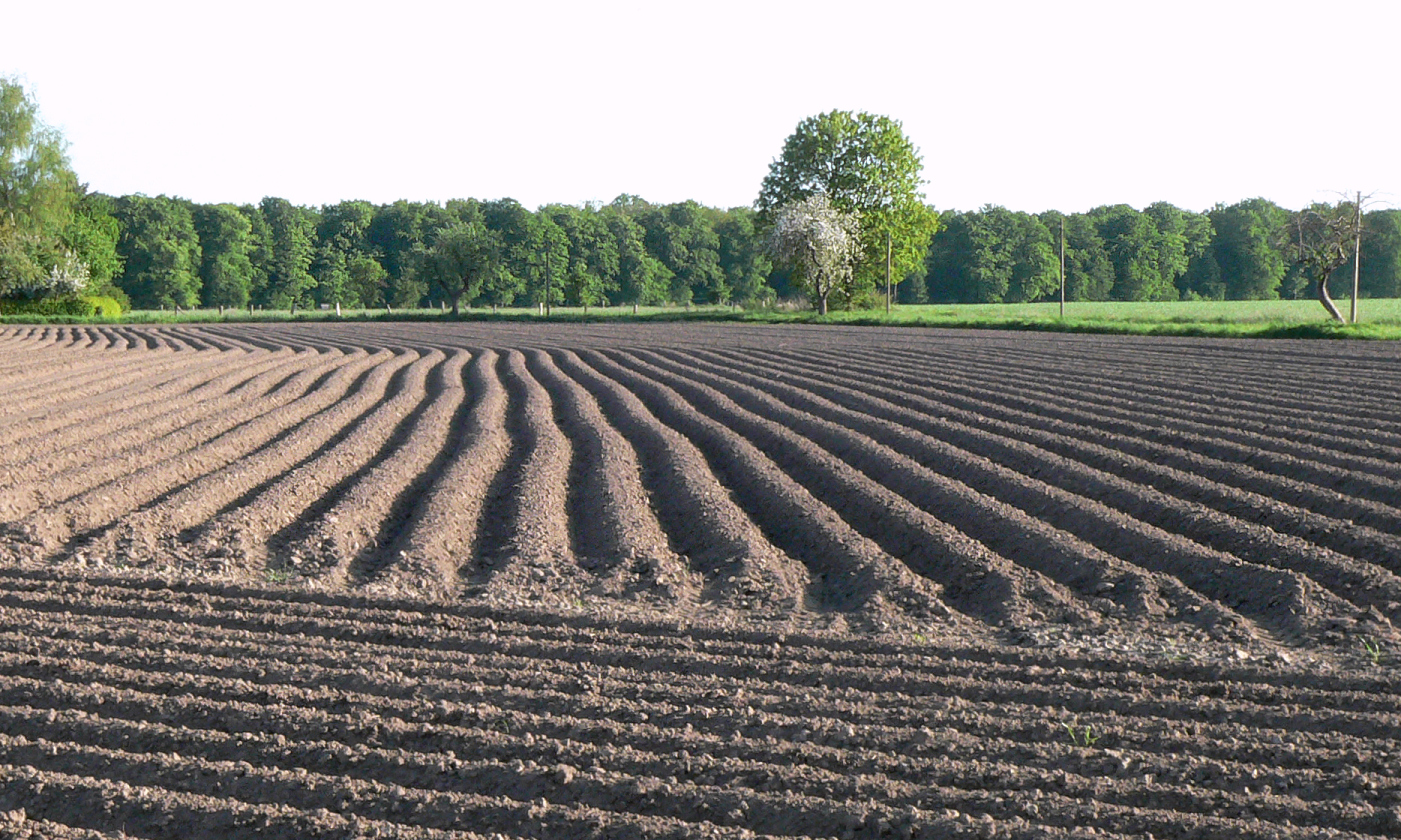
Photo: Arieswings / Wikimedia Commons (CC BY-SA 4.0). The top picture shows a potato field at Kirchwehren, Lower Saxony, Germany, as background; it is not the farm in the story.
Sources: Jagonews24 (1 February 2026), The Guardian (31 January 2026), The Local Germany (14 January 2026), The Berliner (13 January 2026), top agrar (24 September and 25 October 2025), LebensmittelPraxis (24 September 2025), CORRECTIV (17 October 2025), USDA FoodData Central, International Potato Center (CIP), Berliner Tafel, Wikipedia
Comments
(0)