
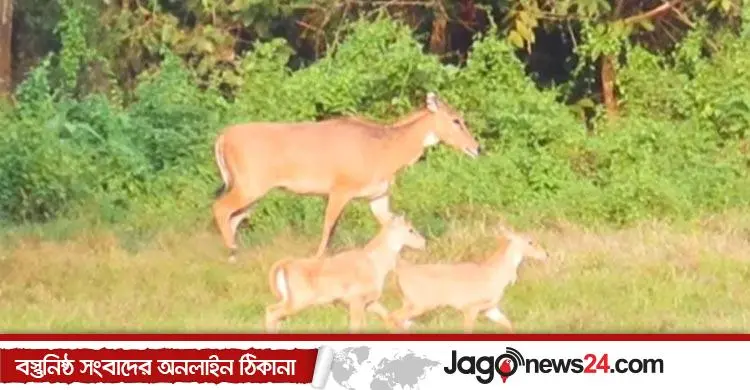
Two nilgai calves have been born at Gazipur Safari Park and are now roaming the forest of the core safari area with their mother.
The park authorities said the calves were first seen on 21 October and have since been seen at a particular spot every day when they come to feed. It has not yet been confirmed whether they are male or female.
Md Raju Ahmed, the park's wildlife inspector, said nilgai have given birth several times before, and with the latest two calves the park now has 11 nilgai.
A day earlier, the two calves were seen with their mother in the core safari area, sometimes suckling and sometimes running through the forest. Park officials said they behave normally even when tourist buses are around.
According to people who work with wildlife, nilgai are usually cautious about the safety of their young, which is why sightings of calves are rare. The calves suckle for up to six months after birth and gradually learn to eat grass and other food.
The nilgai is the largest of the antelope species. Males have horns and are darker in colour, while females are somewhat brown and have no horns.
Tarek Rahman, officer in charge of Gazipur Safari Park and assistant conservator of forests, said the park's open and suitable environment is why nilgai are breeding regularly, and that this is a positive result of their conservation work.
Source: Jagonews24. First published in Bengali on The Agro News.


Comments
(0)