
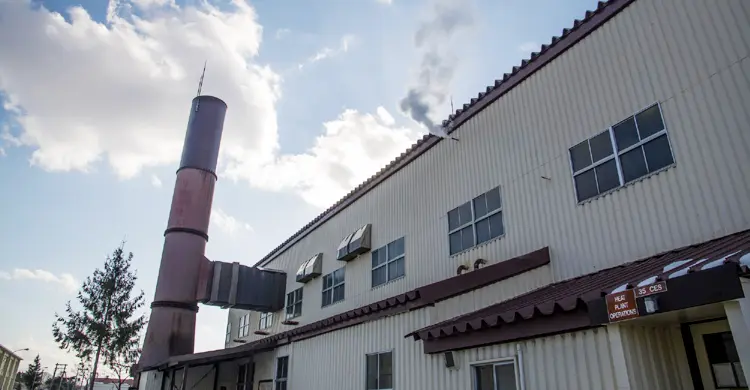
Because of their short shelf life, 30 percent of the mangoes produced in the country are wasted. As a result, despite demand abroad, the fruit cannot be exported at the desired rate. To solve the problem, the government is taking up a project to make mangoes export-ready by extending their shelf life through hot water treatment.
Vegetables also often cannot be exported in a hygienic way. That is why the project "Vapour Heat Treatment Plant to Increase Export of Mango and Other Fresh Agricultural Produce" is being taken up. Planning Minister MA Mannan said the project has already been approved.
As the project costs Tk 27 crore 6 lakh, the minister approved it under his own authority. The Bangladesh Agricultural Development Corporation (BADC) will implement it from July 2022 to June 2025.
The Planning Minister said: "We cannot preserve mangoes properly. We often waste 30 percent. And because of the way we preserve mangoes, our mangoes cannot enter many foreign markets. We will build a vapour heat treatment plant at Gabtoli. Through it, mangoes and fresh vegetables can be exported abroad without hindrance."
Why exports lag
BADC said that although Bangladesh ranks eighth among the world's top 10 mango producers, it has no position as a mango exporter. As mango is perishable, exports cannot reach the desired level simply because of a lack of processing.
Pathogens, insects, heavy metals and blemishes in the fruit also reduce its acceptability abroad. Without mango processing technology, the fruit cannot be made bright and long-lasting or freed of germs, insects and fruit flies, so exporters face difficulties in obtaining phytosanitary certificates.
Traders in the country use harmful chemicals in ripening and storing mangoes, which is seriously harmful to health. To prevent this, marketing will be improved by building an automatic conveyor packaging line.
Under the project, 10,000 tonnes of quality mangoes will be freed of various fungi, bacteria, insect eggs and larvae. In addition, 25,000 tonnes of quality vegetables and fresh farm produce will be processed.
The project will set up a plant with vapour heat treatment technology at Gabtoli in Dhaka as a pilot, to boost mango exports by preventing rapid rotting, increasing shelf life and making it easier to obtain phytosanitary certificates.
Aims and main activities
The project aims to set up a processing centre with vapour heat treatment technology at Gabtoli in Dhaka district by 2023, and to increase exports by 2025 by improving processing facilities for mangoes and other farm produce.
A processing centre of 2,500 square metres will be built. A vapour heat treatment machine and an automatic conveyor packaging line machine will be installed, along with an electricity substation for the processing plant. Local training will also be arranged for exporters, entrepreneurs, mechanics and relevant officials and staff.
According to Krishi Service figures, the country now produces nine lakh tonnes of mangoes a year on 28,000 hectares. But exports are tiny, only about 1,000 tonnes. The main export problems are the use of harmful chemicals to ripen mangoes and extend storage, and post-harvest management (lack of satisfactory packaging and transport, and farmers' lack of knowledge of export standards, among others).
The project proposal says that although the country produces enough mangoes, a large quantity, about 30 percent of total production, is wasted for lack of suitable processing and storage. Humidity and temperature in the harvest season also shorten shelf life, so mangoes rot quickly. This happens because the mango season is short and treatment facilities are inadequate.
Hot water treatment, however, will increase mangoes' shelf life and kill diseases and germs in the fruit. Storage will also reach international standards, making mangoes more suitable for export. Modern management will cut post-harvest mango losses by 10 percent, and the export market for mangoes will expand through quality assurance and better marketing.
Source: Jagonews24. First published in Bengali on The Agro News.

Comments
(0)