
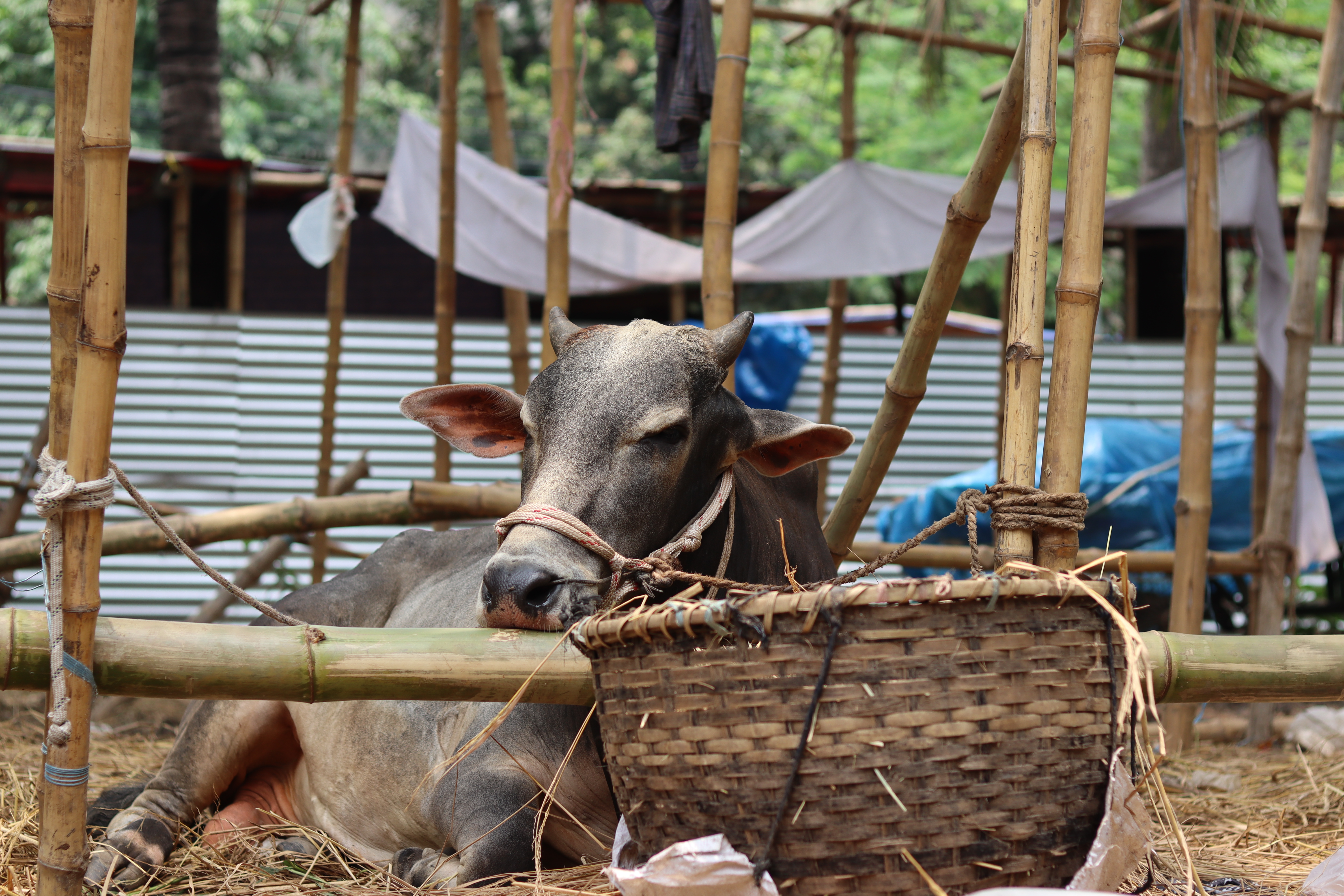
On Saturday 23 May 2026, five days before Eid-ul-Azha, traders and householders at Dhaka's Gabtoli cattle market were busy readying their animals for the festival, but sales had not properly begun. According to a Jagonews24 report from the market that day, buyers were comparatively few, and many of those who came were checking prices and comparing them with market rates. Sellers were asking Tk 1,40,000 to Tk 1,50,000 for cattle expected to yield four maunds of meat.
Gabtoli is a permanent livestock market under Dhaka North City Corporation, where cattle are traded all year round. On the evening of 18 May the National Moon Sighting Committee announced that the moon of Zilhaj had been sighted and that Eid-ul-Azha would be celebrated on Thursday 28 May. On 23 May, the market was therefore in its final week of preparation before Eid.
The asking prices
Touring the market that day, the Jagonews24 reporter found traders tending their cattle, but many pens were still empty and not enough animals had arrived. Sellers said cattle expected to yield three maunds of meat were being offered at about Tk 1,05,000 to Tk 1,10,000, and those yielding four maunds at Tk 1,40,000 to Tk 1,50,000. By the sellers' reckoning, the price per maund of meat was ranging between Tk 32,000 and Tk 35,000.
As in earlier years, demand was highest for small and medium cattle, especially animals yielding four to six maunds of meat. For these, the report said, the meat was working out at about Tk 35,000 a maund on average.
Shafi Biswas, a trader from Damurhuda in Chuadanga, told Jagonews24 he had brought 14 local bulls to Gabtoli, each expected to give about six maunds of meat, and was asking Tk 2,10,000 to Tk 2,20,000 for them. Buyers were very few, he said, and unless meat fetched Tk 35,000 a maund, traders like him would make a loss.
Golap Kasai, a trader from Kushtia Sadar, said he had brought 25 cattle, each expected to give about five maunds of meat, and was asking up to Tk 1,75,000. Meat normally stays within Tk 32,000 a maund, he said, but at Eid sellers cannot survive unless it reaches Tk 35,000. He had been coming to the market for three days without finding many buyers.
Large cattle were kept right at the market entrance, but the report noted that YouTubers and TikTokers outnumbered buyers at those pens.
Why buyers were holding back
By 23 May, the report said, no buyer had been seen leaving the market with a cow; visitors, YouTubers and journalists made up most of the crowd. People involved in the trade believed that because there is so little space to keep cattle in Dhaka, sales usually peak about two days before Eid.
Cloth trader Haji Miron Mia had come from Pallabi in Mirpur with his two children. As every year, he said, he had come with a fixed budget for the sacrifice and was checking prices against it. There was no way to buy a cow now and keep it, he said; traders were asking somewhat high prices, but these might come down a little just before Eid.
Abdur Rahim Bepari, from Mollahat in Bagerhat, had brought 15 cattle to the market two days earlier but had yet to find a buyer. "Nobody has even quoted a price. I've been sitting here for two days," he said.
Buyers were holding back elsewhere too. On 17 May bdnews24.com reported from Rangpur that many people were visiting farms to look at cattle but few had paid advances, and that trading at the cattle markets had not fully picked up; farmers hoped buyers would arrive in the final days before Eid. In a report of 15 May, the state news agency BSS quoted a buyer at the Shialmari market in Jibannagar, Chuadanga, who said he was looking for a cow costing Tk 1,00,000 to Tk 1,20,000, but sellers would not quote below Tk 1,50,000 for one he liked. There too, small and medium local cattle were most in demand, and farmers were worried because demand for large cattle was weaker.
Indian bullocks, fattened in Bangladesh
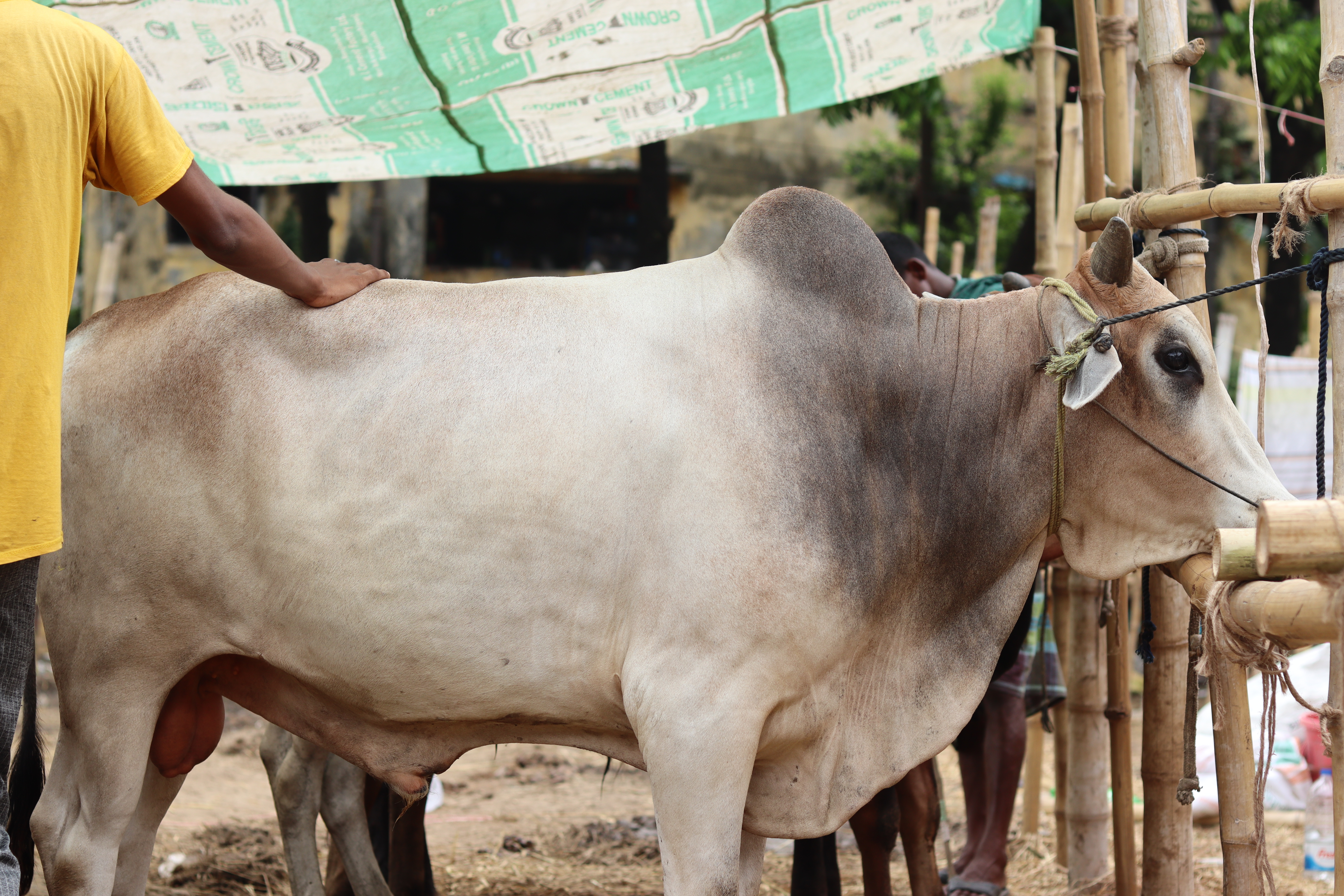
White Indian bullocks were also being brought in for sale at Gabtoli that day. Traders said these animals had not been brought from India recently but about one to one and a half years earlier. When they arrived they were just skin and bone; they were then gradually fattened on rice polish, khesari (grass pea), maize, paddy and bran-mixed concentrate feed, and had since adapted to local conditions. Up to Tk 4 lakh was being asked for each, and sellers claimed each would yield seven to eight maunds of meat.
Lakshmipur trader Mohammad Belayet Hossain said: "We brought cattle from India and raised and fattened them on the farm. At first we bought only bones; now they have grown up in local conditions. These Indian bullocks are also comparatively cheaper than other cattle."
Asked what prices would be like that Eid, he said: "Fresh grass is hard to get now and straw prices have gone up a lot. Labour wages, electricity bills, treatment and all other costs have risen. Making a profit has become difficult this time. If we get our capital back, Alhamdulillah."
That same week the government was stressing its line on animals entering across the border. BSS reported that Sultan Salauddin Tuku, the State Minister for Fisheries and Livestock, told journalists after visiting Gabtoli on the morning of 23 May that people should buy sacrificial animals from lawful sources rather than smuggled ones. Whether an animal brought in illegally is fit for sacrifice, he said, was a question for religious scholars and muftis to answer. According to him, border surveillance had been stepped up to protect local farmers, and measures had been taken with law enforcement agencies to stop cattle entering illegally.
Traders and farmers point to rising costs
Costs were the Gabtoli traders' main complaint. Shafi Biswas claimed that cattle feed cost more than human food, and that medicine and treatment costs had also risen a great deal. The report said that although sacrificial animal markets in various places were starting to fill up, both buyers and sellers were unhappy about prices: buyers complained that animals were too expensive, while sellers said prices were low given that feed and all other costs had risen.
Farmers in other districts were saying the same. BSS reported from Jashore on 17 May that, according to the district livestock office, some 13,500 farmers and growers had prepared 1,17,997 animals for the Eid markets against a district demand of 1,03,128. A farmer in Jashore Sadar told BSS that over the past few years the prices of straw, bran, maize and medicine used for cattle had risen significantly, transport costs had also gone up, and prices did not keep pace with production costs.
The Jashore district livestock officer told BSS that farmers had been trained at various times and advised not to depend only on concentrate feed but to give green grass as well. Because all farmers raise animals for the Eid-ul-Azha market, he said, many animals reach the markets at the same time and prices fall; farmers had therefore been advised to raise animals for the year's other festivals too.
Independent Television reported on 15 May that although farmers were raising animals on natural feed, they feared smaller profits that year because feed prices had risen, and wanted strict government surveillance to stop cattle coming in across the border from India. In the BSS report from Chuadanga, a farmer at the Shialmari market also said that cattle feed prices had gone up a lot and that sellers were setting their prices after counting all their costs.
Why cattle are priced by the maund
At sacrificial animal markets, a cow's price is usually set by an estimate of how many maunds of meat it will yield. That is why the Gabtoli traders spoke of three-, four- or six-maund cattle, and worked out their profit or loss on the price per maund of meat.
The maund is a traditional South Asian unit of mass. Under the Mughals, one maund was defined as 40 seers. In British India the maund was first standardised in the Bengal Presidency in 1833, and the standard spread across the Raj. After the independence of India and Pakistan, metrication fixed one maund at exactly 37.3242 kilograms, and a similar metric definition is used in Bangladesh and Nepal, though in everyday use across Bangladesh a maund is taken as 40 kilograms.
How much meat a cow will yield is the seller's own estimate, and every price in the report is an asking price, not a final sale price.
Gabtoli and Dhaka's sacrificial animal markets
The Dhaka Tribune reported on 19 April 2026 that the capital has two permanent cattle markets that operate year-round: Gabtoli, under Dhaka North City Corporation, and Sarulia, under Dhaka South City Corporation. Temporary markets are added at Eid-ul-Azha. According to the English edition of The Daily Ittefaq on 20 May, 27 markets were being set up in the capital that year, 16 under Dhaka North City Corporation including Gabtoli and 11 under Dhaka South, and more than 3,600 permanent and makeshift cattle markets were to operate across the country. Formal trading was to run for five days including Eid day.
At a briefing on 3 May the Ministry of Fisheries and Livestock said 20 veterinary medical teams would be on duty round the clock at the Dhaka markets. The Daily Ittefaq reported that veterinary teams would examine animals at the major markets and that no animal would be allowed for sale without health clearance; special security arrangements, including plainclothes police at all markets, were also made.
After his visit to Gabtoli on 23 May, the state minister told journalists that a medical centre had been set up at the market that year to safeguard the animals' health, with arrangements for immediate treatment of sick animals, fever checks and necessary medicines, and that Department of Livestock Services officers and veterinarians were on duty there round the clock. According to BSS, he also said special arrangements and equipment were in place to detect counterfeit notes, and that law enforcement agencies were active at the market.
Sacrificial animals were also being sold online. The ministry said at its 3 May briefing that no toll or hasil would be charged on animals bought online. The Daily Ittefaq reported that farms were using social media pages, websites and e-commerce platforms to show buyers photos, videos, live weight, feeding details and farm locations.
How many sacrificial animals the country had
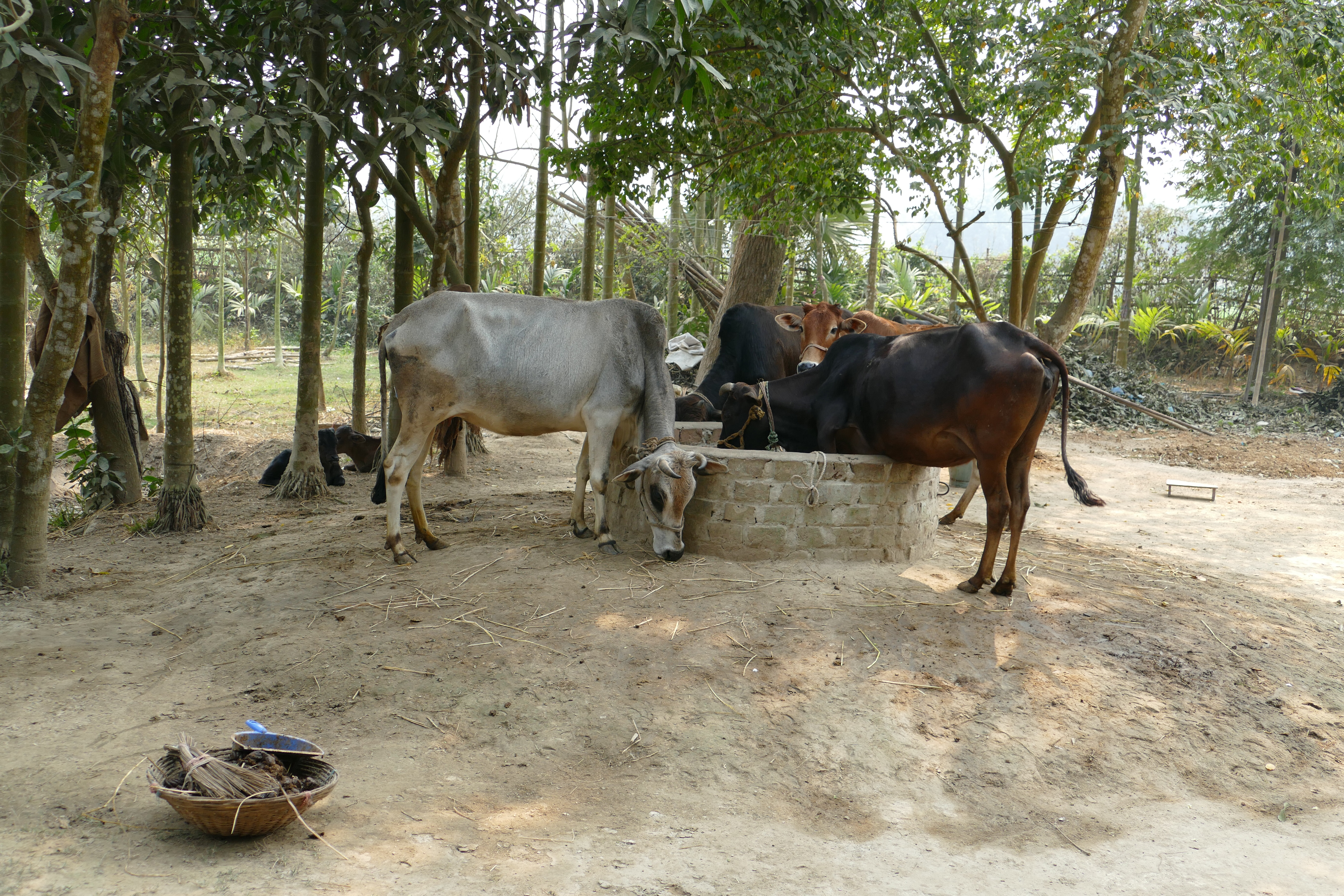
At the 3 May briefing, Minister Mohammad Aminur Rashid presented the Department of Livestock Services' figures: the likely demand for sacrificial animals in 2026 was 1,01,06,334, against availability of 1,23,33,840, leaving a surplus of about 22,27,506. The available animals included 56,95,878 cattle and buffaloes, 66,32,307 goats and sheep, and 5,655 animals of other species.
One of the traders who spoke at Gabtoli that day had come from Chuadanga. BSS reported from there on 15 May that the district's four upazilas had 2,02,239 animals fit for sacrifice that year, including 44,396 cattle and 1,55,200 goats, against a district demand of 1,31,181. According to the upazila livestock officer, the surplus animals would be supplied to other parts of the country.
The previous year's figures give context. Citing a Department of Livestock Services press release, The Financial Express reported on 10 June 2025 that 91,36,734 animals were sacrificed across Bangladesh at Eid-ul-Azha that year, including 47,05,106 cattle and buffaloes and 44,30,668 goats and sheep. A further 33,10,603 animals went unsold; the department said this was because supply had been high, and that it was not unusual. By division, Rajshahi recorded the most sacrifices in 2025, 23,24,971, followed by Dhaka with 21,85,040.
The border, Indian cattle and the growth of local farms
Indian cattle have long been part of the story of Bangladesh's Eid market. The Daily Star reported on 19 July 2021 that before India tightened its border, Bangladesh depended on the entry of about 20 lakh cattle a year from its neighbour. National Board of Revenue data showed that 21 lakh cattle came in informally across the border in fiscal 2013-14; the trade began facing curbs from 2015, and by fiscal 2019-20 the figure had fallen to 2 lakh.
In the same report, the then director general of the Department of Livestock Services said this had made Bangladesh self-sufficient in cattle rearing: the country used to rely on Indian cattle during the Qurbani season, but locally reared bulls had met demand at the four Eids before that 2021 report. By the department's count, the number of fattened bulls in the country rose from 33.42 lakh in 2017 to 38.58 lakh in 2021, and meat production grew from about 13 lakh tonnes in 2009-10 to over 75 lakh tonnes in 2019-20.
The border was in the news again before the 2026 Eid. At the 3 May briefing the minister said a policy decision had been taken to stop cattle markets being held near the border to protect local farmers; in the past, he said, foreign animals entering through some border-side markets had hurt domestic farmers. According to The Daily Ittefaq of 20 May, strict instructions had been issued to Border Guard Bangladesh (BGB) and the police to intensify surveillance against cattle entering illegally through border areas. Farmers in Rangpur division also told bdnews24.com that they would suffer badly if Indian cattle came in illegally.
The report from Gabtoli does not say by what route or process the Indian bullocks on sale there had been brought into the country; the traders said only that they had arrived one to one and a half years earlier.
Fattening thin cattle: what the research says
By the traders' account, the Indian bullocks had been raised on rice polish, khesari, maize, paddy and bran-mixed concentrate. The use of such ingredients to fatten cattle in Bangladesh has been studied.
A study by researchers from Bangladesh Agricultural University and the Bangladesh Livestock Research Institute (BLRI), published in the journal Livestock Research for Rural Development in 2015, noted that local farmers mostly feed their cattle rice straw, a poor-quality roughage that cannot meet even an animal's maintenance needs for energy and protein when fed alone. In a 90-day trial at the Central Cattle Breeding and Dairy Farm in Savar in 2013, twelve Local x Brahman crossbred bulls were given three diets. Bulls on a mixed concentrate of wheat bran, crushed maize, crushed khesari and soybean meal gained an average of 954 grams a day; those on a 1:1 mix of concentrate and urea-molasses-treated straw gained 873 grams; and those on urea-molasses straw alone gained only 205 grams. Weighing cost against feed efficiency, the researchers judged the 1:1 mix the most suitable diet for these crossbred bulls. Citing earlier work, the paper said native cattle on urea-molasses straw alone gained 157 to 292 grams a day, rising to 554 to 883 grams when concentrate was added.
A second study, published in the Journal of the Sylhet Agricultural University in 2018, followed bulls kept by ten smallholders in the haor area of Sunamganj from January to April 2017. Bulls given urea-molasses straw gained an average of 496.41 grams a day, against 236.62 grams for those without it, and the farmers' gross margin was higher in the treated group. Feed amounts and mixtures differ with an animal's age, breed and condition, so the upazila livestock officer is the person to ask about a ration.
Khesari, or grass pea (Lathyrus sativus), which the traders mentioned, is a legume grown in Asia and East Africa both for human food and for livestock feed. Because it survives drought and flooding, it is regarded as an insurance crop. Its seeds, however, contain a neurotoxin, and eating them as a main source of protein over a long period can cause lathyrism, a neurodegenerative disease, in people.

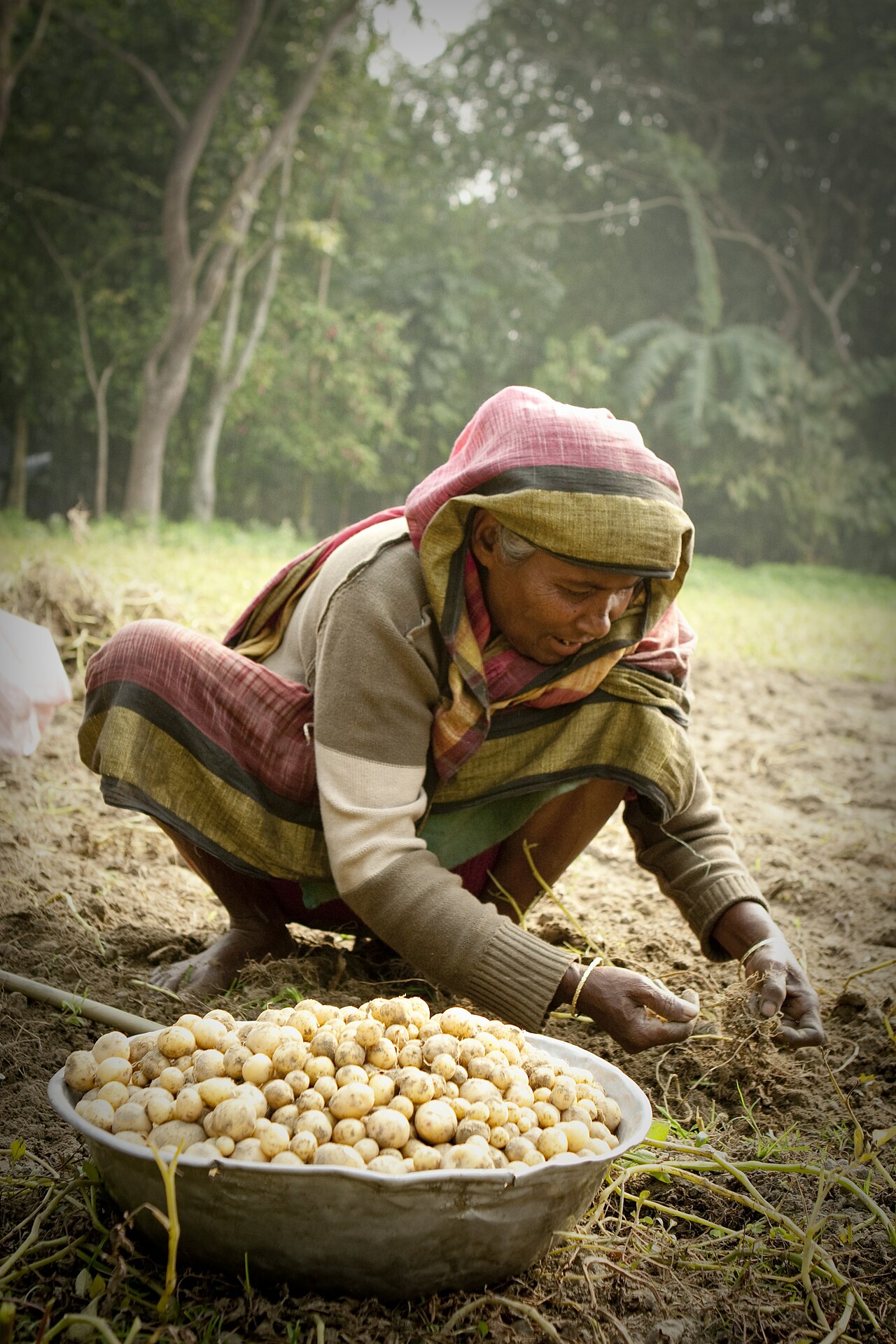
Photo: Wasiul Bahar / Wikimedia Commons (CC BY-SA 4.0)
Sources: Jagonews24, Bangladesh Sangbad Sangstha (BSS), The Business Standard Bangla, The Daily Ittefaq (English edition), Dhaka Tribune, Bangla Tribune, bdnews24.com, Independent Television, The Financial Express, The Daily Star, Livestock Research for Rural Development, Journal of the Sylhet Agricultural University, Wikipedia
Comments
(0)