
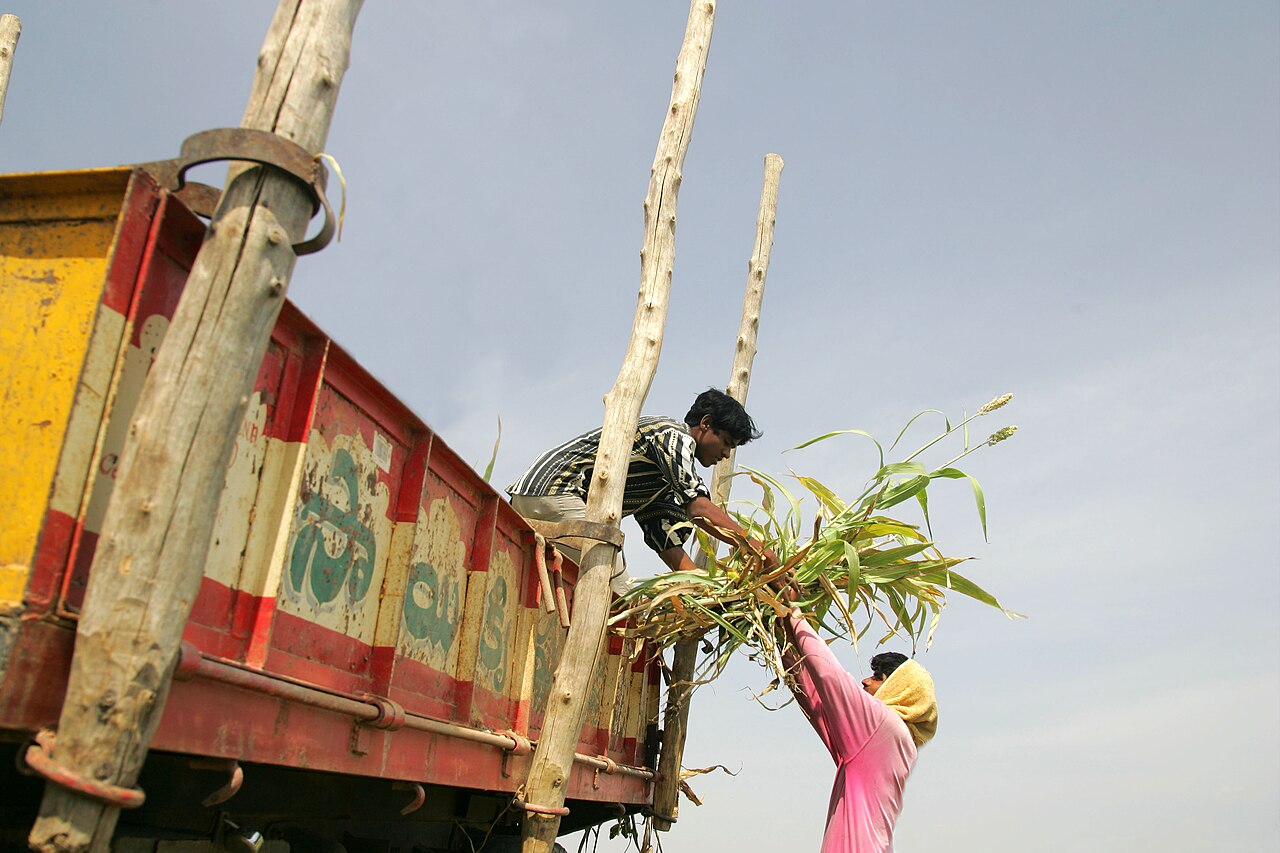
Two bundles of grass can look alike and still feed an animal very differently, depending on where and when they were grown, harvested and handled. A free online tool from the International Livestock Research Institute (ILRI) and the Alliance of Bioversity International and CIAT is meant to make that difference visible, ILRI said on 27 November.
The Livestock Feed Quality Database, at livestockfeeds.cgiar.org, holds samples from tropical livestock systems: grasses, forage legumes, crop residues and other feeds. Depending on the sample, a record carries up to 17 feed-quality measurements, such as protein, fibre and digestibility.
Its main feature is the context. Each record says, where it is known, where the sample came from, in which season, and how it was produced and processed. Published feed tables often give one average value, but the nutrients in grasses, residues and forages change with maturity, rainfall, soil, management and processing, so an average may not describe the feed on a particular farm.
Feed is one of the biggest costs in livestock farming, and its quality affects how much animals eat, how they grow and how much milk they give. ILRI notes that feed quality can also change greenhouse gas emissions per unit of milk or meat, but says the database itself does not show any methane reduction; it supplies information for research and feeding decisions.
Anyone can search and filter the records without an account. Researchers and laboratories that want to add data must request access and submit a standard spreadsheet, which administrators review before it is published. The tool supports feed assessments, ILRI says, but does not replace feed testing or professional ration formulation.
“We wanted to give farmers and advisers information that reflects the conditions they actually work in, and to make it free and easy to find,” said James Hawkins, a postdoctoral fellow in systems modelling and data automation at ILRI. The database was built by ILRI's Mazingira Centre and the Alliance, with support from CGIAR's Climate Action and Sustainable Animal and Aquatic Foods science programmes.
Reporting: Grace Oduor, ILRI.
Photo: ILRI/Stevie Mann / Wikimedia Commons (CC BY 2.0)
Source: ILRI
Comments
(0)