
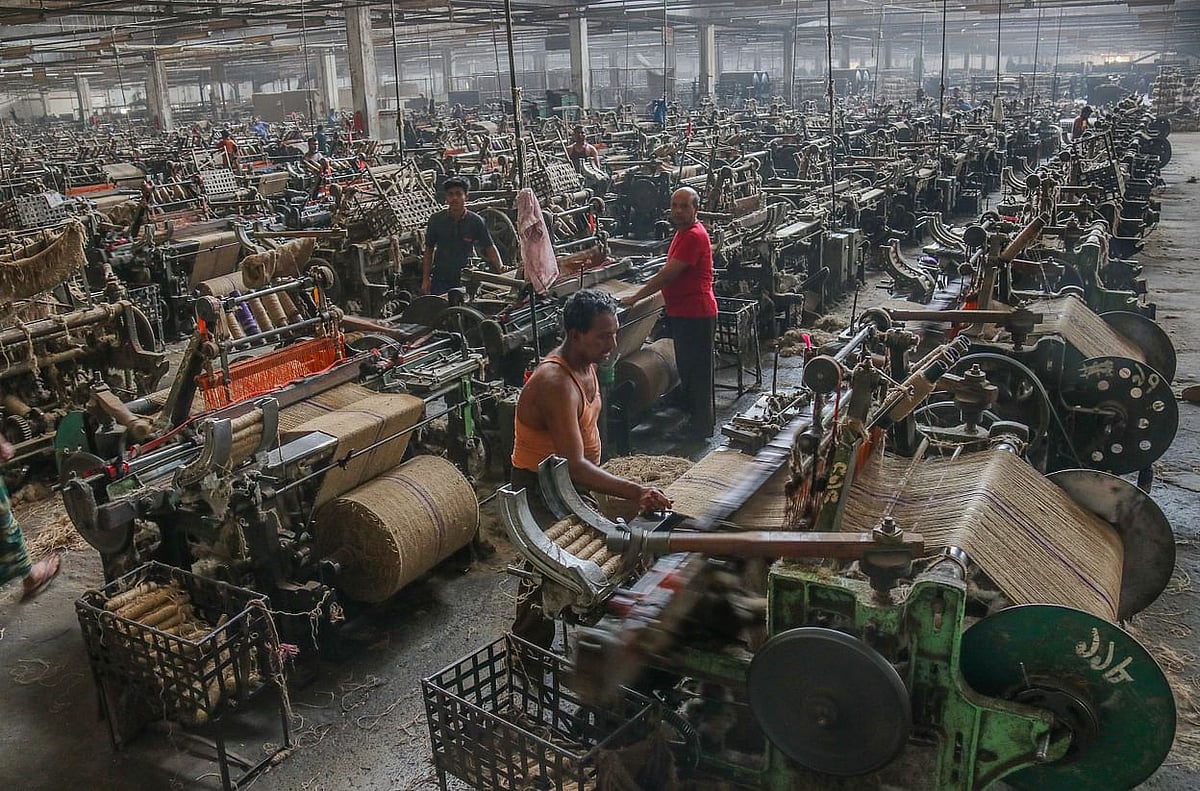
Abul Khair Group has brought four private jute mills that had closed under a range of difficulties back into production by contracting with their owners. Razzak Jute Industries, Faridpur Jute Fibres and Dahmashi Jute Industries in Faridpur and AR Jute Mills in Magura resumed at various points this year. The restart has created 15,000 jobs, and Razzak Jute's output is already being exported.
Group officials said the conglomerate entered jute trading last year and, as a step into jute goods, signed agreements with the four idle mills. Shah Agro Limited, a group company, runs them. The target is 80,000 tonnes of jute yarn and jute products a year for export; yarn from the mills has so far been shipped to Turkey and China.
Sheikh Shabab Ahmed, the group's head of corporate affairs and legal, said the jute goods business is highly capital-intensive and many private mills stand closed, so rather than build new factories the group contracted with the owners of idle ones. The model is simple: the group buys raw jute and supplies it to the mill, the mill's management runs the workforce and makes the goods, and the group exports them.
Talks are under way with the owners of two or three more closed private mills, he said, and the group has applied to lease three or four closed state-owned mills. It plans larger investment, and new factories, to move into higher-value jute products. Bangladesh's jute is of high quality and this environmentally friendly product has a global market, he said, adding that the investment should indirectly improve the lot of jute growers.
Tapas Pramanik, chairman of the Bangladesh Jute Spinners Association, said Abul Khair had entered the jute goods trade in an unconventional way and that reviving closed mills by agreement with their owners is not a bad model. If a group this size focuses on restoring jute's lost standing and capturing the market for diversified jute goods, he said, the country stands to gain a great deal from the sector.
Growing districts such as Satkhira report good harvests this season but little local jute industry; reopened mills raise hopes of firmer demand for raw fibre.
Source: Prothom Alo


Comments
(0)