
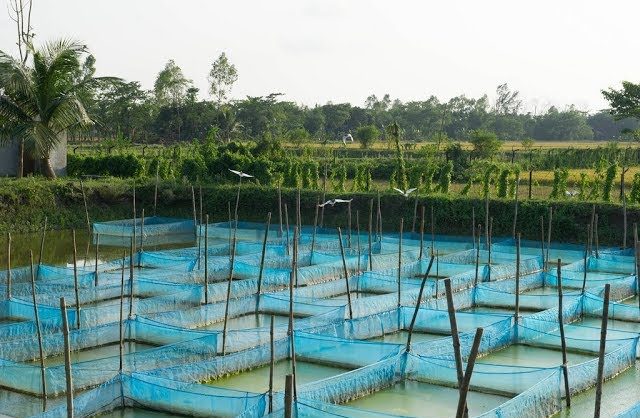
Improved-technology fish farming is spreading in Bangladesh at an unexpectedly fast pace, and getting quality fry for fish farming has become a very important matter. From the early 1990s a large number of fish hatcheries gradually grew up in different parts of the country. There are now about 921 fish hatcheries — 76 government and 845 private — and 10,402 nurseries. Disease in these hatcheries and nurseries has become almost routine, speeding up the death of fry, and farmers and fry growers are deeply worried.
According to fisheries scientists, as in other animals, the immune system plays an important role in a fish's resistance to disease. It fights constantly against pathogens present in the water and helps keep fish healthy.
Fry in hatcheries and nurseries are naturally fragile, and because their immune systems are immature they fall ill very easily. Fry moved from diseased hatcheries to grow-out ponds also carry pathogens with them, which then cause the inevitable death of the fry stocked there.
Fish hatcheries and nurseries commonly suffer from:
- fungal diseases
- viral diseases
- bacterial diseases
- environmental diseases
- parasitic diseases
- myxosporidiosis
- louse infestations
- trichodiniasis
- worm infections
Fungal diseases
Fungal diseases mainly affect fish eggs and spawn. Fungal infection during hatching causes serious problems in hatcheries. The fungi first take firm hold on dead and unfertilised eggs, gradually spread to healthy eggs and eventually destroy the whole batch.
The disease can be prevented in hatcheries by washing the eggs, removing damaged and unfertilised eggs, increasing water flow and reducing egg density. Malachite green is the best and most reliable treatment for fungal disease.
Eggs being reared in the hatchery can be washed with 250 ppm formalin, or affected fish given a 2–3 minute bath in 3–5 per cent formalin. Applying malachite green to the pond at 0.15–0.20 ppm once a week for 2–3 weeks also gives encouraging results.
Viral diseases
Reliable information from various sources shows that grass carp haemorrhagic virus is responsible for the death of Chinese carp fry. A herpes virus also causes disease in common carp and koi carp. According to fisheries scientists, there is essentially no treatment for viral diseases; only regular cleanliness and biosecurity measures help prevent them.
Bacterial diseases
Various bacteria, such as Motile, Aeromonas and Vibrio, often cause the death of fry in hatcheries and nurseries. They cause disease either as primary pathogens or as opportunistic invaders. Tail rot and fin rot are usually caused by these species. Bacterial haemorrhagic septicaemia caused by Aeromonas hydrophila is a serious problem for carp fry.
Deteriorating water quality, temperature swings, organic pollution and high stocking density play a major part in bacterial infection of fry. For bacterial disease, especially dropsy (swollen belly) in fry, applying potash at 5 ppm to the affected pond gives satisfactory results. Oxytetracycline can also be given with feed at 50–60 mg per kg of fish body weight for up to 10 days. Fish should not be harvested within 25 days of using this drug.
Source: Staff Correspondent. First published in Bengali on The Agro News.
Comments
(0)