
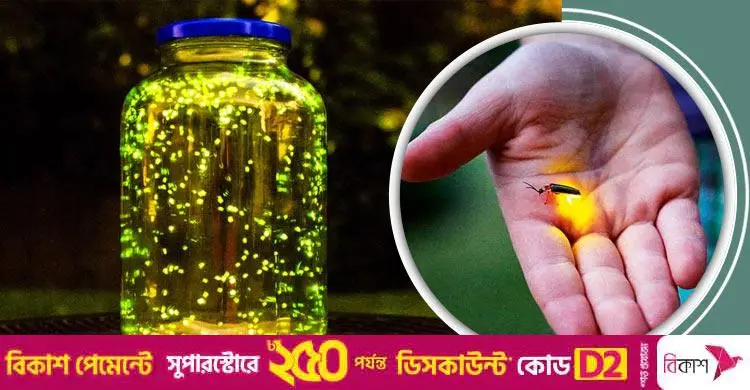
The light of fireflies on dark village nights was an inseparable part of our childhood. Among trees and bushes, twinkling lights would suddenly flare up, and nature seemed to take on a different form. As evening fell, the chase would begin: catching fireflies in cupped hands and letting them go again, and sometimes turning them over out of curiosity to see how such a beautiful light could glow in their bodies.
Countless childhood memories are tied to firefly light. It filled children with joy, like a magic trick. But that light seems to be disappearing day by day and is no longer seen as it once was. Which raises the question: why are fireflies declining, and where has that enchanting light of childhood gone?
Cold light
Fireflies are among a few insects famous for their light. Scientists call this remarkable trait bioluminescence. There are more than 2,000 species of firefly worldwide, yet surprisingly not all of them glow. Besides adult fireflies, light is also produced by firefly larvae and even eggs. It is a natural, spontaneous process for them.
Firefly light is among the most efficient light in the world, because all of it is light energy. That is why scientists call it cold light. Firefly larvae usually eat small snails and insects.
Light plays an important part in the firefly's life cycle. During breeding they use it to attract a mate. In some species only males or only females glow, but in most both can. The light is used not only for breeding but also to communicate and to warn predators.
The silence of night, a mist-covered sky, the call of crickets from distant bushes or bamboo groves, and fireflies glowing among the grass and leaves were once a familiar scene of rural life, especially on nights in the rainy season and autumn. Children would run in groups, delighting in catching them, and the light touched nature lovers of every age.
But today? Night still comes and darkness falls as before, but that familiar twinkling is rarely seen. It can still be found in places, but only very sparingly. Firefly light seems to be slowly fading from our night-time landscape, and with it a piece of childhood and a unique beauty of nature.
Two main causes
Professor Dr Mohammad Saifullah of the entomology department at Bangladesh Agricultural University spoke to Jago News about why fireflies are disappearing.
He said two main factors are behind their decline. The first is excessive pesticide use. "We usually see fireflies at night, but they are around in the daytime too. Their light is visible to us in the dark, so we think they exist only at night. When we use excessive pesticides in crop fields to control other harmful insects, those chemicals affect fireflies. Their life cycle stops, or they die."
Second, he said, the habitat and environment fireflies need are being destroyed for various reasons, such as clearing forests to build houses and settling land by destroying the environment. "Even on our campus we destroy bushes to carry out residential or development projects. Their habitat is destroyed, and this is one of the main reasons their numbers are falling day by day."
Light, poison, habitat and climate
Not only in towns but now in villages too, nights are no longer as dark as before. Electric lights, streetlights, billboards and decorative lighting have robbed the night sky of its natural character. Fireflies find mates by glowing in natural darkness, but artificial light confuses them, so they cannot breed normally and their numbers slowly fall.
The pesticides used to protect crops in modern farming kill not only harmful insects but also many beneficial species. Firefly larvae usually live underground and feed on small insects, and when the soil becomes toxic they struggle to survive. On poisoned land, the future of fireflies is uncertain.
Fireflies usually prefer damp, shady places surrounded by vegetation. But continued urbanisation, deforestation, the filling of wetlands and the loss of nature's quiet places are destroying their habitat. Adapted to particular conditions, they cannot cope with these changes and are gradually disappearing.
Climate change is a huge threat not only to people but also to small creatures. Rising temperatures, unusual seasonal shifts and irregular rainfall are quickly erasing favourable conditions for fireflies in many areas. It is a global problem whose effects reach everywhere, even the life of the tiny, wondrous firefly.
The firefly is not just a small insect but an exquisite ornament of nature. Its light spreads a peaceful beauty through the deep darkness of night. The loss of fireflies means not just the disappearance of one creature but of an integral part of nature's balance. By conserving the environment, using pesticides with care, protecting forests and wetlands and showing compassion for wildlife, we can bring back that lost light and give nature a glimpse of its lost beauty.
Source: Jagonews24. First published in Bengali on The Agro News.

Comments
(0)