
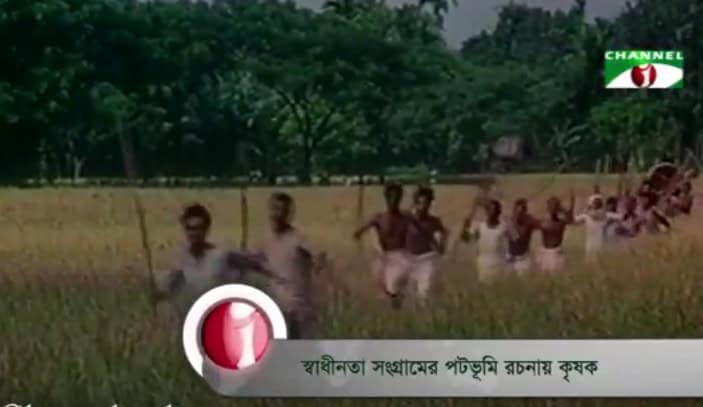
For 200 years the ordinary farmers of rural Bengal carried on movements, revolts and struggles against British rule, and made great sacrifices. Towards the end, the Tebhaga movement was the culmination of that struggle.
After that, from the Language Movement to the historic Six Points, the mass uprising of 1969 and the 1970 election, the country's farming population gave strength to every movement. The background to Bangladesh's struggle for independence was written along the path of many years of peasant movements and revolts, and farmers and rural people played the main role in the journey from self-rule to independence.
After Bangabandhu's historic speech of 7 March, the country's farmers turned the liberation struggle into a people's war. On the battlefield they stood as a wall of defence against the occupying forces.
For the farmer freedom fighters still alive, the spirit of 1971 remains the greatest thing. But does that spirit endure at every level of society? For their hundreds of years of struggle and boundless sacrifice, do farmers receive the respect they deserve?
Source: Shykh Seraj. First published in Bengali on The Agro News.
Comments
(0)