

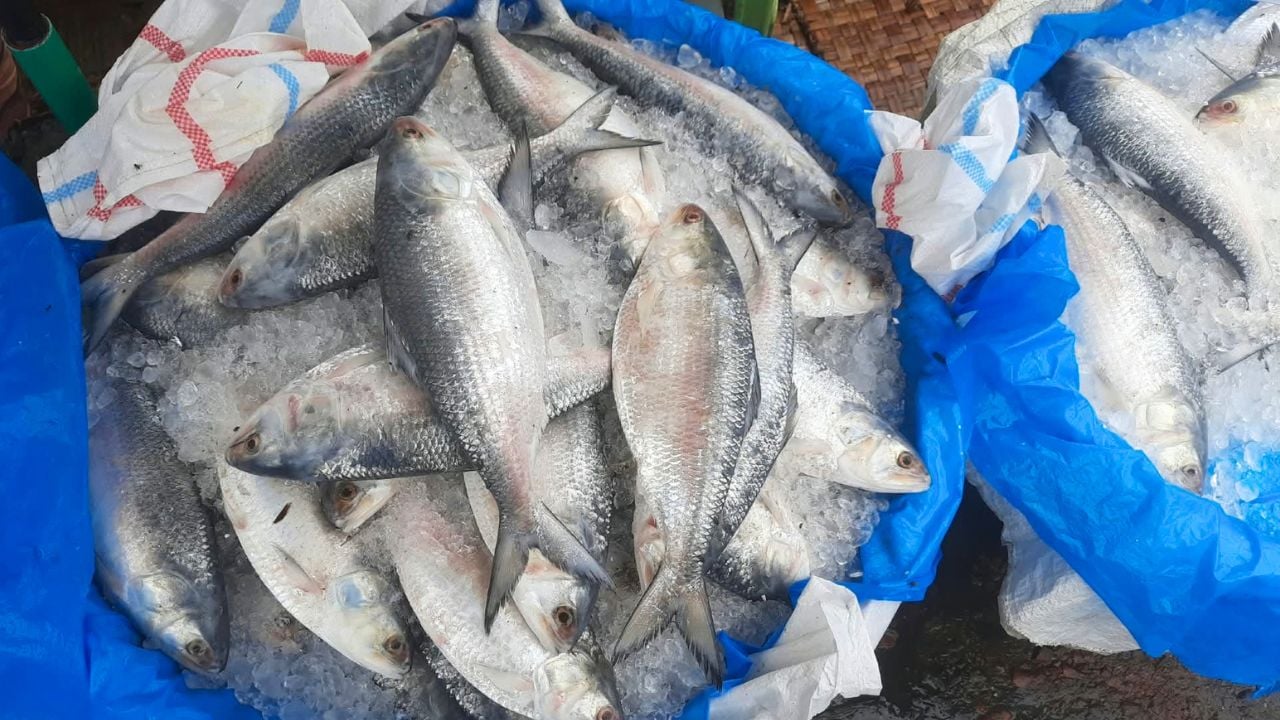
Fisheries and livestock adviser Farida Akhter has said: "Hilsa production has fallen because illegal nets and the catching of jatka have not been completely stopped. Hilsa production is also falling for various reasons including river navigability, climate change and so-called development."
She was speaking on 25 August at a workshop at the Barishal Club auditorium on the shrinking of buffalo grazing land in coastal areas, and the prospects and solutions for developing it.
Action on illegal nets and middlemen
"The availability of hilsa is falling because of current nets and other nets," she said. "We are taking tough action on these and stopping illegal fishing through drives. I hope production will rise and prices will fall in future."
The adviser said: "On setting the price of hilsa, steps are being taken to stop the changing of hands that happens after the fish leave the river and before they reach the market."
Buffalo grazing land
She said a lot of unplanned development was taking place on grazing land, which was not at all desirable and was harming an important resource such as buffalo. But grazing land could be protected if the right policy measures were taken, the adviser said, and if buffalo meat production could be increased, the country's meat supply would rise.
Researchers, veterinarians, farmers from districts and upazilas, and local representatives took part in the workshop.
Source: Jagonews24. First published in Bengali on The Agro News.

Comments
(0)