
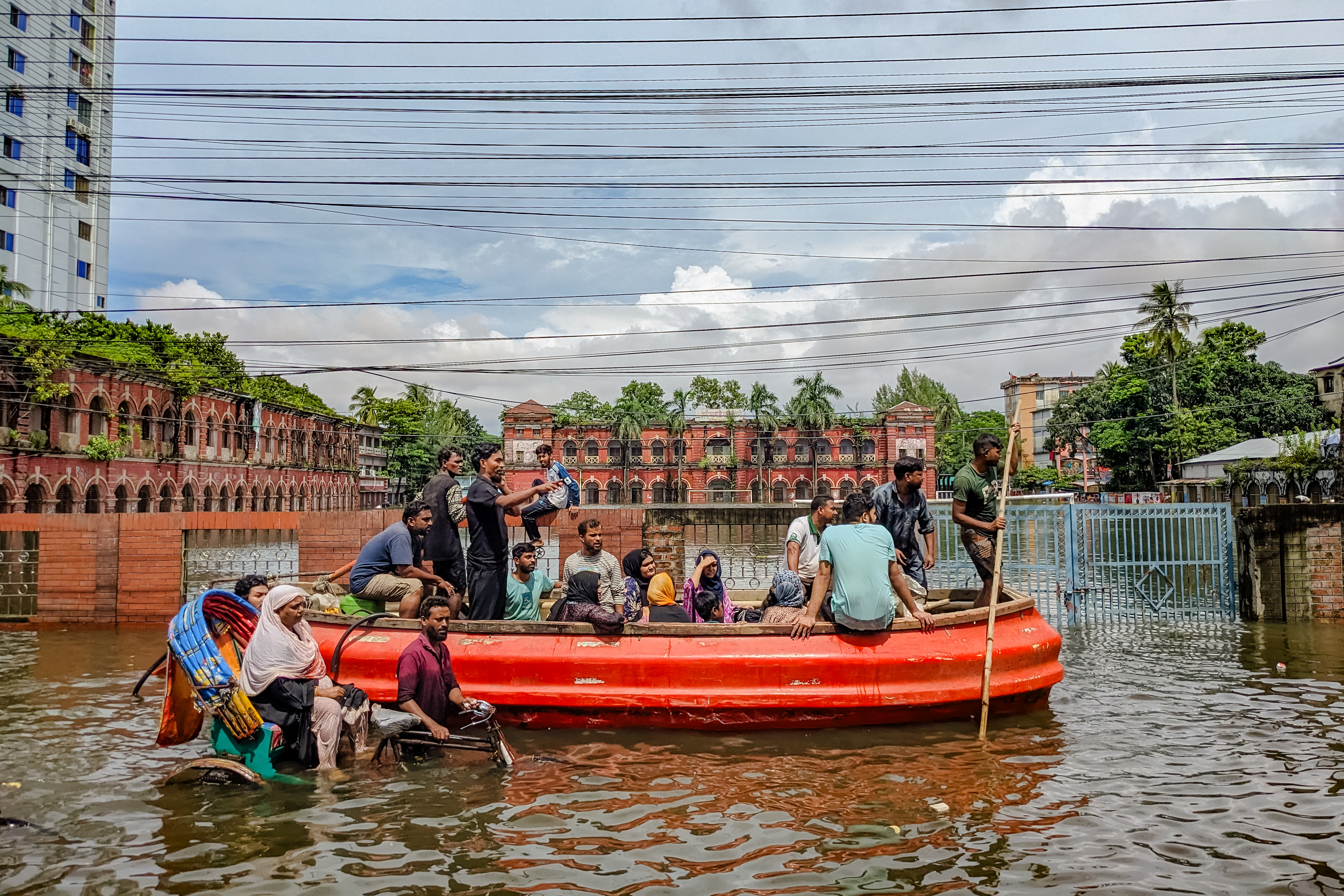
Farida Akhter, the adviser in charge of the Ministry of Fisheries and Livestock, visited fish and poultry farms damaged by floodwater in Chauddagram upazila of Cumilla district on the afternoon of Saturday, 24 August 2024. After touring farms in different parts of the upazila, she distributed relief among people marooned by the water and assured the affected farmers of all-out support, Jagonews24 reported that night.
Chauddagram, which borders the Indian state of Tripura, had been under water for several days by then. A flood that began on 20 August had spread across 11 districts in the east and south-east of the country, Cumilla among them. Water had been flowing into the district from Tripura through several rivers, and an embankment on the Gumti River had given way in the district's Burichang upazila late on Thursday 22 August, two nights before the visit.
Fish farms in three unions, poultry farms at two markets
According to Jagonews24, the adviser first went to the Falgunkara, Barais and Munshirhat unions of the upazila, where she inspected fish farms damaged by the flood and spoke with the fish farmers. She then visited damaged layer chicken farms and Sonali chicken farms at the Atgram and Batisa daily markets.
Batisa and Munshirhat are among the best known of the upazila's 52 hats and bazars, according to Banglapedia, the national encyclopedia of Bangladesh, which also names Miabazar, Chauddagram Bazar, Gunabati Bazar, Dhurkara Bazar and Kankapait Bazar among them. Both places also gave their names to old schools: Batisha Secondary School dates from 1906 and Munshirhat High School from 1954.
During the visit the adviser assured the farmers of full cooperation in recovering from their losses. She also gave directions on ensuring safe fish and livestock production, the report said. It did not give the details of those directions or name any specific assistance.
What the fish farmers asked for
The fish farmers put four requests to the adviser, Jagonews24 reported:
- Bank loans on easy terms.
- A supply of fish fry.
- A subsidy on electricity.
- A suspension of bank loan instalments for a few months.
The report did not record a separate reply to each request beyond the adviser's general assurance of support. Two days earlier, bdnews24.com had reported that floodwater had washed away several ponds and fisheries projects in Chauddagram and business owners had lost millions of taka.
Floods had hit the country's fish farmers before. In August 2020 a Department of Fisheries report cited by The Daily Star put the fisheries sector's loss from that year's heavy rain and floods at about Tk 479.85 crore. Ponds, lakes and fish farms on around 17,000 hectares had been inundated in 208 upazilas of 36 districts, and nearly 6,000 tonnes of fish fry had been washed away, directly affecting around 72,000 farmers. In Manikganj that year a fisheries officer told the paper that many farmers were coming to his office asking for the incentives announced for farmers hit by the pandemic.
Officials on the visit
Those accompanying the adviser included Sayeed Mahmud Belal Haider, secretary of the Ministry of Fisheries and Livestock; Dr Mohammad Reazul Haque, director general of the Department of Livestock Services (DLS); Md Zillur Rahman, director general of the Department of Fisheries (DoF); joint secretaries Dr Abu Naim Muhammad Abdus Sabur and Mosammat Zohra Khatun; Cumilla district fisheries officer Belal Hossain; Cumilla district livestock officer Chandan Kumar Poddar; and Mehedi Hasan Shaon, senior assistant director of the district fisheries office in Cumilla.
The DLS is the government department responsible for veterinary coverage and for development and extension services for livestock and poultry, including the marketing and processing of their products, according to Banglapedia. Its work began in 1893 with a Civil Veterinary Department under British rule, the same year in which the Bengal Veterinary Institute and Veterinary Hospital were set up. After the partition of India it was reorganised as the Directorate of Animal Husbandry of East Pakistan, and in 1960 it was renamed the Directorate of Livestock Service. It works with the Bangladesh Livestock Research Institute, Bangladesh Agricultural University and other research bodies to develop and spread technologies for livestock and poultry.
The DoF works under the same ministry and keeps fisheries offices in the districts, such as the Cumilla office whose officers joined the visit.
How the water reached Chauddagram
Rain and water from upstream had been building for days. On Wednesday 21 August Prothom Alo English reported from Cumilla that incessant downpour together with a heavy flow of water from India had swollen the Gumti River to an alarming level. The meteorological office in Cumilla recorded 79 millimetres of rain in the 24 hours to noon that day and feared more rain in the following 72 hours. Nearly 4,000 hectares of cropland were already under water, and water was also flowing into the district from India through the Kakri, Paguli and Salda rivers, the paper reported.
In Chauddagram itself, the upazila nirbahi officer told bdnews24.com that because of the incessant rain and the onrush of water from India the entire upazila had been flooded and more than 50,000 people had been stranded over the previous three days. Locals said at least 13 unions and the municipality had been inundated, and people were struggling with a lack of drinking water and with erosion along the Kakri River. Chest-deep water had entered the Upazila Health Complex, where, the upazila health officer said, emergency and outpatient services had been halted and admitted patients discharged. The floodwater had also covered the Upazila Parishad premises and government offices.
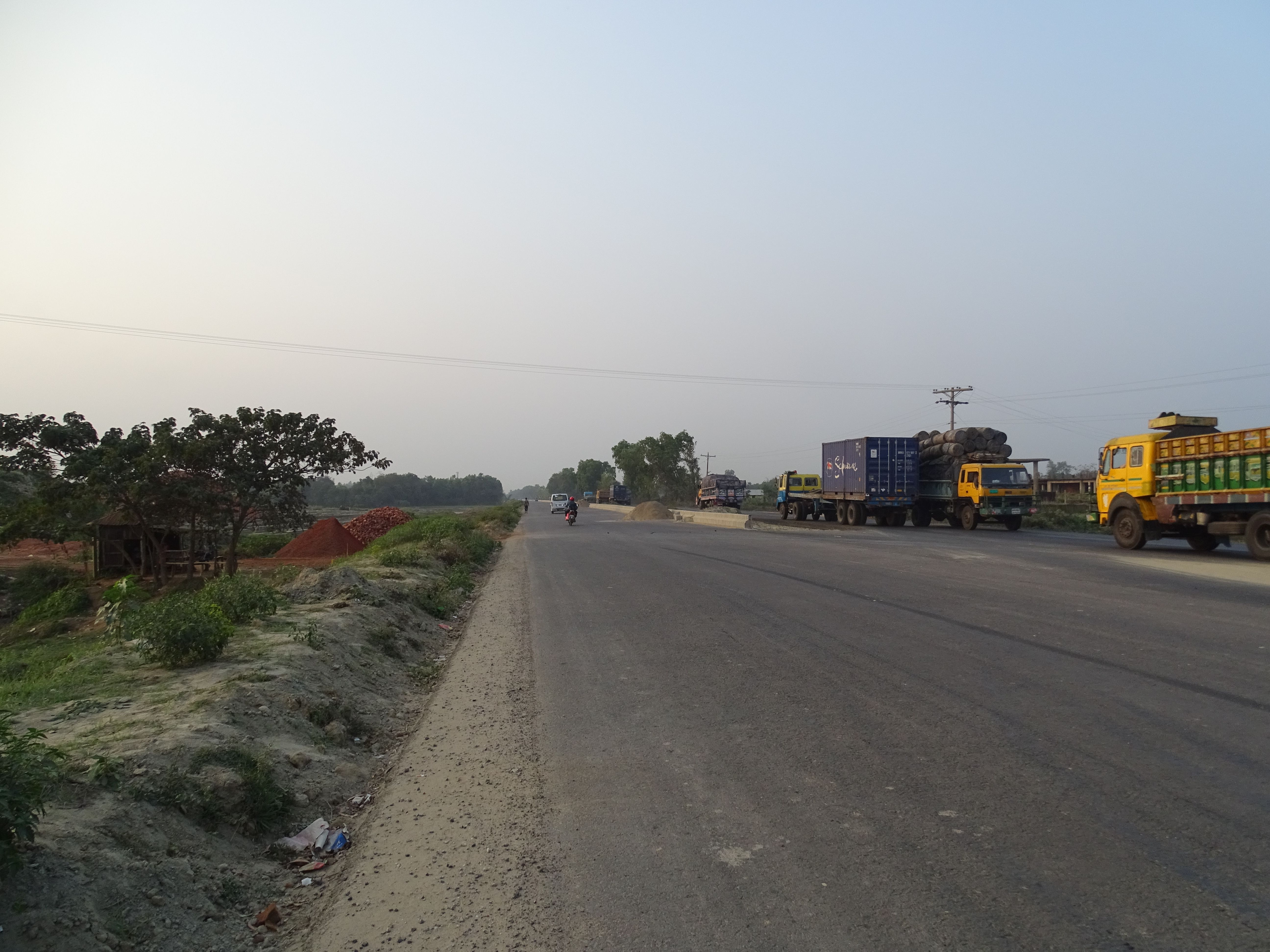
From before dawn on Thursday 22 August, water from the hills was flowing over the Dhaka-Chattogram highway at Chauddagram. The officer in charge of the Miabazar highway police station told The Daily Star's Bengali edition that vehicle movement had been limited as the water on the road rose, though the highway stayed open. The Kakri was overflowing its banks in places around Miabazar, and the swollen Dakatia had flooded neighbouring Nangalkot upazila. Desh Rupantor reported the same morning that several kilometres of the highway at Chauddagram were under water and that the slow traffic had built up long tailbacks; a local resident told the paper he had never seen such a flood in his life.
The same day the Gumti was flowing 70 centimetres above its danger mark, UNB reported, and low-lying areas of Chauddagram and Nangalkot had been flooded, with homes, fish farms and various projects inundated. On Thursday afternoon the river stood 113 centimetres above the danger level, breaking a 27-year record: in 1997 it had exceeded the danger level by 96 centimetres, Water Development Board officials said. Around 11:45 pm that night about 300 feet of the Gumti flood protection embankment collapsed at Buraburia in Sholnal union of Burichang upazila, and water began to spread over the area.
On Friday 23 August, the day before the adviser's visit, the disaster management and relief ministry said 15 people had died and 4.8 million had been affected as the flood hit 11 districts since 20 August: Feni, Cumilla, Khagrachhari, Noakhali, Chattogram, Moulvibazar, Habiganj, Brahmanbaria, Sylhet, Lakshmipur and Cox's Bazar. Four of the deaths were in Cumilla, BSS reported. The ministry's secretary said 887,629 families had been stranded and 188,739 people had taken refuge in shelter centres, and that Tk 3.52 crore in cash, 20,150 tonnes of rice and 15,000 packets of dry food had been allocated for the affected areas.
Losses on fish and poultry farms in the first days
In the early reports from Chauddagram, individual farm owners described what the water had taken. The owner of a poultry farm in the Chauddagram municipal area told bdnews24.com that floodwater had entered two of his farms and that layer chickens worth around Tk 6 million had died, while many more had been washed away. "I don't know how I will ever recover from this loss," he said.
The owner of a fish farm told the same news agency that nearly Tk 5 million worth of fish had been swept away from two of his lakes and three ponds. He said many other fish farmers in the upazila had also lost their fish to the floodwater. Several poultry farms in the area had been washed away, the report added.
The upazila nirbahi officer said the administration was surveying the damage by talking to the secretaries of the union parishads, and that arrangements would be made to help those in need once the full count was in. The chairman of Gunabati union parishad said all the villages of his union had been inundated, and warned that the situation would worsen if the rain continued.
Chauddagram: a border upazila of rivers and dighis
Chauddagram covers 270.49 square kilometres in the south-east of Cumilla district, according to Banglapedia. It is bounded by Cumilla Sadar Dakshin upazila on the north, the Feni Sadar and Daganbhuiyan upazilas of Feni district on the south, Tripura on the east, and the Nangalkot and Laksham upazilas on the west. Chauddagram thana became an upazila in 1983. The 2011 census counted 443,648 people there.
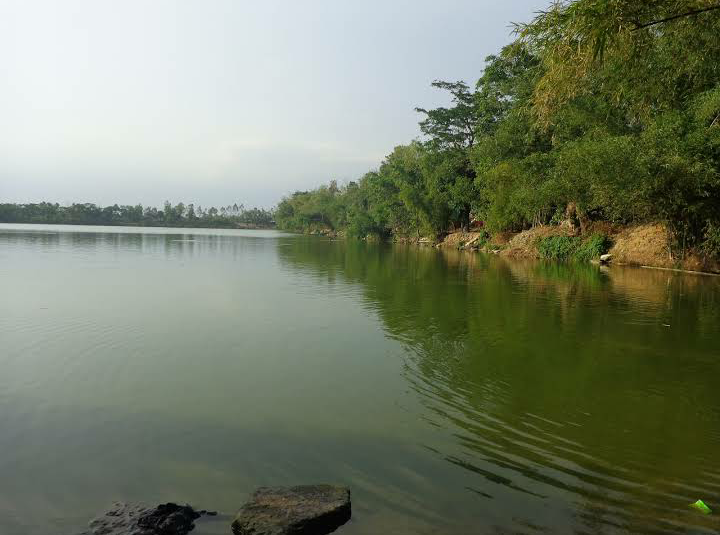
Its main rivers are the Dakatia and the Little Feni, and the upazila has several canals, including the Kala Gang, Balujhuri Gang, Nanhari Gang and Papolia Gang khals, as well as large old ponds such as Jagannath Dighi, Henapali Dighi, Thanabari Dighi and Kashipur Dighi. The Little Feni rises in the hills of Tripura and enters Noakhali district near Gunabati after running over the south-eastern part of Cumilla district. The Dakatia enters Bangladesh from Tripura at Bagsara in Cumilla district; Banglapedia notes that its main source of flow was once the Kakrai, but the Little Feni captured its upper portion, and that the Dakatia now has its source in the Chauddagram Khal, which links it to the Little Feni.
Agriculture is the largest single source of household income in the upazila, at 38.36 per cent, followed by service at 16.42 per cent, commerce at 14.60 per cent and rent and remittance at 11.07 per cent, Banglapedia's entry records from census data. The main crops are paddy, maize, wheat, mustard, potato and vegetables. The same entry, drawing on the 2001 and 2011 censuses and a 2007 cultural survey, counted 18 fisheries, 50 dairy farms, 150 poultry farms, 9 hatcheries and 30 nurseries in the upazila at that time.
Cumilla's place in the country's fish farming
Cumilla district covers 3,034.74 square kilometres and had 5,177,106 people at the 2011 census, according to Banglapedia. Its main rivers are the Meghna, Gumti, Dakatia, Little Feni and Buri, and agriculture is the main source of income at 47.31 per cent, by Banglapedia's census-based count.
Fish farming has been a large part of that agriculture. In July 2019 The Financial Express reported that around 0.21 million tonnes of fish were produced in the district each year. According to the district fisheries office, 84,424 ponds in the district's 17 upazilas were producing 155,738 tonnes of fish, and about 90,000 tonnes came from 70 water bodies covering 4,000 hectares in the Daudkandi, Muradnagar, Meghna, Homna, Titas and Chandina upazilas. Fish farming in paddy fields was also popular. Sarputi, tilapia, rui, katla, mrigal, silver carp and pangas were the varieties most popular with the district's farmers, and the district fisheries officer said at the time that Cumilla held a special position in the country's fish production.
Nationally, Bangladesh produced a total of 48 lakh tonnes of fish in 2023, including 32 lakh tonnes from fish farming and 13 lakh tonnes from open water bodies, The Daily Star reported in June 2024. The paper added that around two crore people in the country were involved in fish farming and related businesses, and that per capita fish consumption had risen from 7.5 kg in 1990 to 30 kg. In the Food and Agriculture Organization's report The State of World Fisheries and Aquaculture 2024, released that month, Bangladesh ranked second in the world for fish caught in inland open waters, with 13.22 lakh tonnes or 11.7 per cent of the global total.
Layer and Sonali chickens: what the visited farms keep
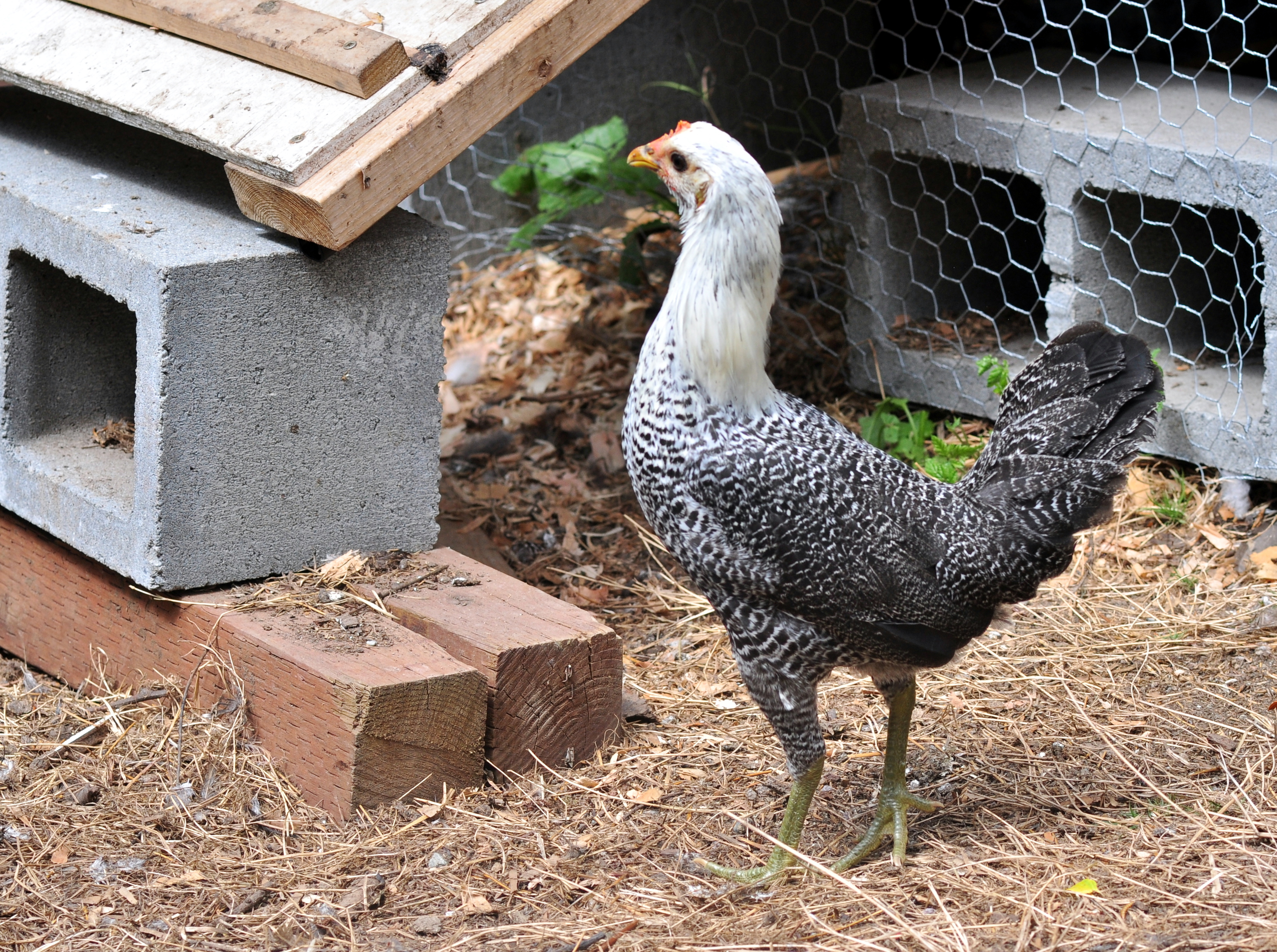
The poultry farms the adviser saw at Atgram and Batisa kept two kinds of commercial chicken. Layer farms raise hens for eggs. Banglapedia notes that because local chickens produce relatively little meat and few eggs, farms have turned to improved breeds such as the White Leghorn, Rhode Island Red and Plymouth Rock; the White Leghorn is the most popular in Bangladesh, and its hens may lay nearly 230 eggs a year.
Sonali is a cross-bred chicken developed in Bangladesh. The Daily Star described it in 2021 as a cross of Rhode Island Red cocks and Fayoumi hens, and in March 2024 a chief scientific officer of the Bangladesh Livestock Research Institute told bdnews24.com that it is a cross of the Egyptian Fayoumi and the Rhode Island Red. According to the account bdnews24.com reported from a poultry geneticist's book, the Egyptian-American cross was the most successful of 22 crosses tried in 1986 at the DLS central government farm in Mirpur. It was not marketed then because it failed to gain popularity; it was perfected in 2000 under a participatory livestock development project run with 10 NGOs and foreign researchers, and became popular after that. The Daily Star reported in 2021 that, under the supervision of the DLS in Joypurhat, Sonali chickens had been bred about two decades earlier at a chicken breeding development farm in that district, which went on to become a centre of Sonali farming.
An adult Sonali hen lays 190 to 200 eggs a year and weighs 1.5 to 2.25 kg, bdnews24.com reported in 2024. The Bangladesh Poultry Association told the agency that the country produced 8.5 million Sonali chickens every week. The bird sells at about half the price of the local (desi) chicken raised by rural families, which it resembles in taste, and a DLS director said its nutritional value was almost the same as that of other commercially produced chickens.
The DLS's Livestock Economy at a Glance for 2022-23 put the country's chicken population at 3,196.89 lakh and its duck population at 660.16 lakh. Egg production that year was 2,337.63 crore, against a demand of 1,806.48 crore, and meat production was 87.10 lakh tonnes. Livestock contributed 1.85 per cent of gross domestic product at constant prices and 16.52 per cent of agricultural GDP, and the department's table put the sector's direct employment at 20 per cent and its partial employment at 50 per cent.
The Gumti and Cumilla's long history of floods
The Gumti, whose record rise preceded the adviser's visit, begins at Dumur in the north-eastern hills of Tripura and flows about 150 km through the hills before entering Bangladesh near Katak Bazar in Cumilla Sadar, according to Banglapedia. It runs about 135 km within Bangladesh, past Cumilla town, Burichang and Debidwar, to join the Meghna in Daudkandi upazila. Its flow at Cumilla varies from 100 to 20,000 cusecs, and flash floods on the river are common. It was once known as the 'sorrow of Comilla town', and the Bangladesh Water Development Board has built flood embankments and made 19 loop-cuts to straighten it.
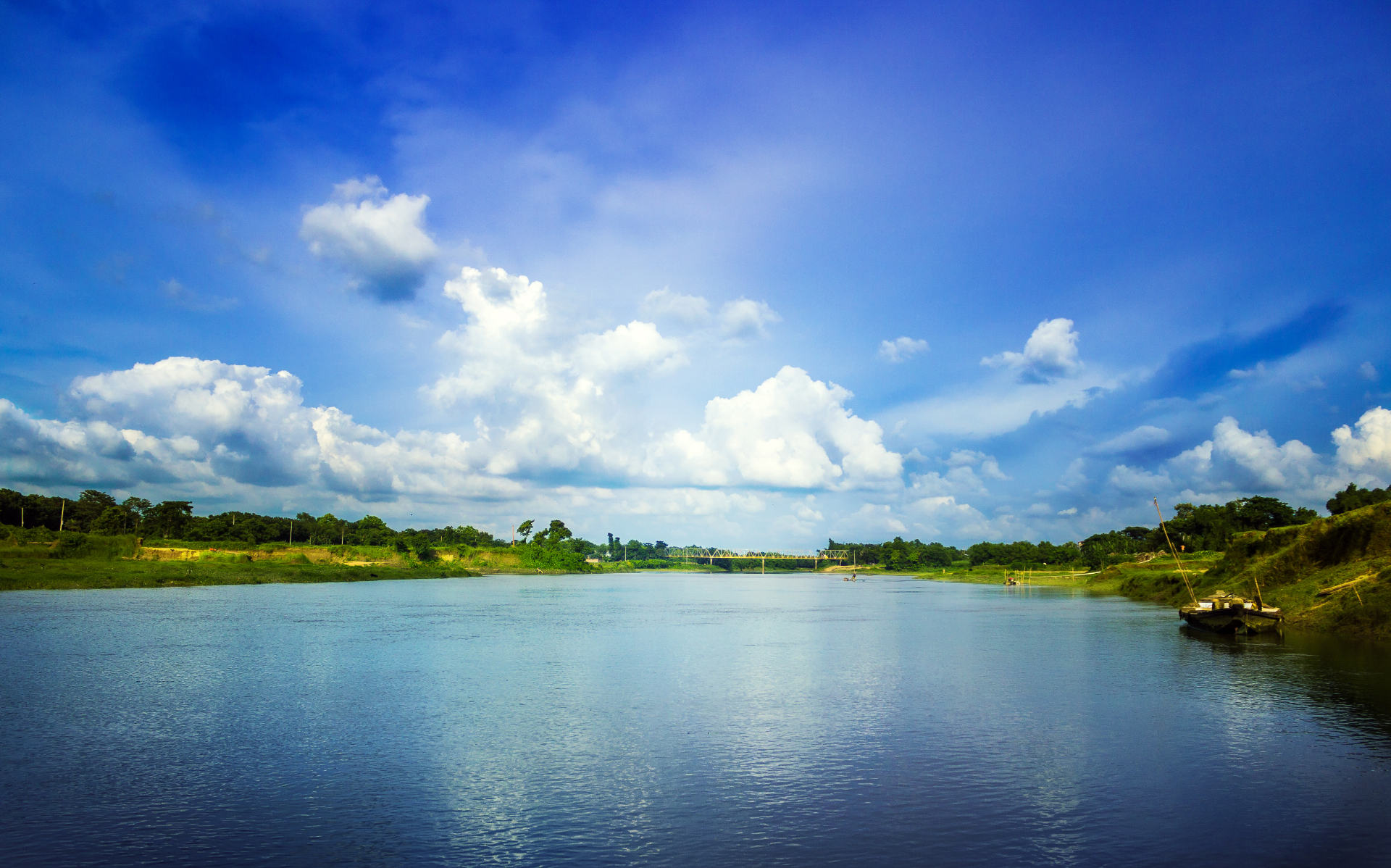
The Gumti's embankment has failed before. Banglapedia's chronology of floods records that in 1786 the embankment along the Gumti gave way in Tippera, as the district was then called, and that in 1794 it burst again, causing much damage. The encyclopedia divides the country's floods into monsoon floods, flash floods and tidal floods, and says that the hill catchments draining into the north-east and south-east bring flash floods that are mostly short but unpredictable in frequency and intensity. In an average year about 26,000 square kilometres, or 18 per cent of the country, is flooded, and in severe floods the area can exceed 55 per cent.
Photo: Iftakharul Islam Munna / Wikimedia Commons (CC BY-SA 4.0). The top picture shows a red building standing in floodwater in Feni District on 23 August 2024, as background; it is not a picture of Chauddagram.
Sources: Jagonews24 (24 August 2024), bdnews24.com (22 August 2024 and 13 March 2024), Prothom Alo English and UNB (21, 22 and 23 August 2024), BSS (23 August 2024), The Daily Star Bangla (22 August 2024), Desh Rupantor (22 August 2024), The Financial Express (16 July 2019), The Daily Star (28 August 2020, 23 September 2021 and 9 June 2024), Department of Livestock Services (Livestock Economy at a Glance 2022-23), Banglapedia.
Comments
(0)