
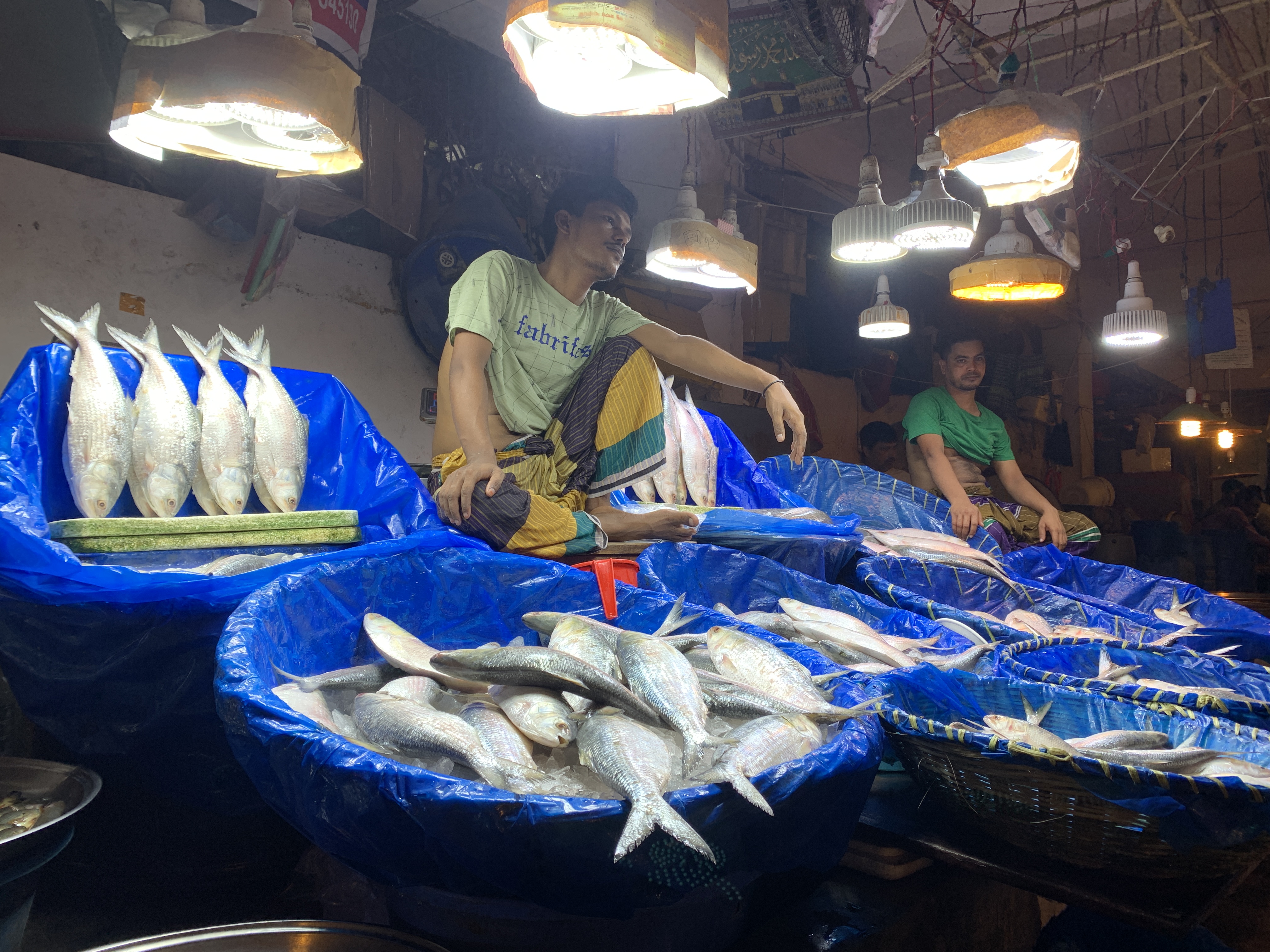
Halfway through the peak season, hilsa supply in the capital's markets had risen and prices had eased a little. On the morning of Friday 15 August 2025, a Jagonews24 reporter visiting several markets in Mirpur, Dhaka, found hilsa somewhat cheaper than before, although buyers said prices still needed to come down a bit more.
July and August are the peak hilsa season. Jagonews24 reported that supply had been thin early in the season, so hilsa had been selling at high prices in markets large and small, in Dhaka and across the country.
Prices in two Mirpur markets
At the Haji Kujrat Ali Molla Market at Mirpur-12, two shops were selling hilsa that day. One asked Tk 2,600 a kg; the other was selling fish of 850 to 900 grams for Tk 1,800. The two sellers said hilsa that had cost Tk 3,000 to 3,200 a kg the week before was Tk 2,400 to 2,600 that week.
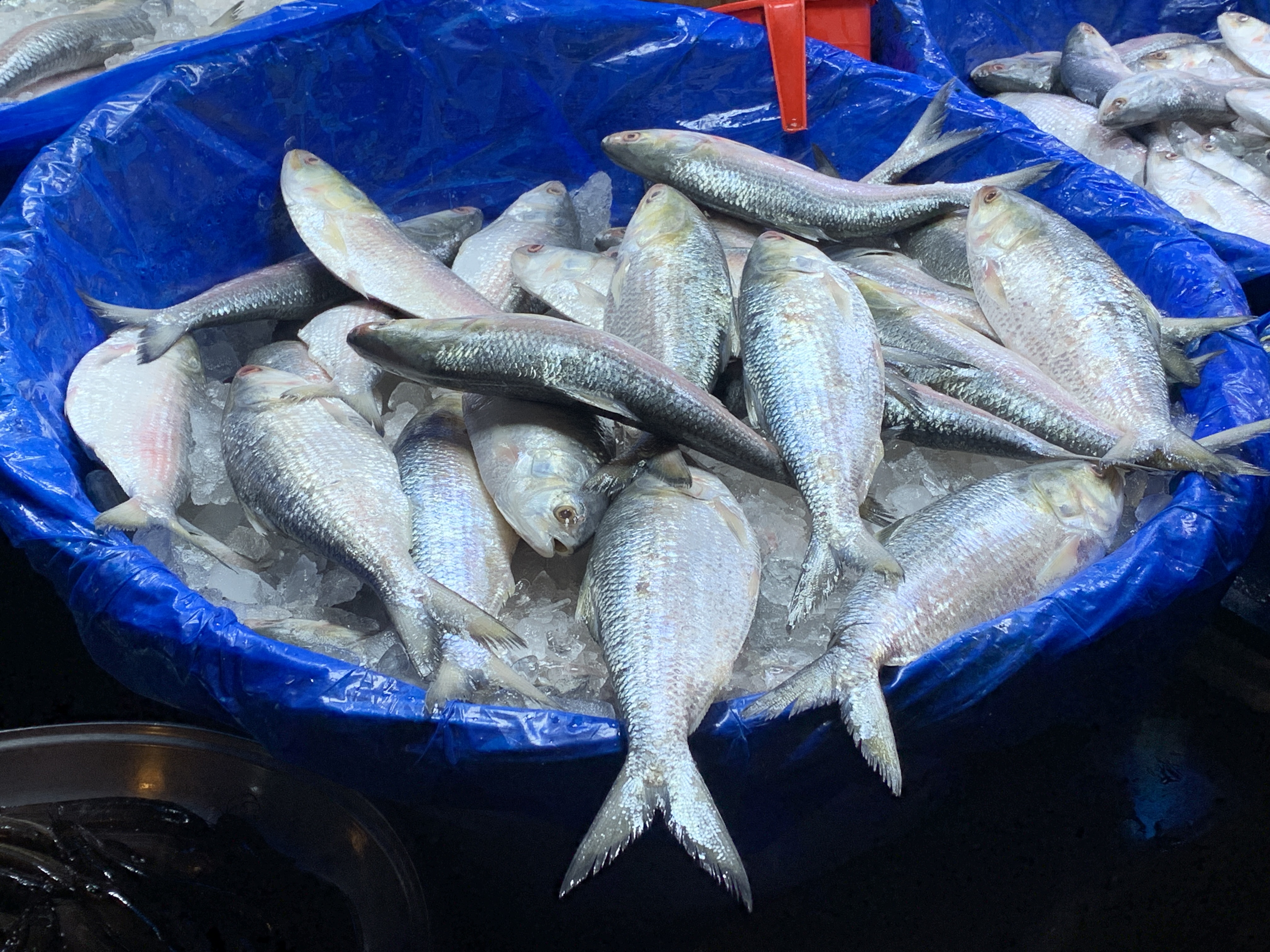
At the Muslim Bazar at Mirpur 11.5, hilsa was selling at Tk 2,400 a kg and jatka, the young hilsa, at Tk 500 to 800 a kg. A seller named Masud said half-kilo fish were going for Tk 1,300 and small hilsa, three to a kilo, for Tk 800. Sellers there also said prices had come down somewhat.
What sellers and buyers said
Mohammad Sukur Mollah, selling hilsa at Tk 2,600 to 2,650 a kg in the Kujrat Ali Molla Market, said there was plenty of fish in the market that week, with more small hilsa about, and those a little cheaper. He said prices differ between hilsa from Chattogram and from the Padma: Chattogram fish are cheaper, while his came from the Padma and cost him more to buy.
A buyer named Howlader, looking over the large hilsa, said he would buy once the price fell a little further. At the Muslim Bazar, too, most buyers were after small hilsa. One shopper buying six or seven jatka said he had paid Tk 600 a kg for small hilsa.
Still dearer than a year earlier
Checks at several other markets in the capital also found prices slightly lower. But data from the Trading Corporation of Bangladesh (TCB), cited by Jagonews24, showed retail hilsa selling on average 16 per cent dearer in 2025 than the year before, at Tk 800 to 2,000 a kg in Dhaka at the time.
A few days earlier, on 10 August 2025, Prothom Alo reported that from July to the first week of August, hilsa of 750 to 800 grams had sold in Dhaka for Tk 1,850 to 2,000 a kg, and fish of a kilo or more for Tk 2,600 to 3,200 a kg depending on size. Karwan Bazar trader Md Suman told the paper that one-kilo hilsa were selling at Tk 2,400 a kg and 1.5-kilo fish at Tk 2,800.
The national fish and its catch
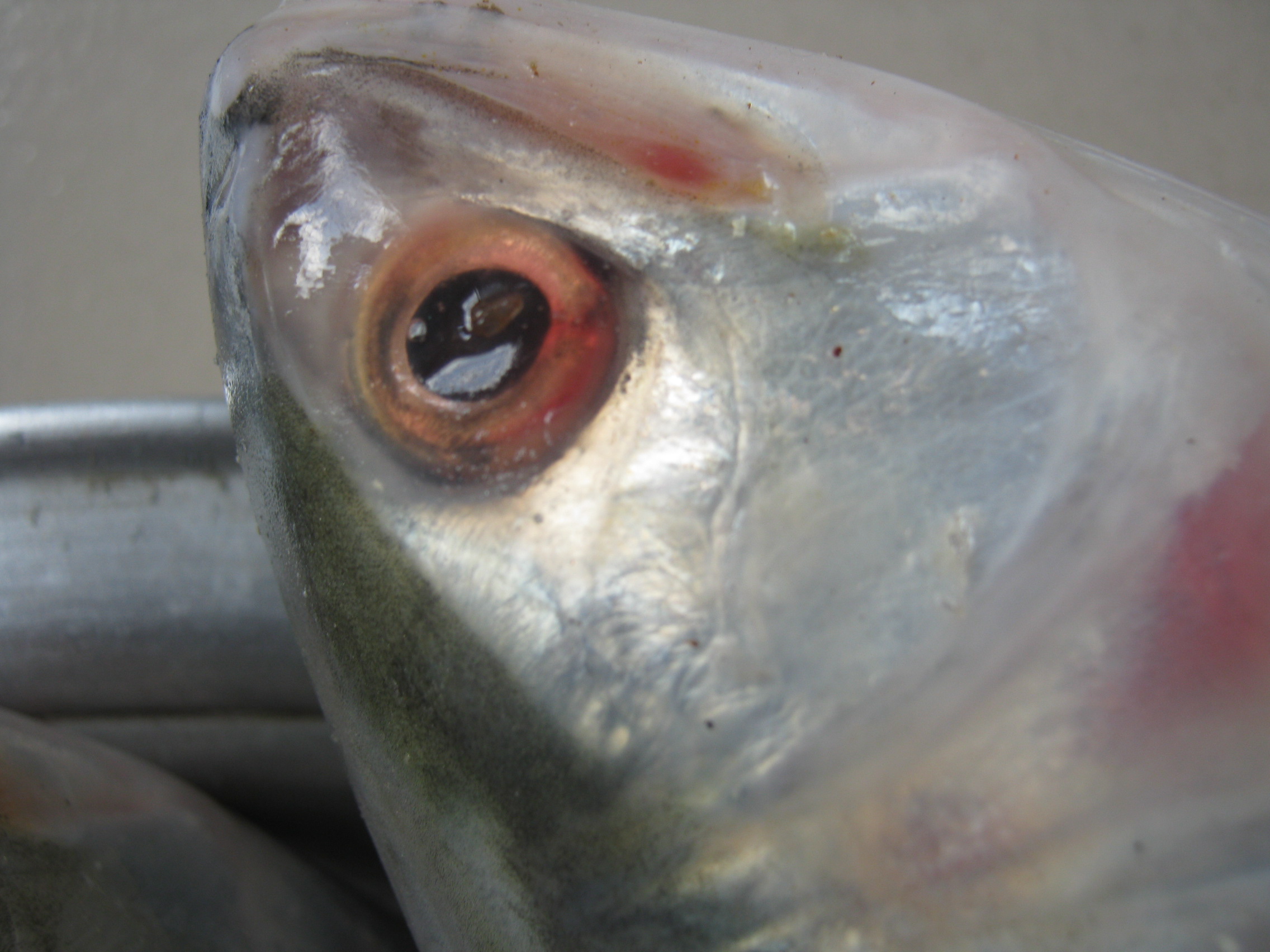
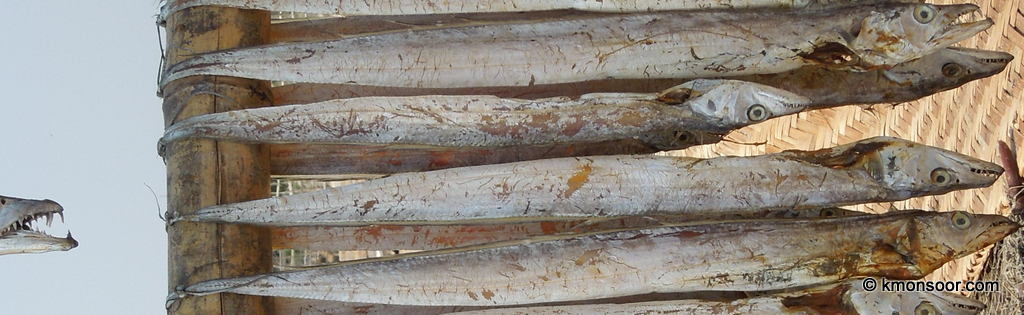
Hilsa (Tenualosa ilisha) is the national fish of Bangladesh. It grows at sea and swims up rivers to spawn, mainly during the south-west monsoon; in Bangladesh it is caught in the Meghna-Jamuna delta. Young hilsa are called jatka, and catching them is banned in the country.
Citing Department of Fisheries data, The Daily Star reported in April 2025 that hilsa production in 2023-24 was 5.29 lakh tonnes, the lowest in seven years, against 5.71 lakh tonnes in 2022-23. Experts blamed bad weather, shallower rivers along the fish's migration routes, overfishing and climate change.
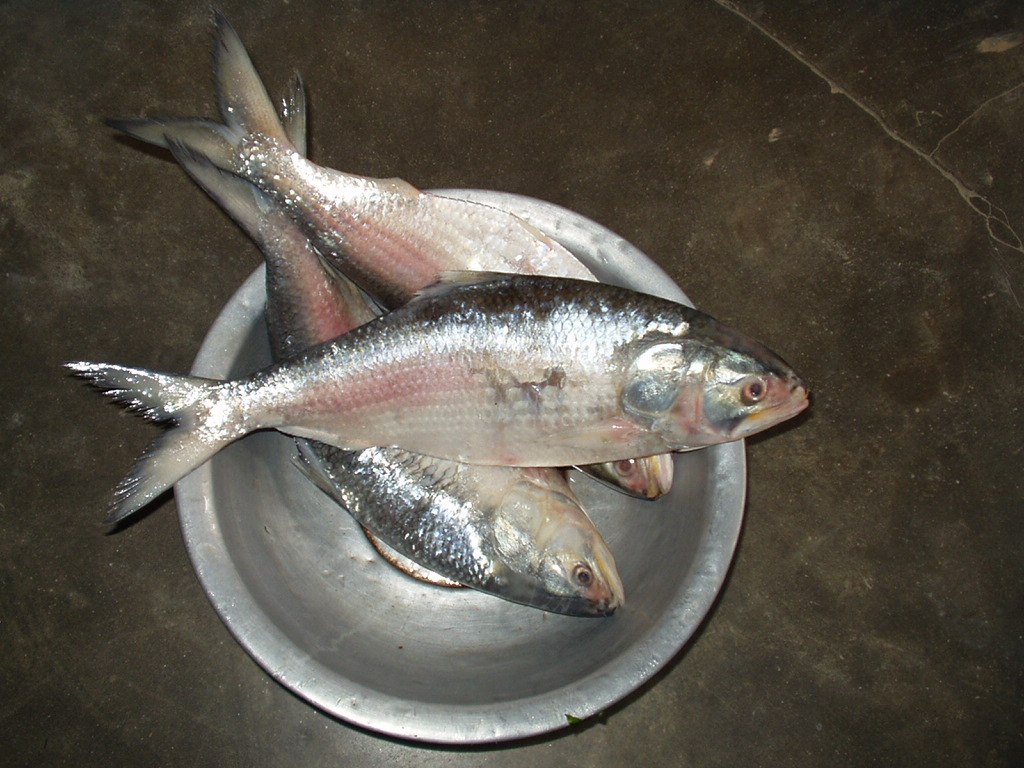
Photo: DelwarHossain / Wikimedia Commons (CC BY 4.0)
Sources: Jagonews24, Prothom Alo, The Daily Star (Department of Fisheries data), Wikipedia
Comments
(0)