
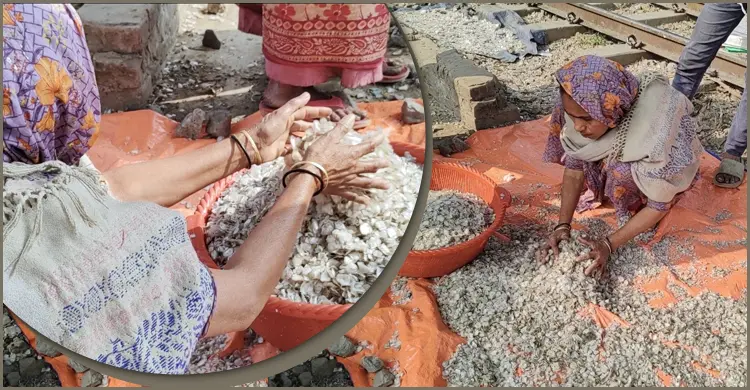
Scales are collected from various large fish and stored, then dried in the hot sun. Once dried crisp, the scales are packed and sent abroad. Medicines, cosmetics and many other things are made from these discarded scales.
In many cases the scales seem to be worth more than the fish. A kilogram of fish scales sells for Tk 70 to Tk 80 to various exporting companies. Countless families have become self-reliant by selling scales that are thrown away after fish are cut. Kulsuma Begum, who collects fish scales at Karwan Bazar in the capital and sells them, said: "I pay the house rent and meet the household costs, including rice, by selling these fish scales."
How the scales are collected
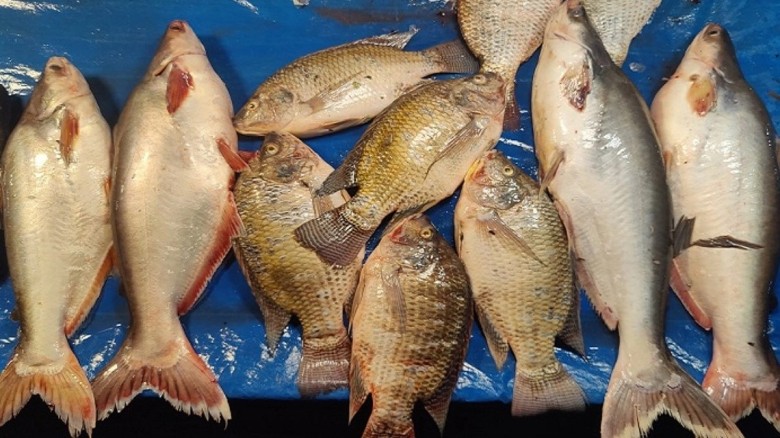
Fish from different parts of the country come to Karwan Bazar, Jatrabari and other fish wholesale markets in the capital. Many people crowd these markets to buy fish at wholesale prices, and have the fish they choose cut before taking it home. The fish cutters collect scales from large rui, catla, coral and other fish sold in the market. Then the cleaners, or the cutters themselves, store the scales.
After being collected from the market, the discarded scales are first washed clean. Then they are spread on a plastic sheet or a clean container and dried in the sun. Scale seller Kulsuma said: "I collect the fish scales, pick out the dirt, then turn them in the sun to dry. If there's sun it takes a day, and without sun it takes two days to dry."
Although the fish cutters work in the market all day, the scale collectors finish their work between 6am and 7am. Those in charge buy large quantities of fish at once for big restaurants, messes or weddings, and a lot of scales can be collected from those fish in a short time. Scales from large fish are used, while those from small fish are thrown away. Cutting every 20 kg of fish yields about 5 kg of scales.
Stored, then sold for export
Besides cutting fish and collecting scales themselves, collectors buy scales from fish cutters on monthly contracts. After drying, the scales are packed in sacks and kept for more than a month. Then various companies buy them from the collectors' homes and take them away for export.
For about eight years Kulsuma Begum has supported a family of seven comfortably by selling fish scales. About 20 families like hers in the Karwan Bazar area are involved in this unusual business. She said: "I have four children, a son-in-law, and the two of us, a family of seven. After food and expenses, more than Tk 10,000 is left over each month. Earlier, 50 or 60 of us did this work in this area. But since we were removed from the government land, there are about 20 of us."
Source: Jagonews24. First published in Bengali on The Agro News.
Comments
(0)