
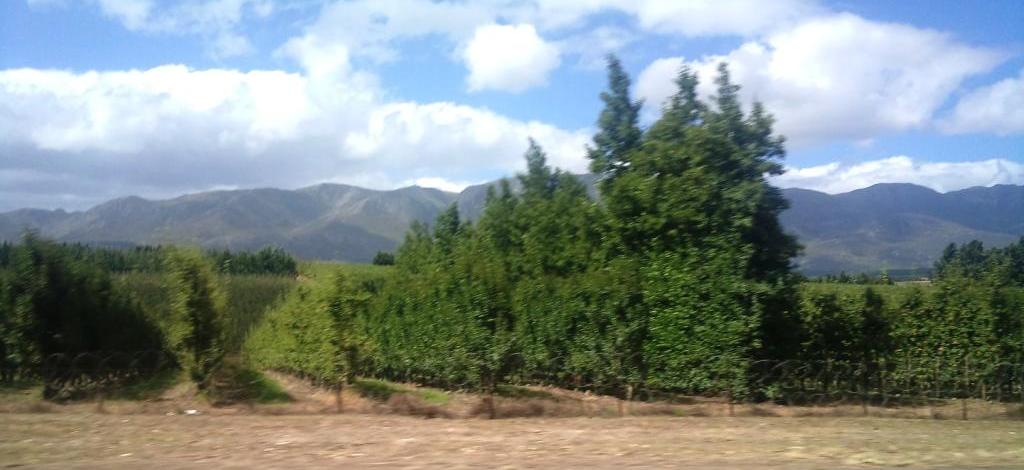
Pome fruit orchards managed with regenerative practices at De Keur, in the Koue Bokkeveld area of South Africa's Western Cape, are using 25% less irrigation water than the farm's conventionally managed blocks while giving comparable yields, and some blocks are yielding more, farm manager Anton de Jager said.
De Jager described the results at the recent Sustainability Summit of the International Fresh Produce Association (IFPA) in Somerset West. A seven-year drought pushed the management team to rethink how it farmed, and five years ago De Keur moved roughly 160 hectares, a quarter of its pome fruit orchards, to regenerative practices.
The changes showed first in the soil. A darker layer formed near the surface, water soaked in more easily, compacted ground became easier to penetrate and earthworms came back. Vegetation left under the trees gave insects a habitat, including pests that would otherwise move up into the canopy, he said.
The water saving was found almost by accident. When the team found anaerobic micro-organisms in the soil, a sign that it was short of oxygen, they realised the regenerative blocks were being over-irrigated. Measurements showed the trees needed less water, and the irrigation programme was changed.
Not everything went smoothly. De Keur stopped synthetic fertiliser on the trial blocks and switched to compost and supplementary foliar feeds guided by plant sap analysis. De Jager said the switch may have been too abrupt for established orchards and that, starting again, he would begin with nursery trees. Soil organisms can make nutrients available, he said, but cannot create minerals the soil lacks, so those shortfalls still have to be found and corrected.
The farm could not buy a compost with the range of organisms it wanted, so it now makes its own, which needs constant attention to moisture, storage and handling to keep the organisms alive. Herbicides have been stopped on both regenerative and conventional blocks, but De Jager said practical problems must be solved before the full approach is extended across the farm. Training, mentorships and visits to other farmers were paid from a separate research budget, so the move cost more than the production budget alone shows.
For growers with little money, De Jager suggested starting with steps that need no costly inputs, such as stopping herbicides and letting existing plants cover the ground instead of buying cover-crop seed, and reading the plants that grow as clues to the soil. Andrew Ardington, founder and director of the Regenerative Agriculture Association of Southern Africa, said training should be budgeted as a planned investment and that lenders and insurers should learn to count improvements in soil health when they assess farms.
The report is by Glenneis Kriel for Farmer's Weekly.
Photo: Abu Shawka / Wikimedia Commons (CC0)
Source: Farmers Weekly South Africa

Comments
(0)