
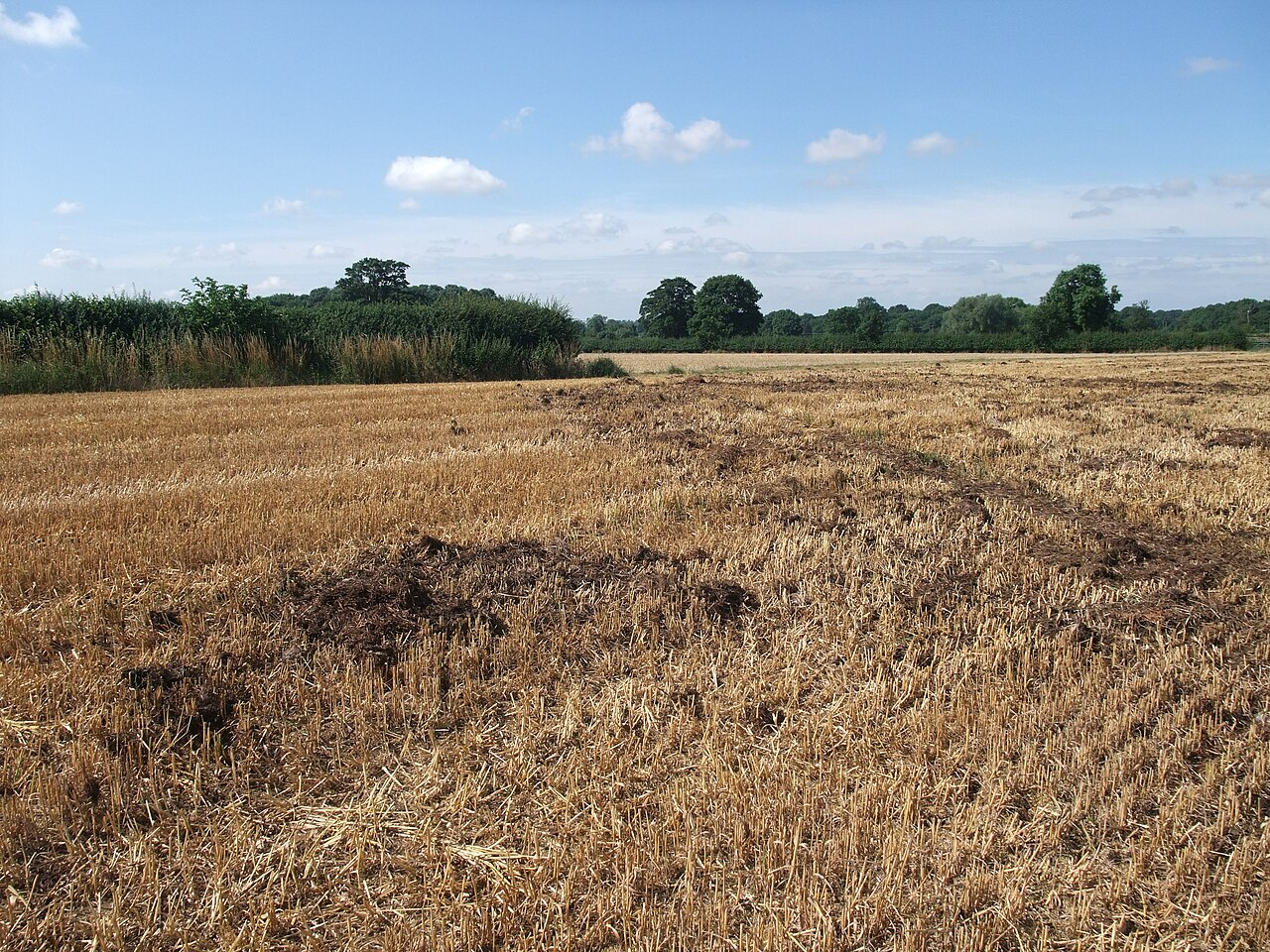
Cereal-growing areas in Europe that leave at least 70% of their crop residues in the field generally support more local biodiversity than areas where less is left behind, according to a study led by the University of Surrey. The finding matters as Europe looks to the stems, leaves and husks left after harvest as a source of renewable energy.
The study, published in the journal Agriculture, Ecosystems and Environment, found that how much residue was retained predicted local biodiversity better than crop yield did. Its authors say this makes post-harvest management a factor to weigh alongside productivity when estimating how much straw can sustainably go to bioenergy.
Surrey worked with the Natural History Museum's Biodiversity Futures Lab and Utrecht University. The team used statistical models to analyse biodiversity measurements across European land uses, cereal fields among them, together with data on crop yields, residue management and environmental conditions.
Residues from wheat, maize and other crops already supply some fuel and bioenergy and are used for animal feed and bedding. Straw left in the field helps keep soils healthy and gives wildlife food and shelter. The models suggest that taking more could hurt farmland wildlife, especially where farmers now leave a high share in place, though the authors say more research is needed to show how removal directly affects biodiversity.
"Crop residues could provide a valuable source of renewable energy for Europe's green transition, but as with any natural resource, we need to fully understand what happens if we take more of these materials from fields," said Professor Zoe M. Harris, director of the Centre for Environment and Sustainability at the University of Surrey.
The researchers point to another route: using less residue for animal feed and bedding could free more of it for bioenergy without taking more from the fields. Lead author Dr Sophie Tudge, who did the work during her PhD at Surrey and is now a postdoctoral researcher at the University of Leeds, said the question was not only how much material could be found but where it should come from.
Photo: Tim Heaton / Wikimedia Commons (CC BY-SA 2.0)
Source: Seed World Europe

Comments
(0)