
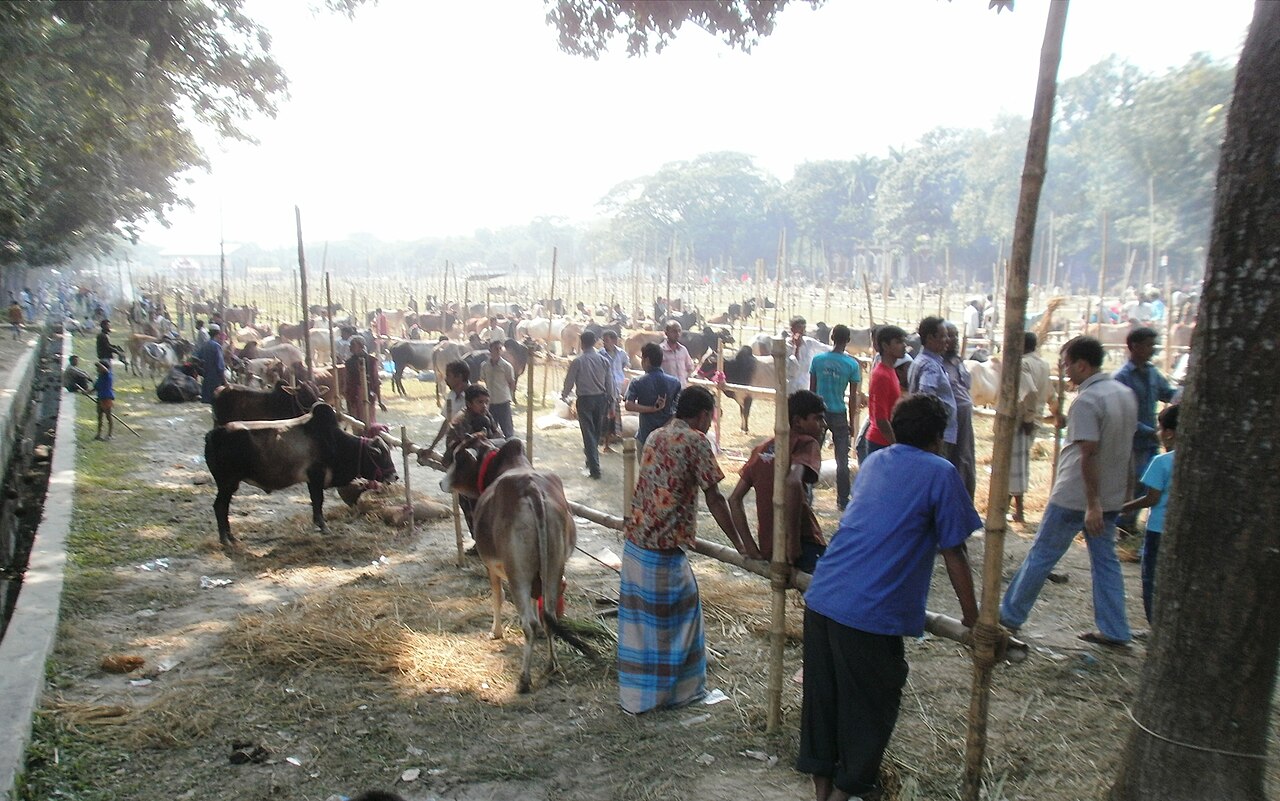
Cox's Bazar went into Eid-ul-Azha in June 2023 with more sacrificial animals than it needed, but buyers at its markets said prices were higher than they had ever seen. According to the district livestock office, 151,622 animals had been raised and prepared for sale against an estimated demand of 140,923 in the district. On Tuesday 27 June, the day before the last market day, buyers at the old Eidgaon cattle market said nearly everyone wanted small and medium local cattle, and that this demand had pushed their prices up. Local farmers, for their part, were unhappy about cattle they said had come in from Myanmar across the border, which they blamed for depriving them of fair prices. Jagonews24 reported the scene on the morning of Wednesday 28 June 2023. Bangladesh celebrated Eid-ul-Azha the next day, Thursday 29 June.
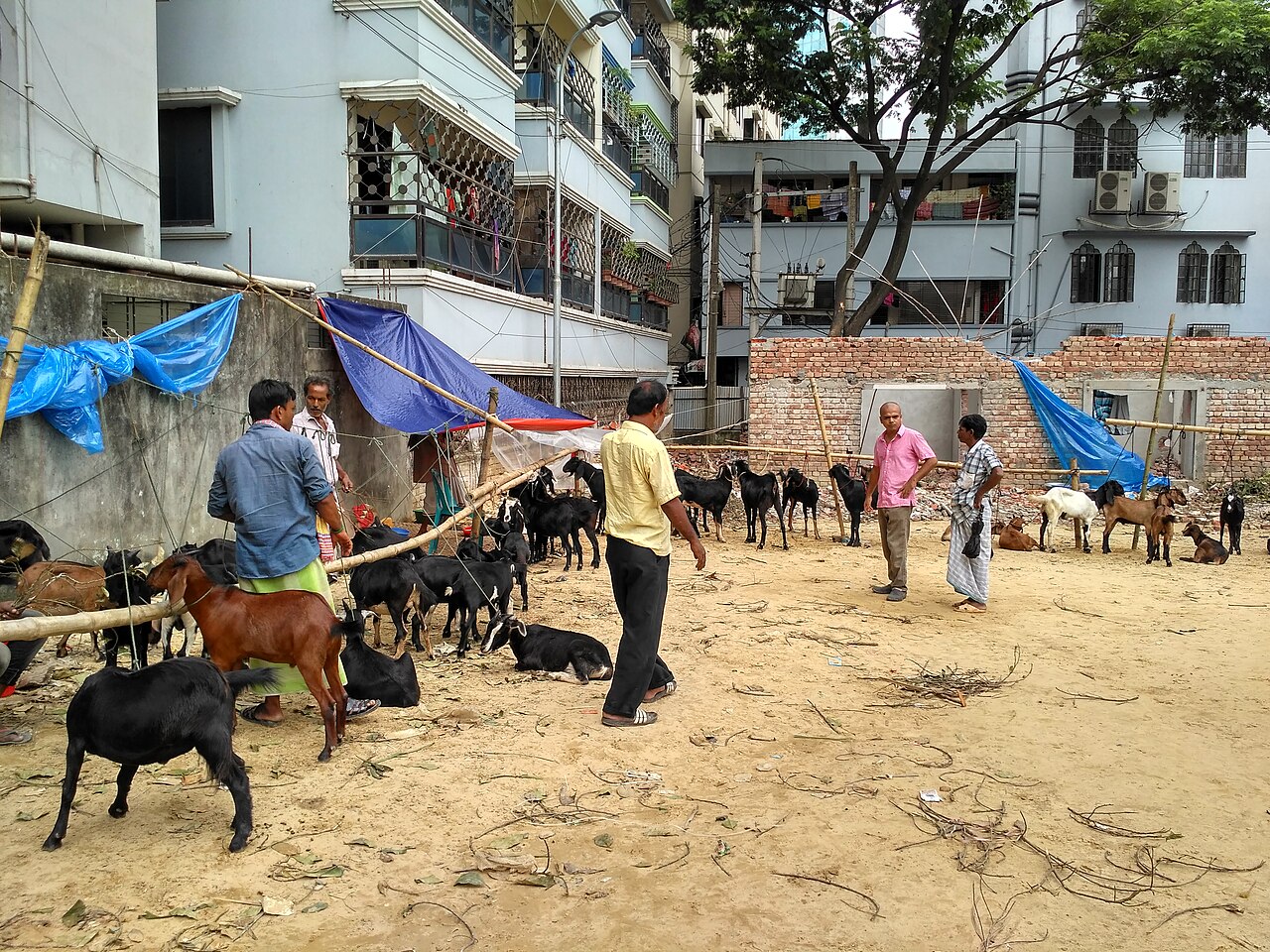
Across the district, most markets were doing good business in the final days. The scramble at every market was for the medium and small cattle that most families can afford and that suit a household sacrifice. Large animals, buffalo and goats were also on sale, and some buyers were holding back until the last day in the hope that prices would ease.
More animals than demand: the district livestock office's count
The district livestock office's figures, as Jagonews24 reported them, showed that 151,622 cattle, buffalo, goats and sheep had been prepared for sale in Cox's Bazar for the 2023 Eid, against a demand of 140,923 sacrificial animals in the district. Of the animals for sale, 100,452 were cattle, 5,094 were buffalo, 35,407 were goats and 10,669 were sheep.
Animals were being bought and sold at 90 markets in the district that season: 38 permanent markets and 52 temporary ones set up for Eid. The livestock office had deployed 27 veterinary medical teams to check the health of animals brought for sale. The office said sales at every market had picked up well in the final stretch.
A count of this kind is made every year before the festival. The Department of Livestock Services (DLS), the government agency under the Ministry of Fisheries and Livestock that runs veterinary services and livestock extension across the country, collects estimates through its field offices. In June 2023 a DLS deputy director (farm) told the newspaper Desh Rupantor that field officers advise farmers on raising animals from the start of the year, warn them not to use harmful drugs for fattening, and count how many animals are being raised. The national total is then compiled from the figures sent up from the field.
Surplus estimates for Cox's Bazar were not new. In August 2019 The Daily Star reported that the district livestock officer had put the district's stock at 1.08 lakh cattle against a demand of 1.05 lakh. In July 2021 the Dhaka Tribune reported that local farmers in Cox's Bazar held 173,519 cattle ahead of Eid-ul-Azha against local demand of 165,000. In each of those years, as in 2023, the question for farmers was less whether there would be enough animals than whether they would get a fair price for them.
Md Zahid Iqbal, the additional deputy commissioner (revenue) of Cox's Bazar, said animals were being traded peacefully at the markets, and that he hoped there would be no trouble on the last day either. People with space to keep an animal had bought early, he said, and those without it would buy theirs on Wednesday.
Buyers at Eidgaon market: small local cattle cost the most
Most of the report came from Eidgaon, one of the old cattle markets of the district. A K M Jahangir and Muhammad Yunus Khan, who had come to buy animals there on the afternoon of Tuesday 27 June, said the great majority of buyers wanted medium and small local cattle. Because of that, they said, cattle weighing two and a half to three maunds (a maund is the traditional South Asian unit of weight used in Bangladeshi markets) were the most expensive for their size. Cattle in that range were selling for Tk 90,000 to Tk 1,10,000.
Junayed, another buyer at the Eidgaon market, said prices that year had broken all previous records. In his account, cattle of a size that sold for Tk 40,000 at other times of the year were selling for Tk 85,000 to Tk 90,000 before Eid. If an animal looked a little better and healthier, he said, sellers asked far more for it. He had gone round many markets and still had not bought an animal, and said he would have to buy on Wednesday, the last market day, whatever the price.
He was not alone. Many other buyers were waiting for the final market because of the prices. Sahab Uddin, a seasonal animal seller, said that although the district had more animals than it needed, dishonest traders were taking extra money by claiming there was a shortage. That claim was his own; the report did not name any trader or carry a response. Whatever the price, Sahab Uddin expected buyers to crowd the last market on Wednesday.
The pressure on prices that season was not only local. In June 2023 Desh Rupantor reported that, because the price of animal feed had risen, people in the trade feared sacrificial animals would cost at least 10 percent more than the year before, and that the DLS had put special emphasis on growing fodder grass across the country for the same reason. A Samakal editorial of 18 June 2023 also noted that farmers were struggling to survive as cattle feed prices kept rising, and said that because feed is import-dependent, a syndicate was alleged to control it.
Buffalo in demand, and an 18-maund bull called Rajababu
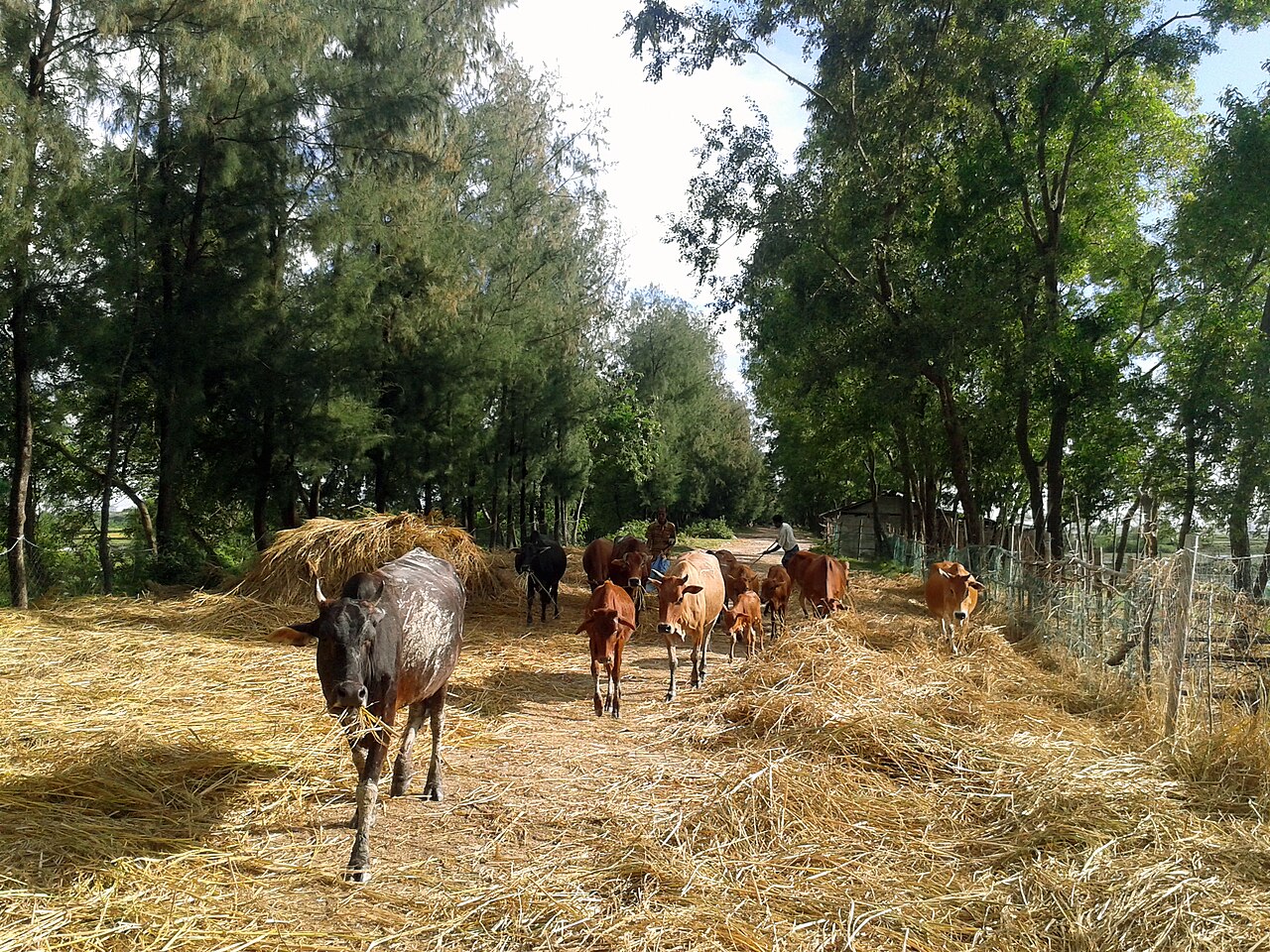
Minhaj Ahmed, who had come from Cox's Bazar town to buy an animal at Eidgaon, said the supply of buffalo was good that year, with small, medium and large animals all on offer. It seemed to him that families in which someone had health problems with beef were rushing to buy buffalo for the sacrifice. "People used to buy few buffalo, but this time the buffalo market is crowded too," he said. The district livestock office's count of 5,094 buffalo for sale was small beside the 100,452 cattle, but in Chattogram division as a whole buffalo were more numerous than anywhere else in the country that year, as the national figures below show.
Banglapedia, the national encyclopedia of Bangladesh, notes that the country has no important breed of buffalo of its own and that the animals are kept mainly for draught work, for ploughing and pulling carts, with the local variety giving little milk. It names Chittagong among the districts where buffalo are kept as draught animals, and says the shortage of green grass is the main factor limiting buffalo rearing, since each animal needs at least 30 kilograms of grass a day.
At the other end of the scale, Mohammad Shafiq, owner of RCG Agro in the Kharulia area of Jhilongja in Cox's Bazar, caused a stir by bringing a bull named "Rajababu", weighing about 18 maunds, to the market. He was asking Tk 12 lakh for it. A buyer looking for a showpiece animal had offered Tk 6 lakh 70 thousand, but Shafiq said he would not even recover his costs if he sold for less than Tk 7.5 lakh. Kharulia had been named in earlier reports as an area of cattle farms: in July 2021 a farmer there told the Dhaka Tribune that he had suffered because of cows arriving from Myanmar.
Markets on the highway and the rule against roadside markets
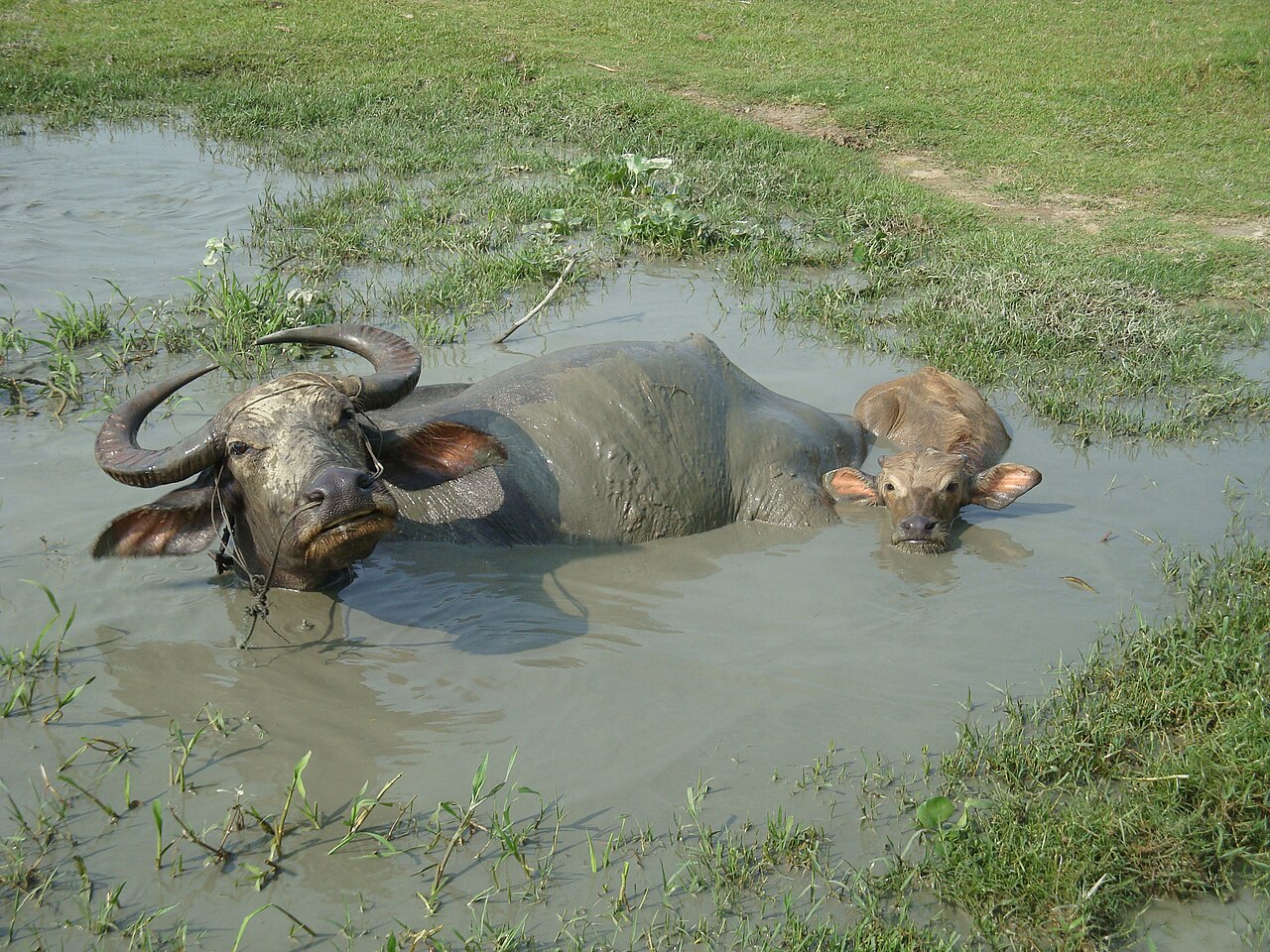
While the cattle markets were busy, people travelling on the highway paid the price. Both the old Eidgaon market and the Kharulia market were held on the highway itself, and at both places traffic jams built up from 11 in the morning until night, causing hardship for travellers and pedestrians. The administration had warned that it would be strict if markets were set up beside the road, but trading had gone on right on the road until then. Local people were demanding that the two markets be moved somewhere else.
The national rule was clear on paper. On 14 June 2023 bdnews24 reported that the cabinet committee on law and order had decided that no cattle markets could be set up on roads that Eid. The decision was announced alongside the national livestock figures after an inter-ministerial meeting at the Secretariat in Dhaka, where officials also discussed keeping animal transport moving to remote areas.
Eidgaon became a police station area (thana) on 21 October 2019 and was upgraded to an upazila on 26 July 2021, formed from the five northern unions of Cox's Bazar Sadar upazila: Islampur, Pokkhali, Islamabad, Eidgaon and Jalalabad. The new upazila covers 119.66 square kilometres, with Ramu to the east, Cox's Bazar Sadar to the south, Maheshkhali to the west and Chakaria to the north.
Cattle from Myanmar and the border
Many people told Jagonews24 that cattle from Myanmar had entered illegally through several places on the Ramu and Naikhongchhari border, and farmers said that, as a result, many of them had been deprived of fair prices. The report's opening also named Teknaf, with Naikhongchhari, as the border routes that had made local farmers unhappy. These were the farmers' and residents' claims, as the report gave them.
Anwarul Hossain, the officer-in-charge (OC) of Ramu police station, said the Rapid Action Battalion (RAB) and Border Guard Bangladesh (BGB) were on strict duty to stop smuggled cattle entering the sacrificial animal markets at Garjania in Ramu and at Naikhongchhari. Some cattle and buffalo had come in by smuggling routes at the start of the season, he said, but in recent days this had stopped completely.
The geography explains why the issue comes up each year. Cox's Bazar district is bounded on the east by Bandarban district, by Arakan in Myanmar and by the Naf river, according to Banglapedia. Teknaf upazila, at the southern tip, has Myanmar's Arakan state on its east and the Naf as its main river. Naikhongchhari, although its markets serve the Ramu area, is an upazila of Bandarban district, bounded by Myanmar's Arakan state on the south and east; Banglapedia lists Bahichhari, Naikhongchhari, Ghumdhum, Baraitali and Dochhari among its hats. Garjania, the market the OC named, is one of the most noted of Ramu upazila's 32 hats and bazars.
Cattle from Myanmar were once brought in openly. In August 2017 the Dhaka Tribune reported that trawlers carried cattle across the Naf to the Shahporir Dwip corridor in Teknaf, where Teknaf customs earned Tk 500 in revenue on each animal and the district administration charged Tk 50 per cow; at least 8,500 cattle had come in that July and August, against 3,435 in the same months of 2016. In August 2019 The Daily Star reported that the district administration had stopped imports through the Shah Pari island corridor on the instruction of the fisheries and livestock ministry, after Teknaf customs had recorded 10,177 cattle in June and 10,095 in July of that year. The deputy commissioner was quoted as saying that "if we import more than the demand, it will financially hurt the local entrepreneurs", while traders criticised the sudden ban.
In July 2021 the Dhaka Tribune reported that the government had halted cattle imports from Myanmar on 5 July that year, citing losses to farmers, and that, according to the district livestock officer, an inter-ministerial committee had decided not to import any animals from Myanmar that year; the paper also reported that some traders had brought animals in regardless. By 2023 the position was that foreign cattle could not be imported. Samakal's editorial of 18 June 2023 said the import of foreign cattle had been banned in the interest of local farmers, and expressed concern at reports that cattle were nevertheless coming in from India and Myanmar by smuggling routes before Eid and being sold openly at border markets.
The national picture for Eid-ul-Azha 2023
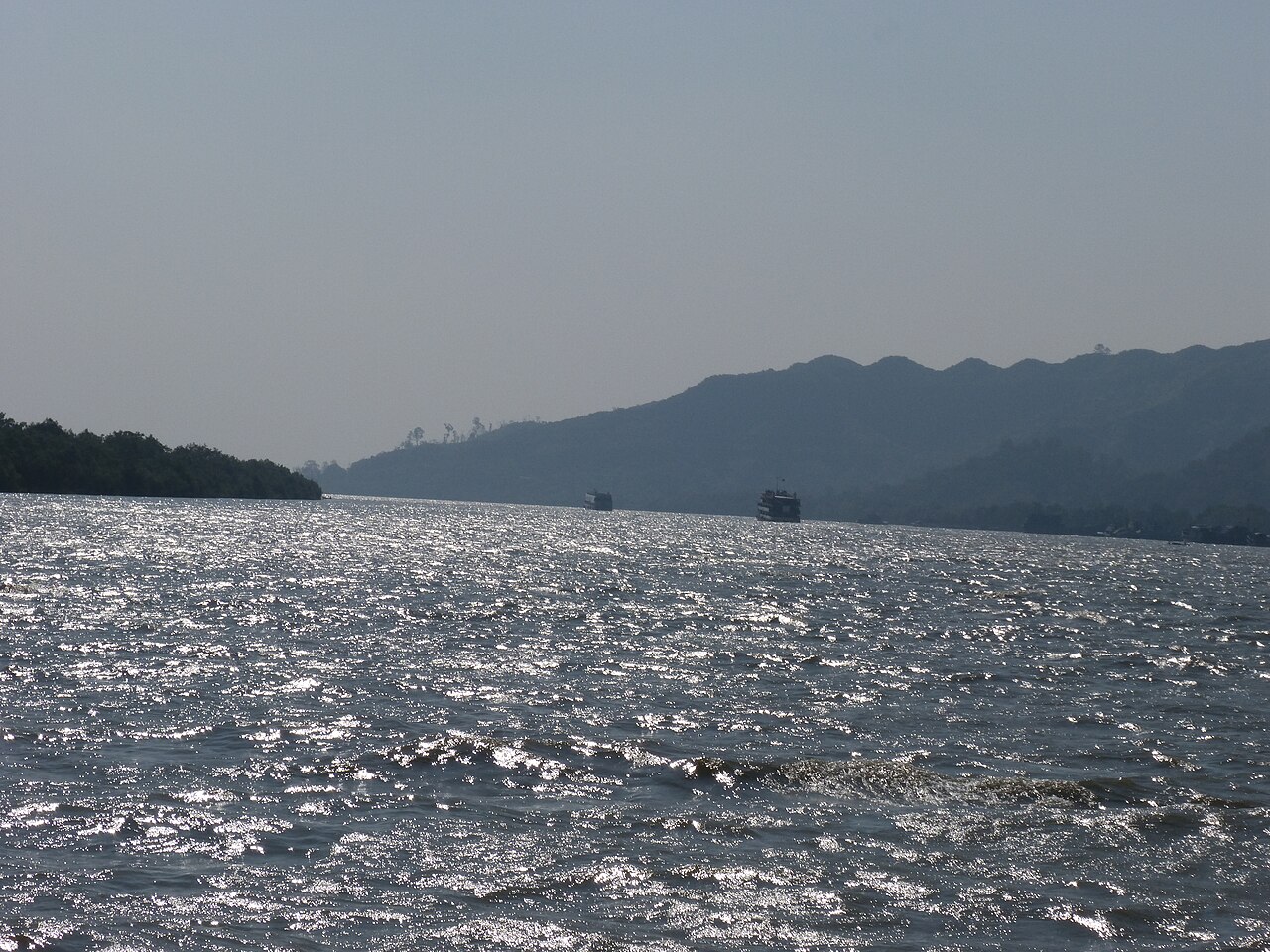
The Cox's Bazar surplus was part of a national one. On 14 June 2023 the fisheries and livestock minister said after an inter-ministerial meeting that 1,25,36,333 animals had been prepared for sacrifice across the country that year, against an estimated demand of 1,03,94,739, a surplus of 21,41,594 animals. The total was made up of 48,43,752 cattle and buffalo, 76,90,000 goats and sheep, and 2,581 animals of other species. The ministry said there was no shortage and no need to import animals.
The previous year's figures, given at the same briefing, were 1,21,24,389 animals prepared and 99,21,941 actually sacrificed. The minister said the 2023 count was 4,11,944 higher than the year before.
By division, the Dhaka Tribune reported 20,53,128 sacrificial animals in Chittagong division, behind only Rajshahi with 45,11,614, and ahead of Rangpur (19,62,951), Khulna (15,11,708), Dhaka (8,95,454), Mymensingh (6,98,047), Barisal (4,93,206) and Sylhet (4,10,225). Desh Rupantor, citing the DLS, reported on 18 June 2023 that Chattogram division led the country in both cattle and buffalo suitable for sacrifice that year, with 12,04,108 cattle and 1,00,492 buffalo. Rajshahi was second in both; Rangpur was third for cattle and Barisal third for buffalo.
The same report said that because cattle, goat, buffalo and sheep rearing had grown with the Eid market in mind, Bangladesh had not had to import animals from neighbouring countries at Eid for almost five years. The DLS deputy director it quoted said the government was giving special support for raising cattle, goats, buffalo and sheep, and that for several years the country's own animals had met its demand for meat, including at Eid.
Eid-ul-Azha falls on the 10th day of the Islamic month of Zilhaj. The National Moon Sighting Committee, meeting at the Baitul Mukarram National Mosque in Dhaka on 19 June 2023, announced that the Zilhaj moon had been sighted that evening and that Bangladesh would celebrate Eid-ul-Azha on 29 June; Saudi Arabia observed it a day earlier, on 28 June. That timetable made Wednesday 28 June the last full market day in Cox's Bazar, which is why so many buyers there were waiting for it.
Cox's Bazar district and its market towns
Cox's Bazar is a coastal district of Chattogram division. Banglapedia gives its area as 2,382.38 square kilometres and its population at the 2011 census as 2,169,668. It is bounded by Chittagong district to the north, the Bay of Bengal to the south and west, and Bandarban district, Arakan in Myanmar and the Naf river to the east. Its main rivers are the Matamuhuri, the Bakkhali and the Naf. Agriculture is the main source of income for 49.84 percent of households, followed by commerce at 17.39 percent.
Ramu upazila, where the OC said security forces were watching the Garjania market, covers 391.71 square kilometres and has 11 unions, Garjania among them. Its main river is the Bakkhali, and its main crops are paddy, potato, pulses, onion, garlic, ginger, betel leaf, rubber and vegetables. Agriculture is the source of income for 47.01 percent of its people. Teknaf, the border upazila named in the report, covers 388.66 square kilometres in six unions, from Teknaf and Sabrang to St. Martin Dwip, and its most noted markets include the Sabrang Hat and the Shah Parir Dwip Hat.
Naikhongchhari, in neighbouring Bandarban district, covers 463.60 square kilometres in four unions: Ghumdum, Dochhari, Naikhongchhari and Baishari. Its main crops are paddy, sugarcane, sesame, cotton, maize, rubber, tobacco, betel leaf, turmeric, ginger and vegetables, and agriculture is the main source of income for 51.93 percent of households.
Bangladesh's livestock in figures
The Department of Livestock Services' summary "Livestock Economy at a Glance" for 2021-22, the latest full year before the 2023 Eid, put the national herd at 247.00 lakh cattle, 15.08 lakh buffalo, 267.74 lakh goats and 37.52 lakh sheep. Meat production that year was 92.65 lakh tonnes against an estimated demand of 75.20 lakh tonnes, calculated at 120 grams per person per day; the department put availability at 147.84 grams per person per day. Livestock contributed 1.90 percent of gross domestic product at constant prices and 16.52 percent of agricultural GDP, and the department estimated that it employed 20 percent of the population directly and 50 percent partly.
Banglapedia lists four improved indigenous varieties: Pabna, Red Chittagong, Munshiganj and North Bengal Grey. Red Chittagong cattle are red in colour and may give about two litres of milk. Native cattle serve several purposes at once, providing draught power, milk and meat, while their dung is used as manure and fuel. Exotic breeds such as Holstein-Friesian, Jersey, Sahiwal and Sindhi have been brought in for crossbreeding, and Banglapedia names the shortage of green fodder, weak management and poor record-keeping among the constraints farmers face.
Photo: Faizul Latif Chowdhury / Wikimedia Commons (CC BY-SA 3.0)
Sources: Jagonews24, bdnews24, Dhaka Tribune, Desh Rupantor, Samakal, The Daily Star, Department of Livestock Services, Banglapedia, Wikipedia
Comments
(0)