
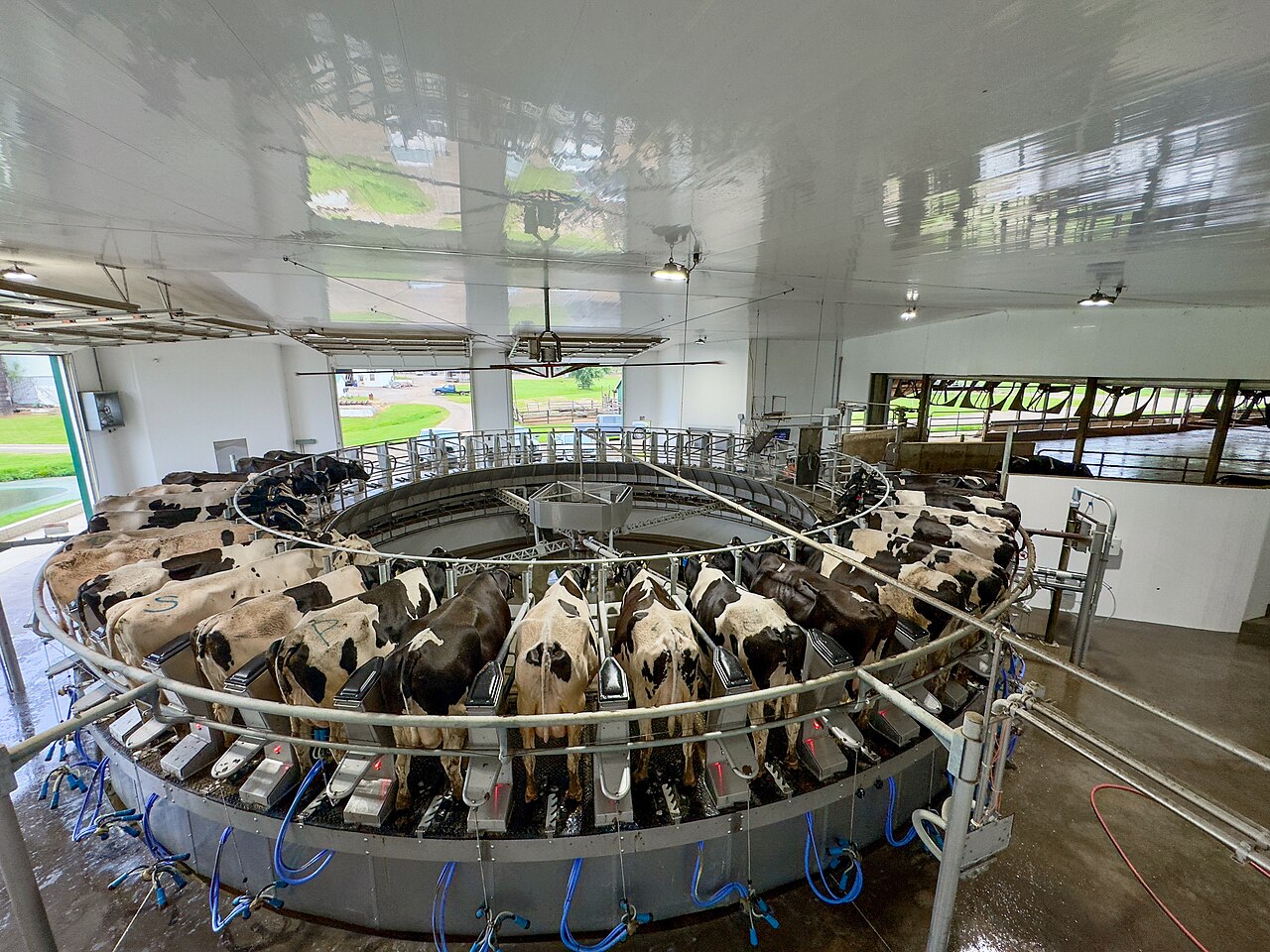
US dairy farmers can raise milk income substantially by producing more butterfat and protein, according to a report from CoBank's Knowledge Exchange, as more of the nation's milk goes into cheese, yogurt, butter and other manufactured products.
Herds in the top 10% for milk components earned an extra $101 to $352 per cow a year at average US production levels, the report found, and $136 to $474 at higher production levels.
"Those numbers can add up fast," said Corey Geiger, CoBank's lead dairy economist. At 24,390 pounds of milk per cow a year, high-component herds in the Upper Midwest Federal Milk Marketing Order earned $256.58 more per cow than low-component herds; at 33,000 pounds the gap widens to $345.58, or $34,558 a year for a 100-cow dairy and $345,582 for a 1,000-cow dairy.
The report covered seven regional Federal Milk Marketing Orders that use multiple component pricing. In the Upper Midwest, 2025 averages were 4.37% butterfat, 3.33% protein and 5.79% other solids, with wide gaps between the best and worst herds.
More than 80% of farmgate milk now goes into manufactured dairy products, and more than 90% of US milk is priced on butterfat, protein and other solids. Processors are also trying incentives tied to whey protein concentrate and isolate.
Abbi Groves, CoBank's agricultural commodities economist, said optimising components gives producers a clear path to a bigger milk cheque. Geiger added that rolling herd average no longer tells the full revenue story and that benchmarks based on pounds of components would.
Photo: USDAgov / Wikimedia Commons (Public domain)
Source: Farms.com
Comments
(0)