
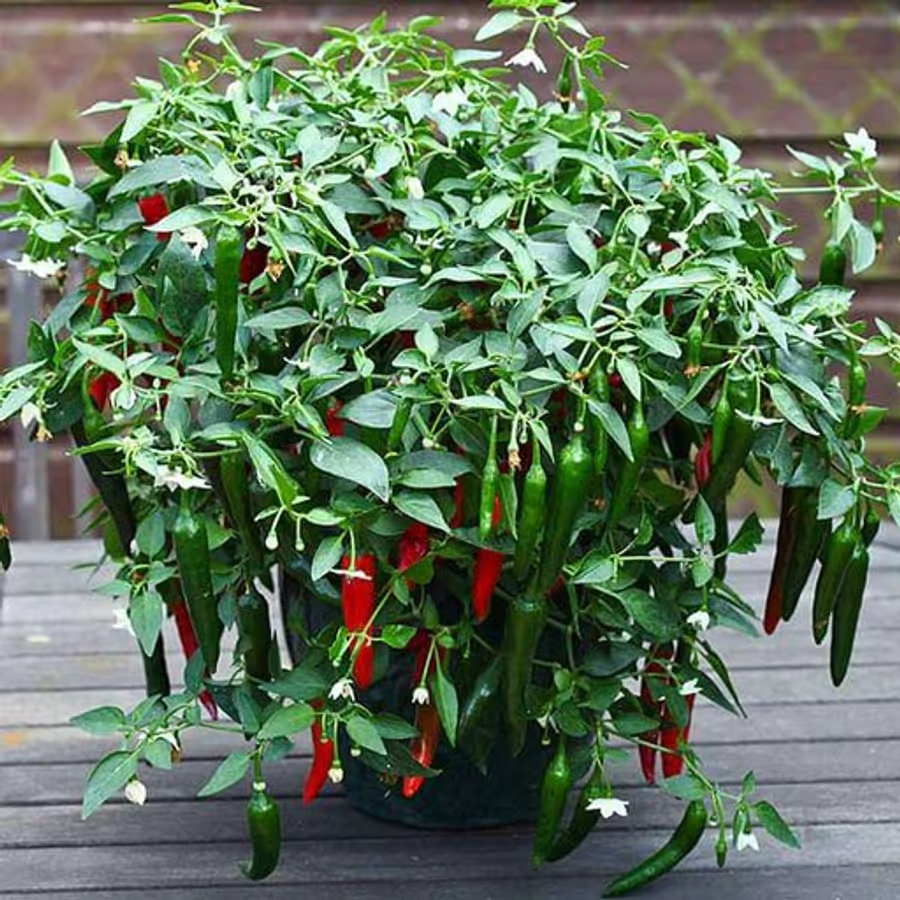
Without chilli, food never seems quite right. Besides adding flavour, chillies are hugely popular in the country and around the world as a spice and in making medicines, and many kinds are grown in different countries. Home gardeners who grow crops in pots are especially fond of growing this vegetable.
Chillies can be grown all year round, but yields are better if they are grown around winter. They are very easy to grow in a home garden or on a rooftop. Loam soil is ideal. Cow dung and urea can be used as manure for chillies grown in pots.
Planting
First buy good-quality chilli seedlings from a nursery. Prepare the soil well and plant the seedlings or sow seed. Seeds from dried chillies can also be soaked for about six hours, dried well and planted in the pot soil. To help germination and stop water collecting, make small holes in the bottom of the pot. Chilli plants should be grown where there is enough light and air.
For chillies in pots at home, it is always better to grow organically. Instead of chemical fertiliser, rotted kitchen vegetable peelings can be used as organic manure. Look after the plants with care, doing everything from watering on time to weeding by hand. Make sure water never stands in the pot after watering.
Yield and pests
Well cared for, one chilli plant can produce at least 50 to 80 chillies over two flushes. When chillies are grown in large quantities in the field, root rot, leaf rot, leaf curl and various bacterial diseases appear, but these are not as common when they are grown on a small scale in pots. Ants often attack potted chillies; sprinkling a little soap powder on the plant can protect it.
Grown this way, chillies will yield well and there will be no shortage of heat on the dinner plate.
Source: Staff Correspondent. First published in Bengali on The Agro News.
Comments
(0)