
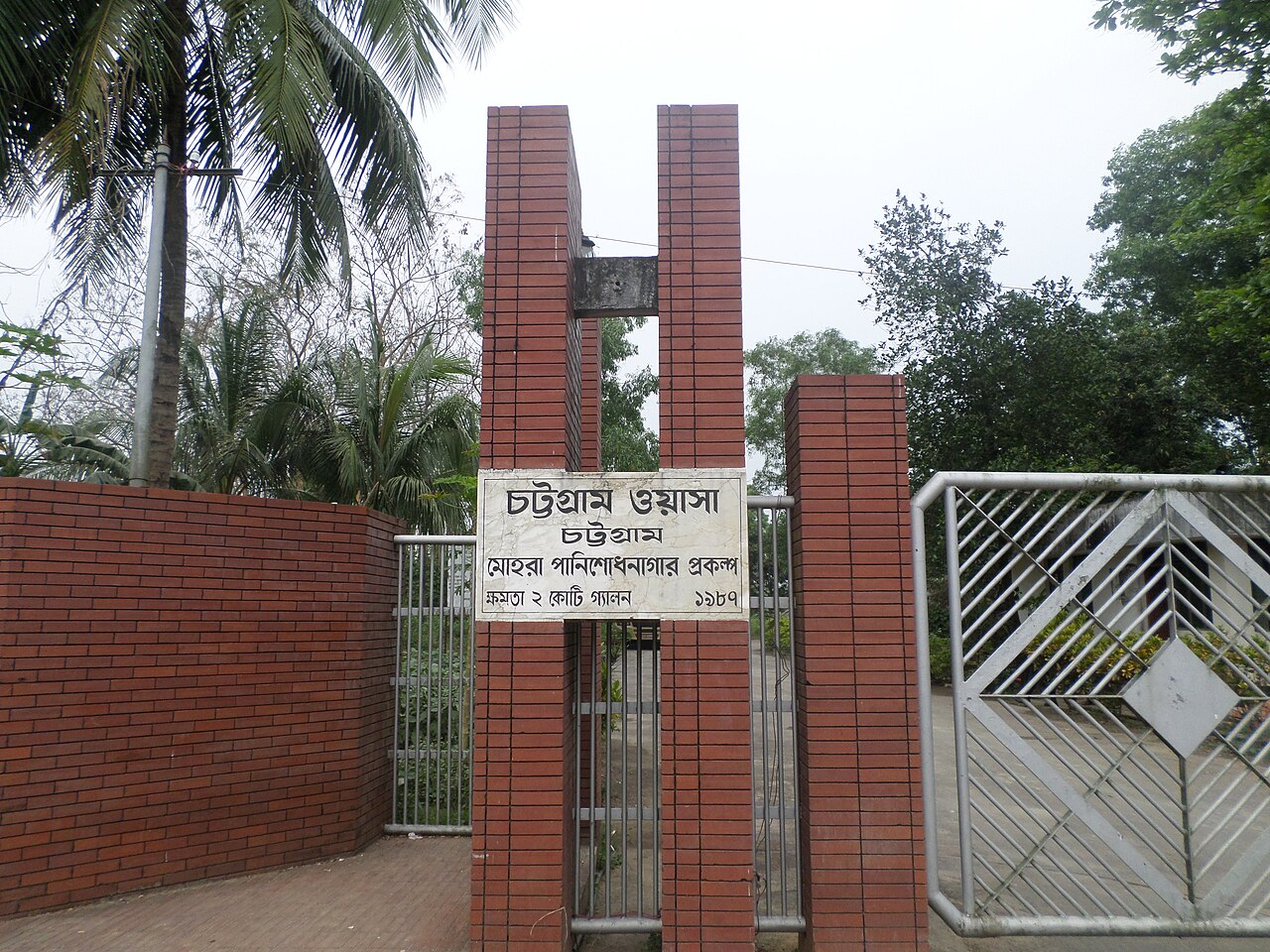
Researchers have found trihalomethanes (THMs) in water supplied by Chattogram WASA. Of 120 samples taken from ten parts of the Karnaphuli supply area, all four common types turned up: chloroform, bromodichloromethane, dibromochloromethane and bromoform. The utility itself does not test for them.
The study was published in June in the Journal of Environmental Chemical Engineering, a Netherlands-based journal. The team is Professor Mosa. Farzana Rahman and researcher Farzana Khan of Chittagong University of Engineering and Technology (CUET) and Professor Md Delwar Hossain of the Bangladesh University of Engineering and Technology (BUET). They say it is the first field study in Chattogram to test piped water directly for THMs and the cancer risk linked to them.
THMs are not added to water. They can form when the chlorine used to disinfect it reacts with natural organic matter such as rotting leaves and algae in river water. Chloroform made up about 60 percent of the total, at 31.5 to 52.9 micrograms a litre depending on the area. In the hot season some samples held more than 70 micrograms a litre of the four combined; levels were lower in winter.
Counting exposure by drinking, breathing and skin contact, the team estimated that drinking water at these levels for a long time could carry an extra cancer risk of about 426 in a million people. Professor Farzana Rahman said the figure was no cause for panic: it does not mean anyone will get cancer, and no patients were studied. She said chlorination must not stop; instead organic matter should be reduced during treatment, chlorine dosed to need and THMs tested regularly, and Bangladesh needs a standard for total THMs.
Answering Prothom Alo in writing, WASA said the study covered only ten areas and one period and questioned how the samples were collected. It said the WHO sets no single limit for total THMs but separate guideline values for the four types, and that the average of each was below them. It admitted, though, that its laboratory has no equipment to test for THMs or chloroform. It tests 240 consumer-level samples a month for residual chlorine and coliform bacteria and will ask a visiting Korean consultancy team to review the issue.
Professor Asiful Hoque of CUET's civil engineering department said WASA must arrange THM testing, and must check that water is still safe when it reaches homes, not only at the treatment plant.
The report is by Prothom Alo's Chattogram correspondent Sujoy Chowdhury.
Photo: Parvezahmed / Wikimedia Commons (CC BY-SA 4.0)
Source: Prothom Alo

Comments
(0)