
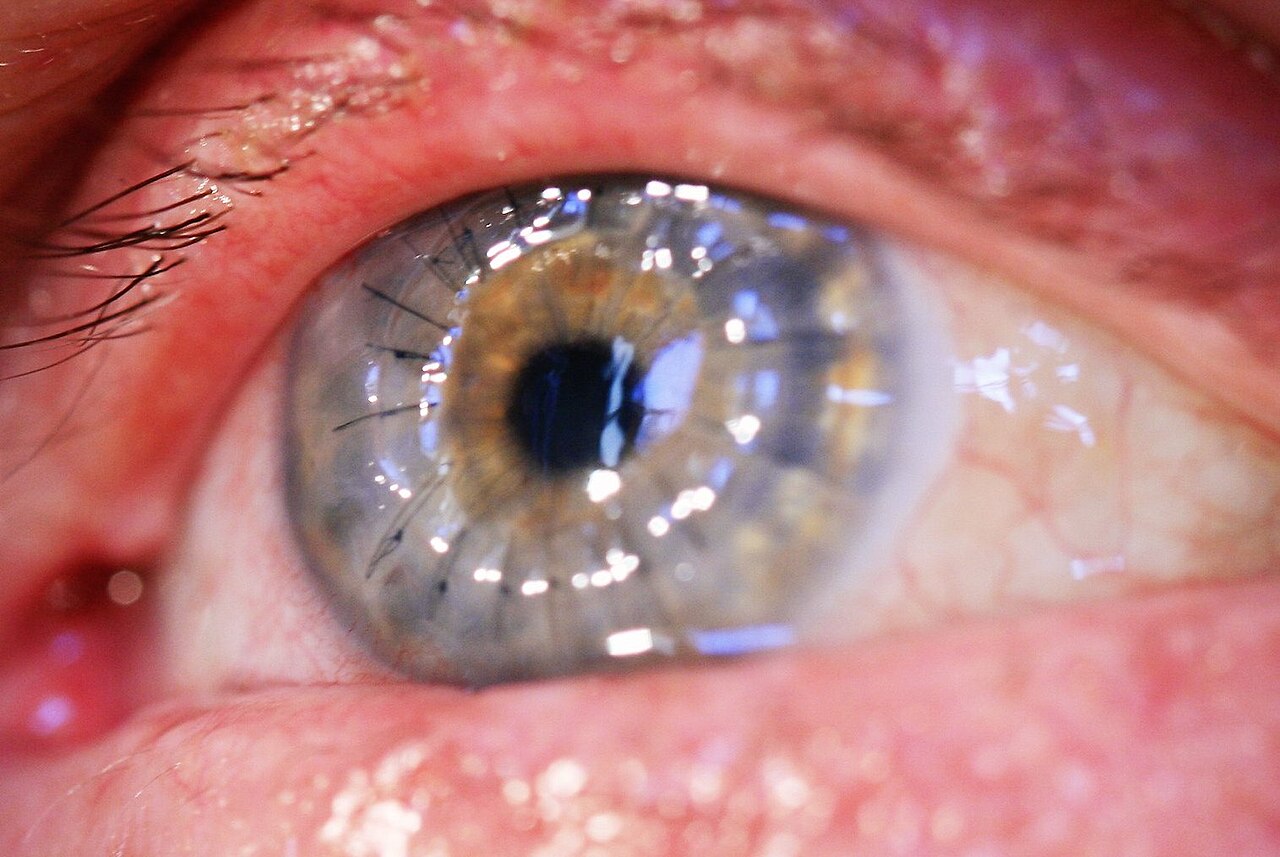
Corneal transplants increasingly replace only the damaged layer rather than the whole cornea, which means a smaller surgical wound, faster recovery, a lower risk of the graft being rejected and a better chance of good long-term sight. Dr Anshu Arundhati, senior consultant and clinical associate professor at the Singapore National Eye Centre, said this on Saturday morning at an open discussion on the latest advances in corneal transplant and refractive surgery, held at the Ha-Meem Group office in Tejgaon, Dhaka.
Corneal disease is the sixth leading cause of blindness worldwide, she said. About 12.7 million people are waiting for a transplant, but because donor corneas are scarce only one patient in 70 gets one. The cornea is the clear front of the eye that focuses light onto the retina; when its cells or layers are damaged it turns cloudy and sight fades. A transplant can restore vision, though not fully if the retina or optic nerve is also affected.
A full-thickness transplant could need about 16 stitches and carried a higher risk of complications. Now surgeons identify which layer is damaged and replace only that: DALK or ALK for the front layers, and DSAEK or DMEK when cells of the inner layer are lost. Partial transplants have grown markedly over the past 30 to 35 years, and more than 85 per cent of corneal transplants at the Singapore National Eye Centre now use them.
Dr Arundhati also warned about children's eyes. Long hours of close work, study or screen time raise the risk of myopia, or short-sightedness, in which the eyeball grows longer than normal; genetic tendency plays a part as well as environment. She advised limiting children's screen time and letting them spend more time outdoors, noting that Singapore and other countries recommend no more than two hours of screen time a day.
Staring at computer and phone screens for long periods can cause computer vision syndrome and dry eyes. Her advice is to look at something 20 feet away for at least 20 seconds every 20 minutes, blink often, sleep enough and rest the eyes. Ha-Meem Group managing director A K Azad and Samakal publisher Abul Kalam Azad attended.
Photo: John Ricks / Wikimedia Commons (public domain)
Source: Samakal

Comments
(0)