
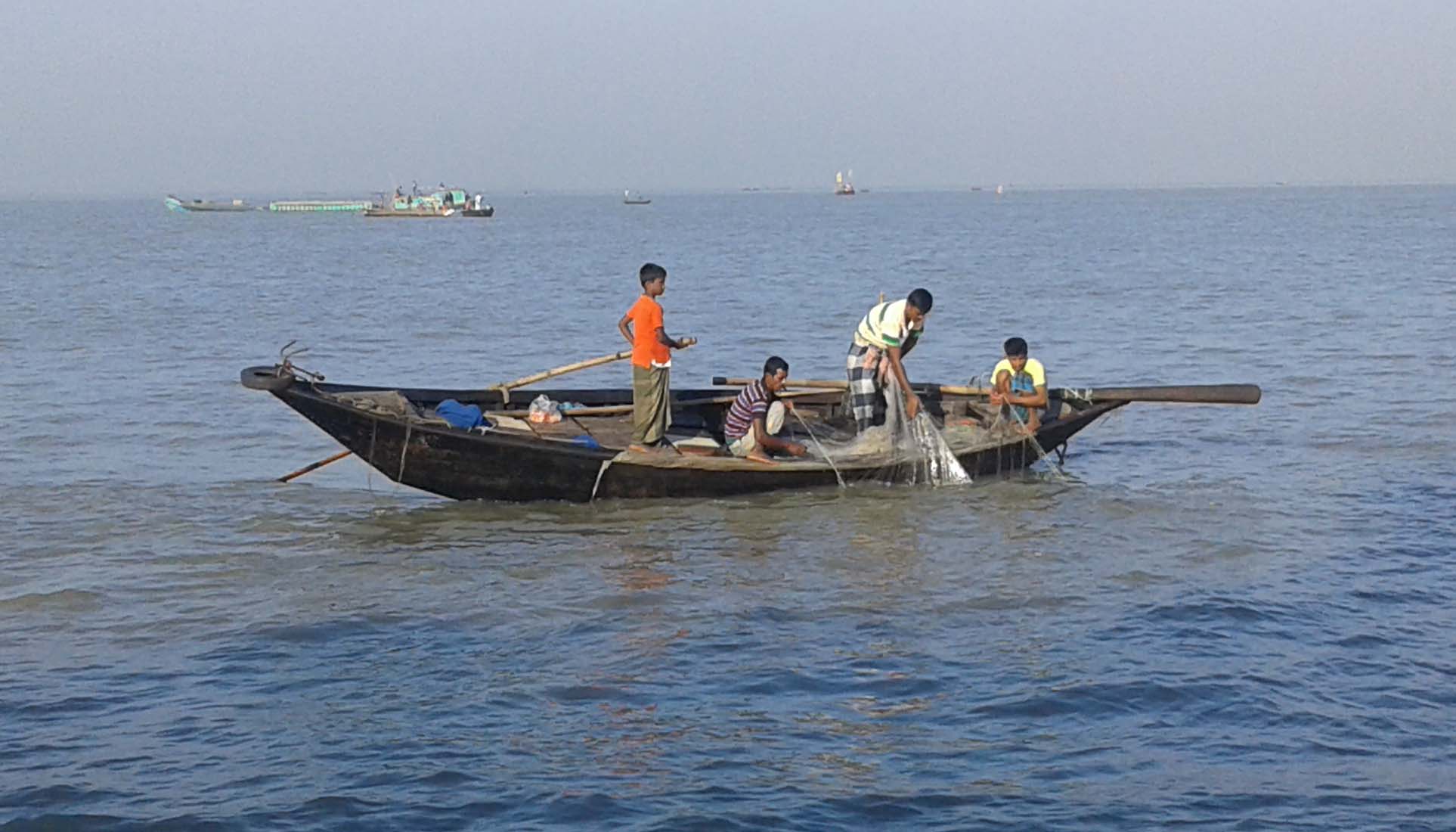
Buyers crowded the Baro Station fish ghat in Chandpur on Friday, 27 June 2025, the weekly holiday, but there was far less hilsa on the landing than they had come for. Traders at the ghat told Jagonews24 that where 400 to 500 maunds of hilsa used to be bought and sold there on an average day, trade had come down to only 50 to 100 maunds.
The fish that did arrive were large and came from the local rivers, the traders said, and a hilsa of about one kilogram was selling for Tk 2,300 to Tk 2,400. Many visitors walked the stalls, asked the price and left without buying. The traders blamed thin catches in the Padma and the Meghna and the loss of trawler shipments from the south, and said they were waiting for the rain and the river water that usually bring the main season's fish.
A holiday crowd at a thin landing
From the morning of 27 June, buyers from Dhaka and other parts of the country walked through the wholesale stalls, the arats, that line the ghat. Some bought two fish and some five to seven, while others turned back disappointed once they heard the prices, the report said. Friday is the weekly holiday in Bangladesh, and the ghat, which sits beside the meeting point of the Padma and the Meghna at Chandpur town, draws sightseers as well as fish buyers on such days.
One visitor, Parvez, had come from Dhaka with three friends. "Four of us friends came from Dhaka by launch to visit the confluence of the three rivers at Baro Station in Chandpur," he said. "The hilsa ghat is next to the confluence, so we came to see the fish. But it has been a different experience here. There are no piles of hilsa, and the prices are high too. We are looking around the whole market and will buy hilsa if we can."
The scene he described, a busy holiday crowd and no heaps of silver fish on the floor of the arats, was the point of the report: demand for Chandpur hilsa was strong, but the landing had little to sell.
What the traders said about catches, prices and the Padma Bridge
Hilsa trader Nabir Hossain told Jagonews24 that the season was under way but that fishermen were catching little hilsa in the Padma and the Meghna off Chandpur. "Given the huge demand for Chandpur hilsa across the country, there is not enough fish in the market," he said. He said hilsa from the southern region used to come to the Chandpur ghat by trawler, but that since the Padma Bridge was built that fish no longer came. "The peak hilsa season is ahead. If the river water and the rain continue, hilsa will be caught, and then the price will fall," he said.
The bridge he referred to, the Padma Multipurpose Bridge, was inaugurated on 25 June 2022. It is a 6.15-kilometre two-level road and rail bridge across the Padma that links the country's south-west with its northern and eastern regions. The link between the bridge and the ghat's trawler shipments is the trader's own explanation; the report did not give figures for the route the fish now take.
Another trader at the market, Kamal Hossain, said the hilsa then reaching the ghat were large and came from the local rivers. "Because it is Friday, more buyers have come, but sales are low. Most buyers check the prices and leave without buying," he said. "So even with some supply, sales are not what they used to be."
He gave the day's prices at the ghat as follows:
- hilsa of about one kilogram: Tk 2,300 to Tk 2,400 each;
- hilsa of 500 to 700 grams: Tk 1,700 to Tk 1,800;
- large hilsa of one kilogram: Tk 2,800 to Tk 3,000.
Weeks of short supply before 27 June
The shortage on 27 June followed several weeks of reports from the same ghat. On 17 May 2025, the news agency UNB reported that hilsa had returned to Chandpur's markets after the two-month ban in the river sanctuary, but only about 50 maunds were arriving at the Chandpur Fish Landing Centre, the Boro Station Macch Ghat, each day. Hilsa from the southern coastal areas of Hatiya, Bhola, Sandwip and Char Fasson had been arriving by pickup van at 40 to 50 maunds a day, while the trawlers, which usually bring 150 to 200 maunds in a trip, had not yet resumed.
UNB gave the price of a one-kilogram hilsa in Chandpur's markets that week as about Tk 2,500, down from Tk 3,000 a few weeks earlier, and fish of 700 to 800 grams at Tk 1,700 to Tk 1,800 a kilogram, down from Tk 2,300. At Biponi Bagh, which the agency called the town's busiest fish market, one-kilogram Padma hilsa cost Tk 2,200 to Tk 2,500, while coastal hilsa of a kilogram cost Tk 1,700 to Tk 1,800. A fisheries official told the agency that July to September would bring abundant catches, and a trader with more than 40 years in the business, the president of a local fish traders' association, said river hilsa would increase once the monsoon arrived.
On 3 June 2025, The Daily Star's Bangla edition reported that a hilsa weighing 2 kilograms 480 grams had sold at an open auction at the Baro Station market for Tk 13,390, which the report described as the highest price yet paid for a hilsa at that market; at least 30 retail sellers had joined the bidding. According to the fish traders' association, 100 to 150 maunds of hilsa would normally be expected each day at that time, but no more than 5 to 10 maunds were arriving. The association's general secretary told the paper that there was a severe shortage of hilsa at the Chandpur market and likened the fish to a "golden deer", the Bengali image of something out of reach.
On 21 June 2025, the daily Desh Rupantor described the ghat's trade as being in crisis. A hilsa seller told the paper that four or five years earlier 2,000 to 3,000 maunds of fish had arrived at the ghat every day, while only 40 to 50 maunds were coming in then. The president of the Chandpur Fish Traders' Cooperative Society (Chandpur Matsya Banik Samabay Samiti) said about 3.5 lakh maunds of fish had been sold at the ghat in the 2020-21 fiscal year and that supply had fallen every year since 2022. The paper reported that a one-kilogram hilsa that once sold for Tk 900 to Tk 1,000 was selling for Tk 2,400 to Tk 2,500.
The same report described the people who depend on the ghat. Wholesalers said they had advanced large sums to fishermen as dadon, the seasonal credit that ties a fishing crew to an arat, and were losing money because the fish were not coming. Porters said they once worked all day and now sat waiting for a boat, and a hotel owner beside the ghat said his trade depended on the crowd at the market. The paper said the opening of new arats elsewhere had also cut the shipments reaching Baro Station. The deputy commissioner of Chandpur told the paper that hilsa production had fallen somewhat in recent years while the production of farmed fish had risen, and that work was under way to increase hilsa output.
Chandpur, its rivers and the Baro Station ghat
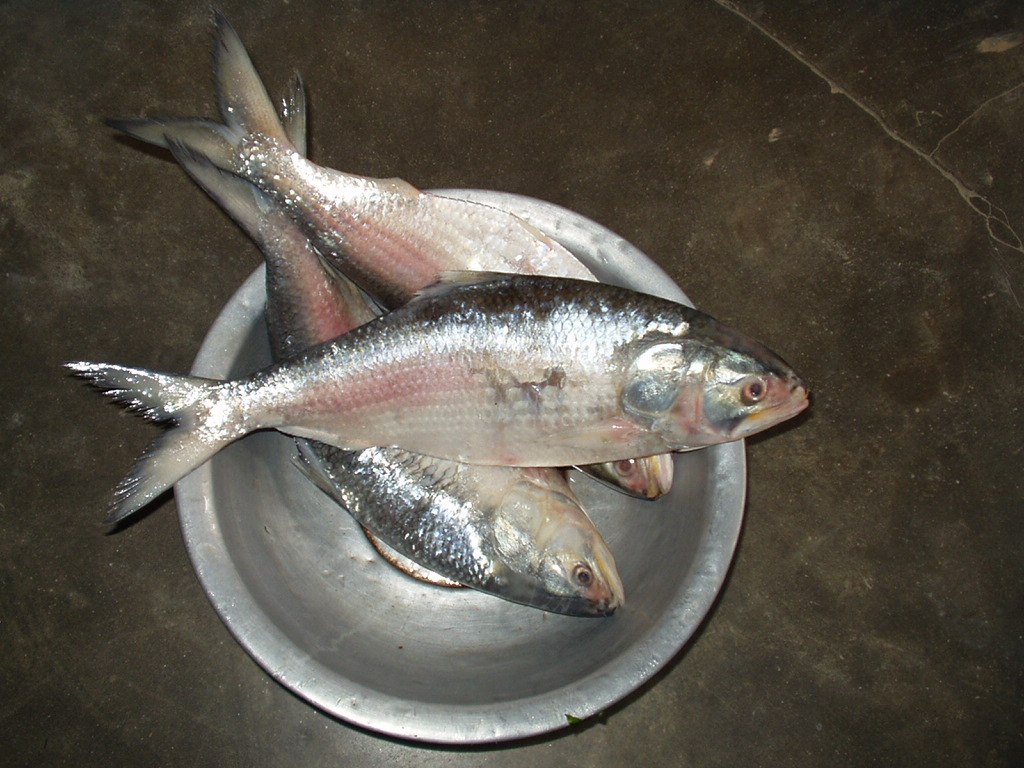
Chandpur is a district of Chittagong division covering 1,645.32 square kilometres, according to Banglapedia, the national encyclopedia of the Asiatic Society of Bangladesh. Its main rivers are the Meghna, the Dakatia, the Gumti and the Dhanagoda, and it is bounded on the west by the Meghna. Chandpur was made a sub-division in 1878 as part of Tripura district and became a district in 1984. The 2011 census counted 2,416,018 people in the district, and Banglapedia lists the District Ilish Chattor, a hilsa square in the town, among its sights. For Chandpur Sadar upazila, where the ghat stands, the encyclopedia names hilsa first among the main exports and lists the Bangladesh Fisheries Research Institute among its important installations.
The rivers explain the trade. Banglapedia describes how the combined flow of the Ganges and the Brahmaputra-Jamuna, known as the Padma, meets the Meghna near Chandpur, sixteen kilometres below Shatnol, at a confluence about eleven kilometres wide in the rainy season. From that point southwards the river is called the Lower Meghna, one of the broadest rivers and largest estuaries in the world, which carries the water of all three great river systems to the Bay of Bengal. This stretch of water is the route that hilsa take between the sea and their upstream spawning grounds.
The Baro Station fish ghat itself was set up in the British period on the bank of the Dakatia, where the river runs into the Meghna, because hilsa were plentiful there and the place was well connected, Desh Rupantor reported. From the ghat, hilsa travel by road and rail to the rest of the country, and the trade supports porters, ice factories, packers, hotels and tea stalls around it.
Hilsa: the national fish and its life cycle
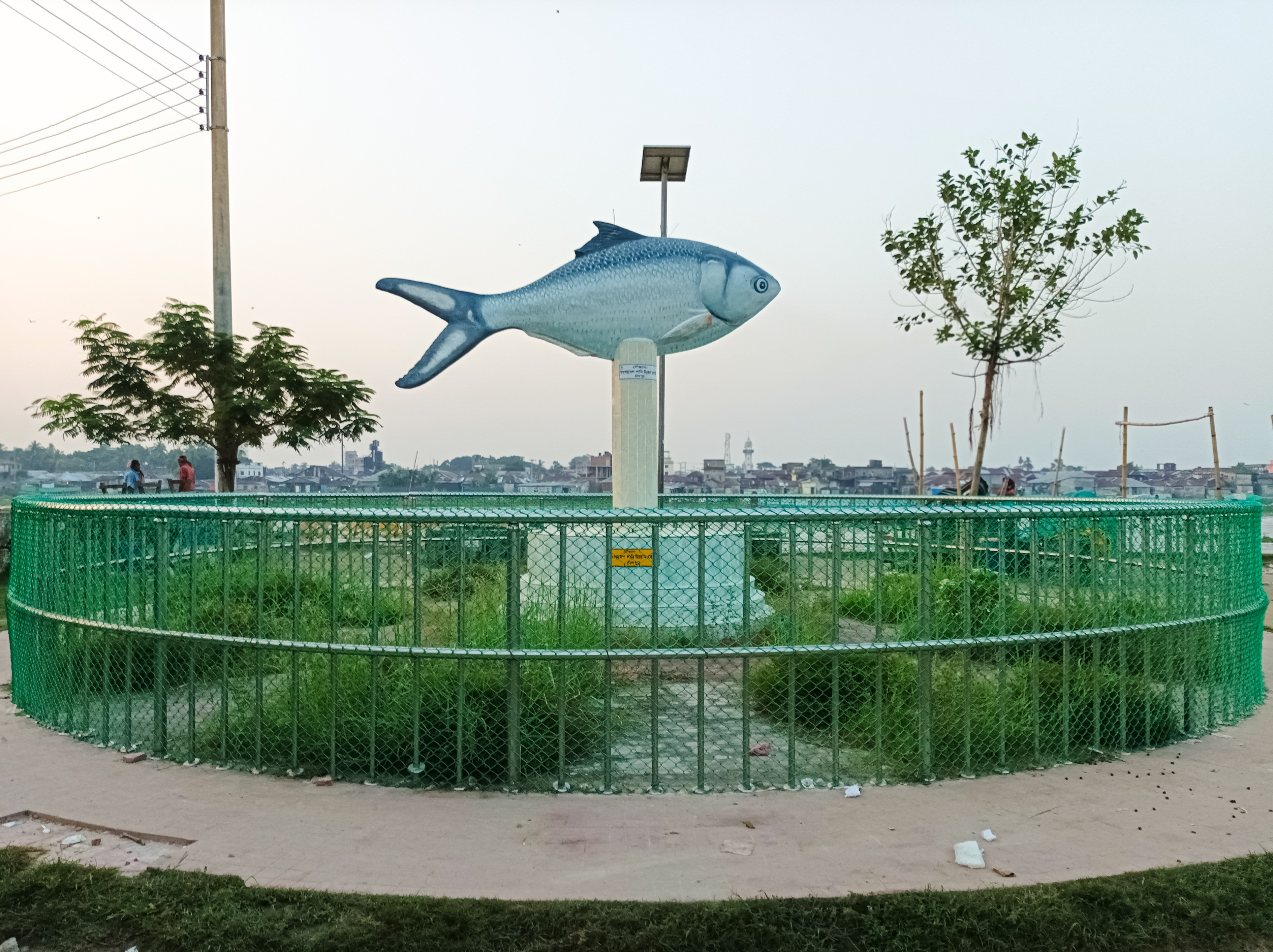
Hilsa, locally ilish, belongs to the genus Tenualosa of the herring family Clupeidae and is the national fish of Bangladesh, Banglapedia notes. It has a strongly compressed, metallic silver body. It can reach 60 centimetres, though most fish caught measure 35 to 40 centimetres, and a large hilsa weighs about 2.5 kilograms. Females grow faster and larger than males, and the fish matures in one to two years. In April 2025, TBS Bangla's report on the jatka conservation week put a one-kilogram hilsa at usually 40 to 50 centimetres long and a fish of more than two kilograms at 60 to 62 centimetres.
The hilsa is anadromous: adults move from the sea up the rivers to breed in fresh water, the eggs float freely and hatch, and the young grow in the river channels before going down to the sea to feed and grow, then return as breeding adults. A large female can produce up to two million eggs. Banglapedia records that hilsa spawn more or less all year, with a minor season in February and March and a major season in September and October, and that the fish feeds mainly on plankton such as blue-green algae, diatoms and small crustaceans.
The young hilsa are called jatka. After hatching in nursery grounds in the Padma, the Jamuna and the Meghna, they grow for six to ten weeks before starting their journey to the sea. For enforcement, the government defines jatka as hilsa up to 10 inches, or 25 centimetres, long, as TBS Bangla's report on the ministry's April 2025 briefing set out. A Bangladesh Fisheries Research Institute survey in 1992-94 estimated that 3,500 to 4,000 tonnes of jatka were caught every year between January and April with fine nets, more than half of them in the Meghna. The two-month ban on the Chandpur river sanctuary falls in the same part of the year.
Adult hilsa are caught mainly with fixed or drifting gill nets, and smaller amounts with seine and lift nets. On the rivers, the fishing units are usually single non-mechanised boats or two-boat teams, while at sea the fishing is done with mechanised boats of 10 to 13 metres or trawlers. A system of collector boats, wholesale markets such as Baro Station and transporting traders carries the fish to inland markets, Banglapedia notes. On 6 August 2017, the Department of Patents, Designs and Trademarks under the Ministry of Industries declared ilish a geographical indication product of Bangladesh.
What the national figures showed
At the national level, the official figures before the 2025 season showed a long rise followed by a dip. In October 2023, the then fisheries and livestock minister said hilsa production had risen from 2.98 lakh tonnes in the 2008-09 fiscal year to 5.71 lakh tonnes in 2022-23, an increase of about 92 per cent over 15 years, as TBS reported.
At the jatka conservation week briefing on 7 April 2025, the ministry's figures put production in the 2023-24 fiscal year at 5.29 lakh tonnes, TBS Bangla reported. Hilsa made up about 11 per cent of the country's total fish production and contributed more than 1 per cent of gross domestic product, and more than 80 per cent of the world's hilsa was caught in Bangladesh's rivers, estuaries and sea, putting the country first among the 11 countries that produce the fish.
Those national totals include the sea catch, landed at coastal ports. The traders at Baro Station were describing something narrower: the amount of river hilsa from the Padma and the Meghna, and of shipments from the south, that reached one historic inland market. Banglapedia's account of the fishery gives the background to that difference. Until about 1972, it says, the hilsa fishery was concentrated in the upstream rivers such as the Padma, the Meghna, the Karatoya, the Rupsa, the Shibsa and the Payra; since then it has declined sharply upstream and is now concentrated in the downstream rivers, the estuaries, the coast and the sea.
The bans that shaped the 2024-25 season
By the end of June 2025, the hilsa fishery around Chandpur had passed through several fishing bans set by the Ministry of Fisheries and Livestock and enforced by the Department of Fisheries with the police, the Coast Guard and the Navy.
The breeding-season ban of autumn 2024 ran for 22 days, from 13 October to 3 November 2024, during which catching, selling, hoarding and transporting hilsa were prohibited across the country. Announcing it, the fisheries and livestock adviser said the restriction was meant to protect the mother hilsa that lay their eggs during that period, UNB reported; the report called Chandpur one of the largest hilsa trading hubs in Bangladesh.
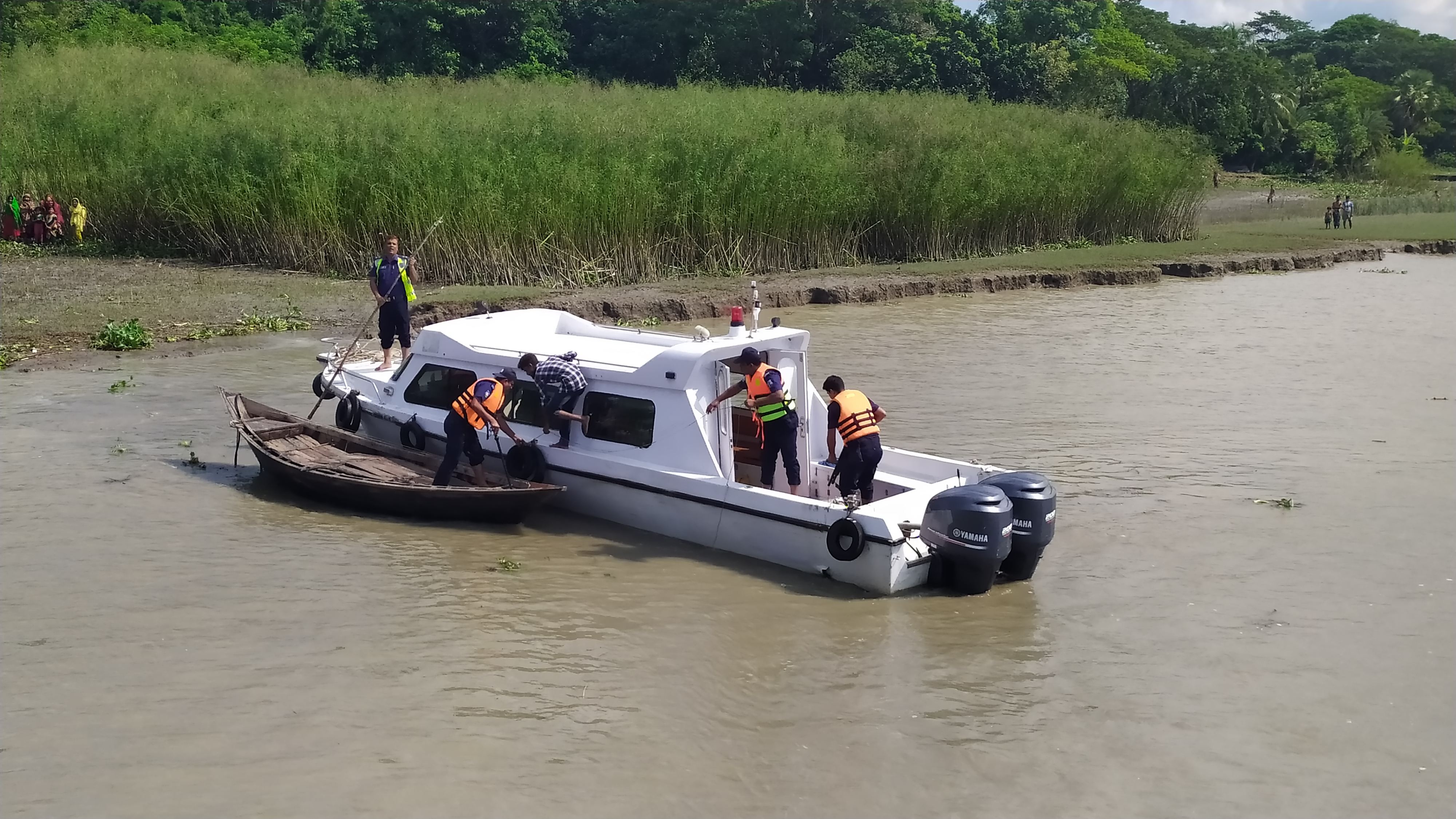
In the Chandpur sanctuary, all fishing was banned for two months, from 1 March to 30 April 2025, along a 70-kilometre stretch of the Padma and the Meghna from Shatnol in Matlab Uttar upazila to Char Bhairavi in Haimchar upazila. The ban covered nearly 44,000 registered fishermen in the district, and each was to receive 40 kilograms of rice as Vulnerable Group Feeding (VGF) aid for four months, The Daily Ittefaq reported on 27 February 2025. Task forces in Chandpur and Haimchar monitored the ban, and the district police chief said river police would patrol the sanctuary day and night. The aim was to protect jatka on their way to the sea.
The government held a jatka conservation week across the country from 8 to 14 April 2025 under the slogan, translated, "Stop catching jatka and hilsa will fill the nets", TBS Bangla reported.
At sea, the government shortened the annual Bay of Bengal ban from 65 to 58 days in 2025, on the advice of a technical committee drawn from the Department of Fisheries, the Bangladesh Fisheries Research Institute and other stakeholders. Announcing the change on 17 February 2025, the adviser said fishermen of neighbouring countries had been benefiting because the ban periods were not coordinated, The Daily Ittefaq reported. The 58-day ban, from 15 April to 11 June 2025, prohibited catching all kinds of fish by all fishing vessels in Bangladesh's maritime zone under the Marine Fisheries Rules 2023, according to a ministry gazette notification. In Bhola district alone, about 65,000 sea-going fishermen stopped work, and each registered fisherman received 78 kilograms of rice.
The traders' talk on 27 June of the season ahead fitted the calendar. The river sanctuary ban had ended on 30 April and the sea ban on 11 June, and Banglapedia notes that local fishermen catch migrating adult hilsa from May to October, with the main spawning season in September and October.
Why the river catch was thin: traders and researchers
The people at the ghat gave several reasons for the shortage. Nabir Hossain pointed to low catches in the Padma and the Meghna and to the southern trawler shipments that, in his view, stopped coming after the Padma Bridge opened, while Desh Rupantor's sources added the new arats that had opened elsewhere. The traders expected supply to recover with the monsoon rain and the rise of the rivers, and the fisheries official quoted by UNB in May looked to July to September for abundant catches.
Researchers had pointed to longer-term pressures on the river fishery. In February 2025, a former scientific officer at the Chandpur fisheries research centre, described by The Daily Ittefaq as a leading hilsa researcher, said hilsa numbers in the Meghna and the Padma had fallen because of pollution and excessive sand extraction. He called for better water quality and less sand mining, and said that conserving jatka with the cooperation of all concerned would raise hilsa production.
Banglapedia lists the causes that fisheries scientists had long linked to the decline of the inland hilsa fishery:
- low water discharge in the Ganges since the Farakka Barrage was built in India, with heavy siltation as a result;
- the indiscriminate catching of jatka;
- disruption of migration routes and the loss of spawning, feeding and nursery grounds;
- rising river pollution;
- the uncontrolled use of mechanised hilsa boats in coastal waters, which catch the fish before they can migrate upstream to spawn;
- flood control, drainage and irrigation works, among them the Chandpur Irrigation and Flood Control Project and the Meghna-Dhonagoda Irrigation and Flood Control Project, which the encyclopedia says damaged the nursery grounds of juvenile hilsa.
Photo: AsikBinRahim / Wikimedia Commons (CC BY-SA 4.0)
Sources: Jagonews24, UNB, The Daily Star (Bangla), Desh Rupantor, The Daily Ittefaq, Prothom Alo (UNB), The Business Standard (TBS), Banglapedia, Wikipedia
Comments
(0)