
A mobile court in Haimchar upazila of Chandpur sentenced two fishermen to 20 days in jail each on Tuesday, 7 October 2025, for catching hilsa in the Meghna river sanctuary area in defiance of the government's ban. The court was conducted by Swarup Muhuri, the upazila's assistant commissioner (land), during the 22-day nationwide ban that protects brood hilsa while they spawn. Haimchar's senior upazila fisheries officer, A B M Ashraful Haque, confirmed the sentences, Jagonews24 reported that morning.
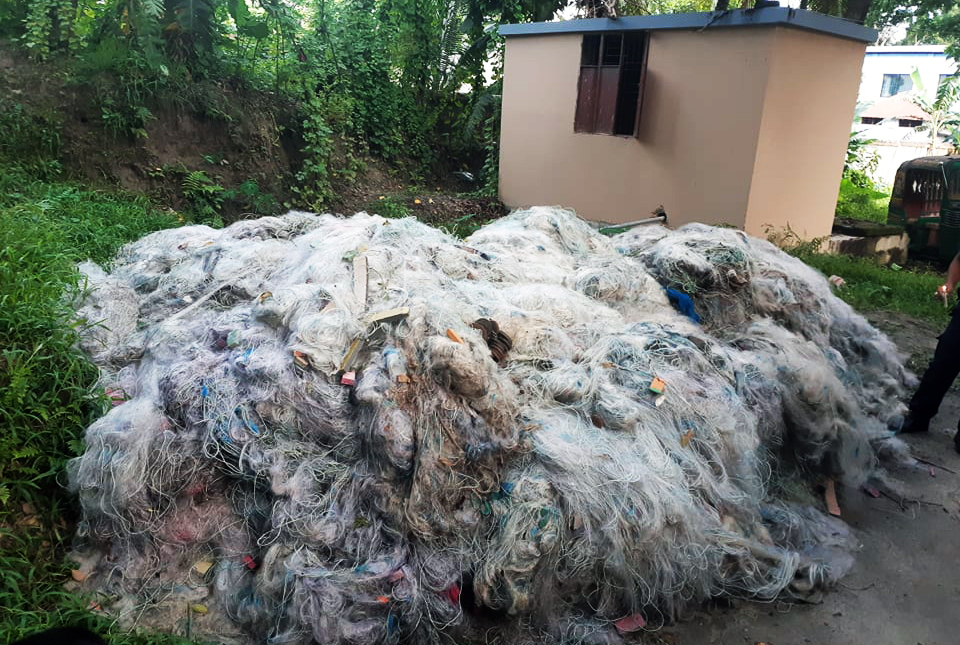
The two men had come from Mawa and were fishing from a 200cc speedboat near Majhir Bazar in Haimchar. A drive team that set out at night on a tip-off chased the boat, detained two people and seized it, along with about 1,000 metres of current net, a fine monofilament net that has been banned in Bangladesh since 2002. The net was burnt in the presence of the executive magistrate. The original report did not name the two fishermen.
How the night drive unfolded
According to the account the senior upazila fisheries officer gave Jagonews24, the fishermen were catching hilsa illegally from the speedboat in the river next to Majhir Bazar. The drive team received secret information during the night, went out on the Meghna and chased the boat. Two people were detained on the spot and the speedboat, described as a 200cc boat, was seized.
About 1,000 metres of current net were found on the boat and seized. The net was then set on fire in the presence of the executive magistrate. The speedboat itself was not destroyed; it was kept in the custody of the Haimchar senior upazila fisheries officer.
The assistant commissioner (land) then held the mobile court and sentenced each of the two detained fishermen to 20 days in jail. Contingent commander Sanowar Hossain and other members of the Bangladesh Coast Guard's Haimchar Nayani outpost assisted throughout the drive. The report was filed by the paper's Chandpur district correspondent and published at 11:04 am on 7 October 2025.
The fact that the boat had come from outside Chandpur echoes a complaint that local fishermen had made only days earlier. On 3 October 2025, Risingbd reported that several fishermen in Chandpur said that even when they kept their own boats and nets out of the river during the ban, fishermen from other districts entered Chandpur's waters each time and took hilsa away. The same fishermen also alleged that a group of offenders sent children onto the river to catch hilsa. These were the fishermen's own claims as reported by Risingbd; the paper did not carry a response to them.
Haimchar, Chandpur and the forces on the river
Haimchar is one of the eight upazilas of Chandpur district. Banglapedia records its area as 134.16 square kilometres, lying between 23°00' and 23°10' north latitude and 90°32' and 90°42' east longitude. It is bounded by Chandpur Sadar and Bhedarganj upazilas to the north, Hizla upazila to the south, Raipur and Faridganj upazilas to the east and Gosairhat upazila to the west. Its main river is the Meghna.
Haimchar became a thana in 1976 and an upazila in 1984. It has six unions, including Char Bhairabi, Nilkamal and Haimchar, and the 2011 census counted 109,575 people there. Agriculture is the main source of income for 64.37 percent of households, and fish is listed among the upazila's main exports along with jute, betel leaf, onion, garlic, coconut and betel nut. Waterways run for 60 kilometres through the upazila, and its noted markets include Char Bhairabi, Haimchar and Katakhali Bazar.
Chandpur district, of which Haimchar is part, covers 1,645.32 square kilometres in Chattogram division. Its main rivers are the Meghna, Dakatia and Gumti, and the Meghna forms part of its western boundary. Chandpur sub-division was established in 1878 and the area became a district in 1984. Speaking to Risingbd on 3 October 2025, the deputy commissioner of Chandpur said the district is known across the country for hilsa.
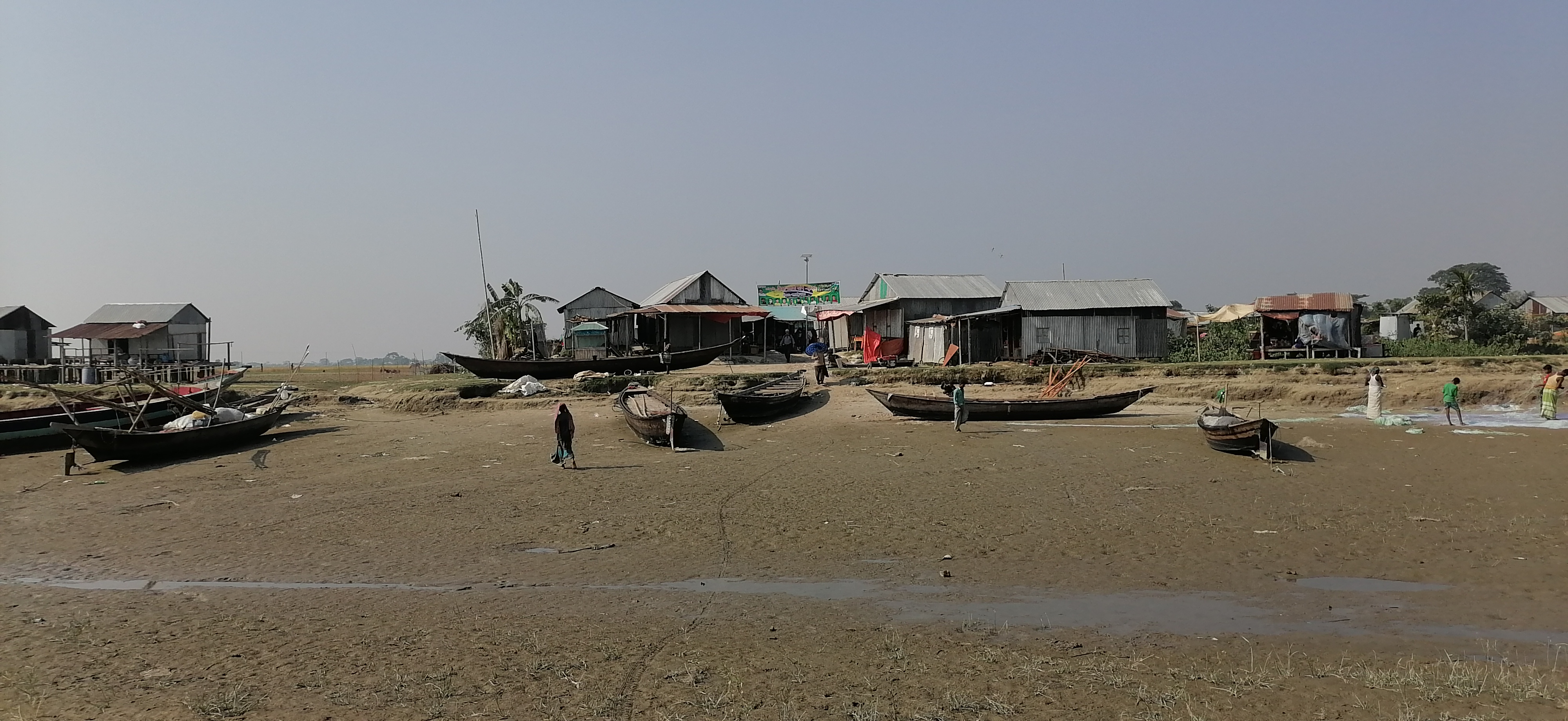
The Coast Guard, whose Haimchar Nayani outpost joined the drive, is a force under the Ministry of Home Affairs. Its official website lists a Dhaka zone and three others: the East zone at Chattogram, the West zone at Mongla and the South zone at Bhola. At the ministry's press conference of 29 September 2025, the government said fisheries officials would be joined during the 2025 drive by the river police, the Coast Guard, the Navy and the Air Force.
The 2025 brood hilsa conservation drive
The ban that the two fishermen broke ran from 4 to 25 October 2025, or 19 Ashwin to 9 Kartik 1432 in the Bengali calendar. At the Ministry of Fisheries and Livestock's press conference on Monday, 29 September 2025, the government said that for those 22 days, which take in the four days before the Ashwin full moon and the three days after the new moon, catching, transporting, storing and selling hilsa would be banned throughout the country. The ministry said the period had been set on the basis of advice from the Bangladesh Fisheries Research Institute (BFRI) and fishermen's views, and that it covered both the full moon and the new moon to give the fish the best chance to breed.
The ministry also said that during the drive fishing trawlers would be kept from crossing into the country's waters from outside, dredging in rivers would be stopped completely, and the same 22-day ban would apply in the sea, along the coast and in the estuaries. The Department of Fisheries described catching, transporting, storing, marketing and selling hilsa during the period as legally punishable, Prothom Alo reported on 4 October 2025.
To make up for lost income, the government said it would give VGF (Vulnerable Group Feeding) food aid to more than 620,000 fishing families in 165 upazilas of 37 districts, at 25 kilograms of rice per family, a total of 15,503 tonnes of rice.
At the same press conference the ministry gave the results of the 2024 drive: 54.86 tonnes of hilsa seized, 612 lakh metres of net destroyed and Tk 75 lakh collected in fines. It said research had found that 52.5 percent of brood hilsa had spawned safely during that ban, producing about 44 thousand crore jatka, the young hilsa.
The 2025 ban began earlier in the calendar than the previous year's. Prothom Alo reported that the 2024 ban had begun on 12 October, that the date had been brought forward this time on the basis of scientific evidence about the breeding cycle, and that fishermen had asked for the timeframe to be reviewed. Officials told the paper that the ban is imposed each year between the new moon and the full moon of the month of Ashwin, when brood hilsa move from the sea into the rivers to spawn, and that catching them then would cause a collapse in future production.
The ban on the Chandpur stretch of the Padma and Meghna
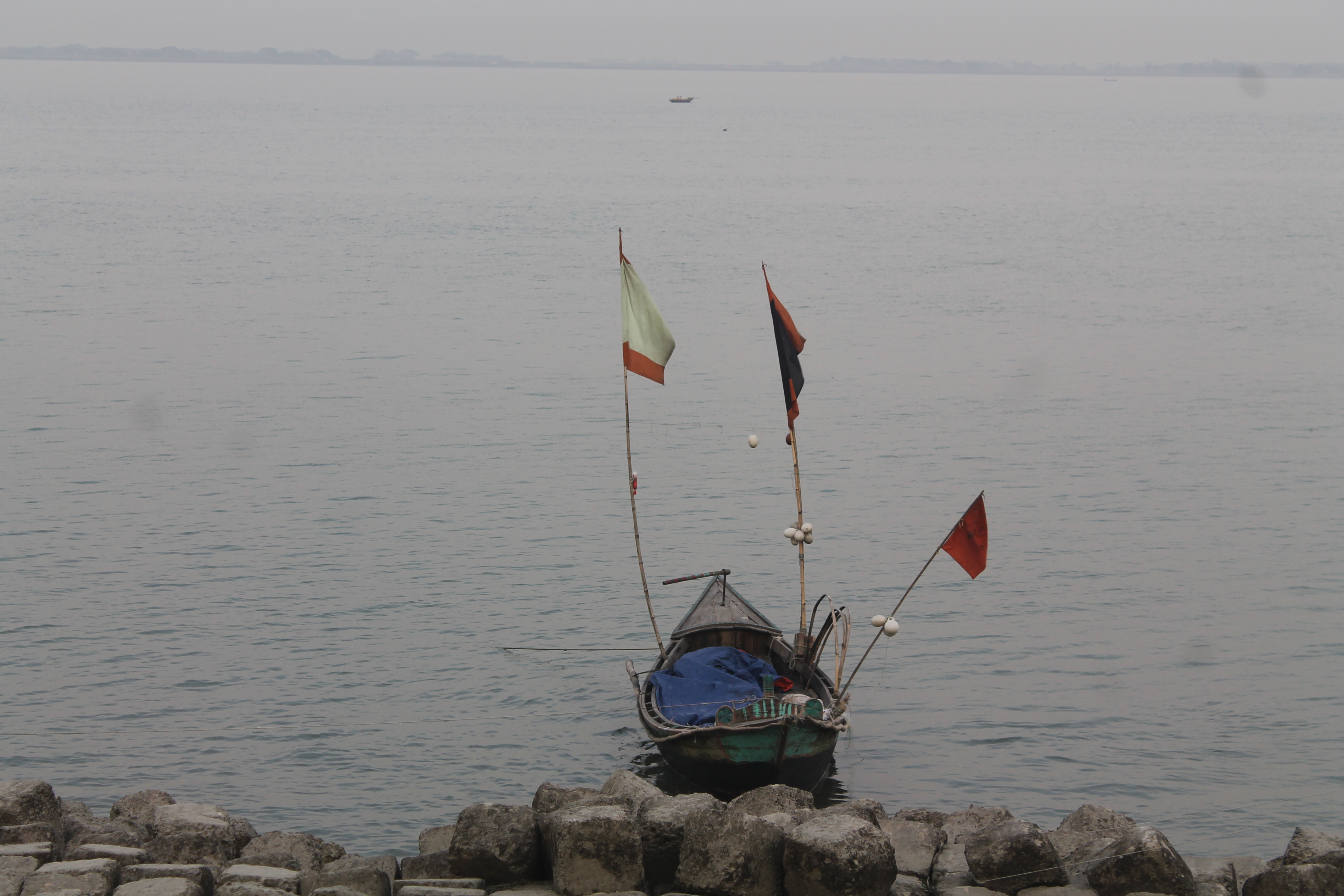
In Chandpur, the 22-day ban covered about 70 kilometres of the Padma and Meghna, from Char Bhairabi in Haimchar to Shatnal in Matlab Uttar upazila, Risingbd reported on 3 October 2025. The deputy commissioner said that all fishing would be banned along that stretch during the period, and that joint teams of the Coast Guard, river police, the fisheries department and the upazila administration would patrol the river every day.
The superintendent of river police for the Chandpur region told the paper that from the previous Wednesday the district administration, police, Coast Guard and fisheries department had been holding roadside meetings and handing out leaflets at Anandabazar, Lalpur fish market, Amirabad ghat, Char Umed and Rajrajeshwar in Chandpur Sadar, with campaigns to follow in Haimchar and in Matlab Uttar and Matlab Dakshin. He warned that strict legal action would follow if anyone broke the ban.
The deputy commissioner said the Protection and Conservation of Fish Act provides punishment for anyone who breaks the law, and that the government had taken up food aid and alternative employment programmes for fishermen. He said 45,615 fishing families in Chandpur would receive 30 kilograms of rice each that year, 5 kilograms more than the previous time. That district figure is the deputy commissioner's own statement; the national allocation announced in Dhaka was 25 kilograms per family. Fishermen interviewed by Risingbd asked the administration to make sure the rice reached them quickly.
The Chandpur stretch overlaps one of the country's legally declared hilsa sanctuaries. Rule 13 of the Protection and Conservation of Fish Rules, 1985, as compiled by the Department of Fisheries up to October 2011, lists a 100-kilometre stretch of the lower Meghna from Shatnal in Chandpur to Char Alexander in Lakshmipur as a hilsa sanctuary, where catching any fish is prohibited from March to April each year. The Business Standard, reporting from Lakshmipur on 3 October 2025, described the same 100-kilometre stretch from Alexander in Ramgati to Shatnal as a declared hilsa sanctuary, closed for the October ban as well.
What the fish protection law provided
The ban rests on the Protection and Conservation of Fish Act, 1950 (East Bengal Act XVIII of 1950), and the rules made under it. Section 3 of the Act allows the government to make rules that, among other things, prescribe the seasons during which killing or catching fish of any prescribed species is prohibited, and prohibit all fishing in any specified waters for a specified period. Section 4 lets the government ban, for a set period, the catching, carrying, transporting, offering, exposing or possession for sale of fish below a prescribed size.
Rule 13 of the 1985 rules is where the hilsa protections sit. In the Department of Fisheries' 2011 compilation, sub-rule (1)(a) bans catching any fish in the listed hilsa sanctuaries during their closed months, and sub-rule (1)(b) bans catching hilsa, and carrying, transporting, offering, selling, exposing or possessing it, throughout the country during the peak spawning period. In that 2011 text the peak spawning period was 11 days around the first full moon of Ashwin. Sub-rule (2) allows fish caught in breach of the rule to be seized and forfeited. Prothom Alo reported in October 2025 that an 11-day ban had been imposed from 2008, and that later research showing hilsa spawn at both the full and new moons led to the 22-day prohibition.
The penalties in force on 7 October 2025 were those of section 5 as substituted by the Protection and Conservation of Fish (Amendment) Ordinance, 2002. Read from the official text and its amendment notes on the Bangladesh Code website, they were:
- Breaking any rule made under section 3, or any prohibition under section 4: rigorous imprisonment of not less than one year and up to two years, or a fine of up to Tk 5,000, or both (section 5(1)).
- Manufacturing, fabricating, importing, marketing or storing current net: rigorous imprisonment of not less than three years and up to five years, and a fine of up to Tk 10,000 (section 5(2)(a)).
- Carrying, transporting, owning, possessing or using current net: rigorous imprisonment of not less than one year and up to three years, or a fine of up to Tk 5,000, or both (section 5(2)(b)).
Section 5A requires the court that convicts a person under the Act or its rules to order the confiscation of anything used or intended to be used in the offence. Section 6 allows specially empowered officers to arrest without warrant a person found breaking the rules or prohibitions whose name and address are unknown or doubtful. Under section 7, offences under the Act are cognisable, a court takes cognisance on the complaint or report of a fishery officer or a police officer not below the rank of sub-inspector, only a metropolitan magistrate or a first-class magistrate may try them, and most of them may be tried summarily. The Jagonews24 report did not state which provision the mobile court applied.
How a mobile court passes sentence
The sentence was passed under the Mobile Court Act, 2009 (Act No. 59 of 2009, dated 6 October 2009). Section 5 allows the government, and a district magistrate within the district, to empower any executive magistrate in writing to conduct a mobile court for maintaining law and order and preventing crime. In Haimchar the court was held by the upazila assistant commissioner (land), and the seized net was burnt in the presence of the executive magistrate.
Section 6(1) allows the executive magistrate to take cognisance on the spot of an offence under a law listed in the Act's schedule that is committed or discovered before them, and to convict the accused on the basis of a confession. Section 7 sets the procedure: the magistrate frames a brief written charge, reads and explains it to the accused, and asks whether they admit it. If the accused admits it, the confession is recorded and signed or thumb-printed by the accused and by two witnesses present, and the magistrate then passes a written, signed order imposing the punishment they think fit. If the accused denies the charge and the explanation is satisfactory, they are released; if not, the case is sent to a court with jurisdiction.
Section 8 limits what a mobile court can impose: whatever the law in question provides, it may not impose more than two years' imprisonment, while any fine within the limit set by that law may be imposed. Section 12 gives the magistrate power to search, to seize and, where needed, to dispose of seized items, which is the authority under which banned nets are destroyed on the spot. Under section 13, a person aggrieved by a mobile court sentence may appeal to the district magistrate, and an appeal against the district magistrate's or additional district magistrate's order lies to the sessions judge.
Why current net is banned
Current net (current jal) is defined in section 2 of the 1950 Act as a fishing net made of monofilament synthetic nylon fibre of different mesh sizes. Section 4A, inserted by the 2002 amendment ordinance, says no person shall manufacture, fabricate, import, market, store, carry, transport, own, possess or use it. Ordinary fishing nets, by contrast, are defined as nets made of other yarns of different mesh sizes, traditionally tanned with materials such as gab fruit, goran bark and coal tar.
Fine-mesh nets are among the pressures that fisheries officials blamed for falling catches in 2025. The project director of the government's Hilsa Resource Development and Management Project told Prothom Alo: "Overfishing has depleted stocks. The rule is to harvest only 30 per cent while leaving 70 per cent of the total stock. But indiscriminate fishing with illegal fine-mesh nets and local trawlers is killing fish of all sizes. Overharvesting of larger fish has also led to shortages in the stock."
Banglapedia notes that adult hilsa have traditionally been caught with fixed or drifting gillnets known as chandi jal, with smaller amounts taken by berjal and shangla jal lift nets, from single or two-boat teams in the rivers and from mechanised 10 to 13 metre boats or trawlers at sea. It lists the heavy catch of jatka, loss of spawning, feeding and nursery grounds, disrupted migration routes and river pollution among the causes of the fishery's decline.
The hilsa and its breeding season
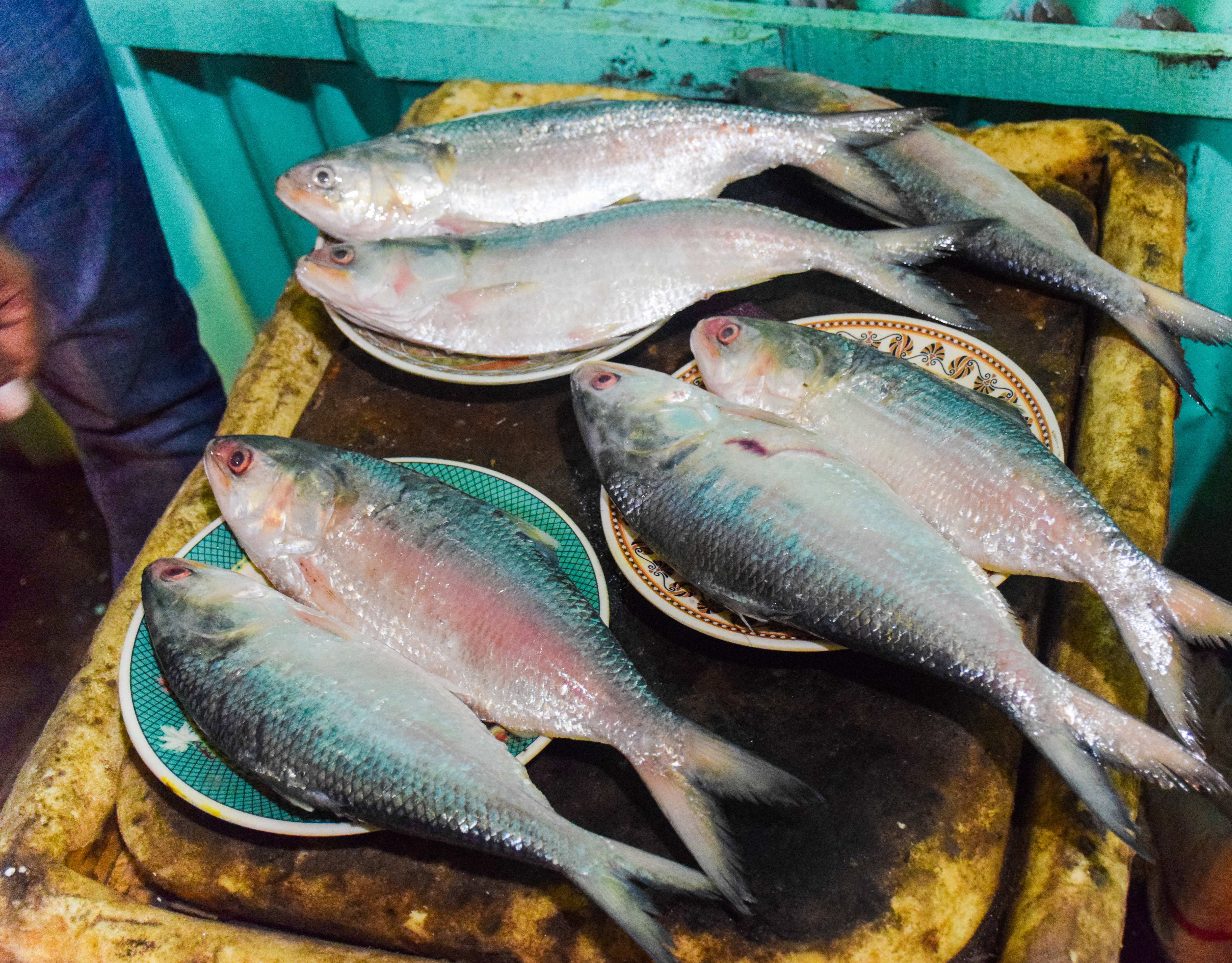
The hilsa, or ilish (Tenualosa ilisha), belongs to the herring family Clupeidae and is the national fish of Bangladesh. Banglapedia describes a strongly compressed, metallic silver body that can reach 60 centimetres, though most fish caught measure 35 to 40 centimetres; a large hilsa weighs about 2.5 kilograms. Females grow faster and are usually larger than males, and the fish matures in one to two years.
The hilsa is anadromous: it lives and feeds in the sea and swims up rivers to breed. Eggs float freely and hatch upstream in the Padma, Jamuna and Meghna; the young grow in the river channels and then descend to the sea before returning as mature adults. A large female may produce up to two million eggs. Although hilsa spawn more or less throughout the year, Banglapedia records a minor spawning season in February and March and a major one in September and October, which is why the October ban matters most. Within six to ten weeks of hatching the young reach about 12 to 20 centimetres and are known as jatka as they start their journey to the sea. The fish feeds mainly on plankton, including blue-green algae, diatoms, copepods and rotifers.
In August 2017 the Department of Patents, Designs and Trademarks registered hilsa as a geographical indication (GI) product of Bangladesh, after the Department of Fisheries applied. The Daily Star reported on 7 August 2017 that the journal was published on 1 June and that the two-month window for objections ended on 31 July without any. The paper cited WorldFish as saying Bangladesh alone produced over 60 percent of the world's hilsa. Prothom Alo reported in October 2025 that Bangladesh began a jatka conservation programme in 2003-04, which gradually raised production.
Production and pressure before the 2025 ban
The 2025 ban came at the end of a poor season. Prothom Alo reported on 4 October 2025 that national hilsa production fell to 529,000 tonnes in the 2023-24 financial year from 571,000 tonnes in 2022-23, with projections pointing to a further fall in 2024-25. Citing Department of Fisheries data, it said the July to August 2025 catch stood at 29,519 tonnes, against 40,291 tonnes in the same months of 2024.
The paper said researchers point to rainfall, temperature, river current, depth, flooding, food supply and water quality as key factors in spawning and catches. It reported that a fisheries department survey had found hilsa migration blocked at 17 points across the Meghna-Tentulia estuary and adjoining rivers, 14 of them on the Meghna itself, and that experts said many estuaries fell to just 8 to 9 feet of water at low tide, well below the roughly 30 feet the fish need to move freely. Siltation and sandbars had reduced depth in the southern rivers, while industrial waste had polluted the water.
An assistant professor in the aquaculture department of Sher-e-Bangla Agricultural University told the paper: "Hilsa is a highly sensitive species. When its habitat changes, it alters its migratory routes." He linked coal-fired power plants on the Ramnabad river and in the Payra-Bishkhali-Baleshwar estuaries, and industrialisation around breeding grounds, to polluted rivers that forced the fish to change course.
Prices reflected the shortage. According to the Trading Corporation of Bangladesh, as cited by Prothom Alo, hilsa prices in 2025 were about 33 percent higher than in 2023, and the Consumers Association of Bangladesh reported a price of Tk 417 a kilogram in 2010, Tk 789 in 2019 and Tk 3,000 to 3,500 in 2025. It was against that background that the 2025 drive, with patrols on the Chandpur stretch every day, set out to let the brood fish spawn.
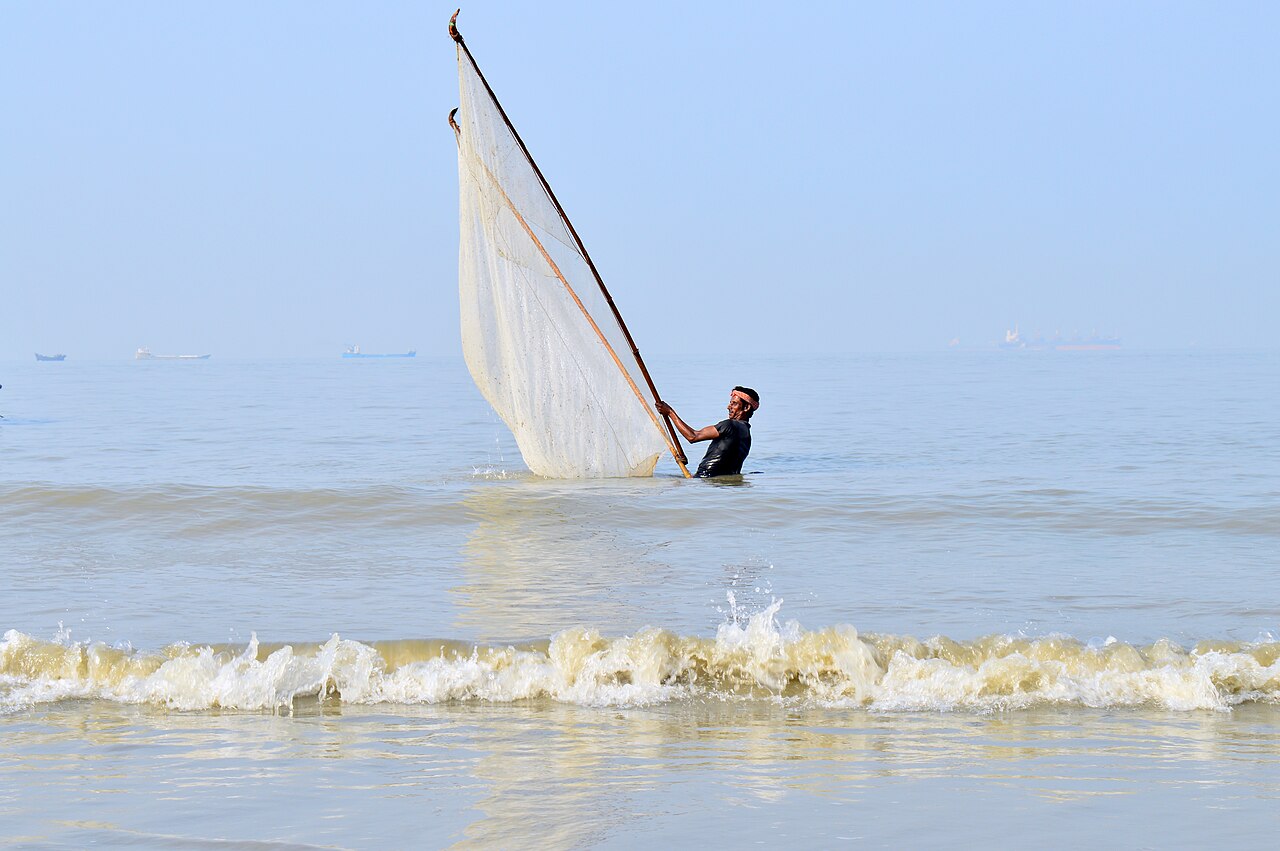
Photo: Fahad Faisal / Wikimedia Commons (CC BY-SA 4.0)
Sources: Jagonews24, Risingbd, The Business Standard, Prothom Alo, The Daily Star, Protection and Conservation of Fish Act 1950 and Mobile Court Act 2009 (Bangladesh Code, Legislative and Parliamentary Affairs Division), Protection and Conservation of Fish Rules 1985 (Department of Fisheries compilation to 2011), Banglapedia, Bangladesh Coast Guard

Comments
(0)